
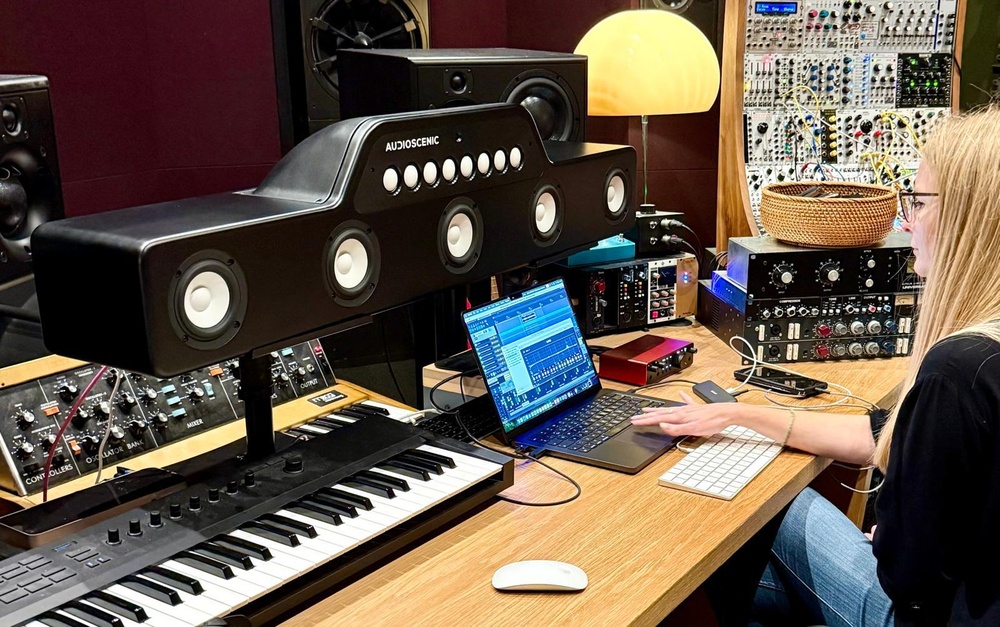
In April 2025, we ran some news on Audioscenic, a UK-based company who specialise in delivering binaural audio over speakers rather than headphones. They’re well established in consumer audio, and their AI-based technology is already hard at work behind the scenes in ‘powered by AUDIOSCENIC’ devices from the likes of Razer, Dell and Acer. In that piece, we considered possible applications of the technology in the pro-audio world, and asked: could ‘powered by AUDIOSCENIC’ technology provide a viable compact alternative to a discrete immersive playback rig? We recently caught up with Audioscenic to see how their technology has developed over the last year or so, and get an idea of where it may be headed next.
Spatial Audio
The demand for spatial audio is showing no signs of slowing down, and while mixing in formats like Dolby Atmos has long been the standard for those working in the film, TV and game audio industries, it’s now increasingly common for those working in music to be tasked with delivering immersive mixes. Companies like Apple have been leading the charge, with their streaming service focusing heavily on immersive content and Personalized Spatial Audio optimising users’ AirPods with customised HRTF files. But something that’s been slower to change is how producers and engineers approach those immersive mixes.
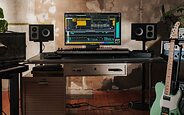
For many, creating an immersive mix is something that takes place at the end of the production process, and is a secondary thought to the stereo version. Things are shifting as more tools are developed, though, and there are already plenty of processors, effects and instruments on the market that allow producers and mixers to explore surround and height-channel placement as part of their initial creative process. But the biggest obstacle for most users sits at the other end of the chain — all the immersive-capable tools in the world are of little use if you don’t have a monitoring system that’s capable of presenting what they’re doing!
Binaural Research
The work Natalia has been carrying out with Audioscenic focuses heavily on binaural audio, as they believe that it offers the most convenient way for the majority of users to take advantage of immersive formats. “Sometimes what happens is that ‘immersive first’ often means ‘discrete channels first’, but we’re maybe overlooking the binaural aspect, which is something that can really make things more translatable and accessible”, she continues, “we’ve got a lot of formats out there — and some of them are very accessible and easy to engage with — but they don’t all talk to each other. One thing they all translate through, though, is binaural audio, and perhaps that focus on binaural is something that is missing.”
She also notes that Apple’s introduction of native spatial tools to Logic Pro has been a step in the right direction. “That was a really big moment that made people think ‘I’ll give that a go!’ and maybe have a play around on headphones. But before then, it was something that was mainly reserved for film and TV studios to experiment with. So that’s the kind of shift that would be good to see in hardware as well.”
An Alternative to Multi-Speaker Monitoring
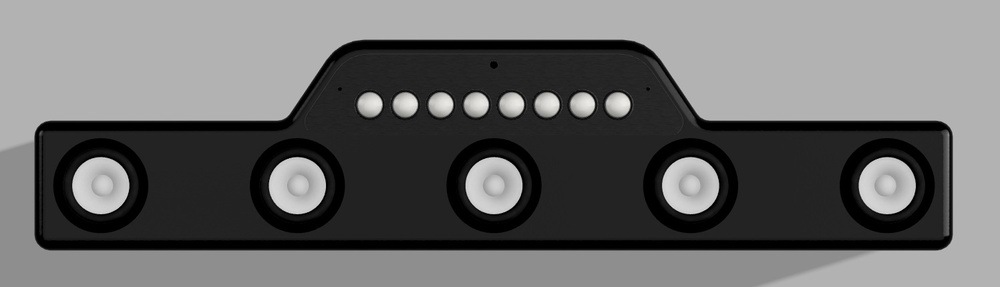 Audioscenic's new hardware uses technology that's similar to beam-forming to deliver binaural audio over speakers rather than headphones.
To get an insight into that side of the story, we also spoke to Jake Hollebon, VP of Research & Audio at Audioscenic, who talked us through a new hardware device that uses technology based on beam-forming to provide binaural playback via speakers rather than headphones. “What our technology does, is provide a way for binaural audio to be consumed practically: you don’t need to throw speakers all around your room and go through crazy setup and calibration processes,” Jake explains. “Headphones are great, but they’re not the right tool for every use case. There is a hardware gap: you can’t consume spatial audio practically over speakers, and that’s what we’re working to achieve.”
The company are keen to point out that with many standards already competing within the world of immersive audio, they feel that it’s important to provide a tool that’s agnostic to them rather than relying on another proprietary format. Indeed, Jake says that this has been the driving force behind their focus on binaural. “That’s how most people are consuming immersive audio in practice”, he adds, “when you remove cinemas with Atmos systems, most people are either listening to the binaural mix or through a TV soundbar — some with satellite speakers, but very, very few have a 7.1.4 home set-up in 2026”. A clear benefit of this approach is that all of the common immersive formats already provide the ability to generate a binaural downmix, meaning that a system that plays back binaural content will be compatible with any of them by default, rather than requiring users to stick to any particular format.
So, returning to the original question: could ‘powered by AUDIOSCENIC’ provide a viable compact alternative to a discrete immersive playback rig? Audioscenic certainly believe that it’s a viable option for many without easy access to a Dolby Atmos studio, and as you might have guessed, there are some interesting announcements on the horizon that they are confident will prove it!