

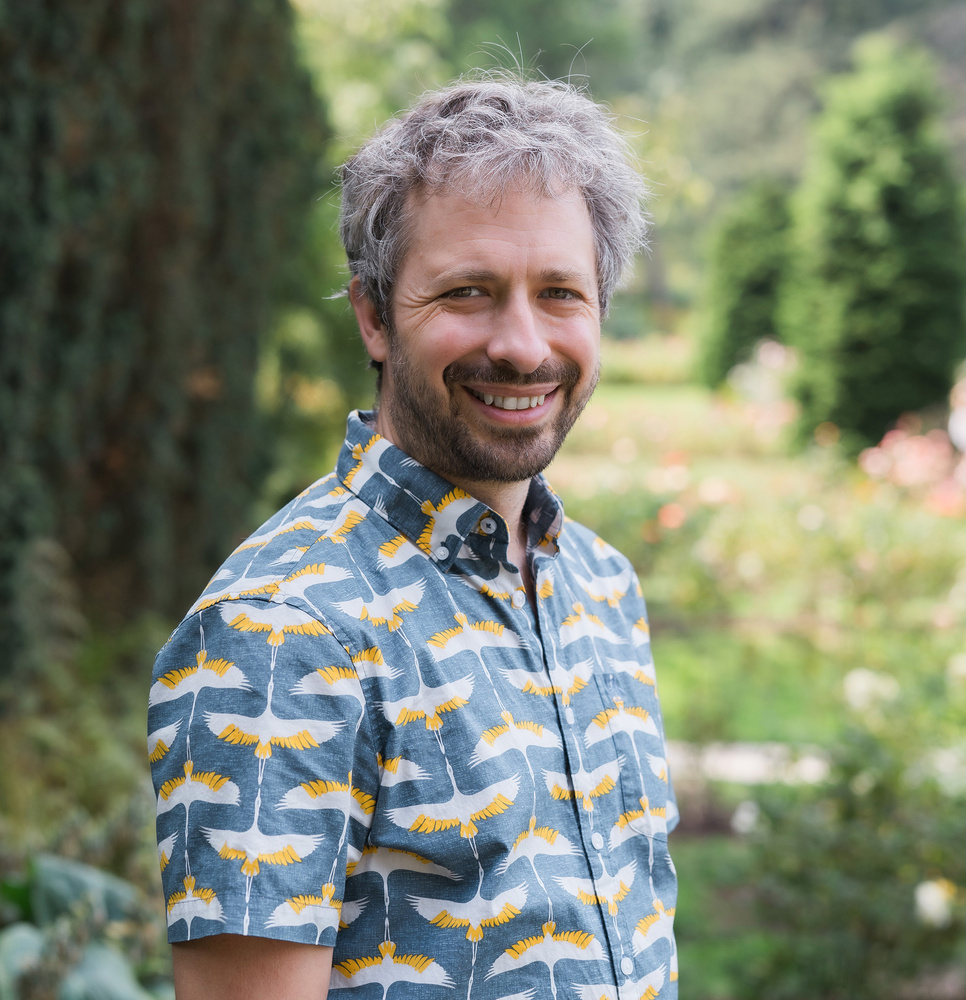
This month’s guest is 4MS founder Dan Green, who started off his career creating guitar pedals while still at school. Fast‑forward 30 or so years and his company find themselves among the modular world’s most respected developers, with a host of celebrated modules in their catalogue, not least the recent MetaModule, Mesa and LEQA.
On his entry into modular
In the 2000s we were making guitar pedals and doing a lot of custom work; we got a lot of requests for all‑in‑one boxes with multiple effects and patch points between. We were basically making custom semi‑modular systems, although we didn’t call it that. Around 2009, our sales contact at Big City Music, Josh Humphrey, asked if we wanted to make modules and sent us a loaner Analogue Systems rack. It clicked instantly: the move from effects to semi‑modular to modular was natural, and we haven’t released an effects pedal since.
On his go‑to modules
Being able to run virtual modules inside the MetaModule has changed how I think about this question, because now there’s a huge number of ‘go‑to’ modules I can reach without rearranging my case or running super‑long cables across a wall of modular. I’m not sure I have anything that fits the spirit of a ‘go‑to module’ anymore, because I love being able to use different things every time I play. Lately I’ve been running hardware triggers into a variety of virtual drum modules: Befaco’s Kickall is a standard — OK, maybe that one is my go‑to! SV Modular’s DrumKit series and our own X0X collection always please. The Clang and Impact drums from Submit and the Battalion engine from Unfiltered Audio are my latest explorations.
On the story of 4MS
I started making guitar effects for myself in high school in 1993, eventually selling them under the name 3MS Pedals; short for 3 Mad Sheep, which was my part of my high‑school phone number, spelled out. The operation was pretty scrappy: working with friends out of the garage of the local anarchist‑punk house, using whatever cheap tools we could get our hands on. Train‑hoppers, bands and travellers passing through would crash on the couch, and sometimes I’d teach them how to solder effect pedals to earn some cash before moving on. We were constantly cooking up new ideas, making a lot of custom artwork, and trying to push the envelope of what an effects pedal or tabletop instrument could do and look like.
From the early days we’ve always published the schematics, board layouts and parts lists so people could make them on their own. Sharing information is a core idea of the company. In 2002, 3M Company sent us a letter regarding the name resemblance, and after some back‑and‑forth we agreed to change our name to 4MS Company. Then we were finally able to buy real tools, a decent oscilloscope and good soldering equipment. Business grew steadily, picking up dealers around the world. As we started using some hard‑to‑find parts, we started selling more kits to make it easier to build your own. We moved a few times — Chicago, St Louis, Austin — before finally settling down here in Portland in 2012.
We’ve continued to grow over time. We are now seven people: about half design, and half operations and production. The MetaModule has sped up bringing ideas to life, too. We can write and test an idea on the computer, then immediately play it on hardware to see how it feels. It’s kind of amazing to go from an idea to hands‑on prototype that fast.
On the LEQA
The Leveling EQ Amplifier came from one of our employees, Ross Fish, and his experience as an audio engineer. Everything you track, mix or master needs EQ and compression, from acoustic folk ensembles to dense electronic dance music. Modular music tends to have wide dynamic and frequency ranges and pure waveforms with limited acoustic ambience, and that can make sounds compete for space, consume headroom and feel disconnected. Treating a patch at the bus level with EQ and compression helps glue everything together, remove what isn’t working, and enhance what is. So making a module to help with that problem was a natural step to take.
It took me a while to accept the lack of control on the LEQA. Instinctively I want CV control over everything! Boost and cut, resonance, filter frequency... But we took all of that away and it was the right choice, because putting compression and EQ outside the realm of experimentation creates a safe space to make crazy sounds in. You can go nuts with your patch and then dial it in on the LEQA so it sounds good, without messing up the patch. The name is a slight nod to one of its inspirations, the LA‑2A, with EQ. You can hear it if you spell it aloud: L‑E‑Q‑A.
On the culture of modular
For me, being a musician and being an instrument designer are one and the same, and I find a lot of like‑minded people in modular because we’re all used to designing our own instrument every time we make a patch. Modular as a format is inherently vast and varied because there are so many manufacturers and everyone’s gear works together. However you define ‘the culture of modular’, it has to include an experimental edge because to do anything interesting you have to try patching different modules in different ways. It’s almost harder to follow prescribed rules than to just play around and see what happens when you patch something new.
I like that there’s a general spirit of sharing in modular: not just open‑source firmware and hardware, but manufacturers sharing tips and parts and techniques with each other, too. I think it’s healthy that sharing knowledge is a core part of the scene. Culturally, it has evolved the way a lot of scenes do. It started small, with everyone knowing each other, then it got popular and attracted a lot of mainstream attention, and now it’s levelled off and shrunk back. I think that gets some people down, but it’s still many times larger than it was when you could fit every US and European manufacturer at one dinner table. There are more amazing modules than any one person could learn, and more are released all the time. Events like Superbooth and Buchla & Friends have such positive, excited energy, year after year. I see more and more steps toward inclusivity and diversity, which is encouraging. There’s still a lot of room for growth, but I’m an optimist and like where we’re going.