


We highlight the new product launches that have caught our interest this month.
IK Multimedia Sinphonica
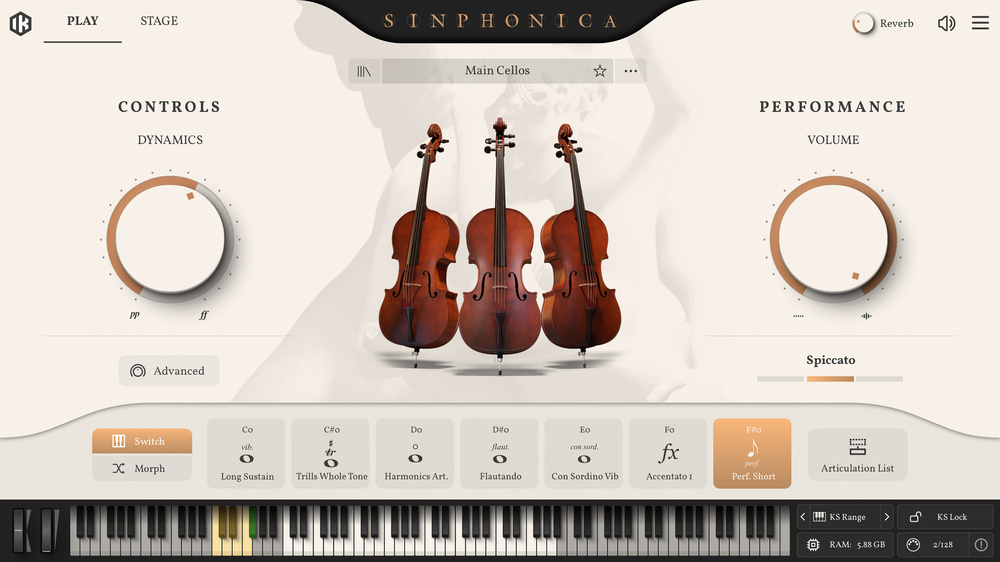 IK Multimedia’s Sinphonica aims to offer a player‑focused alternative to complex orchestral sample libraries.
Available for pre‑order now and set for release on 8th October, IK Multimedia’s all‑new Sinphonica platform will house “a new family of Italian orchestral instruments designed for modern composers”. The first launch in the series will be Sinphonica Maestosa Strings, which captures a 60‑piece ensemble comprising 16 first violins, 14 second violins, 12 violas, 10 celli and eight double basses performing at Officine Meccaniche Studios in Milan, Italy. Modern sample libraries can provide an incredible level of detail, but often require extensive programming to produce natural‑sounding results.
Sinphonica takes a more player‑focused approach, and boasts Responsive True Legato, Articulation Morphing and Dynamic Curve features that allow the instrument to respond in a natural‑sounding way to users’ playing, letting them focus on playing rather than programming. There’s plenty of control over how the ensemble sounds, too, with a virtual stage positioning system called PALCO making it possible to customise the layout of the instrument sections, and a set of eight microphone signals offering flexible tonal options when it comes to mixing. Sinphonica Maestosa Strings can be purchased as an all‑in‑one collection, or as individual instrument sections — upgrade prices for the full collection will be available for those who initially purchase individual sections. IK have also confirmed that other orchestral instruments will be joining the Sinphonica line‑up through future releases.
From $149.99
From €149.99 including VAT.
www.ikmultimedia.com/products/sinphonica
Warm Audio Jude Microphone Preamp
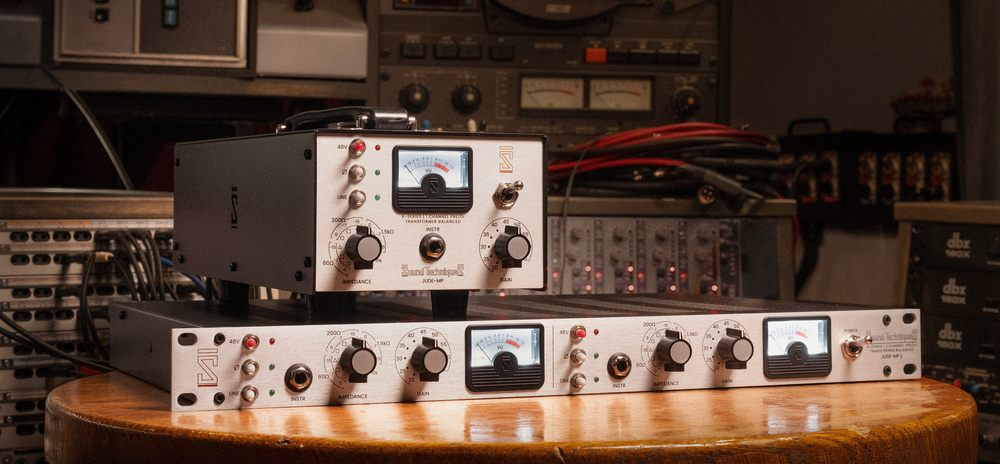 Warm Audio Jude‑MP & Jude‑MP2
Warm Audio’s latest vintage recreation focuses on preamp circuitry found in the Sound Techniques A‑Range, a British‑made console that helped to shape the sound of records by the Beatles, David Bowie, Elton John, Queen, Paul McCartney, Jeff Beck, Fleetwood Mac, the Who and the Rolling Stones. Developed in collaboration with Sound Techniques themselves, the Jude Microphone Preamp — named thanks to the A‑Range console’s use on the Beatles’ ‘Hey Jude’ — is based on designer Geoff Frost’s original schematics, and manufactured to Sound Techniques’ exact specifications.
One of the standout features of the design is the Z‑Match control, which offers nine switchable input impedances that Warm Audio say can help to extract distinctly different tones from the same microphone. How dramatic the change is will, of course, be dependent on the mic in use — dynamic mics and those with output transformers tend to be the most responsive to input impedance changes. Single‑ and two‑channel versions of the new arrival are available (the Jude‑MP and Jude‑MP2), and each unit is hand‑wired before being thoroughly inspected and tested by Warm Audio’s in‑house team.
Jude‑MP $749, Jude‑MP2 $1399.
Jude‑MP £699, Jude‑MP2 £1349. Prices include VAT.
Expressive E Noisy 2.6
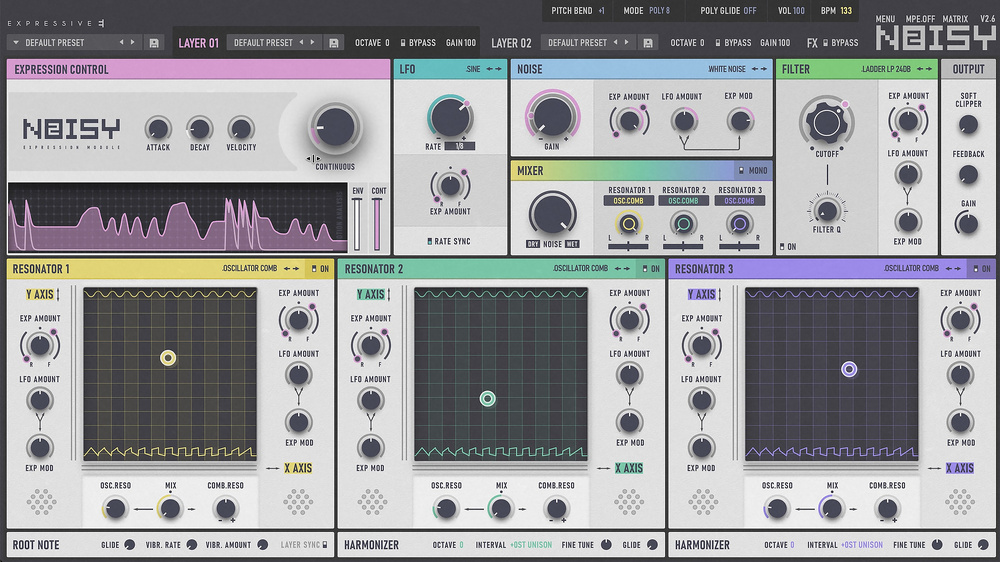 Expressive E Noisy 2.6
Expressive E are understandably best known for the Osmose — and its more recent controller‑only sibling the Osmose CE — but they frequently collaborate with software developers to create patch collections that take full advantage of MPE controllers, as well as offering a few of their own virtual instruments. One such example is Noisy, a versatile soft synth that offers a mixture of virtual analogue and physical modelling, and which has recently received a major upgrade.
With the launch of version 2.6, the instrument has gained five new engines and resonator types: Unison, FM, FM Feedback, Harmonics and Wave Map, additions that greatly expand its tonal palette and cater to everything from classic leads and pads to experimental modern timbres. The onboard effects collection has been kitted out with no fewer than nine new processors, and the update also introduces five new noise sources and an additional LFO shape. As you’d expect, MPE integration is at the forefront, and those with compatible controllers will enjoy 650 dedicated presets that offer a wealth of per‑note control and performance gestures. Those with standard controllers haven’t been left out though, as Noisy 2.6 also includes 750 standard MIDI patches.
€149
€149 including VAT.
www.expressivee.com/88-noisy-two
Origin Effects EQDeluxe
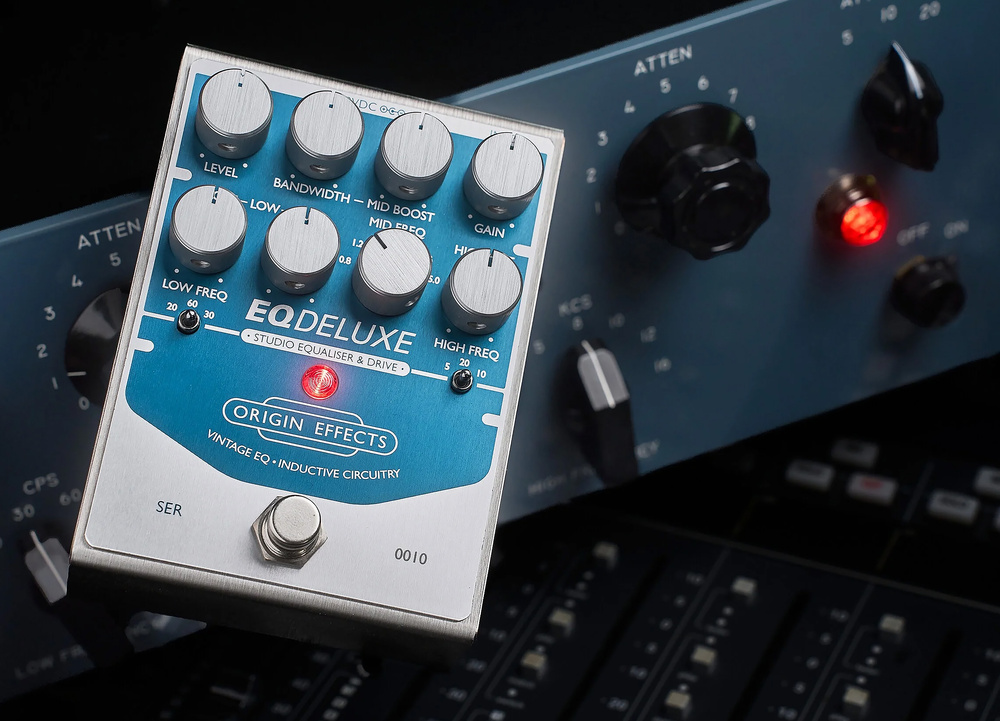 Origin Effects EQDeluxe
There are a few pedals in the Origin Effects line‑up that draw their inspiration from classic studio hardware. Their debut pedal, the Cali76, was inspired by company founder Simon Keats’ experience of playing through a pair of UREI 1176 compressors that he was repairing, and there are currently three variants of that design in the company’s product range. A more recent example is the DCX Boost, which offers the company’s take on Universal Audio’s 610 preamp circuitry, and now the Pultec EQP‑1A has become the latest bit of sought‑after gear to be recreated in pedal form.
Origin Effects say that the new EQDeluxe precisely replicates the behaviour of an EQP‑1A, with independent cut and boost controls on the low‑frequency band making it possible to create the unique curves for which the original design is renowned. The low band can be set to 20, 30 or 60 Hz, while the inductor‑based mid band has been tailored to have maximum impact on your guitar sound, with boost on offer at a choice of six centre frequencies (0.8, 1.2, 1.6, 2.4, 3.6 and 5 kHz). A high‑frequency band provides a shelving cut at 5, 10 or 20 kHz. In addition to its primary function as an EQ, the pedal also incorporates a solid‑state recreation of the EQP‑1A’s valve‑based push‑pull output stage, adding some subtle saturation that contributes to the EQDeluxe’s vintage‑inspired sound.
$449
£348.99 including VAT.
origineffects.com/product/eqdeluxe/
Fender Motion Controllers
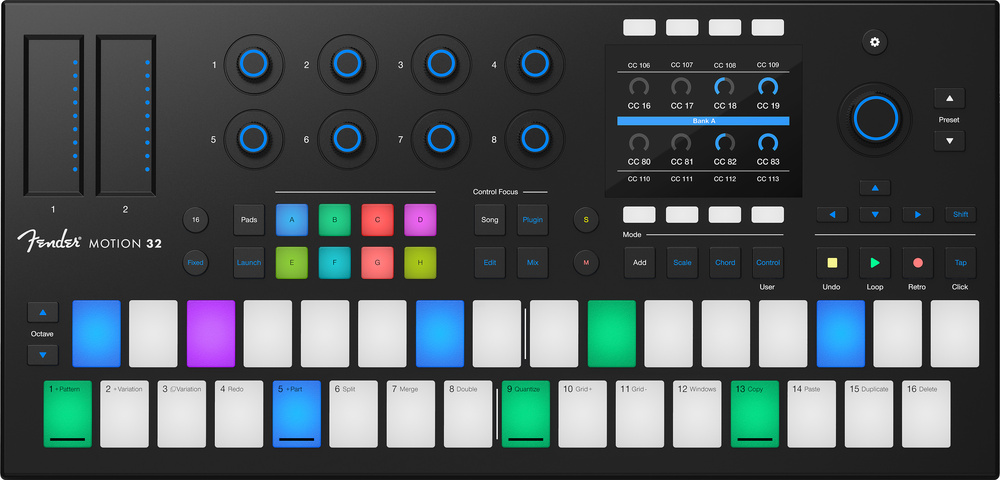 Fender Motion 32
Shortly before NAMM 2026, the news arrived that PreSonus’ Studio One DAW software, along with their Quantum and AudioBox interfaces, were to be rebranded as Fender products. And at the show itself there was another surprise, as alongside the first builds of what is now known as Fender Studio Pro, the company were displaying a pair of MIDI controllers sporting Fender logos. Now officially launched and known as the Motion 16 and Motion 32, the debut controllers are each equipped with a set of Fatar drum pads (16 and 32 respectively), a set of RGB encoders, a touch strip, an array of function buttons and a set of transport controls. They’ve been designed with performance in mind, and come loaded with over 30 chord progressions and scales that make it simple to improvise and experiment with new parts.
As you might expect, both devices boast tight integration with Fender Studio Pro, with users benefitting from pre‑mapped hands‑on control over everything from virtual instruments and plug‑ins to new audio tracks. That doesn’t mean other users are left out, though; Fender say that the two controllers are supported in all other major DAWs. In addition to USB, both units are equipped with MIDI I/O on 3.5mm TRS sockets, too, so they have something to offer those working with hardware‑based drum machines, synths and modular rigs. While we’re yet to try them out, they seem to be priced very reasonably for what’s on offer.
Motion 16 $269.99, Motion 32 $329.99.
Motion 16 £239, Motion 32 £299. Prices include VAT.
fender.com/collections/fender-motion-controllers
KRK V Series Five
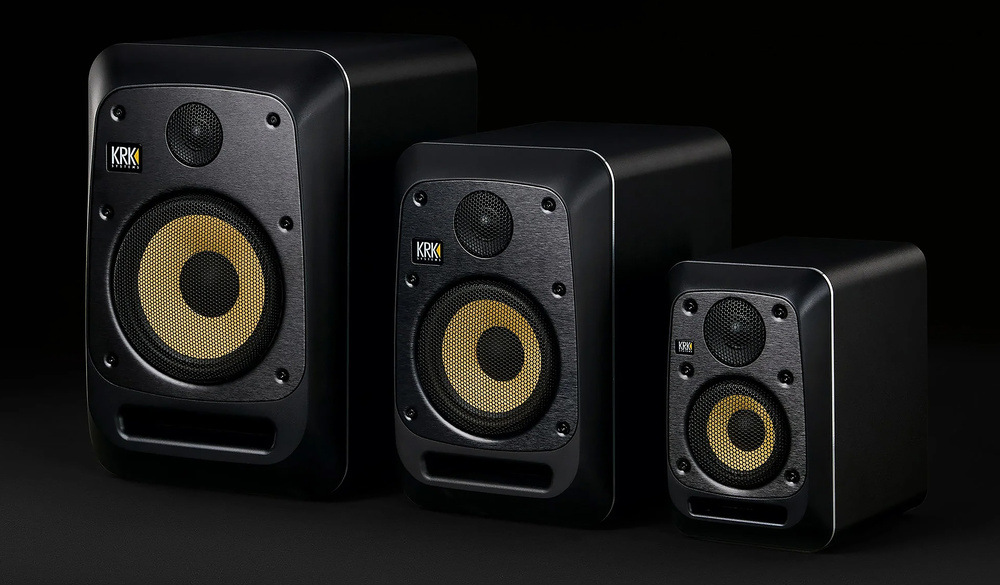 KRK V Series Five
Now in its fifth generation, KRK’s ever‑popular flagship monitoring range has just been treated to a design overhaul and some helpful new wireless control functionality. The V Series Five range comprises three models: the compact V4, which features a four‑inch woofer, spans a frequency range of 48Hz‑40kHz and achieves a maximum of 113dB SPL; the V6, which incorporates a 6.5‑inch woofer, extends low‑frequency performance to 40Hz and delivers up to 118dB SPL; and the largest model, the V8, which has an eight‑inch woofer, extends down to 32Hz, and reaches a peak output of 121dB SPL. All three employ woven Kevlar woofers housed in cast‑aluminium frames, a design choice which KRK say lowers distortion and delivers a more linear low‑frequency performance, while the top end is taken care of by one‑inch silk‑dome tweeter that features an integrated waveguide designed to enhance off‑axis consistency and improve stereo imaging.
The headline feature of the refreshed line‑up is the introduction of KRK Mesh, a feature which provides wireless control of the monitors’ DSP configuration from an iOS device using the KRK Control app. Thanks to the integration, users can now control the likes of system settings, EQ profiles, level management and performance optimisation from the comfort of their listening position, while linking options make it possible to configure everything from a basic stereo setup to a large immersive rig.
From $649 per monitor.
From £585 per monitor including VAT.
www.krkmusic.com/collections/v-series-five-powered-monitors
PSPaudioware BBDelay
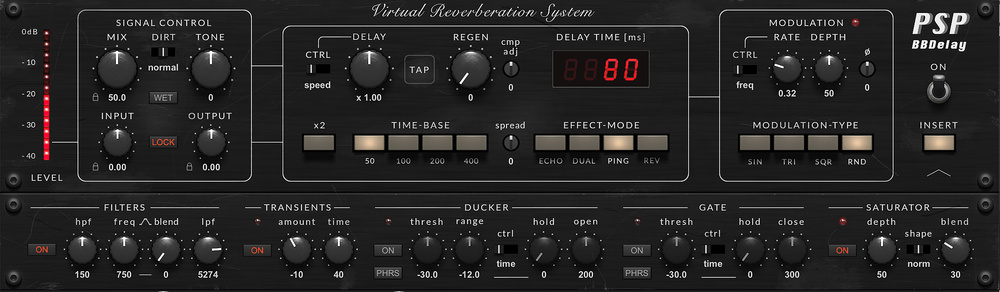 PSPaudioware BBDelay
At SOS's recent GearExpo UK show in London, PSPaudioware were showing off an early build of a new delay plug‑in inspired by the Dynacord VRS 23, and the final version has recently emerged in the form of PSP BBDelay. Said to be one of the company’s most ambitious projects in recent years, the new arrival promises to capture not only the sound of the classic bucket‑brigade‑equipped hardware, but also the ‘musical unpredictability’ that helped make it so popular. Rather than sticking to a meticulous emulation, PSP have taken the opportunity to kit the plug‑in out with some additional tools that weren’t present on the original unit. Along the bottom of the GUI you’ll find high‑ and low‑pass filters, ducking and gating tools, a transient shaper and an analogue‑inspired saturation section. We’ve already put PSP BBDelay to the test, and you can find our review in this month’s issue here.
$99
$99
www.pspaudioware.com/products/psp-bbdelay
Rupert Neve Designs Plug‑ins
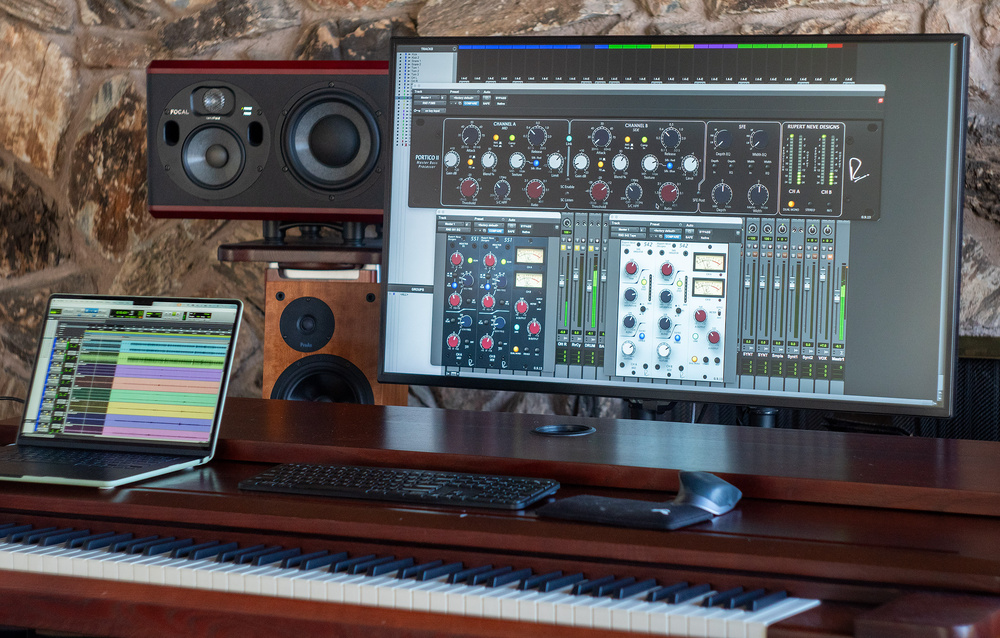 Rupert Neve Designs Plug‑ins
Rupert Neve Designs’ latest announcement is a significant one, as it marks the company’s first foray into software. The launch delivers official emulations of not one but three praised RND hardware designs, all of which have been created in a collaboration with plug‑in experts McDSP. The units in question are the 551 EQ and 542 tape emulator 500‑series modules, along with the Portico II Master Bus Processor, all of which directly replicate the functionality of their physical counterparts, with the exception of a few minor changes related to stereo operation. We won’t say too much here, though, as you can find our full review elsewhere in this issue!
551 & 542 $129 each, Master Bus Processor $199.
551 & 542 $129 each. Master Bus Processor $199.
Arturia Pure Sub
 Arturia Pure Sub
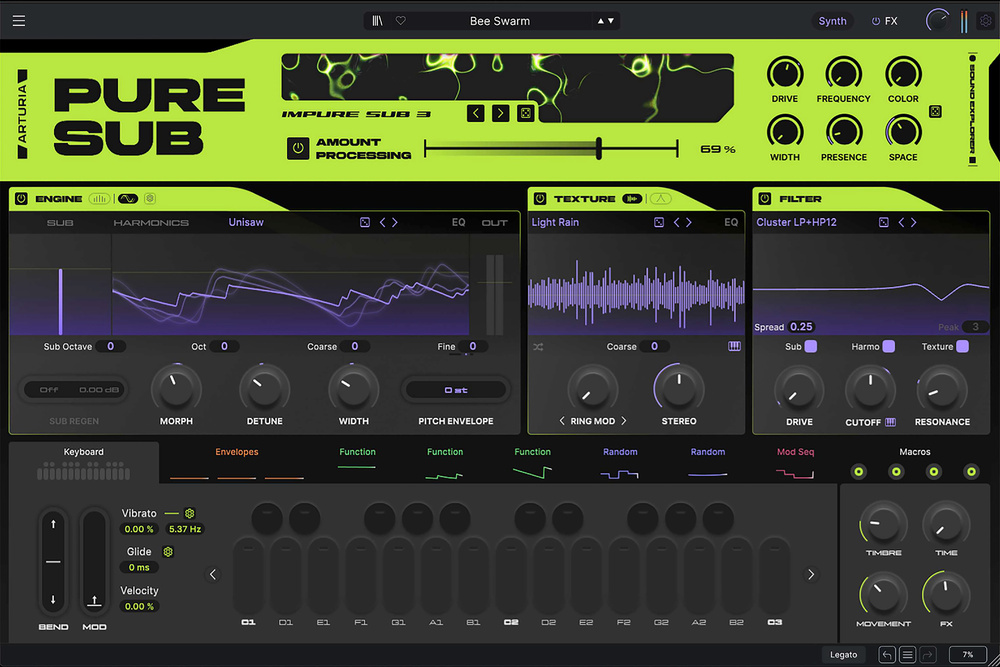
Designed specifically for bass‑heavy electronic music, the latest plug‑in from Arturia aims to offer an all‑in‑one solution for crafting hard‑hitting sub‑basses. Aptly named Pure Sub, the new instrument divides sounds into three elements: Sub, Harmonics and Texture, each of which is equipped with its own set of dedicated controls. It’s capable of creating your basic 808‑style hits and Reese basses, but also includes an array of noise sources, filters and effects that facilitate more complex, evolving sounds. There’s plenty of modulation on hand, including three envelopes and six customisable modulators — if you’re feeling particularly experimental, you can even modulate the modulators! The plug‑in also offers full support for MPE controllers.
$79
€79 including VAT.
Dreamtonics Instrument X
 Dreamtonics Instrument X
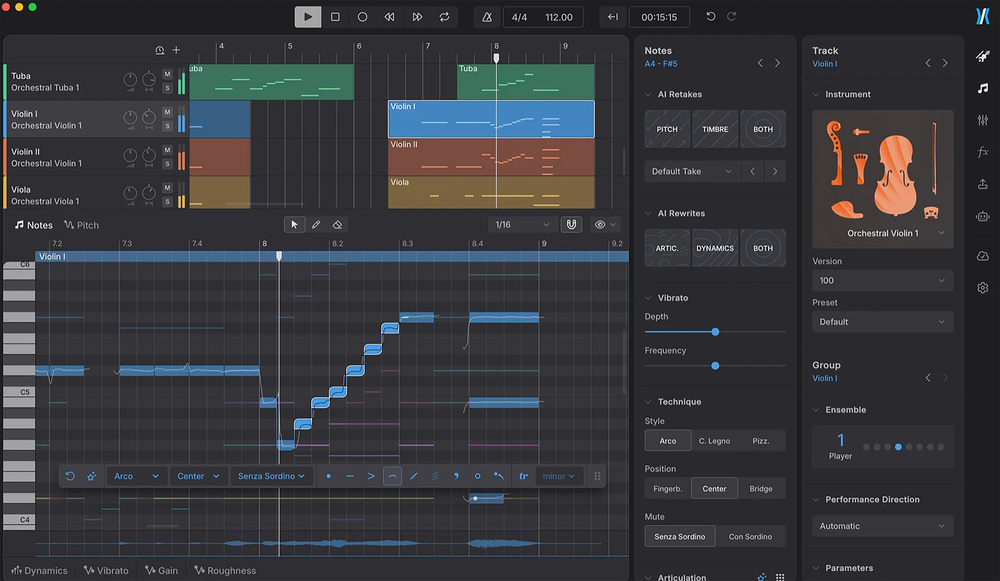
Dreamtonics, the Japanese developers behind Synthesizer V Studio and Vocoflex, have now turned their attention from vocal synthesis to orchestral instruments. Aiming to offer a flexible and intuitive alternative to traditional sample libraries, Instrument X uses the company’s expertise to model the sound of a whole host of standard orchestral instruments, and at launch it comes with a selection of 15 string, brass and woodwind instruments that can be purchased individually or in various bundles.
Given that it relies on modelling rather than sampling, the software can offer extensive control over the likes of bowing techniques and breath control, and includes a Smart Articulation mode that’ll automatically trigger different playing techniques based on the user’s playing. In‑depth per‑note editing is still available for those who like to get a bit more involved, and it’s even possible to blend overlapping techniques. The attention to detail extends beyond the instruments themselves, and Instrument X comes equipped with a choice of virtual mic signals that emulate spot mics, Decca Tree arrays and spaced stereo pairs; it also offers detailed room modelling and spatial positioning tools. It sounds as though Dreamtonics plan to introduce additional instruments beyond the launch line‑up, so it’ll be interesting to see how it develops over time.
From $99.
From $99 including VAT.