

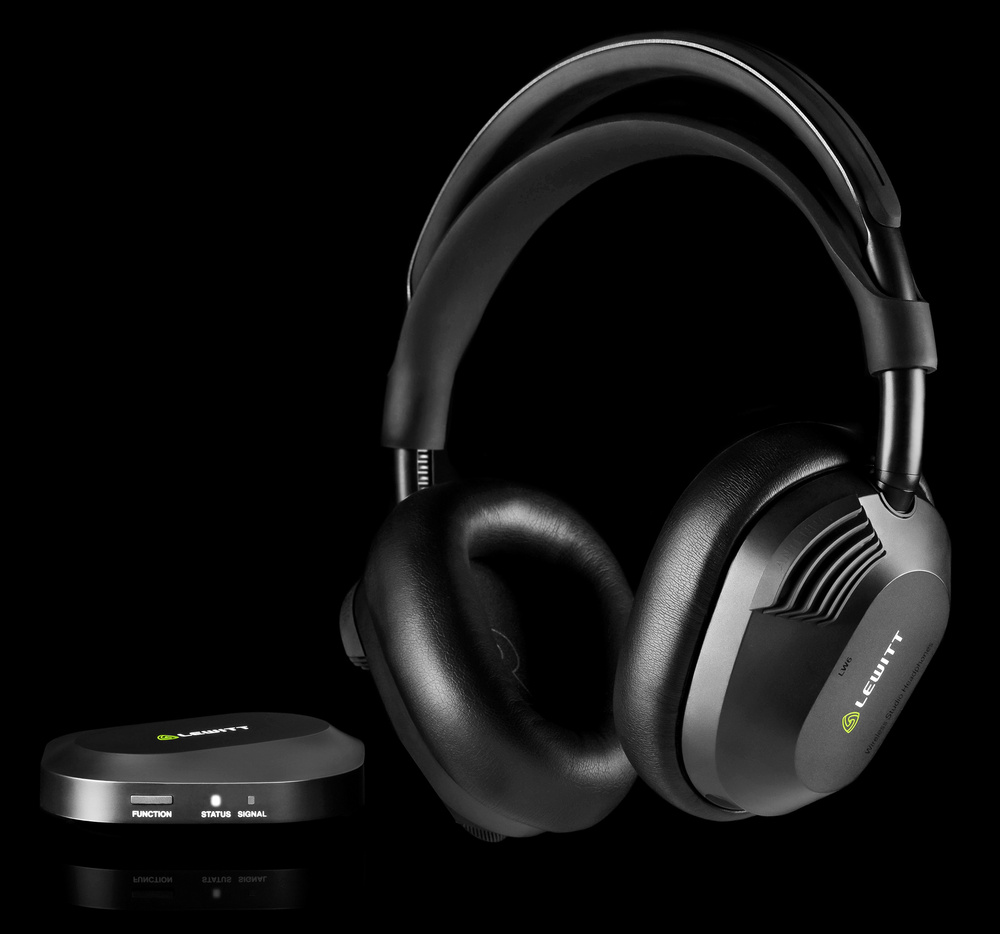
For wireless headphones to be usable for studio applications, latency needs to be minimised. Have Lewitt Audio gone far enough?
If the general public are listening to your music, they are most likely doing so on wireless headphones or earbuds. If you perform it live, you may well rely on a wireless in‑ear system to monitor yourself and your bandmates. But until now, there have been limited applications for wireless headphones in the studio.
It’s not that they don’t have the potential to be useful in a studio context. It’s more that the down sides have tended to outweigh the potential advantages. Complexity of setup, limitations on battery life, compromised sound quality through lossy data compression and above all latency are all issues that mitigate against going wireless. But that doesn’t stop us cursing when we inevitably trip over a cable. If you’ve sent your coffee cup flying across the room one too many times, what are the options?
Bluetooth is an established technology that is adequate for casual music listening, but it doesn’t offer lossless transmission, and the latency is usually way too high for real‑time input monitoring. The newer Bluetooth LE and LC3 codec reportedly bring this down significantly, but not to the levels required for studio applications. So if you want to go down this route, you’ll need to explore proprietary systems from the likes of AIAIAI, AlphaTheta, Yamaha — and, as of now, Lewitt Audio.
Audio transmission uses a proprietary protocol called RealSound, which is lossless and said to operate with a sub‑6ms latency.
Cut The Wires
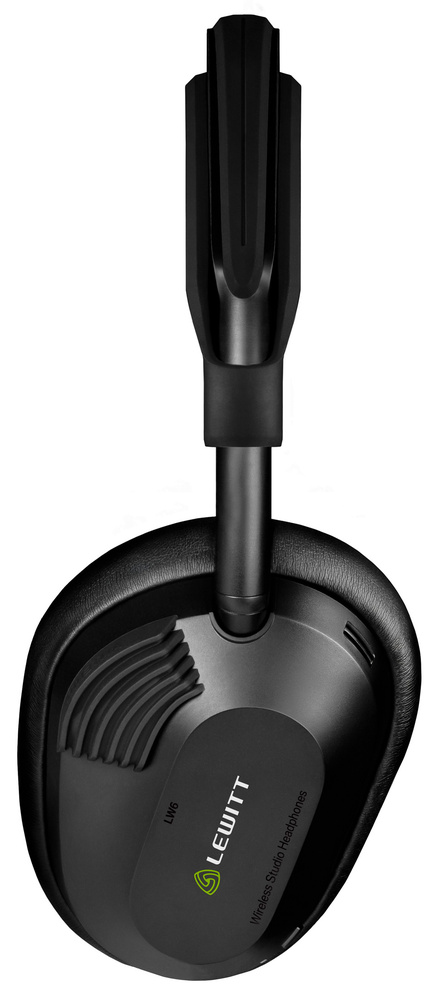 The LW‑6 headphones feature prominent antennae at the top of each earcup.
Described as “the world’s first wireless studio headphones with uncompressed, ultra‑low‑latency performance”, Lewitt’s LW‑6 is a complete wireless system designed especially for studio applications. The principal components are a pair of wireless headphones and a bus‑powered USB device that acts as a transmitter and optionally as your audio interface. The headphones themselves are a closed‑back, active design, although there’s no active noise cancelling. They support Bluetooth, but under normal circumstances, this is used only to send control signals to and from the Lewitt Headphones software running on your computer or mobile device. Audio transmission uses a proprietary protocol called RealSound, which is lossless and said to operate with a sub‑6ms latency.
The transmitter is a small, square black box with a Type‑C USB port and two mini‑jacks labelled In and Out. These have several possible applications. You could connect a pair of conventional headphones to the Out socket and use them simultaneously with the LW‑6, so that two people can listen at once. And you can connect the In socket to the headphone output on another audio interface, thus escaping the need to aggregate the LW‑6 or use it as your only interface. The output has a digital volume control which is governed from the Lewitt Headphones software.
The headphones feature distinctive asymmetric earcups, with shells made from hard plastic. Both earcups have antennae with rubberised fins at the top rear. At the base of the left earcup you’ll find a mini‑jack socket, allowing the LW‑6 to receive its input from a wired connection. It always operate as an active pair of headphones, though, even in this mode. Next to this are an on/off button and a USB‑C socket; this is mainly for charging, but if you prefer, the LW‑6 can be used as a wired USB audio device. The right earcup sports a rotary encoder, for adjusting volume, plus three further control buttons.
The construction of the headphones is a little unusual. The frame is formed of a single piece of curved metal, with the earcups mounted on gimbals that allow freedom of rotation forward and back, but not up and down. There’s no way to extend or shorten the basic geometry, but smaller skulls are accommodated using an additional piece of rubberised material that acts as a headband and can be slid up and down as needed. The design means that there’s a fair amount of clamping force on each earcup, so...
You are reading one of the locked Subscribers-only articles from our latest 5 issues.
You've read 30% of this article for FREE, so to continue reading...
- ✅ Log in - if you have a Digital Subscription you bought from SoundOnSound.com
- ⬇️ Buy & Download this Single Article in PDF format £0.83 GBP$1.49 USD
For less than the price of a coffee, buy now and immediately download to your computer, tablet or mobile. - ⬇️ ⬇️ ⬇️ Buy & Download the FULL ISSUE PDF
Our 'full SOS magazine' for smartphone/tablet/computer. More info... - 📲 Buy a DIGITAL subscription (or 📖 📲 Print + Digital sub)
Instantly unlock ALL Premium web articles! We often release online-only content.
Visit our ShopStore.