

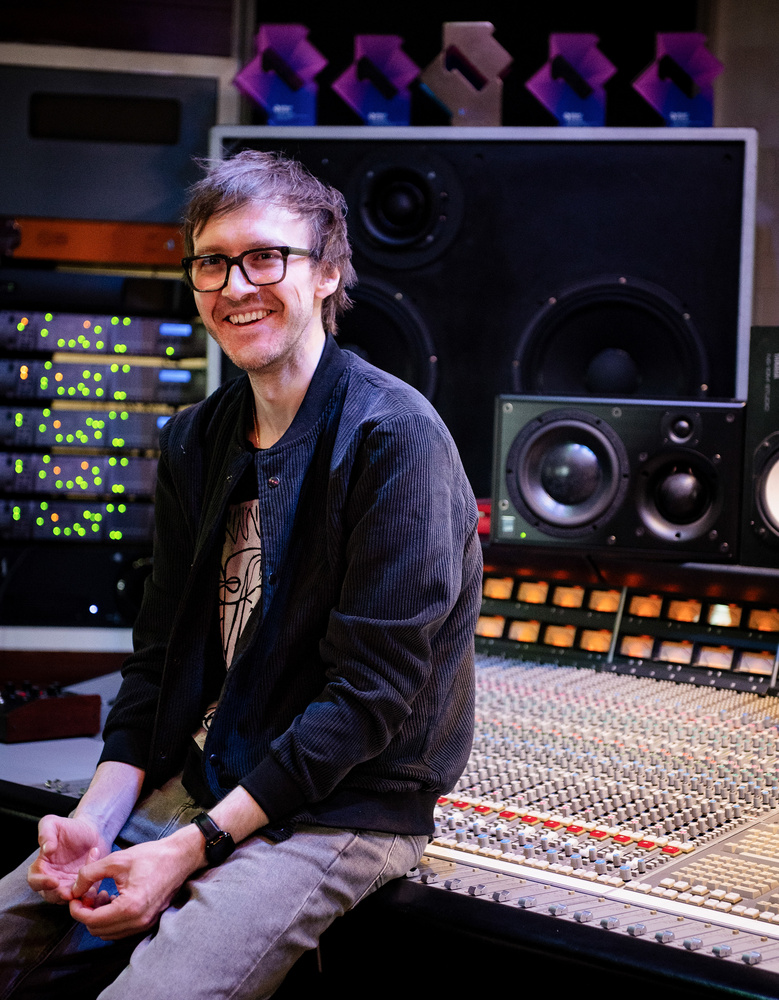
 David Watts at The Chairworks.
The Reytons have proved that selling records and CDs to a loyal fanbase is still a viable business model. David Watts is the producer behind those discs.
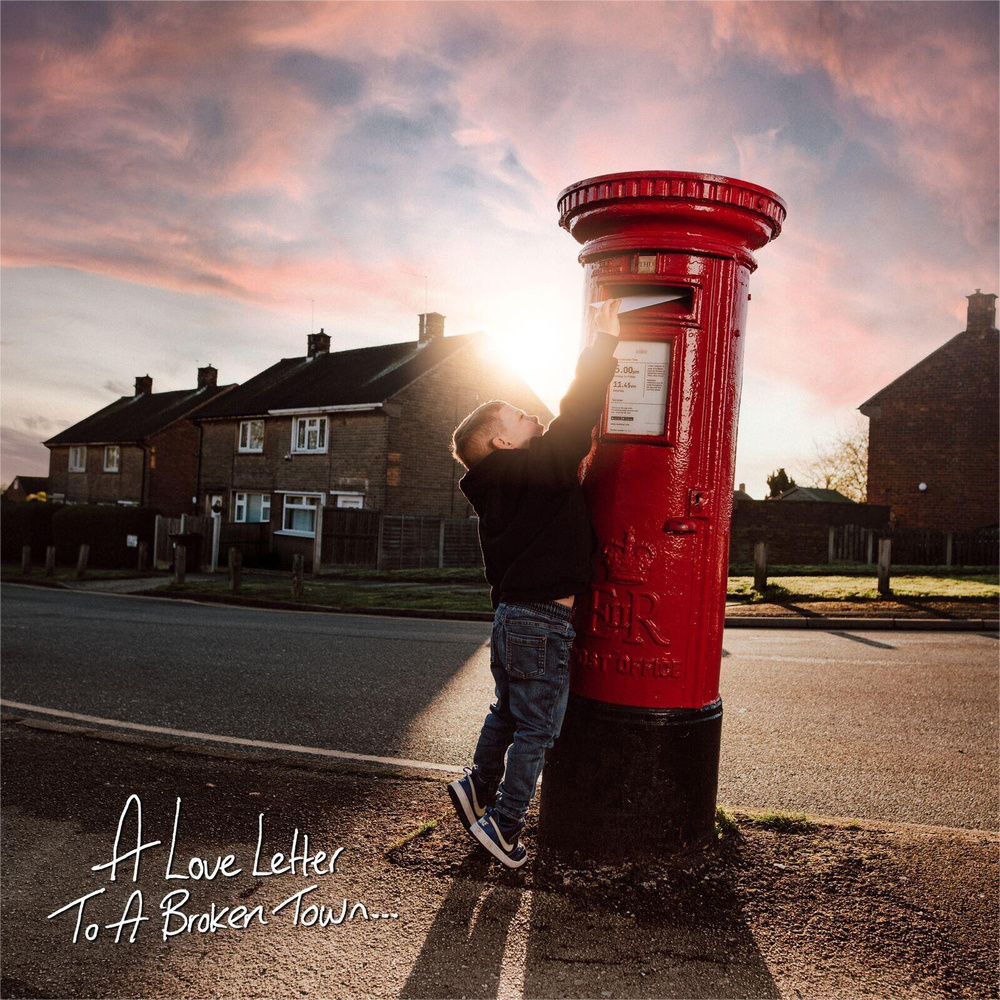
Rotherham band the Reytons topped the UK charts in 2023 with their second album What’s Rock ’N Roll. Given that the band are independent, and had no support from media or radio, this was an astonishing achievement. The band’s fourth album A Love Letter To A Broken Town then repeated the feat this August. Once again self‑released, it was, according to singer Jonny Yerrell, “the first album in history to reach number one in the Official Charts without a single play on mainstream radio”. What’s more, the Reytons achieved this by selling physical media. A Love Letter To A Broken Town reached the top spot off the back of 15,031 album sales, 14,282 of them physical.
The Reytons are very rooted in Yorkshire, so it is fitting that they recorded their albums in The Chairworks studio in Castleford, West Yorkshire. The main man at The Chairworks is David Watts, who produced, mixed and engineered all Reytons’ albums to date, plus two of their EPs, and whose other credits include Kaiser Chiefs, Richard Hawley, the Fall, Paul Heaton & Jacqui Abbott and Orchestral Manoeuvres In The Dark. His work with the Reytons started with a phone call in 2021.
“The Chairworks is quite a big studio space, and many bands book it for that reason,” explains Watts. “The Reytons booked the studio for some drum sessions during Covid lockdowns. I was the in‑house engineer, and we hit it off, and I went on to do their fourth EP May Seriously Harm You And Others Around You and their first album, Kids Off The Estate [both 2021], which contained tracks from their previous EPs and a few new songs. For the second album they had a six‑week window at The Chairworks to write and record the album, and for me to produce and mix it. It was crazy. In the process we uncovered a good way of working together. I think we’re a good blend. We do a lot of things without talking too much. Things just happen.”
Big Chair
Originally from Middlesbrough, Watts grew up playing guitar in bands, but “always had the recording bug. I remember watching a documentary about the making of Nirvana’s Nevermind, and being fascinated by it. My first studio job was in Eliot Kennedy’s studio in Sheffield, doing the classic thing of starting with making tea, and ending up being his engineer. I learned from Sound On Sound, YouTube, Gearspace and mostly figuring things out myself. In 2010, I did a song called ‘Just Drive’ with Alistair Griffin that was used by the BBC as an end‑of‑Formula‑1 season montage. It ended up getting into the UK top 40 singles chart on the back of that.
“It made me decide to go independent, and over time I drifted towards The Chairworks. When I first walked into this studio, I couldn’t believe what I was looking at. There were original Pultecs, LA‑2As, Telefunkens, Neves, Neumanns, tons of keyboards, guitars, amps, pedals and a 48‑channel SSL 4000G+ console. Everything you could dream of. It was a ridiculous setup, like an oasis in the middle of a desert. I started doing a few sessions here, and then gradually ended becoming part of the furniture. I’ve been here for about 10 years now, and the last few years I’ve been renting the whole place as my own studio.”
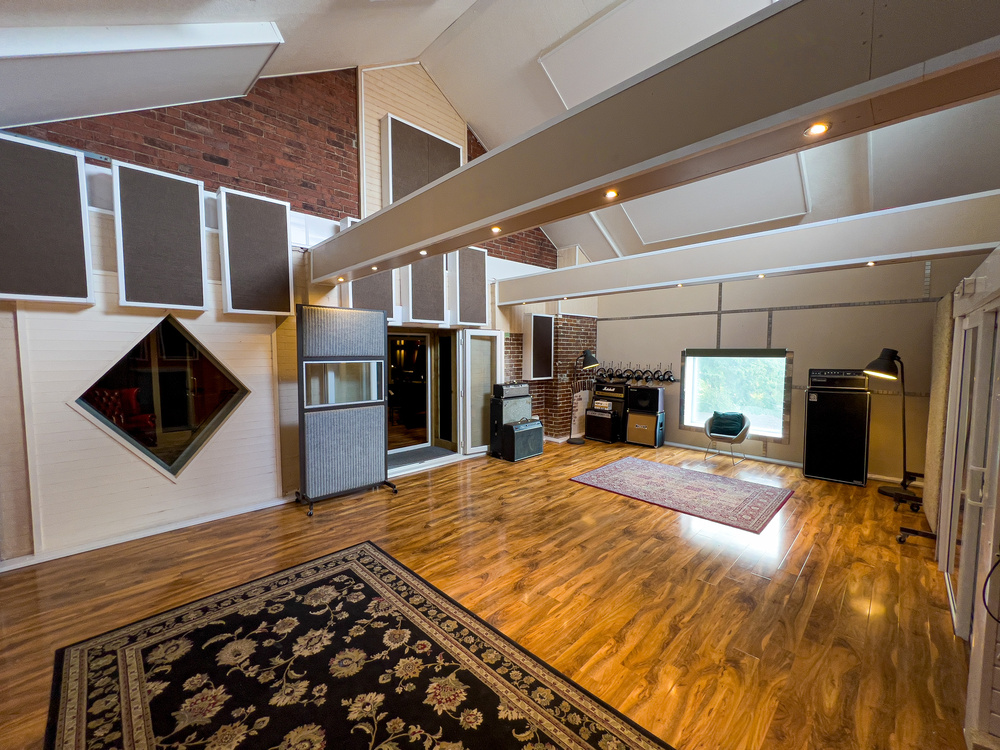 The Chairworks boasts an impressive live room.
Also featuring residential accommodation and mastering facilities, The Chairworks is a one‑stop facility, and with Watts functioning as a one‑stop studio professional, it means that creating a Reytons album is, confirms Watts, “an all‑in‑one‑thing. I’m there from the very beginning to the end. What happens is that they tend to come in with no songs prepared and we start from scratch. Joe [O’Brien], the guitarist, is always putting together tracks and demos in his spare time, so he usually has some ideas to listen to, but generally speaking, day one of the album is me sitting in front of an empty Pro Tools session. Next up, I’ll program a drum loop, and Joe will be improvising over that. I’ll plug him straight into Pro Tools, in which I use software amps like UAD Paradise Guitar Studio or Neural DSP.
“We’ll get a rough sound together, and I’ll be throwing on plug‑ins, like the Strymon BigSky reverb, a Moogerfooger filter, a tremolo or other things. While he’s playing I’m literally clicking about, throwing on sonic colours, essentially building a track while he’s playing to help inspire him. Joe is reacting to all that, and there’ll usually be a moment when we’ll look at each other, or I, or one of the band members, will say, ‘Oh, that’s good.’ It’s a very free environment. We don’t really sit down and discuss what we’re going to do. We just start, and then we capture the moments where it’s all clicking together. The only discussion may be something like Joe saying, ‘I’m in the mood for doing an energetic, big riff song,’ or ‘Let’s try and do one that’s a bit more chordy.’ So I’ll have a rough direction. But for the rest it’s very much stream‑of‑consciousness writing, where he’s playing until something happens.”
Parallel Production
“Once Joe has an idea that everyone likes, we’ll get it down and create an eight‑ or 16‑bar loop that can be a potential verse or chorus, and Jonny will go into the vocal booth to see what he can come up with. On previous albums we often developed each idea to a full backing track, but if Jonny then struggled to come up something, we’d have wasted a lot of time. So with the new album we kept things simple and we just created basic eight‑ or 16‑bar ideas. Jonny would then take 45 minutes or an hour or so to come up with his vocal parts, and while he was doing that, Joe and I would start another idea. Jonny would come in after an hour or so to play everyone what he’s got, and he then would go in again to start working with a new eight‑ or 16‑bar loop, while everyone else is fleshing out what he did, because now we have a vocal over a basic loop. It was a bit of a conveyor‑belt process, but it worked well, and for the new album the band ended up with about 60 ideas.
“We’re at no point thinking that we’re just creating a demo, because every element can potentially end up in the final mix. Even with the vocal takes Jonny does when first trying out ideas, there’s usually one or two cases on each album where he absolutely nails the delivery on a certain section and we keep it in the final mix. Jonny has a small studio setup in the vocal booth, with Logic, a Shure SM7B mic and KRK speakers....
You are reading one of the locked Subscribers-only articles from our latest 5 issues.
You've read 30% of this article for FREE, so to continue reading...
- ✅ Log in - if you have a Digital Subscription you bought from SoundOnSound.com
- ⬇️ Buy & Download this Single Article in PDF format £0.83 GBP$1.49 USD
For less than the price of a coffee, buy now and immediately download to your computer, tablet or mobile. - ⬇️ ⬇️ ⬇️ Buy & Download the FULL ISSUE PDF
Our 'full SOS magazine' for smartphone/tablet/computer. More info... - 📲 Buy a DIGITAL subscription (or 📖 📲 Print + Digital sub)
Instantly unlock ALL Premium web articles! We often release online-only content.
Visit our ShopStore.