

 Photo: RDNE Stock Project
Comparing your work in progress to known references can be valuable — but it can also lead you astray!
A reference track is a measuring instrument. Most of the trouble starts when it becomes a verdict.
A client sent me three references and asked which one we were aiming at. All three were contemporary pop masters: dense, bright, and sitting at a level that made his own mix sound thin the instant he switched. He had been working against them for a fortnight. What he had at the end of it was louder, flatter, harder in the upper mids, and further from his song than the version he started with.
That is the failure this article is about, and referencing did not cause it. What caused it was referencing with no condition under which to stop.
What A Reference Is Actually Good At
Used properly, a reference does a narrow and valuable job. It tells you how your tonal balance compares against a record you already know translates. It tells you where the genre typically puts the vocal, and whether yours is sitting there. It tells you whether your low end has comparable extension, and separately whether it has comparable control, which are different questions that a single glance at a meter will conflate. It gives you a plausibility check on density: whether the amount of information you are asking a listener to hold is normal for this kind of music, or whether you have quietly written a much busier record than you think you have.
Those are calibration tasks. For calibration, a good reference is the best tool available and nothing else comes close. But it cannot tell you whether the song is working. It cannot tell you whether the chorus lifts. Most importantly, it cannot tell you whether the distance between your mix and the reference is a mixing problem at all — and that is where the real damage is done.
A commercial record you admire is the end product of writing, performance, tracking, editing, arrangement and production decisions taken months before anyone opened a mix session. If the reference has a vocal that sounds enormous, some of that is the mix and a great deal of it is the room, the microphone, the performance, the comping, and the fact that the arrangement got out of the way to make space for it. You cannot mix your way into a different arrangement. Referencing will go on telling you that you are not there yet, correctly, and no amount of work on the mix bus will close a gap that was opened during tracking.
Loudness Is Not A Matter Of Taste
Almost every spiral I see begins with a level difference. The reference is louder, the louder version sounds better, and the mixer begins making moves to close a gap that has nothing to do with technique or tools.
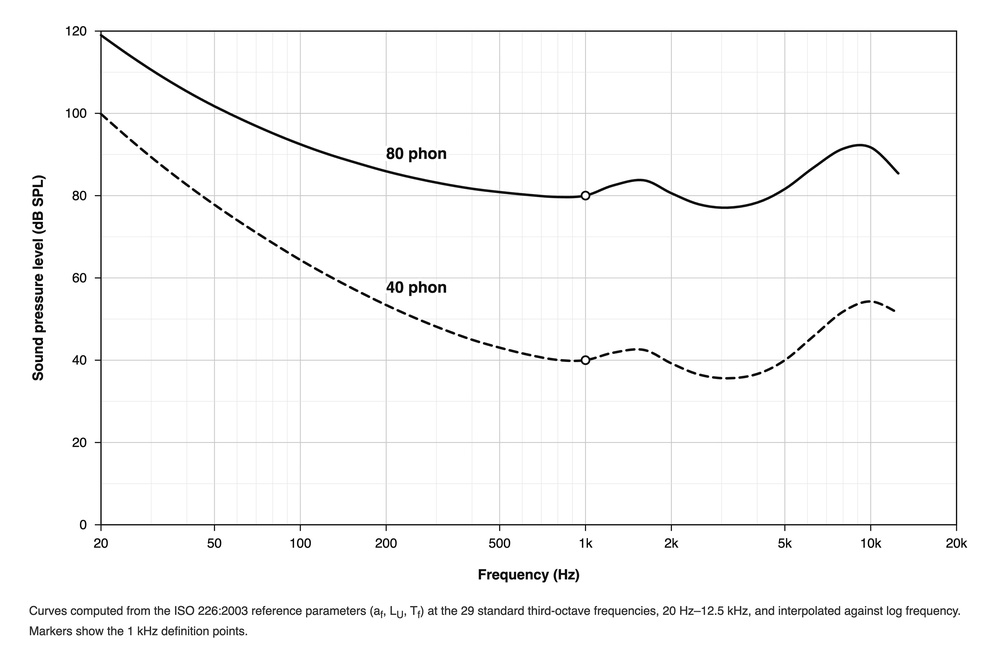 Our sensitivity to different frequencies varies with level. The consequence is that differences in volume manifest as differences in timbre.
The mechanism here is physiological rather than aesthetic. Human frequency sensitivity is neither flat nor linear with level: as sound pressure rises, sensitivity at the frequency extremes rises faster than it does through the midrange, which is what equal‑loudness contours describe. A record played 2dB louder is therefore not simply a louder version of the same record: it is audibly fuller at the bottom and more open at the top. Compare an unmatched reference against your mix and you will hear that difference, attribute it to something your mix lacks, and reach for a tool to compensate. A difference of a few tenths of a decibel is enough to skew a preference judgement. Two or three decibels will make an inferior mix win.
Level‑match before you compare anything else. There is no version of this workflow that survives skipping that step....
You are reading one of the locked Subscribers-only articles from our latest 5 issues.
You've read 30% of this article for FREE, so to continue reading...
- ✅ Log in - if you have a Digital Subscription you bought from SoundOnSound.com
- ⬇️ Buy & Download this Single Article in PDF format £0.83 GBP$1.49 USD
For less than the price of a coffee, buy now and immediately download to your computer, tablet or mobile. - ⬇️ ⬇️ ⬇️ Buy & Download the FULL ISSUE PDF
Our 'full SOS magazine' for smartphone/tablet/computer. More info... - 📲 Buy a DIGITAL subscription (or 📖 📲 Print + Digital sub)
Instantly unlock ALL Premium web articles! We often release online-only content.
Visit our ShopStore.