

 Mickie Most in his office at RAK Studios.
He was an Aldershot-born singer/guitarist who once claimed to have been "the Elvis of South Africa"; a music publisher, record label exec and studio owner whose estimated £50 million net worth placed him on the Sunday Times list as one of the 200 most successful people in Britain; a renowned talent-spotter whose biting comments about the competitors on '70s TV show New Faces turned him into a household name. Above all, he was the man whose work with the Animals, Herman's Hermits, Donovan, Lulu, the Nashville Teens, Jeff Beck, Hot Chocolate, Smokey, Mud and Suzi Quatro garnered more worldwide number one singles than any other producer in the history of the record business.
Mickie Most, who died in London on May 30, just three weeks short of his 65th birthday, had an uncanny knack for unearthing hit material and marrying it to the right artists, whether this was based on their looks or their abilities. Accordingly, while the Animals' powerful cover of the Josh White blues song 'House Of The Rising Sun' became an instant classic upon its release in 1964, topping the charts on both sides of the Atlantic and earning Most a Grammy Award, he was more often associated with catchy but lightweight MOR numbers such as the Hermits' 'I'm Into Something Good' and Hot Chocolate's 'You Sexy Thing'. In 1965, the Animals parted ways with their producer due to the overtly commercial material that he was putting their way, and despite the fact that Most launched Jeff Beck's solo career with the single 'Hi Ho Silver Lining' the following year, his production of the Yardbirds' 1967 Little Games album was fairly disastrous — the record didn't even get released in the UK.
As Most himself would subsequently admit, rock music wasn't his forté, and neither was album work. Nevertheless, his talent for creating three-minute pop gems was undeniable, and when I spoke with him back in April 1998, like all who possess a natural ability, he really did make the art of the hitmaker sound ever so simple. It isn't, of course.
A World Without Rules
"The first thing you have to understand about the music business is that there are no rules," he proclaimed. "If I was to say to you a few years ago that a group from Manchester called Oasis was going to do the Beatles and sell millions, you'd say, 'Oh come on, that's all been done.' You never can tell what's coming next. It could be anything, but normally it's a progression from America with regard to what is dictated in terms of beats per minute. American black music is the only black music. British black music is really white."
 RAK Studios: "We're talking about 60,000 feet, in St John's Wood."Indeed, despite his subsequent penchant for mainstream pop, it was African-American music that initially captivated Mickie Most, before rock & roll inspired him to pick up a guitar. As a kid, going by his original name of Michael Peter Hayes, he grew up listening to the R&B sounds broadcast by American Forces Network radio during the early-to-mid '50s. Yet it was also at around this time, when albums were too expensive for him to buy, that his preoccupation with singles took hold.
"Albums were for people who had money to burn," he asserted. "In fact, one of the only albums that I bought in those days was the first by Elvis Presley, and I still play that today, so I've certainly had my 30 bob's worth out of it! As most of the albums would just have one or two songs that you liked and the rest was throwaway, we were really hot for singles and we lived in this world of jukeboxes. That was our entertainment. Any cafe that had a jukebox and a pinball machine was Las Vegas for us in the '50s, and I don't think I ever grew out of that."
Learning to play the guitar, Michael Hayes performed semi-professionally in clubs around Central London's Soho district including the legendary Two I's coffee bar — before a pairing with a schoolfriend saw the disingenuously named Most Brothers recording for Decca during the mid-to-late '50s. Their single 'It Takes A Whole Lotta Loving To Keep My Baby Happy' was a moderate success, but this was only a precursor to the stardom that awaited the newly rechristened Mickie Most when he joined his future wife Christine in South Africa in 1959.
"Christine was from South Africa, and when she returned there her family said I would have to follow her if I wanted something more permanent," Most recalled. "They thought I wouldn't bother but I did, and they then made it clear that I would have to spend four years there as they didn't know me, which seemed sensible."
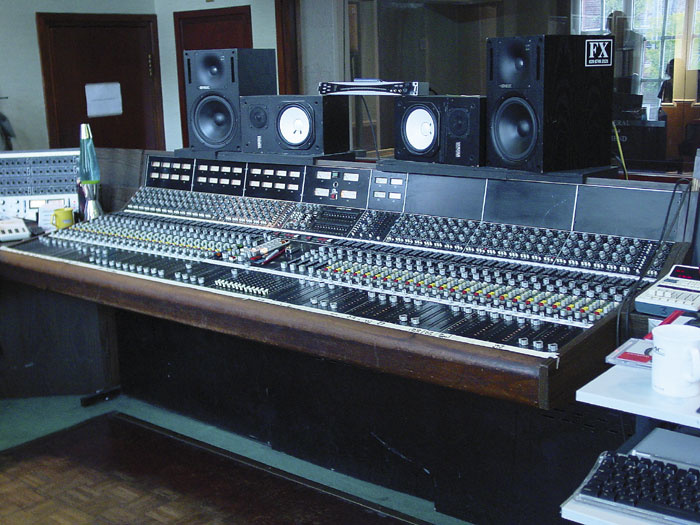 RAK Studios One (shown) and Two are thought to be the only studios in the UK with original '70s API desks.Sensible in the personal sense, maybe, although professionally such a move had to be questioned in light of the rock boom that had been taking place in Britain. Or did it? As things turned out, Elvis's army induction, Little Richard's dedication to the Church, Chuck Berry's imprisonment for statutory rape, Jerry Lee Lewis's ostracism for marrying his 13-year-old cousin, and the deaths of Buddy Holly and Eddie Cochran coincided with rock & roll taking a back seat to sterile, parent-approved pop as performed by the likes of Fabian, Frankie Avalon and Pat Boone. In South Africa, by contrast, white teens were still hungry for the kind of material that had blazed a trail just a few years before, and Mickie Most was quick to cash in on this opportunity.
Fronting a band called the Playboys, he scored 11 consecutive number ones through 1962 with covers of American hits such as 'Rave On' and 'Johnny B Goode'. What's more, he also paved the way for his future career by producing these records, before heading straight back to England after completing his four-year probation on the African continent. Once again, his timing couldn't have been better: during a 1963 package tour, performing on the same bill as the Everly Brothers, Little Richard and Bo Diddley, Most visited Newcastle's Club-A-Go-Go and saw a band on stage called the Animals.
"I immediately knew that this was what I'd been looking for since I'd arrived back in England," he recalled. "At that point the music scene was really bland, with people like Eden Kane and John Leyton, but the Beatles and their like were also just starting to hit, and so I was fortunate to be in the right place at the right time."
Studio Time
In the Autumn of 1976, with a stack of hit productions to his name, a successful record label up and running, and the profits to show for all this, Most decided to circumvent the then-crippling British tax system by investing in a recording facility, RAK Studios, in north-west London. Not perhaps the easiest way to make money, but nonetheless an appropriate move for someone in the business, and, given Most's entrepreneurial instincts, a sure-fire earner all the way. "It's made money every year for 22 years now," he commented back in 1998. "So, on top of the tax avoidance, it's been a very, very good decision. We bought the building for about £350,000 when the market was on the floor — and we're talking about 60,000 feet, in St John's Wood, a hundred metres from Regent's Park — so it was really a bargain. Then, when we sold the record company, which owned the studios [to EMI], I bought the studios back for a couple of million, and now I think they're worth about £7 million."
Independence
Most was not just fortunate, but also astute. At a time when there was only a handful of major record companies controlling matters, Most himself opted to pay for the artists that he signed and subsequently produced. "The record companies didn't like the idea of you doing things that were outside the norm," he said, "but I just signed the groups to myself and I financed them, offering them a royalty and a deal, and then it was up to me to make this deal work. Fortunately I had already been recording with EMI, and EMI were interested in what I was doing. They had a label manager there working for Motown named Derek Everett and he liked what I was doing. The first record that came out was a hit, the second record was number one all over the world, and after that I never had a problem."
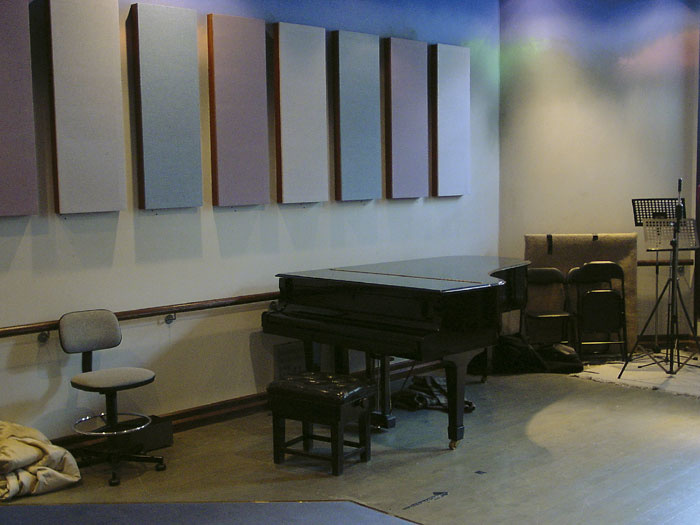 The substantial live area in RAK Studio Three.The first Top 20 hit by The Animals was a record entitled 'Baby Let Me Take You Home', on the strength of which they secured a tour supporting Chuck Berry. 'House Of The Rising Sun' was among the numbers that they performed regularly on stage, and in mid-tour Most decided to bring the band down from Liverpool to London overnight and commit their extraordinary performance of this song to tape.
"They got on the sleeper and I picked them up early in the morning along with their drum kit, amplifiers and all their gear," he recalled. "We were booked into Kingsway Recording Studio for a three-hour session from eight until 11, and by 8:15, take two, I said, 'That's the one.'"
So what to do during the remaining two hours and 45 minutes? Well, that was easy. Why not make an entire album?
"That consisted of songs that they wanted to record, really," Most explained. "Songs that they'd rehearsed and played many times as part of their repertoire, so I said, 'OK, go for it.' We did everything live, straight to mono, and that's how it all started. After that, for me, it was a case of hit after hit. The next one was 'Tobacco Road' with the Nashville Teens, followed by 'I'm Into Something Good' with Herman's Hermits."
This last was a million miles away from the earthy R&B sensibilities of the Animals. Mickie Most, don't forget, was into R&B and rock & roll, but, as time would soon tell, he was also equally into capitalising on his gift for spotting commercially viable acts and matching them up with the right songs.
"I had this Goffin and King tune, 'I'm Into Something Good', which was really catchy, and I really thought it needed somebody youthful-looking," he remembered. "Herman's Hermits' management had called me many times and asked me to take a look at them, so I said, 'Send me a photograph,' and as soon as I saw the photo I envisaged Peter Noone as a young [President] Kennedy. I quickly went up to Bolton, where the band was playing, and they were doing all of the pop R&B stuff such as 'Mother In Law', 'Poison Ivy' and so on. I'd brought 'I'm Into Something Good' with me and they fitted it really well, so I told them to learn the song by Sunday and we would record it then. That's basically what happened and it was as simple as that."
Atlantic Crossings
After these early successes, Most soon settled into a life of transatlantic commuting. "I used to spend every other week in New York or Los Angeles, scouring around places such as the Brill Building for material. I had all of these appointments set up for me, so when I arrived there on a Sunday night I'd have my schedule and then from Monday morning to Friday evening I'd visit publishers and listen to tunes. On Friday night I'd return to London, record the material the following week and then go back to the States the next Sunday. That's all I did for five years."
Sounds very straightforward, doesn't it? However, while a lot of people think they can spot a hit record, most potential hits never even make it into the lower regions of the charts. So what were Most's criteria when trying to identify the kind of material that would prompt record-store cash registers to ring? Well, to quote the man himself, "There has to be that bit of magic. The song, the recording; the whole thing has to add up in my mind to a hundred, and when I hear it I go, 'That's it!'
 The old and the new: analogue 24-track and Pro Tools hardware in RAK Studio One."At other times I might hear a great song, but the arrangement isn't doing it for me, so I'll rework it and often that'll turn out to be what is needed. I just seem to have the ability to do that, I don't know why. There again, there are also times in your life when you're wrong — perhaps it was the wrong timing for the record; it came out too early or too late, we didn't pick up the airplay, whatever — but if it doesn't succeed, it doesn't succeed, and making excuses is a negative. You just have to say, 'OK, I goofed, I've got to try harder next time.'"
As the '60s moved on, the record business was rapidly evolving, rock music was being taken more seriously and priority was increasingly being given over to album sessions. Didn't this necessitate much more time being spent in the studio? "They certainly all took longer than 15 minutes," was Mickie Most's reply. "I mean, that was just one of those freak things, but still, as far as I'm concerned, once a performance is on tape it's just pointless to keep going on. With 'House Of The Rising Sun' I realised I'd got it, and I must have got it because the record's sold millions and millions for more than 30 years. I'm sure if I'd spent another two weeks doing it I would never have improved on it. In fact, it would probably have got worse.
"As we moved towards the late '60s things were changing technically. We went from mono to stereo, four-track to eight-track to 16-track, and things obviously began to take longer, but I personally like to be in and out of the studio. I just can't keep things up for that amount of time; it's too long. Also, as you get older you don't want to waste so much time doing something that you used to do in three hours. We used to do a whole single and maybe a spare 'B' side in a three-hour session — certainly we'd get the master done — and even all of those Donovan records, some of which were quite complicated, were done in three hours.
"Having said that, I think there are records that suit the lengthier sessions. A lot of dance and rap records suit it, because you've got programmed material and once you've got the vibe right on the programming it remains right. So, you can do overdubs, and so on, and maintain the energy, but I do believe that when you're performing group music the recordings sound and feel better when everything is played together. If they're good players and they're well rehearsed they should play in time, and that will produce a better feeling. After, all, most people buy records because they feel and sound right. Musically they don't understand, and why should they? They're not musicians, but instinctively they know."
RAK Days
Even though Most had brought Epic Records a lot of success over the course of about five years, courtesy of his work with Donovan, Lulu and the Yardbirds, by the end of the 1960s CBS's main man, Clive Davis, felt that the single had already had its day. So did many of his industry colleagues, yet Most didn't agree, maintaining that it should still be regarded as the flag-waver for the album. This was the attitude that he adopted when forming his own RAK Records label in 1969 — if others were willing to abandon the singles market then he would aim to fill their shoes, and the result was that the first 27 records issued on RAK were all Top 50 hits. Thus commenced Mickie Most's cycle of success during the 1970s, during which time he discovered acts such as Suzi Quatro, Mud, Smokie and Hot Chocolate.
 "I was recording an album — that never got finished — with Jeff Beck at Motown in Detroit when I first saw Suzi Quatro," he recalled. "The manager of a group called Cradle invited us to see them in our spare time, and they were pretty good, but it was the bass player who caught my attention. She was not singing at the time, she was just standing at the back, but she played very well and I thought that she had something. So I told the manager that I was not interested, but that if the group didn't make it, and it should break up, then give her my number in London, and I'd like to talk to her. Some time later she phoned and said that the group had broken up, so I sent her some money, a contract and a plane ticket, and that's how it happened."
Hot Chocolate, meanwhile, appeared at the RAK offices in the form of songwriters Errol Brown and Tony Wilson during the early '70s, and Most promptly used a couple of their compositions to good effect with Herman's Hermits and Mary Hopkin. However, when Brown and Wilson then turned up with a song entitled 'Love Is Life' he suggested that they record it themselves. Some session musicians were quickly brought together in the studio, but it took a lot longer to come up with the sound that the producer was looking for. "We had to create a sound, a Hot Chocolate sound, because there wasn't a group, just two writers," he said. "I kept trying things, and it was almost like being a chef really, introducing different ingredients, throwing them away and starting again. Eventually I got this kind of organ-guitar thing going, this riff, and that's what they got known for.
"Anyway, that record was a very big hit. The second and third weren't so big — they were a bit too Carribean, too calypso-ish, and I told them that although the songs were all very pleasant I didn't think they were going in the right direction. I said, 'You've got to write something really black, otherwise there's not much more I can do,' and the next song that they wrote was 'Brother Louie', which was a black record. That got them back on the path, and then we had all of the big stuff that followed, like 'Sexy Thing' and 'Everyone's A Winner'."
Meanwhile, it was a riff that Mickie Most had heard on an American blues record back in the mid-'50s that would eventually lead to him converting a drummer into a front man. Cozy Powell was the sticksman and 'Dance With The Devil' was the record that he had a smash hit with during the mid-'70s, by which time the riff had been floating around in Most's head for the best part of 20 years. "It reminded me of the Coronation Street theme," he said. "It had the same notes. I'd known Cozy since he'd worked on the Jeff Beck album in Detroit, and we got on really well, so I suggested turning this riff into a drum-based song. We worked on the arrangement, we recorded it, and, amazingly enough, it became successful as well."
Getting Out
Having scored UK hits in the '80s with Racey, Kim Wilde and Johnny Hates Jazz (featuring his son Calvin Hayes), Most once again followed his finely tuned instincts when they told him that his tastes and modus operandi weren't in sync with the contemporary scene. "When I sold the record company it was because music was turning in a way that I didn't understand," he admitted. "You know, the kind of stuff that Duran Duran and the like were doing, it was starting to move into areas that I didn't feel I could contribute to. You see, before sampling and synthesized sounds, when we were in the studio we relied heavily on the rhythm section, and then if we wanted to sweeten the tune up a bit there were only three or four things we could do; we could either use strings, brass, reeds or voices. There was nothing else, other than the percussion, and so if we wanted to make a sound that didn't exist in those days we'd have to do so through echoes and mixing sounds together. We did that a lot with Donovan and with the Yardbirds: putting amplifiers in cupboards and microphones in the toilet, and tape running all around the studio for those long delays as we didn't have Lexicons. That kind of thing was interesting.
"Eventually, however, the recording process got bogged down with so many preset sounds that it became very difficult to make a decision. At the same time dance was getting in there as well with all of those 125 beats, and while the people who were taking ecstasy could probably see the light, I couldn't. After all, I was getting past my sell-by date now to be spending my evenings dropping this stuff and leaping around until five or six o'clock in the morning. I'd already spent 30 years of my life in the recording studios, and so just before I was 50 I retired from seriously making records.
"I took a long time off and I just sort of dabbled, dealing with our publishing company and overseeing the updating and installation of new equipment in our four studios. I would hang out with a load of musicians who came in every day for three months, made their album and disappeared before another lot would come in, and it was great to do that because I didn't feel like I was missing anything. Instead I was here without having to do any of the work!"
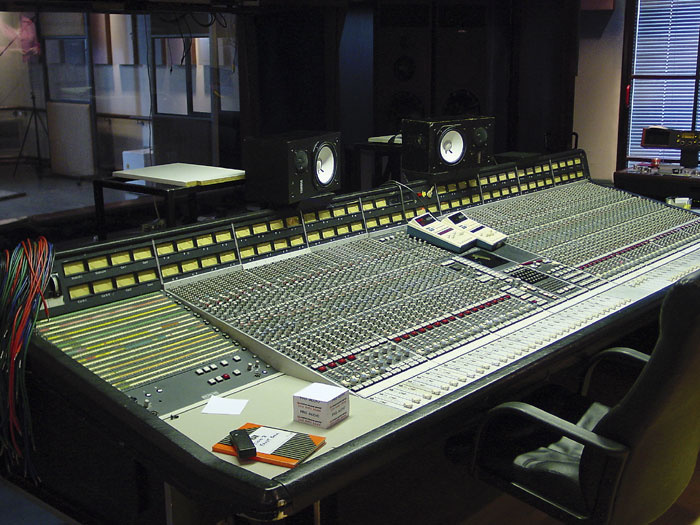 Studio Three, unlike the others, is based around an SSL G-series mixer.In early '98, after an eight-year hiatus, Most produced a new artist named Tee as well as an album and two singles by a group of three girl singers called Jamaica. So it was that his work had, in a sense, come full circle, as he once again essayed to develop raw talent and come up with an innovative sound. "It's interesting," he remarked, "because it's a battle. It's a big challenge, and I've always loved a challenge."
A couple of years after our interview, Most would also produce an album by Steve Harley. Yet, for the most part, he was content to indulge his interests away from the studio: cooking, collecting cars, riding his motorbikes and residing in a palatial house in Totteridge, North London, which boasted eight bedrooms, nine bathrooms, a 40-metre indoor-outdoor pool, fully fitted gym, sauna, tennis court, five-a-side football pitch and four and a half acres of parkland. Not everyone in the music business does so well, but then not everyone has Mickie Most's acumen.
"We had a deal with MGM," he said, looking back to his earliest distribution deal. "They had Herman's Hermits and the Animals. Then I had a further deal with Epic for the next five artists that I produced. You see, EMI distributed MGM's records in England, and the president of the company came over and said, 'Hey man, why haven't we got the Beatles?' So, Len Wood, who was running EMI at the time, looked down the charts and said, 'Well, have these ones; the Animals.' It's funny how these things start.
"'I'm Into Something Good', 'Tobacco Road' and 'House of the Rising Sun' were all number one hits in America, yet six months before I'd played these records to a lot of companies in New York, Philadelphia and Los Angeles, and not one of them would take any of the three, saying they didn't think they were right for their market. It wasn't difficult to hear that these records were in for a shot, so I was laughing really. It didn't depress me at all, but the only thing was that I expected these people in America to know. I couldn't believe how much they didn't know, and nothing has changed. They're clueless, and the proof of this is that if they knew what was going down they would all be multi-millionaires, wouldn't they? I mean, the guys in A&R departments would be riding around in Lear jets if they got it right all the time, but they're not."