

 Jacquire King in Blackbird Studio D, where Only By The Night was recorded.
For the recording of their fourth album Only By The Night, Kings Of Leon and co–producer Jacquire King decided to aim high. The result: a worldwide smash and a long–awaited breakthrough in the band's native US.
Some time late last year, Kings Of Leon frontman Caleb Followill presented an incomplete song called 'Sex On Fire' to the band and their producers, Jacquire King and Angelo Petraglia. Embarrassed about the explicit sexual nature of the lyrics, he needed some coaxing to convince him that the song was worth doing, and even during the recording sessions the following Spring, more arm–twisting was required to get the singer to overdub his vocals. It has certainly paid off, because 'Sex On Fire' and its parent album Only By The Night have charged to the top of hit parades worldwide.
 Only By The Night has different sleeves in the US (above) and internationally.
 Only By The Night (US sleeve).Only By The Night has been Kings Of Leon's first hit album in their native America, but is their fourth overall. Petraglia has worked on all four, while Ethan Johns (son of the legendary Glyn) and Jacquire King have swapped places twice. The former engineered, mixed and co–produced Youth And Young Manhood (2003) and Because Of The Times (2007), while King performed the same duties on Aha Shake Heartbreak (2004) and again on Only By The Night. Grammy Award–winning King has also worked with Tom Waits, Buddy Guy, Modest Mouse and Josh Ritter, and, like the band, makes his home in Nashville, Tennessee. This meant that preparations for the recording of Only By The Night began with informal social meetings.
"We just hung out together last year," recalls King, "and of course you start talking about the record and about the songs. Caleb would get out an acoustic or electric guitar and would show us some ideas that he had, including 'Sex On Fire'. Everyone felt that it was a great melody and song, and the band already has a reputation for singing about sex, so we encouraged him as much as we could. In any case, rock & roll has always been fairly explicit.
 As well as the largest API Legacy desk yet built, the Studio D control room is home to vast amounts of vintage and modern outboard."We identified 18 songs that we wanted to work on for the record, and we had a couple of weeks of proper pre–production a few months later, with the band set up in a large rehearsal room, on a stage with a PA and so on, as if they were playing live. We really fine–tuned the arrangements and approach in the recording studio later on. I don't like to develop set ideas during pre–production about how a song is going to be executed, because you don't really know how things will work out and feel until you actually record them. Pre–production is about getting organised and having conversations about the songs and being ready to be efficient in the studio."
Experimenting With Sound
 The basic track sheet for 'Sex On Fire'; further effects tracks and overdubs were later added during and after the transfer to Pro Tools.Recordings for Only By The Night took place in Nashville at Blackbird Studio D (the same room where Joe Chiccarelli and the White Stripes recorded Icky Thump, see SOS October 2007) during the first months of 2008. King recorded the band live in the studio, to analogue 16–track, as he had for Because Of The Times, but there were a number of differences in the sessions for Only By The Night. "Four years ago I used an old 3M machine and a TG console from Abbey Road, and I mixed to quarter–inch. There was no computer involved in the second record, it was all analogue and manual mixing, no automation. I recorded the basic tracks with seven microphones, with Caleb singing live with the band, and none of the songs came out above 12 tracks. It was a very fast and trimmed–down recording process.
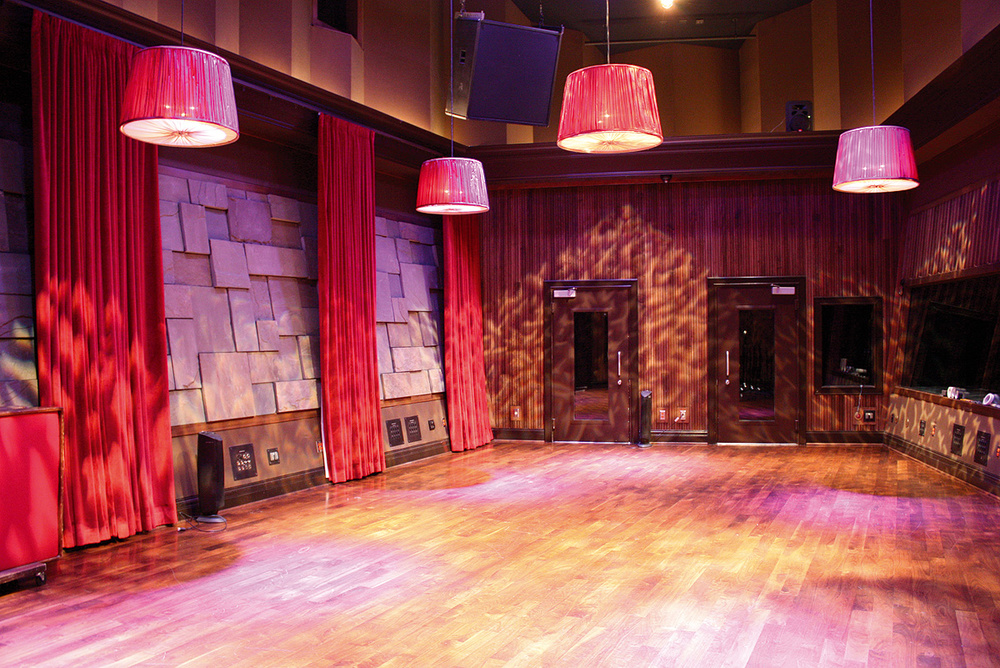 Blackbird Studio D, where Only By The Night was recorded."For the current record, they again all played together in the studio, but the room at Blackbird was bigger and we had a little bit more isolation. I don't mind spill and bleed, because it gives you a very nice texture and a depth of sonic quality, but our main goals on the new record were to spend more time on the production and on Caleb's vocals. Although Caleb sang guide vocals while we were tracking, the only guide vocal that made it to the album was 'Cold Desert'. All the other vocals were overdubbed. Caleb is an insanely good singer, and we wanted more perspective on the vocal performance. It was nice to have the backing tracks down, and then talk with him about how he wanted to approach the vocal. He typically sang each song two, three or four times, and then we'd either make a composite of the different takes, or just used a complete take.
 As well as numerous EQ plug–ins (not shown), drum processing encompassed BF76 and Lo–fi plug–ins on overheads and room mics respectively, with reverb courtesy of Altiverb."In addition, we were experimenting with sound on the new record, instead of just going for energised, magic performances, as we'd done with the previous record we did together. We were still looking for that, but we also wanted broader textures and more layering of sounds. We changed drum setups, guitar amplifiers, effects, and so on, just trying different things to get a vibe going. We took our time, and at Blackbird we had the best gear in the world at our disposal. I recorded through Studio D's newer 96–channel API as well as a Neve BCM10 sidecar."
 The final Pro Tools Session included four bass tracks: the original miked and DI'd recordings, and duplicates treated with AMS hardware and Sound Toys (right) software delays. With Blackbird owning a staggering 1300 microphones, along with a wide range of vintage preamps and outboard gear, King certainly wasn't short of recording options. His approach was to set up many different microphones in the room, and then choose the mics and signal paths that were most appropriate to a particular song. "As I said before, one of the things that we really wanted to do with this record was to find the sonic placements and vibe and approach for each song that was right. We wanted to make a real production out of this album. The guys had made other records in a more simplified approach that moved faster. That was beautiful and appropriate because they are amazing performers, but they have grown as musicians and they wanted to shake things up a bit and spread their wings. So I had a general layout in the room, which would change from song to song, depending on what was most appropriate for the sound. I'm a real believer in recording the sound that you want, rather than keeping things safe and figuring out a way to make it work in the mix. It's an essential part of recording anything that has some meaning. With each decision you shape the next stage. If you leave stuff you record with too many options, you never really have a sense of where you're headed."
The Recording Setup
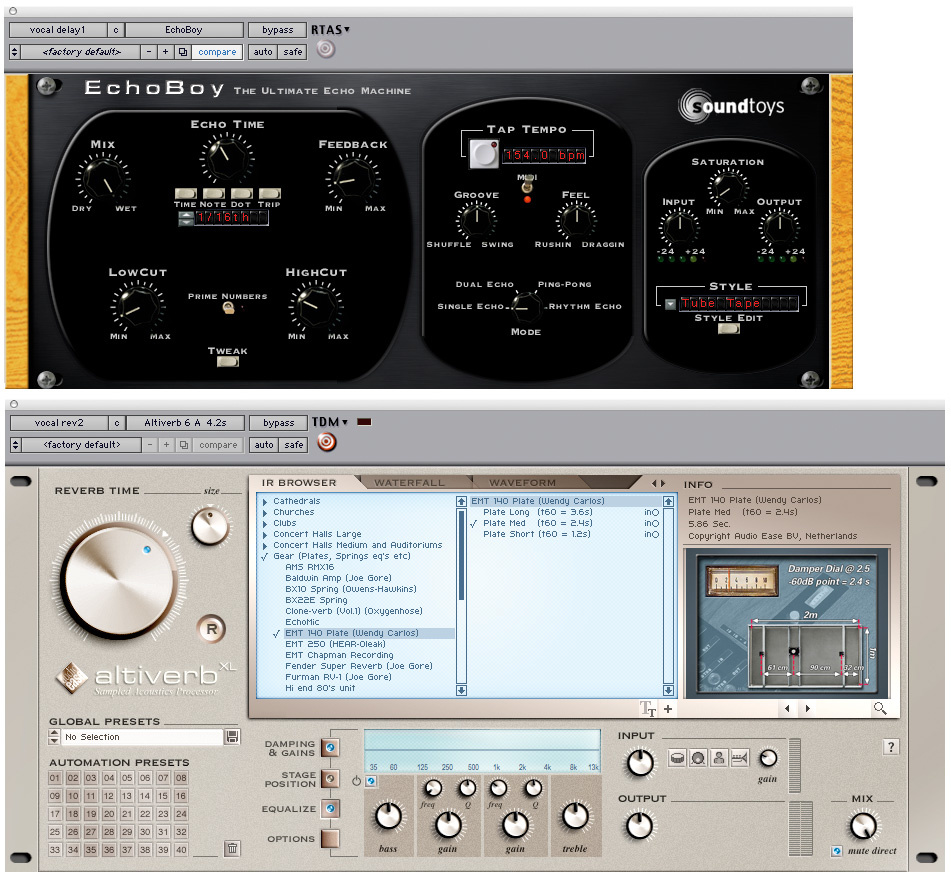 Apart from delay (top), reverb and EQ (bottom), most of the vocal treatment was handled using hardware. Bass: "With regards to 'Sex On Fire', the bass was recorded with a DI and a Neumann U47 on the SVT cabinet, close but not right up to the speaker. The microphone on the bass is usually at its upper range of ability, and because the U47 is a tube microphone you get a little bit of tube squash, with the harmonics nearly going into distortion. A lot of times in rock & roll, the bass is really clean and you have to fuzz it up. Both the DI and the 47 went through a Neve 1081 preamp and then an [Teletronix] LA2A compressor, plus an old Dbx 160 on the DI. I also used a very old subharmonic synthesizer, the Dbx Disco Boombox, on the DI. Jared plays a lot of melodic stuff very high up the neck of his bass, and to be able to keep the weight of the track I synthesized some additional low end."
 Jacquire King's Quad 8 EQs were used on the drums and the final stereo mixdown."I also put an AMS delay and a Cooper Time Cube on the bass, just to give it a little bit more ambience. The latter is something made by Urei. It's a tiny box with a speaker at one end and a mic at the other, and you get 11–14 milliseconds of weird, hollow, echoey delay/reverb. It gives a nice early reflection type of texture. Because the delay is so short, it also gives a chorus–filter like effect. I had several such additional effects running during recording. I set these effects up on a separate channel on the desk, but didn't record them to the 16–track. Instead, during the transfer to Pro Tools, I recorded them on separate tracks. This meant that I might record 22 to 24 tracks in Pro Tools during the transfer."
Drums: "The microphones on the drums changed a lot from song to song. On the kick it could be a Beta 52, sometimes it was an RE20, or a [Sennheiser] 421, or a [Neumann]FET 47, or an NS10 [ie. the driver from a Yamaha NS10 monitor used as a mic], or a combination. It depends on what I was trying to achieve. The mics were usually in front of the kick, or just barely inside. On one song, 'Crawl', I did put a U87 on the batter side of the kick, next to the pedal, which gives a very attack–orientated sound, with a Led Zeppelin–ish quality. On 'Sex On Fire' I used the 52, FET 47 and NS10 on the kick. I had all the kick mics on a Neve BCM10 sidecar and I'd submix them and run them through a GML EQ and then to one track on the tape. I didn't want to keep them separate. It was a matter of get the sound, make the decision, and move on.
"The snare was recorded in similar fashion to the kick. I had the option of various mics that all went through a BCM10 and were submixed, through a GML 580 EQ, then a [Empirical Labs] Distressor, just to give it some control and make sure the snare hit the tape at the right level. On the track sheet a transformerless Shure SM57 is indicated. It was something I read about a couple of years ago, and it's a really good thing. It gives a nicer, more transparent, usable sound that requires less EQ. You lose a bit of level, but typically the things that you record with a 57 are so loud anyway that it doesn't matter. So I asked the people at Blackbird to take the transformer out of one of their 57s and they were gracious enough to do this. After recording I also ran the snare and kick through an Eventide DSP4000 on a Big Muff setting, and recorded that in Pro Tools during the transfer to the computer.
 This rack houses most of the outboard processors used on the mix of 'Sex On Fire', including the Sontec EQ, Neve 1099, 'blue stripe' Urei 1176, Teletronix LA3A, Empirical Labs Distressor, Dbx 902, Chandler TG1 and Dolby A encoders."The toms were recorded with three Josephson E22S mics, which are a modern type, and they're fantastic on the toms. There were a rack of toms plus two floor toms, and I also submixed the tom mics via a BCM10 to a stereo pair, panning the toms as was appropriate for the track. The overheads were recorded with a Telefunken Elam 251 going through a Neve 1081 preamp/EQ, then an Urei 1176, and then to tape. The ride cymbal and the hi–hat were recorded with RCA77 ribbon mics, the ones that David Letterman used to have on his show. When I use a mono overhead, as I did in this case, I like using ribbons, for a good stereo spread between ride and cymbal.
"I had half a dozen mics up for the room sound: a Neumann U67, M49, AKG C12, RCA 44, and/or a Royer SF12 in the echo chamber. I'd leave the door to the echo chamber open so the sound of the drums was happening in there as well, and I'd move the room mics around to get the sound that I wanted for a particular song. I would then bus different combinations to the two room tracks, depending on the song. In the case of 'Sex On Fire' I used a U67 and an RCA 44 for Room 1, and an RCA4 4 and an SF12 for Room 2. Some of these mics went through Neve preamps, some through an old RCA tube mic that Blackbird customised. The combination of room mics was bussed through a Fairchild 670.
 Altiverb."In general, I don't care for wide stereo coincident pairs of room mics on the drums. I would rather have interesting mono elements to pan as appropriate and then use reverbs or delay if I want to have a stereo spread in the background. My feeling is that the drums should be more centred in the stereo spectrum. I prefer to use things like guitars for the outer edges. Oh, I forgot to mention that there's also a drum loop that Matt [Followill, the band's lead guitarist] overdubbed. He played it on a keyboard, and it felt really good and we used Beat Detective for some manual editing to line it up better with the drums. I also overdubbed an old Simmons snare drum in the choruses."
Guitars and vocals: "We had five or six guitar amplifiers available for each guitar, and again, we picked the ones that were most appropriate for the song. Angelo and I would listen to the guitar parts and mix and match amplifiers. Sometimes we'd put reverb on one amp and a delay on another, or effect pedals on both. We had all kinds of combinations, although we kept it to two amplifiers per performance for each player. I'd put an SM57 in front of one amp and a U67 in front of the other. The guitars went through API mic pres, an API 550A EQ, and I also used some APSI parametric EQs. Occasionally I'd put an 1176 in the signal chain, but in general I don't use much compression on distorted electric guitars going to tape, because there's not a lot of dynamic range to them as it is. The synth–like reverb you can hear on the guitar was done at Blackbird on an Eventide DSP4000 and added during the transfer to Pro Tools. Caleb's vocals were recorded with a Shure SM57 going through a Chandler TG2 mic pre, a Neve 1073 EQ, an LA2A compressor, and I also had a Dbx 902 de–esser on them."
'Sex On Fire'
- Producers: Jacquire King & Angelo Petraglia
- Writers: Caleb, Nathan, Jared and Matthew Followill
Jacquire King: "After having completed the overdubs in Pro Tools at Blackbird, I took the files to my studio, The LBT [also in Nashville], where I mixed the entire album, and where I do almost all my mix work. These days my work is kind of half and half between mixing stuff that's given to me, and engineering, producing and mixing projects. With a few exceptions, I mix all the stuff I produce. When I'm given stuff to mix that I haven't produced, I spend a bit of time beforehand trying to get to know the artist and their vision. I want to respect what they did and enhance that. My approach is fairly simple in that regard. I'm fortunate in that a lot of the stuff I'm asked to mix already has a lot of character, and so it already has a strong vision built in, so I'm sort of just joining the party. But I will sometimes take drastic measures if I feel a song needs it.
 "With the stuff I engineered and produced myself, mixing isn't so intense. I know what the artist wants and I typically record things as I want them to sound. So the mix is more about fine–tuning balances and EQ and adding some compression and effects and using the automation to bring the music to life. There usually is not a lot of surgery involved. Of course, it's harder to be objective when you've also produced something, and I've sometimes made the mistake of overdoing it in the mix. You have to put yourself in the mindset that you already did what you want to do, and the mix is all about balance and presentation.
"There is a method to my mix approach. When working on a song I haven't recorded, I will first push up all the faders to get a sense of the song and its the elements. With 'Sex On Fire' I did not have to do that, of course. After that I try to move very fast through the beginning stage and get the vocals in as early as possible. I typically start with the drums, because they have the most elements that need bringing together. I try to take only 15–20 minutes for them and then I start pushing other things up. I'll go to the bass next, and once I have the bass and drums roughed in, I'll push up the vocal, and only after that the other elements in the song. I've made the mistake of working hard on a track and getting all the elements in, and then finding that I didn't leave space for the vocals, which are the most important element of a song. For 'Sex On Fire' I worked like this, starting with drums, then bass, then bringing the vocals in, followed by guitars. Then I spent some time fine–tuning the drum loop. It wasn't finished, so I had to program it so it extended until the end of the song.
 "I do a lot of mixing in Pro Tools, but don't mix entirely in the box because I also want the analogue components in my mix. I also think that summing to stereo is superior in the analogue realm, so I have a Folcrom passive summing network, which I use in combination with the desk. I like to be able to use analogue outboard gear. Analogue compression, for instance, is superior to plug–in compression, even though plug–in compression can be usable, and I do occasionally use it. I also like to use a lot of vintage outboard EQ, but it has a lot of fixed–frequency stuff, so it's not as flexible or precise as plug–in EQ. I use outboard EQ primarily for high–frequency shaping — digital EQ doesn't handle high frequencies very well. So a combination of outboard and plug–in EQs works for me. I also love [Audio Ease's] Altiverb, and combined with outboard reverb it gives me layers of artificial and natural reverb that can fit together really well. With regard to plug–ins, I think Waves and McDSP make great stuff and I have used it a lot, but I now try to use different stuff, to have more sonic identity. I pretty much use the Massenburg DesignWorks EQ plug–ins now all the time. I pretty much put that plug–in on everything. Even if I don't actually use it, it still alters the sound slightly."
- Drums: Massenburg DesignWorks EQ, Bomb Factory BF76, Digidesign Lo–fi, Quad 8 EQ, Chandler TG1, Sontec EQ, Audio Ease Altiverb

"I cut the kick around 255Hz to get rid of some honkiness, and added some 11k on the snare, both with the Massenburg DesignWorks. I also cut a tiny bit around 263Hz on the overheads, and sent them through a Bomb Factory BF76, which is a plug–in version of the 1176, just to control the snare transients a little bit in the overhead picture. I also EQed the toms to roll back some of the tubbiness on them. There's a Lo–fi plug-in on Room 1, to take the cymbal wash down and dirty it up; when you reduce the sample rate and bit depth you also lose high frequencies. I cut everything below 206Hz with the Massenburg on the Simmons drums to clean up any unwanted frequencies. For the rest, there's nothing dramatic on the drums, just some specific shaping with digital EQs and opening up the top and bottom with outboard or the Quad 8 EQ. All the drums were bussed and sent to an outboard compressor, the Chandler TG1, for parallel bus compression. I also had a Sontec EQ on the drum bus. The Altiverb works primarily on the snare, kick and toms, just to give them a little bit more space. I set it to a room at Ocean Way Studios, so it's not a big splashy reverb."
- Bass: AMS delay, Sound Toys Echoboy, Empirical Labs Distressor, Chandler TG1, Dbx Disco Boombox
"On the Mix window screen you can see that there are bass DI, bass amp, bass AMS and bass delay tracks. The AMS is a delay that I applied at Blackbird and that I then printed to Pro Tools. The delay is the Echoboy delay, which I added during mixing. The idea was to get a different texture than I could with the AMS delay. Both delays had different delay times, different qualities of sound, and different feedback and modulation effects, and the idea was to spread them out and fatten up the sound, give it some space without putting a reverb or something poky–sounding on it. By spreading the bass out a bit you also make it sound bigger. In addition, there's some Distressor and TG1 compression and some EQ on the bass, as well as some more subharmonic synthesis, again using the DBX Disco Boombox. I have a slightly more modern version of the box."
- Vocals: Sound Toys Echoboy, Audio Ease Altiverb, Massenburg DesignWorks EQ, Neve 1099, Urei 1176, Dbx 902, Dolby A encoder, Teletronix LA3A
"I had a Sound Toys Echoboy delay and an Altiverb reverb, set to the EMT 140 plate, on the vocals. In fact, there are two or three delays and two or three reverbs in total, different amounts in different sections of the song. I had a Massenburg plug–in EQ on the vocal bus, and underneath it you can see my insert signal chain: Neve 1099 EQ/Urei Blue Stripe 1176/Dbx 902 de–esser. I pre-mix in my computer and things are coming out in stems, and going out into the desk and the Folcrom mixer for mixdown to stereo. The 1099/1176/902 were inserted in the analogue realm and daisy-chained. There's also a distant lead double in the chorus. I call that a performed effect. Instead of using a delay and modulation to get something in the background, you record a second performance in a different space and with a different microphone. You get something more deliberate and unique that way. Finally, once it came to summing, I also added some Dolby A to the vocals, which gives an excited high-frequency sound that I sent through an LA3A and blended back in."
- Guitars: Massenburg DesignWorks EQ, Sound Toys Echoboy, Cooper Time Cube, Digidesign delay, Audio Ease Altiverb
"Using a guitar amp, I added a short slap delay on Matt's guitars. I also used an Echoboy for delay on certain sections, like in the choruses. There was a little bit of bus compression on the guitars and a little bit of EQ, all very minor stuff, because I had already recorded what I wanted. The only radical EQ is on the Cooper Time Cube delay, which I described above, and which I applied to Caleb's guitar. I took out everything below 861Hz to get rid of the darker tone that was obscuring the source tone a bit. There's also a bit of Digirack delay on Caleb's guitar, to give it a bit more dimension by panning it to the other side than the track itself. The Altiverb on Matt's guitar is a very small room at Cello Studios, for a little bit more space."
Mixdown
"I mixed to another Pro Tools rig at 24/88.2, going in via an Apogee PSX100 A–D converter. I had a Sontec EQ and a Quad 8 EQ on the stereo mix, to boost the high frequencies, as well as a pair of Neve 2254 compressors. I used a separate Pro Tools rig, so I'm not tied into whatever sample rate I have in my first Pro Tools rig — 88.2 folds down more easily to 44.1, so is easier for the mastering engineer. I used 24/96 for the recording process because I wanted to keep my options open as to whether to mix from Pro Tools or two 16–tracks. We did a lot of A/B comparisons at Blackbird, and we found that 24/96 gave us the best result. But before mixing I took things down to 24/48 in the original computer, because I like that format best for digital multitrack playback. If you use 96k you have all these frequencies above our hearing range that just eat up headroom. In analogue these frequencies roll off gradually, but 96k remains flat until 40kHz. I mixed to 88.2k because I feel it gives a better stereo image. Many people complain that all this stuff doesn't matter because the delivery formats, like MP3, are shot. I don't feel that way. I definitely want to give the listener the best possible sonic experience."
The Best Of Both Worlds
Jacquire King recorded the main parts for each song live to 16–track analogue tape at Blackbird. Once he had the basic tracks down, they were transferred to a Pro Tools system at 24–bit, 96kHz, using Apogee A–D converters, for overdubbing and mixing. So why not simply record straight into Pro Tools, and enjoy unlimited track options from the first moment?
"The simple answer," replies King, "is that recording to analogue has two great benefits. The first is sonic, and centres on the transients and the tape compression that tape gives you. It gives me a wonderful sonic texture that I just can't get away from. Tracking to digital is good, but I don't get the same quality in the transients, particularly of the drums. The other advantage of tracking to analogue is that it puts the recording situation in a different frame of reference. I have found that when I'm recording to tape, the musicians' performances are more focused and inspired. Perhaps the recording process comes across as more permanent, so they pay more attention and are more involved. There's a certain romance to recording to tape. They're not looking at a screen, so it's all about using your ears. Making records with your eyes, as is a danger with Pro Tools, is a really poor approach. And when you are rolling back the tape, or changing a reel, it allows for a moment of conversation and reflection.
"After tracking, I loaded everything into Pro Tools, because a digital workstation is the best environment to mix from, with the massive amounts of tools that are available and the precision with which you can do things and the speed at which you can work. When you're doing overdubs you're dealing with one person at a time, and the speed that digital offers comes in very handy. Finally, loading things into Pro Tools allowed me to get away from that analogue treated sound. Doing the overdubs straight into the computer gave me a more modern texture, and I felt that the two textures combined and complemented each other well."