

Mike Vernon produced some of the greatest blues records of all time. A full decade after retiring, he's back in the studio with some of the British blues scene's brightest lights.
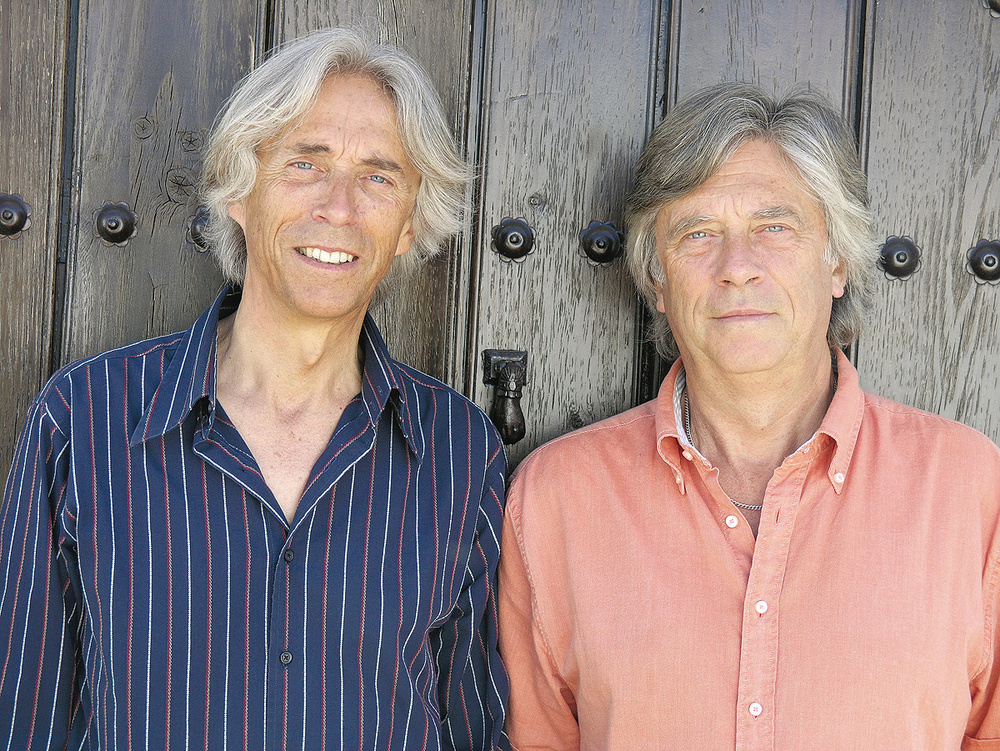 Mike Vernon (right) with his brother and sometime studio partner Richard Vernon.
Mention the name Mike Vernon to any self‑respecting blues fan, and you can guarantee that it won't be long before said fan is reeling off the names of classic records he made as a producer during the late‑'60s British blues boom. As well as manning the helm for many of John Mayall's recordings — including the groundbreaking 1966 album Bluesbreakers With Eric Clapton — Vernon produced numerous other Brit blues artists including Chicken Shack, Peter Green, Fleetwood Mac and Ten Years After, and US blues stars including Otis Spann, Champion Jack Dupree and Eddie Boyd also recorded albums with Mike, for his legendary Blue Horizon label. Although he'll probably be best remembered for blues records, Mike Vernon's production endeavours have also included artists as varied as David Bowie, Focus, Level 42, the Proclaimers, Bloodstone and Dr Feelgood, as well as his own groups, the Olympic Runners and Rocky Sharpe and the Replays.
In 2000, having become disenchanted with the state of the mainstream record industry, Mike decided to call time on his career and moved to the Spanish countryside, limiting his musical activities to occasional live events in his Spanish locality and Blue Horizon reissues. A few years ago, however, Mike suddenly decided that he rather fancied getting back into the studio again, after a bit of gentle prompting from an old blues player friend of his.
New Horizons
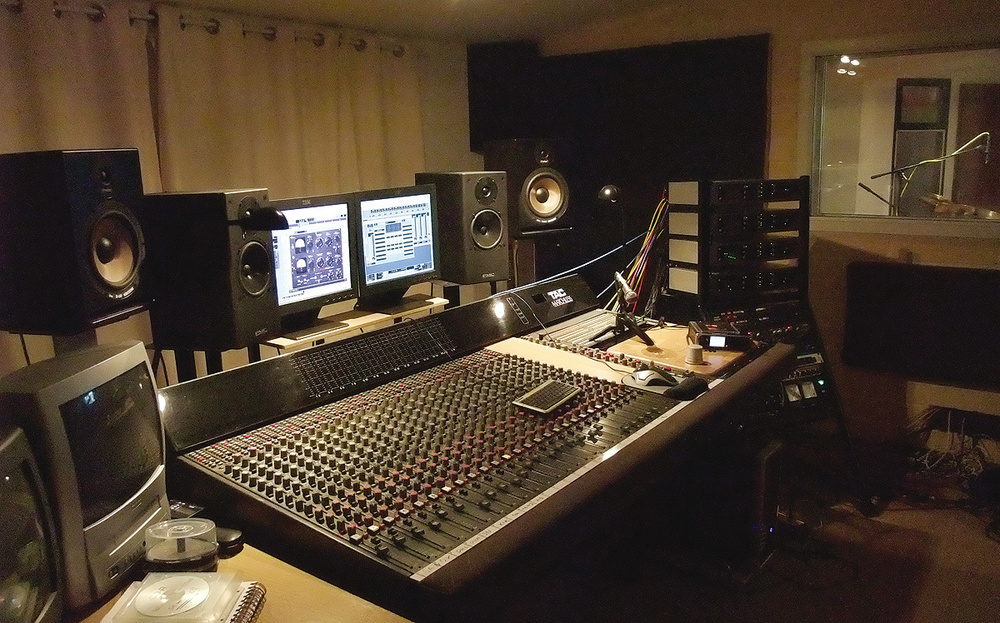 Both of Mike Vernon's recent projects were recorded at Platform Studio in Berkshire.
"We have a big blues festival here that's been running here for about 20 years, and two years ago a very old friend of mine, Sherman Robertson, played,” Mike explains over the phone from Spain. "And he played because I got him the gig. He was absolutely, outrageously brilliant and, of course, we got talking afterwards and I kept saying, 'It's about time you made another studio record.' He said, 'Well, I'm ready, I'm ready… but I'm only going to let one person produce it, and that's you.' So I said, 'Great, let's get some songs together, let's find a backer and let's get the whole thing sorted!' I spent about five or six months working on it, and then suddenly Sherman turned round and said, 'I don't want to do it!' I think the phobia kicked in, and I was left feeling very deflated, because I was really actually looking forward to going back into the studio one more time and just seeing if I still liked it!”
Mike Vernon wouldn't have to wait too long to find out. Thomas Ruf, head honcho of top German blues label Ruf Records and backer for the Sherman Robertson record, had other artists on his roster he thought would benefit from Vernon's legendary expertise. Enter two talented young British blues guitarists and singer‑songwriters, Dani Wilde and Oli Brown, the musicians who can duly lay claim to having brought Mike Vernon out of retirement.
 "Thomas came to me and said, 'I need to make a new album with Dani Wilde. How do you fancy that?'” recalls Vernon, "Well, I had to admit I'd never heard of her, so I said, 'Send me what there is and her new songs,' and I liked what I heard. And then I got another call from Thomas saying, 'Right, let's just put Dani on hold… I've been left in the lurch. The producer who was going to do Oli Brown's new album has pulled out, would you like to do that?' And I again had to admit, 'Sorry, never heard of him!' Anyway, Thomas sent me Oli's stuff and I thought, 'Oh God, this kid's actually fantastic! I have to be involved in this.' And so I ended up making two records in the space of three months, which wasn't as I would have planned, but I don't regret it.”
One thing that really impressed Mike Vernon about both Oli and Dani was how easy they were to work with. The cockiness and arrogance of certain bands and artists during the '90s had been one of the reasons Mike had wanted to get out of the business in the first place. "I have had the misfortune in the past to work with people who are just so big‑headed and who won't take any advice at all, and that's very irritating!”, laughs Mike Vernon. "But Oli was such a nice kid, was really, really into the music and wasn't like 'Well, I'm the new kid on the block, don't try and tell me what to do!'… and I have to say the same about Dani. I want commitment from people. I give 100 percent myself — I always did — and I feel quite aggrieved when the artist themselves spends more time rolling joints and getting drunk and turning up late. I just don't need all that! I got a really professional approach from both Oli and Dani, which was much, much appreciated, and I think that actually shows in the records.”
A Very Live Sound
 Oli Brown.
Oli Brown's Heads I Win, Tails You Lose and Dani Wilde's Shine were both recorded at Platform Studio in Hurst, Berkshire, and were engineered and mixed by Sean Lynch and Damon Sawyer respectively. Mike Vernon's approach to both recordings echoed the way he's always favoured producing bands in the studio: getting things sounding as live as possible.
"If you listen to Bluesbreakers… and a lot of the Fleetwood Mac stuff that I was involved with, it has a very live sound because most of it was recorded all at once,” explains Vernon. "And we tried very hard to do that with Oli, although we didn't quite achieve it, but the thing is that I think in terms of the overall sound, it does sound pretty big and like they are actually all playing at once, which pretty much they were. I've always tried to do it that way. We pretty much did Dani's record the same way really — we had her play and sing live with the band, but she redid most of the vocals, so that she could really concentrate on what she was doing. But the fact that she was singing live when they were actually playing the track made an enormous difference to the feel of what was being played, and that's exactly what happened with Oli. Oli was in the control room with Gary the bass player and Oli was singing into the mic, and Jamie was drumming in the studio through the glass, and they were all playing to the nuances of a live vocal.”
Working with the right engineer is always a key prerequisite for Mike Vernon when he's in the production hot-seat.
"Given the choice, I try to find people that I know, who I can work with, who are of a similar nature, who have similar ears and like what I'm going to be doing,” he says. "I don't want to have an engineer working with me who doesn't like listening to 12‑bar blues all day, because that would be really tedious for them and that's not good for anybody. I think that engineers and producers have to have that sort of relationship.”
 Mike with Neil Slaven and Keef Hartley, circa 1970.When it comes to mic selection, Mike Vernon has never been too concerned. He tends to let his engineers make their own informed choices.
"There are lots of very good microphones around, but of course they can be inordinately expensive!”, says Mike. "I mean we'd all like to be able to have one of those great big RCA ribbons but you can't get them for love nor money and if you could, you'd be paying another mortgage out! But I don't know if the difference it creates is sufficient enough for, you know, the average punter. I do know people who can tell the difference and can say, 'Well that sounds to me like a Neumann…' which is extraordinary, really, but I'm not one of those people. I'm more of a feel merchant: if I don't have the right kind of feel from the band, the right kind of approach from everybody involved, then it's not much good to me. It won't make any difference what microphones I use, it won't sound any better!”
Both albums were mixed using Cubase and each record was completed in a refreshingly short amount of time.
"These records were made in 10 days and I would prefer to do that than spending three or four weeks,” explains Vernon. "I'm not really into all that. I've had to do it before and I don't want to have to do it again. That's the only part of it that I don't enjoy, because it all takes too damn long! I like the old days, when John Mayall would make an album in four days!”
Where It All Started
Mike Vernon fell in love with music at a very early age and was soon "sponging up” all the rhythm & blues, rock & roll and blues tracks he could find. He began working for Decca Records in 1962 while he was still in his teens.
"I didn't really have [a job description] in those days,” says Mike. "I suppose it was what you'd now call a gofer — 'Make the tea, go for this, go for that, take this up to the studio' — and that was about as far as it went. It was a stuffy old place, full of stuffy old people, and I just felt that it needed an injection. I was far too young to ever say such a thing, but I just felt that there would come a time where Decca would become part of the real world, and I'd like to think, actually, that I did have some major part in that, along with my immediate boss, Hugh Mendl, who gave me enough rope to hang myself 10 times — put it that way!”
It was Mike Vernon's obsession with the budding London blues scene that helped him develop into one of Decca's youngest record producers.
"I just took opportunities,” he explains. "I was such a blues freak, and I was always out at night in London at any one of about half a dozen clubs, listening to the Yardbirds and so forth, and that's how I got to meet Eric Clapton in the first place. I used to go see John Mayall at the Flamingo and we became known to each other and that's really how John Mayall got the renewed deal at Decca… I went to Hugh Mendl and said, 'We need to pay some attention to John Mayall's Bluesbreakers, especially now he's got this young ex‑Yardbirds guitar player, Eric Clapton, who's turning the blues scene completely upside down. He's going to be a major force as a guitar player in the future. We need to nab this band while we've got the chance.' And he said, 'If you say so, go ahead and do it!' so we negotiated the deal. I got involved as producer immediately, and that was really how it all started.”
Beano

Mike Vernon tells us about the challenges he had while recording John Mayall's classic 1966 Bluesbreakers With Eric Clapton LP, fondly known as the 'Beano album', due to the fact that Eric Clapton was snapped reading a copy of the famed kids' comic on the sleeve.
"The whole plan was to make that record as live‑sounding as we possibly could, and in those days that was not easy, because there were so many restrictions in terms of the way people used to do things,” says Mike. "Everything was always, 'Well, you must do it this way, you must do it that way, you must always have the microphone only so far from the actual cone of the amplifier and the amplifier must only be turned up to three or four for the optimum sound reproduction!'
"Clapton had said, 'This is going to be your biggest challenge, recording my sound!' We didn't realise how big a challenge it was going to be but, thank God, we had a young engineer who became a very famous producer, Gus Dudgeon, who was ready for any challenge whatsoever. Sadly, he's no longer with us [Dudgeon died in a road accident in 2002], but I can remember seeing his face the very first time Clapton plugged into the Marshall stack and turned it up and started playing at the sort of volume he was going to play. You could almost see Gus's eyes meet over the middle of his nose, and it was almost like he was just going to fall over from the sheer power of it all! But he dealt with it in inimitable style, and after an enormous amount of fiddling around and moving amps around, we got a sound that worked. I think all the solos, with the possible exception of 'Stepping Out', were done live. You can actually tell they were, because the drums suffer as a result of it. There was an enormous amount of guitar on the drums. The studio wasn't very big — it was big enough, but nobody had had to deal with a band making that kind of noise.”
In 1968, just two years after the great success of the 'Beano' record, Mike Vernon left Decca and went independent. The move was largely a result of the fact that Vernon's cult Blue Horizon label — upon which he'd been releasing small‑run blues recordings since the mid‑'60s — had gained such a great reputation on the British blues scene.
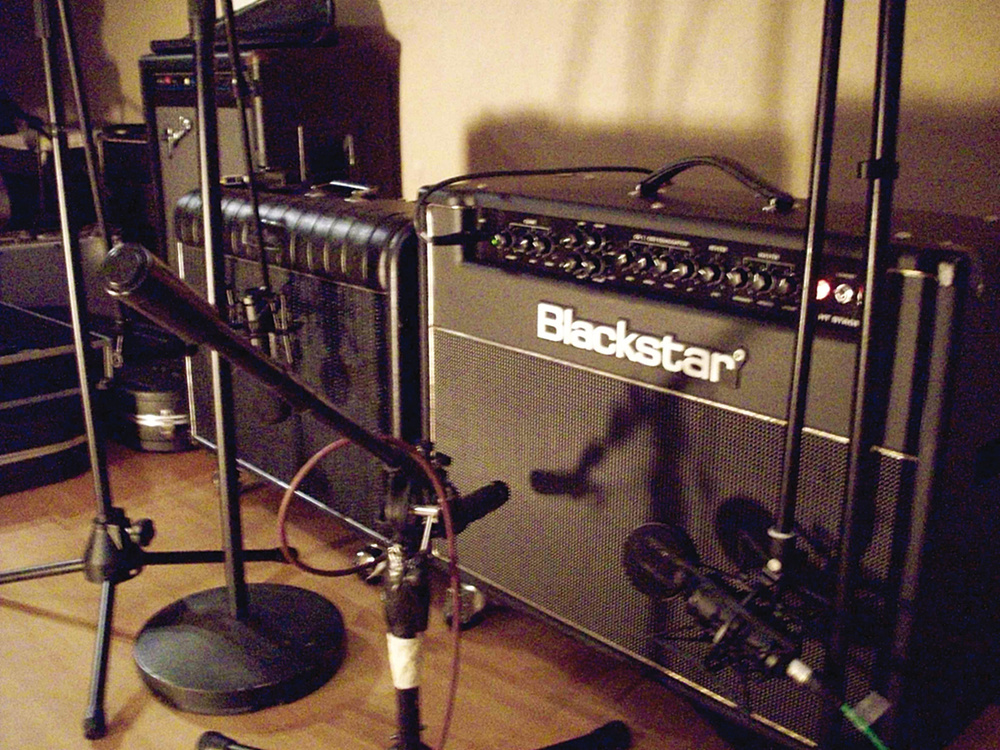 Oli Brown's guitar rig, with mics placed for recording."It just sort of snowballed, to the point where Peter Green was going to leave John Mayall and form his own band and he said to me, 'I want you to record our records and I want them out on Blue Horizon. I don't mind if we're with Decca, but I don't want it on any other label but Blue Horizon,'” explains Vernon. "I did the very first demos with what would become Fleetwood Mac, and they got offered to Decca, and they weren't rejected, but they wouldn't put the record out on the Blue Horizon label… so we offered it to CBS and CBS took it and took the label identity as well. But once that record came out and was something of a success, I got the dreaded phone call from the seventh floor at Decca, got called in and was told, 'You can't produce records for other record companies!' I said, 'Well, I did offer it to you and you rejected it, so I took it to someone else'. And they said, 'OK, fair enough, but you can't do these two things at once, so you either have to resign or we'll fire you!' So I said, 'Right, I resign as of now,' went away, and about three weeks later I came back and signed an independent production deal with Decca, and that's how I continued on as an independent producer for Decca… and other companies.”
The rest, as they say, is history, and Mike Vernon spent the next few years as an independent producer, pioneering one classic blues record after another. After the blues-boom bubble burst at the beginning of the '70s, Vernon started a recording studio in Chipping Norton with his brother, Richard, which continued to be a successful enterprise through to its closure in the late '90s, just a few years prior to Mike's initial retirement.
Back In The Saddle
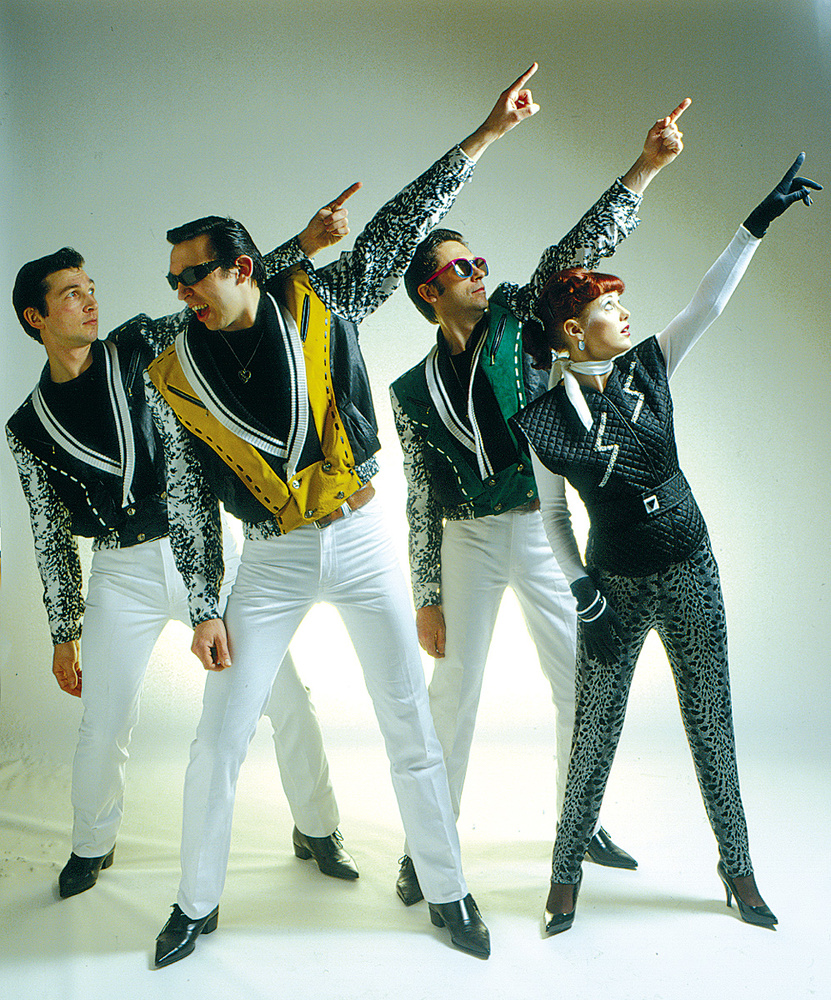 Mike Vernon (third from left) has also stepped out from behind the desk as Eric Rondo of Rocky Sharpe & the Replays.
So now that Mike Vernon has made two fantastic new blues records in the space of the last 12 months, can we presume that this means his self‑imposed retirement is effectively over?
"As a result of the Oli Brown record in particular, there have been a few people getting in touch with me and saying, 'We noticed you're back in production, we'd like to send you a demo of this band and that band.' I politely have to say to them, 'No, thank you,' and if they do send them, I politely listen and then say, 'No, thank you!' I'll be 66 in November – and that's young by some peoples' standards, I suppose — but I just don't really fancy going back into it full‑time. I would love to do a major production with a major artist. That would be something I would love to do. There's a number of people that I never got to record, and I now won't get to record, because they are getting too old now, BB King of course being one of them. I'd love to be able to make another record with Eric Clapton. I'd love to do that and I think we could probably make a very good record together, but that isn't going to happen either. I don't worry about it any more. I just relax as much as I can and as much as people allow me to, then when something comes along that I fancy doing, and it doesn't appear to be too arduous, I'll give it a shot.”
Old School Methods
Unsurprisingly, for someone who places the highest importance on capturing a band's performance as live as possible, Mike Vernon prefers to work in the analogue domain when he can. "I'm a great fan of analogue, always have been, and spent the greater part of my career working on analogue. For me, analogue makes you focus more on what you're doing. You have to actually give the performance of your life to be able to get the result. When you work digitally, you have so much more scope, and if you make a mistake, it can be corrected at the drop of a mouse. It's just click here, copy and paste it and it sticks. I'm not saying I don't subscribe to it, because I do and I have done. In fact, just recently, within the last couple of months, I've been involved in a project here in Spain, which is another blues project, with Louisiana harmonica player Lazy Lester. The whole thing was recorded digitally using Pro Tools. When you've got a guy who's flying in and a band who are flying in, and they're only here five minutes and then they're gone, you don't have time to review everything and you suddenly find yourself copying four bars and pasting it in and things like that. You might have been able to do that in analogue days, and I have been known to do it, but it's not what you normally do is it? What you would ideally do is say, 'It's crap, lads, you've got to do it again!' But the digital format does allow you a lot more room.
"The truth of the matter is that I think that about 95 percent — or maybe even slightly more — of the people that buy records these days wouldn't be able to tell the difference. If you played them an analogue version of something and then played them the digital version, they wouldn't be able to tell the difference. There's only certain nuances that elephant ears like yours truly can hear… it's the subtleties in certain sounds, and the smoothness, the warmness or the hardness of it that make it one thing or the other.”
The Engineer's Perspective
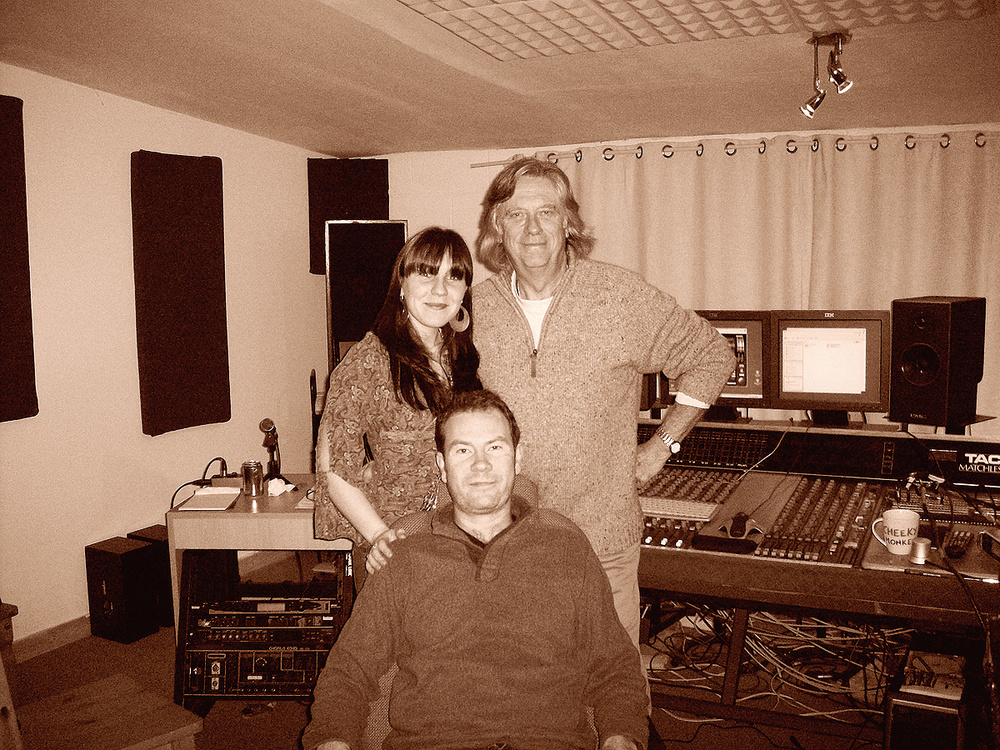 Damon Sawyer (front) with Dani Wilde and Mike Vernon.
Damon Sawyer started Platform Studio back in 1999 and, as well as recording and mixing Dani Wilde's Shine album, he played the role of assistant engineer on Oli Brown's Heads I Win, Tails You Lose. So what was it like working with Mike Vernon?
"Mike is absolutely by far the most professional guy I've ever worked with. He's so in control of the whole project and always involved, at every point. Whenever there was a decision to be made, he was just there in the driving seat. One of the reasons I really enjoyed working with him was because he's got what I call the old‑school approach, with all the emphasis on performances, and that's the way I like to work as well. I'm a player: that's what I started off doing, so I'm all for capturing the performance. And Mike's so good with the artists. The primary thing was to keep them comfortable. When we were recording Dani, if she said, 'Oh, I fancy doing some vocals,' you'd just down tools and go to vocals, whereas quite often people will go 'Hang on, we're set up for this...' With Mike, if the artist wants to sing, she sings, and I must say I learnt an awful lot from working with him.”
Damon talked us through the mic placements he used on both albums.
"Oli's guitars — most of the rhythm tracks and everything — were recorded with a Prodipe ribbon mic and an SM57, and for guitar overdubs, solos, there'd be a room mic as well. I think most of the time it was probably an AKG C414 in the room. We've got quite a nice live space, which is great for drums and ambient miking. Oli did swap amps a lot. It wasn't just one straightforward rig — there were different rigs for different tones and solos, whether it be lead track or rhythm. I think there were three different amps in there. There was the Blackstar [HT Stage 60] and there was a Kustom [Coupe 72], and I think there was a Fender as well. I don't think they were actually using multiple amps at any one point, but most of the rhythm tracks were actually cut live with the drums and bass, then some solos were dubbed. The heart of both of those albums was, again, the old‑school approach of actually capturing the performances with the rhythm section as it is. On Dani's, we had a Fender Blues Junior and a Super Reverb… we used different amps depending on the tone. It was a similar mic setup, with a mixture of the ribbon, a 57, and a 414 sometimes. Mike insists on having that room mic for any kind of solo overdub and it helps the solos cut through. I used the early 414, the EB, because I do think they sound quite different to the newer reissue stuff like the XLS. I always think the top end's a bit too much — it's a bit more natural with the vintage stuff. The drum setup had an AKG D112 on the kick, a Beyer M201 for snare, a pair of vintage C451s for overheads, two 414s on the two toms, actually set to hypercardioid, and I also use a home‑made 'sub kick', which is actually a 15‑inch speaker, but it's great — and there was a room mic as well, a Prodipe valve lamp.”