

Boss of the highly successful and determinedly independent Mute Records, Daniel Miller is one of the UK music industry's unsung stars. Bill Bruce celebrates 20 years of Mute with the man himself, looking back on such highlights as his work with Depeche Mode — and takes a rare tour of Miller's superb home studio.
Note: Unfortunately SOS does not have any of the studio images which accompanied this print article.
"I don't want to be sentimental about technology," reflects Daniel Miller. "I think it's a lot easier to make quite good music now than it was when I started out. But it's still as difficult to make great music as it ever was."
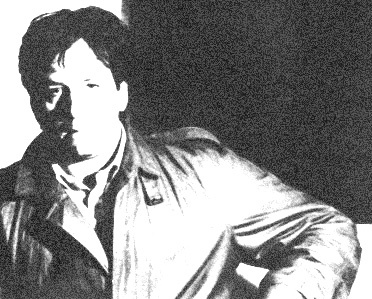 Daniel Miller of Mute Records.Unbelievably, Mute Records, the independent label Daniel founded and home to Depeche Mode, Erasure, Nick Cave and Moby amongst others, is 20 years old this year. Now one of the few genuinely independent UK record labels still in existence, Mute is far from gasping its last or selling out to a major label, like so many of its contemporaries, but continues to go from strength to strength. Mr Miller has a great deal to be proud of.
In the spirit of celebration, Daniel has invited SOS into his rarely‑seen home studio for a chat about the history of his company, and a look around the studio itself. This home facility developed in tandem with the rise of Mute and the construction of Mute's own studio (see 'The Instrument' box). Piece by piece, Daniel gathered together his own collection of classic vintage electronic equipment, of which more later in this article.
No Master Plan
Mute Records has come a long way since its formation in 1978, but Daniel is the first to admit that the success of the label was hardly the result of any great master plan. In fact, it initially came about just so that he had an outlet for his own electronic material. As he admits, "I just wanted to do it on my own; I didn't think anyone at a record company would understand the music I was making."
The young Daniel Miller studied at film school and became a film editor after leaving college in 1971. Having always dabbled in music from school bands to DJing, he was inspired by the number of DIY records being produced in the wake of punk, coupled with the emergence of cheaper synth technology. "I always wanted to get into electronic music, so I worked as a film editor to make as much money as possible. I bought a little 4‑track recorder, a Korg 700S synth, and a little mini‑mixer, and that was it. When I became happy with what I was doing I decided to bring out a record. I was just going to do 500 7‑inch singles, but then I went to the Rough Trade shop [legendary indie record label and distribution company] and they said they would distribute it for me. I didn't really know what that meant then, but they said I should press up 2000, and they all went fairly quickly."
In the guise of The Normal, Daniel released two landmark indie singles, 'T.V.O.D' and 'Warm Leatherette' (the latter inspired by JG Ballard's novel Crash and later covered by Grace Jones). Both featured skeletal, entirely synth‑based instrumentation and minimal, almost chanted vocal accompaniment. These wholly electronic beginnings meant that the label was initially viewed solely as a vehicle for synth experimentalists. Once again, however, this was not as the result of a conscious stylistic decision on Daniel's part — it was simply because he signed up artists whose work he liked, and electronic music was what he was into at the time. "Nearly all of the records I bought then were coming from Germany: bands like Faust, Can and Kraftwerk. I hardly bought an English or American record in those years. My real agenda was in finding acts who were unique; I didn't want to have a band who sounded like someone else."
Running the label from his home and releasing singles rather than albums, Daniel kept the nascent label's overheads relatively low, and both his releases and those by other artists he signed sold reasonably well. Indisputably, Mute benefited tremendously when interest in electronic music mushroomed at the turn of the '70s and '80s, and post‑punk electronic experiments from the likes of Throbbing Gristle, Cabaret Voltaire and Robert Rental gave way to the more mainstream synth‑pop successes of Soft Cell and The Human League, amongst others. Even after all these years, Daniel is ardent about the success of this music. "It was an historic inevitability," he attests. "There had been nothing like that before, and then there was this rash of singles which all seemed to come out at around the same time. They all came from a love of electronic music, cheap synths, and the inspiration of punk."
The real turning point for Mute came when Daniel signed Depeche Mode, a band initially viewed as an electronic version of the boy bands of the day, complete with neat, simple synth hooks and choirboy‑like block vocal harmonies. Once again, however, Miller absolutely denies that the addition of Depeche Mode to the Mute stable represented any conscious effort at bandwagon‑jumping on his part, insisting that the label became players in the electro‑pop explosion of the early '80s almost by accident. But he admits the revolutionary effect the band had on his label, and the determination it instilled in him to provide in Mute the right environment for a hit singles band. "When Depeche started to break it took on another dimension. I had never had anything like a hit single, and this was the band being chased by every label in the country very soon after I started working with them. They were very young, and they had all these labels banging at their doors, so I felt a sense of responsibility to get it right for them. Also, all the majors said that Mute could never have hits, so I wanted to prove them wrong! It made me very focused."
Art 1 : Commerce 1
Success can often cripple small labels, as they expand to meet the needs of their major act and then can't sustain themselves when that band falls out of fashion. Daniel clearly recognises this phenomenon: "One act like that changes the nature of a company; you have to catch up so you can service that artist. If you're smart, though, you can build up the company for the years when you can't expand your other acts.
"When we first had a hit with Depeche Mode we were still living hand to mouth. But I've got a shopkeeper mentality; when a lot of money came in, I put it to one side thinking it wouldn't last. I didn't go out straight away and sign loads of bands; it was important just to develop the artists I had. Besides, I ended up with two huge pop bands by default when Vince Clarke left Depeche Mode to form Yazoo, and after Yazoo came Erasure. But that was luck; after all, I didn't ask Vince to leave Depeche Mode."
Despite his self‑effacing comments, there is no denying that the work Daniel put into Mute paid off, as not only did Depeche Mode become — and remain — enormously successful, but Mute grew with the band, ensuring that Depeche and its subsequent offshoots stayed with the label (see the 'Mute: Made For Mode' box). Furthermore, Daniel eventually did plough the enormous financial rewards of Depeche's success back into the company, carefully expanding the artist roster over time, and making Mute one of the few truly independent record labels still in existence which has successfully juggled commerce and art.
When this point is made, however, Daniel once again plays down his own business acumen, preferring to credit Mute's sound financial status to a dedicated and loyal staff: "We didn't have a financial person for ages and ages, but then as we got bigger, we got a guy who had been an accountant for Cadbury‑Schweppes for years — which I liked, because I didn't trust music business accountants. When I asked him why he would want to leave such a secure job, he said, 'well, I love music and I want to be involved in it.' He's been with us ever since. I've never worked for a major label, so I'm not really in a position to judge, but I think that people get more emotionally involved with the work at Mute than they might do at somewhere like EMI."
The Way We Live Today
Throughout the '80s and into the '90s, Mute continued to grow in stature. While Vince Clarke's Erasure enjoyed a string of hits across Europe, Depeche Mode became one of the most successful British acts to conquer the United States. This tremendous upturn in the company's fortunes ensured that Mute was spared the subsequent fate of several independent UK record labels, who have either collapsed altogether, like Manchester's Factory Records, or been at least partially bought out by major labels, like Alan McGee's Creation. Daniel confesses that times are tough for indie labels in the late '90s, but does not forecast a similar major buyout for his label, believing "it wouldn't be right for Mute".
Despite the difficult climate, it's refreshing to find that Daniel still has a commitment to music designed for more than chart success, just as he had in the early days of Mute. However, he is always aware of the commercial and financial pressures involved. "When you start working with an artist you have to find out if they want to have hit records or not. And if not, obviously you do it a different way. You can't spend a lot in the studio, on a video, or on photo sessions if you want to make a record that is great but isn't going to sell a lot. Which is one of the reasons why we got our own studios in the first place — to make those kinds of records" (see 'The Instrument' box).
Despite this approach, as on every label, the boss has to make the difficult decision to drop an act at some time or other. At most major labels, profits and costs are the common determining factors, but at Mute, once again, Daniel's approach is a little different: "I have dropped bands, but not always for financial reasons," he admits, mentioning that he always takes several factors into account before swinging the axe. "One is financial, but another is artistic output. If a band is making great records but losing a bit of money, I'm not going to drop them. Another is the band's own willingness to succeed. There's nothing more frustrating than when a band makes a great record, but doesn't want to promote it or seem to want to succeed."
Mute: Made For Mode
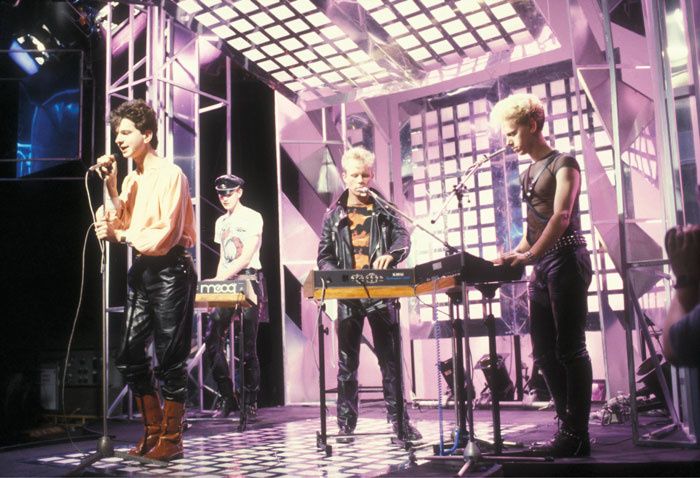 Early Depeche Mode on Top Of The Pops.Photo: BBC archive / Redferns
In collaboration with both Depeche Mode and Vince Clarke in all his various projects, Daniel has aided the production some of the most striking records of the last 20 years, from Yazoo's 'Only You' which fused blues with electronics, through to the multisampling and 'found sound' of Depeche Mode's 'People Are People'. He looks back on the band's achievements with pride — especially given the restrictions of the technology available at the time. "I think they set up a completely new playing field," he says. "I think there were very few people doing stuff like them.
"When I first worked with them, they'd never been in a studio before." he remembers, adding wryly, "To be honest, at that time I'd hardly worked in one either! I felt like I was a really experienced producer compared to them, but I wasn't really. I think I did help them get the sounds they needed with the very small range of technology at our disposal. I was trying to show them the possibilities open to them.
"The very first time we went into the studio was to do a track called 'Photographic' for a sampler album. A different version of that later ended up on their first album [1981's Speak and Spell]. I had my ARP sequencer sync'd to tape and Vince just couldn't believe it. They immediately got into it. In terms of structure and arrangement I left their ideas alone, because I thought the songs were great and wanted them to go down as faithfully as possible.
Following Speak and Spell, Vince Clarke, hitherto Depeche Mode's main songwriter, left the band, eventually forming Yazoo with Alison Moyet. At this stage in Mute's history, this development might well have spelt the end not just for Depeche Mode but for Mute itself. But Daniel didn't panic. In the time between Clarke leaving and his replacement, Alan Wilder, joining a year later, Daniel became an unofficial fourth member of the group. "I just thought, 'well, let's get on with the next record'. I knew Martin [Gore, Depeche's future songwriter] could write songs. However, it did get very different when Vince left. He had been the driving force behind the band; he got them together to rehearse and went around with demo tapes. So I was more concerned about keeping the band motivated, because I knew Martin had the songs — although even I was surprised at the massive leap in his songwriting from the Broken Frame album to Construction Time Again and songs like 'Everything Counts'.
"Vince always had a clear idea of how songs were going to be, whereas Martin's songs were presented in incredibly raw form; usually just a Casio, a voice and a foot tap! None of us had a particularly solid idea of how those songs would end up. We were building more from scratch. So I started to have much more input into sounds and arrangements. I was trying to be original all the time.
"The first two Depeche Mode albums were all done with analogue gear, although by the time we got to A Broken Frame [the second album, 1982] we did have a TR808 drum machine. We used it for a few things but not for the whole kit, because we were really into using drum sounds we made on synths. We'd make our own bass drums and snares because we didn't want to sound like everybody else. We also didn't use things like the LinnDrum for the same reason; it was full of good quality sounds, but it robbed you of your identity. I suppose we were working to our own ideology."
At Home With... Daniel Miller
Daniel has been itching to begin the guided tour of his home studio, and does so. He brims with the enthusiasm of a true devotee, even though these days he only makes music for himself, and not for commercial release. Clearly, the studio holds as many memories for him as pieces of classic equipment. "When I did my first single I was totally into Kraftwerk, and I just used this Korg 700S. I had no sequencers; it was all laid down by hand. The 700S is an amazing instrument, with brilliant sounds. It's got two ring modulators, which is a bit bizarre, considering it was designed to sit on top of an organ and play little melodies, but I think synth manufacturers didn't really know what their market was then. The big Moogs were aimed at the experimental music market and the big ELP and Tangerine Dream types. The guys who came out with these first mini‑synths, Korgs and Rolands... I guess they didn't know what their market was, so they built in all these extra little gadgets."
Keen to expand his synth arsenal, Daniel soon moved up in the world, buying an ARP 2600 modular synth with its optional analogue sequencer, which he uses (and enthuses about) to this day. Many dismiss analogue sequencers as primitive devices today, but Daniel leaps to their defence. "They certainly didn't seem primitive at the time; they were the highest of hi‑tech, and the ARP stayed my main sequencer for years. It only had 16 note steps, but was a tremendously creative tool. I remember the first time I showed it to Vince Clarke; he was mesmerised by it, and so the ARP became crucial to the early development of Depeche Mode. In the end, though, I was desperate to get something MIDI, because the control voltages from the ARP are very unstable, and you could never get a CV‑to‑MIDI converter that worked properly. Now I have these two analogue‑style MIDI sequencers, the Doepfer MAQ16/3 and the Latronic Notron. I waited years for someone to make a MIDI sequencer that was like an analogue one to use, and Doepfer finally did! It's great for recording straight onto the computer and manipulating later."
This last comment provides an insight into the way Daniel uses the studio today; he favours coming up with ideas via the knobular interfaces of the ARP, Notron and Doepfer, and then puts these ideas into his Apple Mac to edit. He sees this approach as a combination of the best of what analogue and digital have to offer, as he finds an all‑digital synth and sequencer setup actively counter‑creative at the earliest stage of the writing process. "There is definitely a problem with MIDI; it gives you too many options. MIDI instruments and sequencers are infinitely tweakable, and you don't commit yourself to basic ideas. I've got away from having so much gear and gone back to a couple of bits of gear I really love; there are plenty of people doing that nowadays. So even though you might have 32 tracks of computer‑based audio recording, you've only got two monophonic synths to commit to when you write."
If this seems like a step backwards, Daniel disagrees. "You can't go backwards by limiting yourself. You're just focusing on the stuff you really use and getting the best out of what you have."
One Mute label resident certainly agrees. Vince Clarke ditched all of his MIDI sequencers in the early '90s, and has written all of the Erasure albums from 1991's Chorus onwards on a Roland MC4 analogue sequencer. Strangely, despite his aforementioned love of old sequencers, Daniel is not an MC4 fan. "I personally hate the MC4, but Vince loves it; he thinks it keeps great time. I think you can get too focused on things like timing. Vince knows his MC4 so well he can just sit there for five minutes, banging away at it and you won't hear a note. Then he'll press play and a whole tune will pour out of it. He's got an instinct for it. I'm not nearly as much of an analogue purist as Vince is. I just like machines that are good fun and easy to use."
Unsurprisingly, given this last remark, Daniel is not a fan of digital synths, such as those which followed the success of the DX7 in 1983, as he feels that they were not just less easy to use but also contrary to the original spirit of synths in general.
"To me a DX7 isn't a synth, it's more like an organ; just a keyboard instrument. I think a synthesizer isn't primarily a keyboard instrument — it's a sound‑generating instrument. One of the ways you happen to be able to use it is from a keyboard, but I've always been into different types of controllers. The designers of those digital systems were trying to fit too much into one box, and so the synths weren't much fun to use. If you wanted to get strings, brass and drums out of one instrument they were great, but none of our artists were particularly keen on that kind of stuff. It was all catering to keyboard playing... velocity sensitivity and all of that. The way you put expression into an analogue synthesizer isn't to do with how hard you hit a key, it's how you create a sound and manipulate it in real time; moving filters and envelopes as it's going. That's why everyone's so knob‑crazy now, which I think is great; the last few years have seen some really good things come out. One thing I use a lot these days is the Quasimidi Rave‑O‑Lution 309. It's got great sounds and memory facilities, and it's very programmable — it's just very enjoyable to use, which is how instruments ought to be."
As well as synth technology, Daniel and other Mute artists actively embraced sampling technology in the early '80s (Vince Clarke was one of the first pop artists to purchase a Fairlight, as Daniel points out). But in these days of relatively inexpensive digital and hard‑disk recording does he still feel that instruments like the Synclavier and Fairlight were worth the tens of thousands of pounds they cost at the time?
"In a sense they were. The Synclavier itself was slightly erratic and difficult to use but it opened a door to a world of sound that nothing else came close to — and we were able to make big hit records which we couldn't have made without it," he admits matter‑of‑factly.
Daniel's Home Studio
SYNTHS
- EMS Synthi AKS suitcase synth. "It's really handy to have a hard disk recording facility with some of these old analogue synths, like this one, because the synths don't have memories and sometimes you'll never get a killer sound back a second time. It's great to twiddle away for hours onto the hard disk and then cut and paste the parts and make up loops."
- ARP 2600. "This was used on every Depeche Mode record I worked on."
- EDP Wasp. "The Wasp is really important because for a certain generation it was the first really affordable synth."
- EMS Synthi 100. "This is one of those instruments that you would drool over in synth history books. Only about 50 were ever made. This one was part of the electronic music studio at the University Of East Anglia and they weren't asking very much for it, relatively speaking. Lately, I've been doing some remixes and it's appeared on those."
- Kawai K5m.
- Korg 700S.
- Korg MS20.
- Korg O5R/W. "This is my one concession to multitimbral sound modules. It's a good sketch tool."
- Moog Minimoog.
- Novation BassStation.
- Novation BassStation rack.
- Oberheim Xpander.
- Synton Syrinx. "This is a brilliant monophonic synth — in fact one of the last monosynths — from the early '80s. It isn't a modular synth but I find it very flexible. It has three different independent filters which make it sound like nothing else."
- Quasimidi Rave‑O‑Lution 309. "Great name, great sound, and great real-time control. Gareth Jones (producer and remix partner) and I did an entire remix just using this and a little Yamaha SU10 sampler on his kitchen table, direct to DAT."
- Roland MKS80 Super Jupiter.
- Roland System 700 & System 100M modular synths. "It took about five years for me to track the 100M down. These were partly bought as collector's items, although the 700 was used to treat some loops on the last Depeche Mode album Ultra."
- RSF Kobol.
- Studio Electronics Obie‑Rack. "This is effectively two Oberheim SEMs in a rack, with MIDI, and was a gift from producer/remixer François Kervorkian. He was raving about these when he worked on the last Erasure album and he said if he ever came across one of these he'd get it for me. It's got some really good sounds."
- Waldorf Microwave.
RECORDING
- Alesis Quadraverb multi‑effects.
- ATC 100 monitors.
- Celestion monitors.
- Dbx 160XT compressors.
- Dbx gates.
- Fostex RD8 ADAT.
- Lexicon LXP15 multi‑effects.
- Lexicon LXP15 MkII multi‑effects.
- TAC Magnum 24‑channel mixing desk.
- Tannoy monitors.
- TC Electronic TC2240 parametric EQ.
- Zoom 9030 multi‑effects.
SAMPLERS
- Akai S612.
- Akai S1000.
- Boss SP202 Dr Sample.
- Yamaha SU10.
DRUM MACHINES
- Roland R8M Drum Module.
- Roland TR909.
HARDWARE SEQUENCERS
- Latronic Notron.
- ARP analogue sequencer (x2).
- Doepfer MAQ16/3.
- Roland MPU101 MIDI‑CV converter (x3).
COMPUTERS & SOFTWARE
- Apple Macintosh A600.
- Bitheadz Retro AS1 software synth.
- Koblo Vibra 9000 software synth.
- Opcode Vision sequencer.
- Steinberg/Propellerheads Rebirth software synth.
MISCELLANEOUS
- Kenton Pro4 MIDI‑CV Interface.
- Opcode Studio 4 Interfaces.
- Peavey PC1600 hardware MIDI controller. "This is very handy for controlling my software synths."
An Influential Player
The legacy of these pioneering Mute singles can be heard in much modern music. For once Daniel is not backward in coming forward. "I think the likes of DJ Shadow and all the Detroit techno guys were hugely influenced by our early records, although it is hard for me to say that, because I was involved so closely with them. Mind you, I have met quite a few techno producers who say that the first thing they programmed into their first little Casio keyboards was the riff from Depeche Mode's 'Just Can't Get Enough'. It's great when you find out the person who made a record you like was really influenced by a record you were involved in. I suppose everyone wants to feel they're helping to move music forward."
Mute has been the biggest thing in Daniel Miller's life for the past 20 years, making you wonder if he thinks having a life away from the record label is equally important: "I think it is important to do that," he laughs, "but I don't! I don't have a family, and I don't have any major hobbies outside of music. If you're running an indie label, it is very hard to switch off."
It's pretty obvious that Daniel Miller is in the music business for the full nine yards. At the end of our interview, he responds to a question about his attitude to retirement with a firm reply. "It depends when I drop," he smiles.
The Instrument: Selected Gear List
The Instrument is the new name of Mute's in‑house recording studio. It has been home to everyone from Depeche Mode (who recorded parts of several of their earlier albums there, and still use it as a pre‑production facility) and Nick Cave to Renegade Soundwave and Nitzer Ebb. Previously, the studio has only been available to Mute artists, but it is now opening its doors to the public. Situated in North Kensington, London, The Instrument comprises a large main studio, a small but cosy pre‑production suite and an audio post‑production facility. Many of Mute's own fine collection of vintage synths (see extensive list below) are available to clients on request, often at no extra charge.
INSTRUMENT 1
SYNTHS/KEYBOARDS
- EMS Vocoder.
- Korg DRV3000.
- Korg Wavestation.
- Novation BassStation.
- Roland JV1080 (with Vintage voice card).
SAMPLERS
- Akai S1100 (with 10Mb of RAM).
- Emu E6400 (with 64Mb of RAM, 16‑out output expansion and digital I/O expansion boards).
RECORDING
- Alesis ADAT (x2).
- Alesis Quadraverb multi‑effects.
- Amek Hendrix 56‑channel mixing desk.
- ATC200 monitors.
- Brüel & Kjær 4006 mic.
- Dbx 120x bass enhancer.
- Drawmer DS201 dual gate (x4).
- Dynaudio BM15 monitors.
- Eventide H3000 & H3000SE pitch‑shifter/multi‑effects.
- Focusrite dynamics processors (x2).
- Joe Meek compressor.
- Korg DRV3000 multi‑effects.
- Lexicon 300 reverb.
- Lexicon PCM70 reverb.
- Lexicon PCM80 reverb.
- Mutronics Mutator filter bank.
- MXR pitch‑shifter.
- Neumann U87 mic.
- Otari DTR7 DAT machine.
- Otari MTR12 half‑inch stereo tape recorder.
- Otari MTR90 2‑inch 24‑track.
- Panasonic SV3800 DAT machine.
- Rode NT2 mic (x2).
- Roland SDE330 multi‑effects.
- Roland SRV2000 multi‑effects.
- Shure SM58 mic.
- Summit tube dual preamp.
- Symetrix Noise Reduction.
- TC Electronic Finalizer mastering compressor.
- TC Electronic parametric EQ.
- TC Electronic TC2290 delay.
- Valley People 610 compressor.
- Yamaha NS10M monitors.
- Yamaha SPX90 multi‑effects.
COMPUTERS & SOFTWARE
- Apple Mac Quadra 610.
- Atari 1040ST.
- C‑Lab Notator.
- Propellerhead Recycle.
- Steinberg Cubase.
MISCELLANEOUS
- Syquest drive (44Mb).
- Iomega Zip drive.
- Kenton Pro2 2‑channel MIDI‑CV converter.
- Novation DrumStation.
INSTRUMENT 2
SYNTHS/KEYBOARDS
- Moog Minimoog.
- Moog Prodigy.
- Novation BassStation rack.
- Oberheim Xpander.
- Oberheim Matrix 6R.
- Oberheim Matrix 1000.
- Roland JV1080 (with Vintage voice card).
- Roland PC200 MIDI keyboard.
- Roland TB303 Bassline.
- RSF Kobol.
- Yamaha DX7II.
- Yamaha SY35.
SAMPLERS
- Akai S1000 with 10Mb of RAM (x2).
- Lexicon Jam Man loop recorder.
RECORDING
- Alesis 3630 stereo compressor.
- Alesis ADAT digital multitrack (x2).
- Altec 436b compressor.
- Amek EQ (x4).
- Amek Einstein 60‑channel mixing console.
- BSS DPR402 stereo compressor.
- Crane Song STC8 compressor.
- Drawmer DL221 compressor.
- Drawmer DS404 noise gates (x4).
- Dynaudio M2 monitors.
- Eventide H3000 pitch‑shifter/multi‑effects.
- Neve 33135 mic preamp/EQ (x2).
- Panasonic SV3800 DAT machine.
- Roland SDE3000 multi‑effects.
- Studer A80 MkIII tape machine.
- TL Audio 4‑channel signal processor.
- TL Audio EQ2 valve parametric EQ.
- Yamaha NS10M monitors.
- Yamaha REV7 multi‑effects.
- Yamaha SPX990 multi‑effects.
COMPUTERS & SOFTWARE
- Apple Mac Quadra 610.
- Atari 1040ST.
- C‑Lab Notator.
- Steinberg Cubase.
- Steinberg Recycle.
DRUM MACHINES
- Novation DrumStation.
- Roland TR808 drum machine.
MISCELLANEOUS
- Kenton Pro2 MIDI‑CV converter.
POST‑PRODUCTION SUITE
COMPUTERS & SOFTWARE
- Apple Mac 9600/350MHz (with 64Mb RAM, 2Gb internal hard drive & Iomega Zip drive).
- Digidesign DPP1 Digital Pitch Processor.
- Digidesign DVerb Delay.
- Digidesign Pro Tools 24 (v4.1.1 software).
- Focusrite D2 EQ plug‑in.
- Focusrite D3 Compressor.
- Waves compression, EQ, and limiter plug‑ins.
RECORDING
- Cambridge Audio CD player.
- Denon Cassette deck.
- Dynaudio BM15 monitors.
- Panasonic SV3800 DAT Machine.
- MOTU MTP AV SMPTE/MIDI synchroniser.
MISCELLANEOUS
- CD‑R burner.
- External 9Gb, 4Gb and 1Gb AV hard drives.
- Iomega Jaz drive.
- Technics SL1210 record decks (x2).
- Vestax 05 DJ Mixer.