

 Photo: Original Mark Ewing & Richard Ecclestone
Although many of the most famous music mixing engineers have been in the business for decades, we find out how a new generation of up-and-coming stars are combining traditional and cutting-edge recording techniques to make their mark on modern production.
Although the icons of pro audio are still robust and active — it would be difficult to imagine a time when people like Al Schmitt and Alan Parsons aren't making records — the torch will be passed some day. Somewhere between Boomers and Slackers, mixers today in their twenties, thirties, and early forties are the bridge generation: they began their careers in an analogue world and were on the leading edge of the transition to digital. They are also coming of age at a time when the business of music has changed radically, and continues to evolve. The major record labels that funded most productions are giving way to a new landscape of independent artists — many of whom may never have seen the interior of a conventional recording studio — with truncated budgets.
The downloading phenomenon that so impacted the labels' revenue streams also affects those in the technology trenches, as well; when music moves through unregulated channels, outside the conventional path of bricks-and-mortar retail outlets and commercial radio, royalties and other back-end revenues become harder to track and collect. Corporatisation and globalisation of the music industry — from labels to radio and media to live performances — have also changed the business and artistic picture, making large corporate entities take strategies to music similar to those they apply to ledger-keeping: keep it safe and predictable. In the US, it's not unusual for the larger radio chains, such as Clear Channel, Infinity and Cumulus, to put as much emphasis on who the mixer is as who the artist or label is, looking to stay with those who have proven ability to generate consistent hits and whose recordings test well with focus groups.
At the same time, the technology moves inexorably forward, requiring that engineers constantly update their skills, attend trade shows, and read magazines, while still somehow managing to complete the often gruelling mixes that come from 96 channels of audio, in which producers often try the same part 25 times and leave it to the mixer to sort out! It's a different horizon than even a few years ago. But what hasn't changed for this cohort is the intense desire to make music and make it good. How they go about that tells us much about them and, by extension, the future of what music will be.
Scott Kieklak: Keeping The Vibe
 Scott Kieklak isn't a household name yet, but his mix clients are. He has notched up hit records for artists including Missy Elliot, Ginuwine, Ghost Face, Monica and Lil' Kim. Like many mixers, Kieklak has built a relationship with a major studio, in this case Hit Factory/Criteria in North Miami, which is a magnet for major artists working in the city, a symbiotic arrangement for both mixer and studio.
"I'm an old-time rock singer. I still sing with a band sometimes," laughs Kieklak, who, like an increasing number of his generational cohort, attended a technical academy, in his case the Art Institute of Fort Lauderdale. "But since I started working with hip-hop I don't listen to rock anymore. I'll still sing it, but when I listen, I'm listening to hip hop and urban."
 His preferred technologies are typical: he's a huge fan of the SSL 9000J console for both its sound and its automation, and works with Pro Tools v.5.1.3. Once into outboard, though, plug-ins tend to give way to analogue: Tube-tech CL1B compressor, LA 2A, Summit TLA100 compressor, Massenburg gear, Dbx 902 de-essers. On the digital side he likes the older Lexicon stuff, including the PCM-series boxes and the 480L, as well as the TC Electronic M3000, and Apogee A-D converters.
How Kieklak got his start would warm the heart of any EMI veteran: the 27-year-old began as a food runner and librarian at Hit Factory, and would be 'Johnny on the spot' when a session came up faster than an engineer could be roused to run it. And this ability to adapt quickly is at the core of being a good hip-hop engineer.
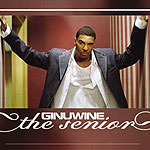
 Albums which have benefited from the Kieklak touch are Missy Elliott's This Is Not A Test, Ginuwine's The Senior, and Lil' Kim's La Bella Mafia."The sessions for that kind of music are not structured at all," he says. "You'll be tracking someone's vocal and suddenly someone else simply gets up and goes out to the studio and starts singing, too. Everything always has to be ready; everything has to be armed; you have to be ready to record anything and everything, even if someone is just playing with a little keyboard part. It might seem like they're just noodling, but then they realise, hey, this is something. They won't remember exactly what they played a minute or two ago, but you've got it for them. In Pro Tools, I have the Quick Punch mode constantly on. Not everyone knows about it. You can hit the space bar while the session is running and it drags back several seconds to when the [input] of the playing started. Another way of being always ready to record is to know what sources the artists like to use. The guitar or keyboard may not be on the session, but it'll be there, so you want to run it into Pro Tools anyway. Guitars, turntables, everything is bussed to Pro Tools. Anything that disrupts a session breaks the vibe, and vibe is what the music is all about. Technical chops are important, but being able to avoid disruptions to the flow of the session is even more important. That might be the biggest way in which music recording has changed.
 Scott Kieklak: "Anything that disrupts a session breaks the vibe, and vibe is what the music is all about. Technical chops are important, but being able to avoid disruptions to the flow of the session is even more important."
"It's the same with microphones and compressors," Kieklak continues. "I always have the mic chains ready to go. Particularly with microphones and vocals, you have to anticipate distortion when people are going to suddenly jump up and join in on a vocal session. Distortion comes most of the time from capsule overload in the microphone. It won't be able to handle a sudden increase in [level]. I use a Neumann U87 most of the time when I know the artist, but when I'm not completely sure, the Sony C800G microphone is a good choice, because it can handle the pressure better.
"The chain I like to use is usually a Neve 1073 preamp/EQ with a slight bit of compression from the CL1B. Not much; you want to let it breathe. You can always add more compression later. The thing a lot of people forget is that you can put compression on afterwards, but you can't take off what you recorded."
The same goes for ambience. Kieklak likes to build a room for vocals out of gobos and blankets in the middle of the main room, keeping better visual contact with the singer than using an isolation booth can often offer, but still being able to control the ambient space. "The same thing applies as with compression," he says. "You can always put more ambiance on later, but you can't take off what you've already recorded."
Kieklak is hybrid in his use of console versus hard disk workstation. "I use Pro Tools about sixty to seventy percent of the time as the mixing platform, the console about thirty to forty percent," he says. "The console makes it easier to cross-patch, which I do a lot to make tracks like the kick and snare bigger using samples coming in other inputs," he explains. "I do that instead of taking up tracks in Pro Tools."
He also has an interesting approach to building mixes. "I start with the vocals," he says. "I listen to a rough mix of the track, just so I know what everyone else has been listening to for the last two months and to make sure that all the parts in it are also in my [Pro Tools] sessions and that I'm not missing any parts. I'll start with the vocals and start with the hook, the chorus, starting with the first time it goes by, since the following ones are usually that one flown in.
"Panning to me is the most important part of setting up vocals, especially for radio," Kieklak continues. "I rarely go over eighty-five degrees left or right. Past that you start having problems with mono. Definitely check the backgrounds in mono. They might sound great in stereo, but radio is not full stereo and you'll find that they drop back on the radio if they're panned too much. I'll pan the first pair of backgrounds and make a master fader for them in Pro Tools, with a little compression on them and a de-esser on the way out. I take each of the background parts — lows, mids, high mids, highs — and bring them in closer to the centre progressively, and I never use even degree values. I'll use eighty-five degrees or seventy-three degrees. I usually bring the highest parts in a little more than the rest. The reason is, I'm trying to position the backgrounds in the mix as people would naturally group themselves around a microphone, like an old doo-wop group on a street corner. I use the odd values on the panning to give the sense that the position isn't totally structured and predictable.
"I then do other vocal parts, like ad libs, the same way, creating master faders for the groups in Pro Tools. From that point, I send the vocals through a chain, [usually a Neve 1073 to a Summit TLA100, a GML EQ, and a Dbx 903 de-esser], then edit out the problems like headphone bleeds, and do my crossfades. Then I'll start staging the instrumentation in much the same way, grouping them by type and with similar panning procedures. I'll start with the drums, with the kick and snare first. Those I'll listen to on the main monitors, listening at club level — I want to see the speakers move! — as opposed to the vocals, which I'll mix on NS10s. I also use the little monitor speaker on the Studer A820 half-inch machine. It's a five-inch speaker, but it gives you a very good reality check. If the hook is too loud in the mix, you'll hear it. I use that for balance, but certainly not for tone. I actually try to listen to a mix on every speaker possible; I'll even bring in a boom box and burn a CD. The bottom line is, if you can hear the kick on a five-inch speaker, then you've won."
Tony Maserati: Too Many Choices?
Tony Maserati is one of New York's veteran mixers at age 40. The city can burn them out fast. A regular mixer for Destiny's Child, Beyoncé, R Kelly and other R&B greats, Maserati works out of The Hit Factory in Manhattan. He's watched the committee approach to music production become a dominant force in the industry. "I do get pressure sometimes, more and more, actually," he says. "Someone from the record label will come in and say a radio programme director mentioned that this guitar part needs to come up or that vocal lick needs to be brought out more or flown in earlier in the song. They're coming back with ideas they get from market research, and it's getting scary that people treat music in such a way. I know a record has to be commercial, but it also has to be emotional. We're making three-minute pieces of art, and to judge them on the basis of ten-second snippets played over the phone to a housewife in Arkansas is annoying. That really characterises the times we live and work in."
![Tony Maserati: "In the analogue days I would come up with one [vocal] effect for the entire song. Now, I'm putting different effects on individual lines and even individual words."](https://dt7v1i9vyp3mf.cloudfront.net/styles/news_large/s3/imagelibrary/y/youngmastersmaserati-hpqizPHGxieyGj4T4OlEh8S05vc2Af50.jpg "Tony Maserati: \"In the analogue days I would come up with one [vocal] effect for the entire song. Now, I'm putting different effects on individual lines and even individual words.\"") Tony Maserati: "In the analogue days I would come up with one [vocal] effect for the entire song. Now, I'm putting different effects on individual lines and even individual words."
Tony Maserati: "In the analogue days I would come up with one [vocal] effect for the entire song. Now, I'm putting different effects on individual lines and even individual words."
Recalling his early work with Destiny's Child and Beyoncé, about five years ago, Maserati notes that reverb on vocals was the norm. More recently, he says, plug-in processing has allowed him to micro-manage vocal effects. "In the analogue days I would come up with one [vocal] effect for the entire song," he says. "Now, I'm putting different effects on individual lines and even individual words." Going one step further, Maserati says he will sometimes let the vocal's rhythm set the groove for the track after the fact, a technique he used on Beyoncé's single 'Baby Boy'. "I'll chop the track on 16th or 32nd notes and put in mutes on those beats to follow the rhythm of the vocal," he says. "It's as though the entire track is now a vocal effect."
Echoing an observation that's been made by a number of mixers lately, Maserati points out that when someone asks for a vocal to be dry, they don't really mean 'dry' — they mean 'not wet'. The distinction is critical. "I use [reverb] far more sparingly now," he says. "I'll pick the spots, like on a very emotional high point of a song. It used to throw me for a while, but truthfully now I don't miss a lot of reverb on a vocal. It's also made me realise that the veterans of the old days of mixing really knew what they were doing with reverb. They were expert at layering reverbs and doing things like tuning plates. I was always amazed by a guy who could tune a plate."
The new paradigm is more reverb, but tighter reverb times and applying it so that it tracks the vocal or the featured instrument very closely. "I like to use choruses, like the TC Electronic 2290 or 2110 plug-ins," he says. "Sometimes a TC and a Roland together. Set it up so it surrounds you in the stereo spread."
Maserati notes that another hallmark of contemporary mixing is that he will get tracks in on a variety of digital (and sometimes even analogue) formats. "Pro Tools sessions, Logic sessions, sometimes I just get twenty-four tracks of audio data," he comments. "The producer for Destiny's Child and Kelly Roland, Rob Fusari, uses Cubase and he will send me the tracks on a CD. All the tracks just start on 'one' — no Pro Tools sessions. I import them to Pro Tools at bar one, beat one and I'm ready to go. When tracks come in that way and they're done well, it's a great thing. But you have to make sure the synchronisation is perfect."
Maserati, like many mixers of his time, is gear-laden. He runs two Pro Tools systems for two different purposes: one for mixing and one for prepping the audio elements, a task that can consume almost as much time as the mixes themselves. "It takes about two hours to prep a session, and it's really hard for me to give up that time," he says. "I'm already working fourteen hours a day on just the mixes. So I assign an assistant to do the clean-ups on the tracks, cleaning up the bad edits, assigning the outputs and patches, and positioning the pans. Then I review the tracks in my Pro Tools rig and make decisions about automation and which plug-ins we're going to keep or lose after they appear on the screen. It's important to have an assistant keep notes in the comments windows of Pro Tools about plug-ins. I'll want to bounce the parts to disk and listen to them with the plug-ins on and off and see which works better. But documenting this stuff is important, because there's so much metadata about the audio tracks."
That points up another new wrinkle in the world of mixers: as they find themselves getting increasingly large track sets that are chock full of unfinished production ideas, the old saw of "fix it in the mix" is taking on new weight. "Very often, I'm seeing things that are left in the middle of the decision-making process," Maserati says. "The digital world is allowing people to not finalise many of their artistic decisions. That can be problematic for someone on a time budget, not to mention a financial budget. When a label gives me a gig I do a budget based on how many days I think it will take, and if I go over because I have to resolve these unmade decisions, the label is going to be looking at me. Fortunately, I've been doing this long enough so that I think I can intuitively make most of those decisions for the track myself and make them quickly and be rather sure I'm right, but it still takes time. That's where time management has become a big part of my working mode. My assistant knows me and how I like panning positions, so he'll take care of that task while I'm sorting out some of the decisions that have to be made for other things. Time is finite, so you have to make up for what gets taken away by complex mix decisions."
(One benefit of the model of studio/mixer symbiosis is that the facility will provide the assistants for the room, and a regular client like Maserati will get the pick of the litter, so to speak, of what the facility has to offer in terms of human technical resources. Maserati has had only four assistants in three years of steady work at The Hit Factory, which is a relatively low turnover rate in the studio business.)
But this point underscores a larger issue that stems from the excess for which digital offers the opportunity, one peculiar to this generation (even if some of the more grizzled veterans remember grousing that going from 16 tracks to 24 was the demise of artful recording). "A lot of people simply don't have the discipline to limit the number of tracks they use, Maserati complains. "That leads to them deferring decisions till the mix, and I end up being the editor and the arbiter of the production. I'm not really complaining — I've been a producer and I liked producing. But I like mixing better. Still, I'm becoming the [de facto] producer of the track in a way, and there are times I'm faced with a decision I don't want to have to make, like asking me to comp five or ten vocal tracks. I think those decisions require input from the artist."
Maserati is also a fan of making sure that as much information as possible about the tracks accompanies them when they arrive for mixing. "One of the interesting and positive things about Pro Tools becoming the standard is that it's also becoming an instrument you can play in the same way you could 'play' the analogue console like an instrument," he observes. "The downside is that it's so widely available and accessible. As more people have access to it, the bar of engineering quality gets lowered. We're losing the paper trail of track sheets we had with analogue tape. I get no information on punches, on which microphone was used, if a clock was used or what it was clocked at. When the artist takes the track home to do vocals, that can really complicate things. What everyone needs to do is create a Read Me file and stay with it, updating it at every step along the way."
Dave Way: Dealing With A&R
 Dave Way: "There seems like more pressure on an artist for the second record than on the first. And you can feel that as a mixer in the control room, too. It's stifling the artist, and by extension the mixer too."Dave Way acknowledges that he's in his 'mid-thirties', and his reluctance to precisely date himself reflects in an oblique way the rising star status of mixers. He works out of rock-heavy Los Angeles, and his credits, while diverse, mirror that: tracks for artists like Julio Iglesias and Ringo Starr punctuate longer stretches populated by artists like Macy Gray, Evanescence, Foo Fighters and Pink.
Like most mixers with serious credits, Way has a manager. He feels he is perfectly capable of dealing with the intricacies of the business side of his profession; what he lacks is time. "It makes the day-to-day dealings with labels and producers a lot easier," he says. "I could do that, but at the expense of time away from work or from learning what I need to know about new gear." But after a moment he concedes further that, "the business of being a mixer, of being an audio professional, has become more complex. It's also more competitive. And the nature of the business has changed. There's more pressure on certain [title] releases to be hits. The pressure comes from all sides, from A&R, and you can feel it in the control room like you never did before. They need [the record] to be very, very radio-friendly. I'm getting more instances of the 'radio police' coming into the studio when I'm working — programme directors sent over by the A&R department to give them feedback even as the mix is being done, because A&R want to cut to the chase and make sure the mix will be what radio wants."
 Then there's so-called 'sophomore syndrome' — the second record that needs to mimic and ape the first hit. (It's axiomatic that the first record was a hit; otherwise, there's precious little chance, in the world of consolidated and cost-conscious labels, that the artist was asked to stick around to make a second one.) "You want the record to be successful, of course," Way says. "And it has to be radio-friendly to be successful most of the time. But you also have to wonder where you're going to draw the line at how much input you're going to take. What was the point of hiring you if they didn't want you to make certain artistic decisions? And when it comes to the second record, it can be difficult. I mean, what if Bruce Springsteen had had to make Born In The USA as his second album? Artists need time to develop, and they get very little of that these days. There seems like more pressure on an artist for the second record than on the first. And you can feel that as a mixer in the control room, too. It's stifling the artist, and by extension the mixer too."
This phenomenon has actually affected Way's approach to mixing records on a technical as well as artistic plane, he acknowledges. He says he'll refer to the previous record as a guide to both aesthetic and technical moves to some extent, whether he was the mixer of the previous record or not. "Right or wrong, everyone, in fact, is referencing that first record," he says. "Trouble is, we were likely a lot freer making that first record, and now we have to be constrained by it."
 On Pink's Missundaztood, Way worked on several tracks produced by Dallas Austin. Way describes the album's over-arching vibe as "an R&B girl's take on what a rock record should be. The record has a rock tone to it, but the drums were programmed. I had done a mix of 'Just Like A Pill' with the guitars louder, but it didn't match the mood Dallas and Pink wanted, which you can really get by listening to 'Don't Let Me Get To Me', where the drums are louder than the guitars."
Contemporary mixers are becoming used to getting increasingly large numbers of tracks in. As Tony Maserati notes above, the main purpose his assistant serves is to organise incoming data. However, Way sometimes finds a method to this madness. On the upcoming release by Andrew WK, Way was confronted with well over 100 tracks on each song, which he considers to be a red flag warning that there are a lot of technical and artistic decisions awaiting to be made before the first mix ever gets started.
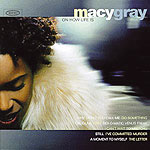
 Albums Dave Way has worked on include Pink's Missundaztood, Macy Gray's On How Life Is, and Christina Aguilera's debut."But Andrew did have them worked out," he says with a sigh of relief. "He's going for a 'wall of sound' approach, with virtually every part quadrupled or more — six pianos playing the same part, sixteen guitar parts. It's a lot of tracks, but in this case at least it was planned. That kind of stacking produces a much better effect than trying to electronically double and fatten parts. When you try to get a stereo piano from a synthesizer, it's not truly stereo. What Andrew would do instead would be to play the exact same part on different tracks. Each track is going to have a few pointy edges, some imperfections that create an effect that no digital box ever could. Not as sloppy as a recording done thirty years ago, when the only way to double something was to literally double it, but when it's panned hard left and right, those doubles hit the listener discretely. Even a few milliseconds difference between them breathes a lot of life into a song, to the extent where you can actually do a part truly doubled. I much prefer the energy that that brings to a mix."
It might be regarded as a retro technique, but then, this cohort of mixers is, as mentioned earlier, the bridge generation between an era in which music was limited by the parameters of its technology and an era in which Western music's 12 notes are manipulated in seemingly boundless ways to fill out an almost infinite number of tracks. They are between an era in which the album producer was also more often than not the album's mixer, and a time when technology-induced specialisation has made positions such as programmer paramount to that of musician or engineer. The mixer balances more than tracks relative to themselves and to unity gain; he or she is balancing the musicality of a work against the siren-like allure of what technology can do to it. At the same time, the mixer has to figure out when the next royalty check is due and if it adds up properly. Quite a balancing act, indeed.