

 Al Kooper, 1971.Photo: the Al Kooper collection
As a musician, Al Kooper became Bob Dylan's sideman and went on to fuse soul and jazz. As a producer, he invented the supergroup, and as an A&R man he brought Southern rock to the world.
Al Kooper remembers standing in the wings of a stage somewhere in Middle America in the midst of one of notorious DJ and impresario Alan Freed's travelling rock & roll extravaganzas, watching an argument between Jerry Lee Lewis and Chuck Berry unfold. "They were arguing over who was going to close the show," says Kooper, who was then 14 years old, playing guitar in a New Jersey band called the Royal Teens who had scored a hit in the summer of 1958 with a novelty ditty called 'Short Shorts'.
Lewis apparently lost the row, but before he closed his set he squirted the piano with lighter fluid and tossed a match on it. Walking off stage as the Steinway went up in smoke, Kooper was there as Lewis passed a fuming, flabbergasted Chuck Berry and spat out 'Follow that!', coupled with a racial epithet that was not out of character for a southern redneck in the late 1950s.
What a nice Jewish boy from Brooklyn was doing in a situation like that was getting a first-hand education in a music business that was on the brink of becoming an industry. Kooper would become one of the more ubiquitous cogs in that machine, showing up, like some kind of long-haired Zelig, at critical moments. He just happened to be there, in 1965, when Bob Dylan was cutting Highway 61 Revisited in Columbia Studios in Manhattan, and when the producer wasn't looking, sat down at the Hammond B3 and played the organ riff to 'Like A Rolling Stone'. Or else he simply made his own contribution to musical Darwinism when he decided that a bar band with a barely pronounceable name in a divey club in the dowtown tourist strip might have a hit with a song called 'Free Bird'.
Kooper pretty much made his own luck throughout a career that included joining a band called the Blues Project, perhaps America's sole useful response at a time when John Mayall and the Bluesbreakers were tidily repackaging American blues and shipping it back across the Atlantic to an audience of youths who would spend the better part of their lives thinking that Eric Clapton and Jack Bruce wrote 'Crossroads'. At a time when horn sections on pop records were either of the Frank Sinatra or James Brown variety, Kooper was imagining how they might sound if Maynard Ferguson got his DNA trapped inside a Marshall stack, which resulted in Blood, Sweat & Tears' first album, Child Is Father To The Man. Kooper produced major hits with oddball bands like the bizarrely theatrical Tubes, whose White Punks On Dope put a tongue in the cheek alongside the safety pin, as well as quieter but equally enduring gems, like Nils Lofgren's Cry Tough in 1976 and Marshall Chapman's 1978 Jaded Virgin; and took the UK's David Essex down an unfamiliar road with Be-Bop The Future.
Kooper did all this while releasing the occasional solo record, such as I Stand Alone. Even when he wasn't looking, musicians paid homage, such as when the Beastie Boys sampled his song 'Flute Thing' on their five-times-platinum Ill Communication. A survey in Hip Hop magazine noted Kooper as the only artist sampled by all of the top producers polled. He's a musician's musician, which partly explains his relative anonymity outside of the universe of players and aficionados. His work, though, speaks quite ably for itself.
A Poor Substitute
You could say that Al Kooper has embraced home recording, but it might be more accurate to say he's had it foist upon him. He's adept at working MOTU's Digital Performer sequencer, and has moved from hardware gear into the Waves plug-in bundles he now uses (although he still clings to his Alesis Masterlink 9600 as a CD burner). But he misses the studios he used to haunt, like the Record Plant in Los Angeles, where John Lennon would occasionally stop by during a mix. "I liked being able to choose rooms according to the project," he says. "Skynyrd sounded great in a big room in Atlanta, but the small Record Plant Studio B was perfect for Skynyrd and the Tubes as well. And I miss how the studio owners could differentiate a studio solely on the basis of a service philosophy, not just equipment."
He stays up on formats and is a big proponent of SACD's DSD technology. He has remixed Super Session and Child Is Father To The Man in 5.1 for Sony Music, though the releases are still pending. "For the most part, I thought 5.1 mixes on DVD-A were too conservatively mixed, and there was no adventure or daring use of the space provided. They just sounded like stereo mixes on HDTV. I went berserk on Child Is Father To The Man — guitars flying over your head like helicopters in Apocalypse Now. A string section divided into four sections filling the entire room, stuff like that. Hell, stereo only gives you a 180-degree playing field while 5.1 gives you 360 degrees plus height. If you use that space propitiously, one can hear the little nuances of each instrument gratuitously. As a fan, I want to hear the envelope being pushed on 5.1 mixes, so that is what I did."
Ukelele Man
Kooper could play piano at the age of six with barely a lesson. He was playing the ukelele at summer camp when an older boy mentioned that by learning two more strings he could join a rock & roll band as a guitarist. This was serendipitous since, by the time he was 14, in 1958, the music culture was poised to switch from saxophones and hair pomades to embrace the Stratocaster as its icon. New Jersey group the Royal Teens were a revolving bunch, with the oldest members, at 16 years old, still subject to the whims of high school and parental control. Kooper was on the merry-go-round at the right time, when the band had a top five hit with 'Short Shorts'. The band joined the seemingly endless cavalcades of touring shows put together by Alan Freed and Dick Clark. "I was still in high school, so I would tell my parents that I was gong over to a friend's house for the weekend," Kooper says. "Meanwhile, what I was doing was going to New England to play four shows." Kooper with Bob Dylan in 1965.Photo: the Al Kooper collection
In between short-term jobs including waitering at a pizza parlour and clerking at a department store, Kooper developed a nascent songwriting talent. He hung around 1650 Broadway in Manhattan — not the more famous Brill Building, three blocks south at 1619 Broadway, where only the ghosts of the old Tin Pan Alley still lurked. 1650 was the focus of the emerging pop music business, where Don Kirschner was building a publishing empire and writers like Carole King, Barry Mann and Cynthia Weill were churning out hit singles. Kooper got a job as an assistant engineer at Adelphi Sound Studios, a demo mill on the seventh floor.
"As an assistant, all I did all day was cut acetates of other people's sessions," Kooper recalls. "But at night after the studio closed, I got to engineer some sessions. The first session I ever did was a radio station promo spot for Dionne Warwick. I was so excited because I was really a fan of hers. The first words I ever recorded were 'This is Dionne Warwick and you're listening to W-A-B whatever-station-it-was.' The studios had handmade consoles with large rotary knobs in place of faders. Most places were mono; a few were three-track."
West 53rd Street Revisited
Kooper began to meet people who would play a role in his future career, including Columbia staff producer Tom Wilson and guitarist Mike Bloomfield, whom he would later build the Super Session album around. Wilson recorded some of Kooper's songs with various artists and used him as a guitarist on some sessions. (The idea of engineering sessions held little allure for him after just a few months at the studio. Even today in his home studio, Kooper scowls at having to record his own parts.)
In 1965, Wilson invited Kooper to watch one of the producer's sessions for Bob Dylan's Highway 61 Revisited, at the Columbia Studios on West 53rd Street in Manhattan. "It was the first time I saw Mike Bloomfield play," Kooper remembers. "Dylan sessions were a little chaotic, and I was 21 and very ambitious. I was listening to 'Like A Rolling Stone' being rehearsed by the band and I suggested me playing an organ part. Tom said 'You're a guitar player, not an organ player.' Then he went to take a phone call and I thought to myself 'Well, he didn't say no.' So I went out into the studio and sat down at the organ. Then Tom comes back into the room. He says 'What are you doing out there?' I nervously laughed, and Tom let me stay. The next take was the keeper." Primarily a guitarist, Al Kooper grabbed the opportunity to play Hammond on Bob Dylan's 'Like A Rolling Stone', and thereafter established himself as a session keyboard player.Photo: the Al Kooper collection
The rest, as they say, is history; in Kooper's case, it was but Chapter Two. "The Dylan sessions changed everything," he says. "Suddenly, I'm a keyboard player, I'm getting session work and no longer living the precarious existence of a songwriter, and I'm in Bob's circle. He'd call up and say 'We're all going to dinner,' and I'd say 'Where?' and just go. It kind of inoculated me to fame, because every night with him you'd be around famous people. I just shut up and took all of it in. I was a willing student."
Interestingly, the next Dylan record was the opposite of the chaotic Manhattan sessions. When Dylan went to Nashville to record Blonde On Blonde in 1966, Kooper was there, as well. Producer Bob Johnston coupled the New York session player with seasoned Nashville A-team players like Charlie Daniels, Charlie McCoy, Joe South and the late Kenny Buttrey. Kooper's usefulness to Dylan increased. "Bob had a piano in the hotel room, but in the days before cassette recorders, he would teach me the chords and I'd play them over and over while he wrote the lyrics," says Kooper. "I was his human tape recorder. By the end of the day I knew the songs intimately. I told Bob 'Why not come to the session an hour later than you normally would?' I would teach the band the songs for the sessions each night. The sessions were at the old Columbia Studios on Music Row. Kris Kristofferson claimed he was the janitor there then. He could have been, but I never noticed him."
Turning Blue
The Blues Project was put together by guitarist Danny Kalb. Producer Tom Wilson called Kooper to play on their audition session for Columbia Records. Joining Kalb were Steve Katz, Andy Kulberg, Roy Blumenfeld and short-lived vocalist Tommy Flanders. "He didn't have a chance — everyone in the band was Jewish except him," Kooper deadpans. Kooper was asked to join the band, which he viewed as a chance to improve his keyboard chops. "Living in New York at that time, you didn't get to hear a lot of blues. You knew the crossover stuff, like Jimmy Reed and John Lee Hooker. So I got quite an education at the hands of Danny Kalb and his record player."
The Blues Project made three records, the first and last of which were live albums. Kooper considers all of them 'poorly recorded' — "Steve's harmonica on Live At The Café A Go Go sounds like a duck call," he snorts. "The second album, recorded at Olmstead Sound, has a lot of weird echo on it, and that was our best recording." He speculates that Wilson, who was also producing the Animals at the time, was simply slotting the Blues Project sessions into cancellations from other projects, as though they were an afterthought. "We'd do three-quarters of an album in one session and then they'd call us a week later and tell us to come down now and finish it," he recalls. "It was frustrating because we'd hear records our friends were making and they would sound amazing and ours didn't. I talked with John Sebastian [of the Lovin' Spoonful] and asked how long he spent on 'Do You Believe In Magic' and he told me two days. We were getting 15 minutes."
Experiences such as these understandably prompted Kooper to want more control over records he was involved in. When he split with the Blues Project over his desire to put horns on his new compositions, the opportunity arose. The result would be Blood Sweat & Tears. "I was a slavish groupie of Maynard Ferguson's band during his 1960 to 1964 period," he says. "Ellington and Basie escaped me, but Maynard was as close to rock & roll as jazz could come. His horn parts would put a dent in your shirt at 20 yards."
 At Columbia Studios, New York, in 1968, with arranger Charles Callelo (centre) and an unknown Columbia employee.Photo: the Al Kooper collection
In 1967, Kooper went into Columbia Studios, by then moved over to East 52nd Street, with producer John Simon and began work on Child Is Father To The Man. Kooper says Simon's production methodology would come to define his own: "We would go in and record everything to mono or two-track, like a demo. Then John would take those tapes and digest them, rewriting some of the arrangements. I learned how important that kind of pre-production is to a record. Not just rehearsal, but hearing the songs in their basic form and having time to reconsider them."
Kooper left the band after touring in support of the first album, but it marked a turning point in his career. He took an A&R position at Columbia — a sort of graduate school for him. His first production would allow him to work with Mike Bloomfield again on a project, one that would put the jazz-based notion of the jam session squarely into the mainstream of rock.
Kooper and Bloomfield had led remarkably parallel careers. "We both went from Dylan to a blues band to a horn band, and we were both thrown out of horn bands," he says. What would become Super Session was a group of players that Kooper assembled — Bloomfield, Harvey Brooks, Eddie Hoh and himself — going into Columbia Studios in Los Angeles with no songs. "All I said was 'Wanna jam?'" he recalls. Half the album was cut on the first night, and Bloomfield, whose recorded work Kooper had always felt never did him justice, was brilliant. "This was the setting in which you could get the best performance out of a great musician," he says. "Just like jazz." But the next day, in the house Kooper had rented for the musicians on his Columbia Records expense account, he came down to breakfast to find a note from the quixotic Bloomfield saying simply that he had left.
"Actually, the note said he couldn't sleep," says Kooper, who still seems amused by it today. Kooper called every guitar player he could think of in Los Angeles, and Stephen Stills, who had just left Buffalo Springfield and was still forming Crosby, Stills & Nash, accepted the invitation. It turned what would have been a musically astute jam session record into an all-star record event, laying the groundwork for a slew of 'supergroups' to come.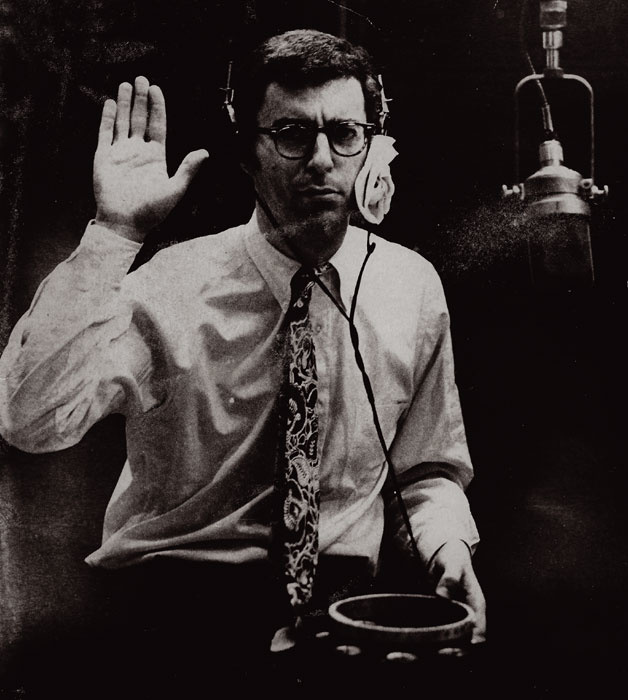 John Simon, who produced Blood, Sweat & Tears' debut album along with many other classics.Photo: the Al Kooper collection
Sounds Of The South
Kooper left Columbia in 1972 and moved to Atlanta. The Georgia music scene in general was booming, with the Allman Brothers the flagship artists for Phil Walden's Capricorn Records in the nearby city of Macon. The Atlanta Rhythm Section were recording their hits in their own studio in the suburb of Doraville, and Kooper produced an album for duo Frankie & Johnny there while making the rounds of clubs. "We'd work from noon to eight in this great studio with the guys from the Section as the back-up band, then go out carousing," he remembers fondly. "We were at one club one night and this band came on and I hated the lead singer — he would strut around the stage carrying the microphone stand. This was the era of Yes and Genesis and ELP and all this 'progressive rock' music, and here were these country boys playing three-chord rock. But it occurred to me that things go in cycles — whenever new movements washed over the music business, it would always return to three-chord rock as a way to kind of centre itself again. I thought if I could find a great three-chord rock band, I could sell a few million records."
He could, and he did. By the fifth night of a week-long stand, Kooper was playing on stage with Lynryd Skynyrd. Kooper took them to MCA Records, which gave him his own label, Sounds Of The South Records, as a way to break into the burgeoning Southern rock scene. They recorded their debut record, Pronounced Leh-nerd Skin-nerd, at the Atlanta Rhythm Section's Studio One, which Kooper bought into through a co-venture with Atlanta producer Buddy Buie.
"I never worked with a band like that before," he says. "They were incredibly well rehearsed, right down to the guitar solos, which were composed to the note and not improvised like a lot of rock bands. As a result, when I recorded them, I could always count on being able to get a double-track of the solo. That's a great way to get a guitar solo to sit on top of the track without boosting the volume ridiculously high. It became part of their trademark sound: you could slip the double in there in the mix and it would take centre stage without unbalancing the mix. All three of the band's guitarists [they had added several members to the group during the course of the first album] were so distinct that it really was like producing an orchestra." 'Free Bird' remains the second most-played song on American radio to this day.
Up The Tubes
The Tubes were a different kind of orchestral rock band, as much Cirque Du Soleil as a musical experience. Record labels circled around them, aware that something was there but uncertain as to what to do with it. After A&M Records finally signed them, Kooper was brought in to produce their first album and put much of what John Simon had taught him to work, spending three weeks rehearsing the band and tweaking the arrangements.
 Engineer Lee Kiefer (front left) and Al Kooper (front right) with the Tubes in the Record Plant, Los Angeles.Photo: the Al Kooper collection
"When you make a change to an artist's song as a producer, you have to be able to validate and defend every one of those decisions," he says. "There was this theatrical dimension to the Tubes and I decided that I didn't want to see the live show before I did the record. I didn't want to be influenced by it."
Record Plant's Studio B was a relatively small room, which seemed to help contain the band's theatrical impulses, particularly those of lead singer Fee Waybill. "They were more like a Broadway show than a rock band," Kooper says. "I wanted strings and horns but knew that I couldn't get the arrangements I wanted from a rock arranger, so I hired Dominick Frontiere, who had done the scores for movies like Hang 'Em High. Major 'B' movies. He completely got it."
Al Kooper has kept busy since then, producing his own and other artists' records, and playing live, under the name The Rekooperators, with various assortments of top-flight musicians. In 1992, he became music director for perhaps the strangest band of all. Backstage Passes, his autobiography, qualified him as a member of the Rock Bottom Remainders, a loosely affiliated rock band made up of authors including Dave Barry, Stephen King, Dave Marsh, Amy Tan, Barbara Kingsolver and Matt Groening. Their touring adventures became grist for their own book, 1995's comical Mid-life Confidential. Kooper has done a show as a DJ for Radio Caroline, with another pending. At 60, he's hardly ready to retire. As he puts it "I need a few other degrees to round out my education," but he remembers the1970s as a decade that we're unlikely ever to see again in terms of sheer decadence and diversity of talent. "It was like Rome at its peak — and when AIDS hit the music business, it was when Rome burned."