

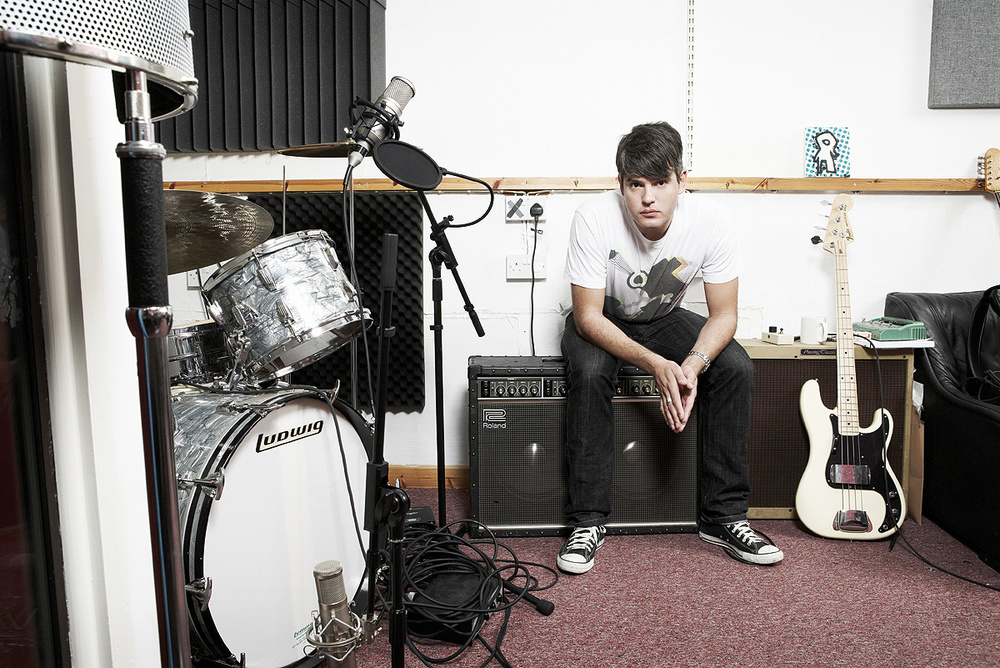
With credits ranging from Kate Nash to Bloc Party, Primal Scream and the Rapture, Paul Epworth might just be Britain's busiest producer.
Recent years have not been kind to record producers. It's harder than ever for new talent to establish itself, while many well‑known names have found themselves with more time than they would have wished to work on their golf swings. Conventional wisdom has it that the downturn in the music business and the explosion of affordable home recording are responsible, but looking at Paul Epworth's list of credits, it's tempting to offer an alternative explanation: one man is doing all the work himself.
Since he shot to prominence as producer of the Futureheads' eponymous debut album, the former Air and Strongroom engineer has written hits with Kate Nash and produced everyone from the Rapture to the Rakes. On top of this, he's a prolific remixer, puts together cutting‑edge R&B tracks for singers like Hannah Sibide, and has two musical projects of his own in the pipeline.
"The term 'producer' bundles together a lot of very different roles," he says, "even down to being a project manager, to a vocal coach to a guitar tech. All of those things could come under the umbrella of a producer. I'm a writer as well, and a lot of the stuff I've done in the last year has been writing and production. So then you're the person making the music, basically, and you're just working with a singer. Then your job is to guide the nature of the song and the aesthetic, instead of just the aesthetic and worrying about getting decent guitar sounds. The orthodoxy is very different."
Heavy Snares
 "This is the major machine," says Paul Epworth of his Roland SH5, "though the bottom end isn't so good, and for that reason, for bass lines I tend to use the Arturia Minimoog."
If there's a signature Epworth sound, when it comes to rock and indie material, it's a combination of hard‑hitting, up‑front drums and prominent bass. "That's something I got from listening to Rick Rubin records, where the drums are always really punchy. It used to really wind me up hearing drum sounds where every time they hit the snare, all you'd hear was ringing. To me, I'd much rather it was punchy and powerful and drove the backbeat, but didn't overstate its presence. So it's a little bit of that Rick Rubin, Steve Albini aesthetic, and I love the warmth of disco drums, like Arthur Russell's really muted drum sounds. I guess that's what I'm trying to do is find a balance between those two aesthetics.
"I try not to gaffer‑tape drums at all, but I spend hours meticulously tuning them. Sometimes you tune drums and they sound great in the room, and you put mics on them and they sound shit. So it's a case of tune it, have a listen, tune it, have a listen. I worked with Bruce Botnick many years ago and he taught me something the old Stax drummers used to do, which was to detune the snare really low and then stick a wallet on it. I think part of it was that because you couldn't have the kick drum very loud on those cuts, the main part of the rhythm was the snare drum, so the snare drum had to be big and heavy and push the groove. I remember him saying to me that the guy who had the heaviest snare drum was the guy who had the heaviest wallet because he was doing the most gigs! So there was a little bit of one‑upmanship there.
"I never EQ to tape. I like the fact that you can really EQ a drum by pushing and pulling a mic in or out [to use proximity effect]. I always try to make sure the sound's right on the mics, meticulously checking phasing. I find it's always worth listening to how the mic's positioned relative to how you want it EQ'ed before you start flipping phase, because it's not a perfect art. If you always put your mics in exactly the same spot, great, I'm sure you can flip the phase, but if you start moving stuff around, you often find that it's not 180 degrees, so I think that using a Little Labs phase tool, stuff like that, can really help. I like to make commitments, so I might use three mics on a kick drum and two mics on a snare, and make sure I commit them to tape together, just because I'm not totally convinced that if you come back and try to phase‑align those later, they'll ever be the same.
"I don't ever use dynamic mics on a drum kit if I can help it: it'll either be ribbons or condensers. The exception would be an [Electro‑voice] RE20 inside the kick, but I tend to try to use a [Neumann] U87 or 47 outside, and a Yamaha NS10 driver on the bottom. I try to line them up equidistant, so that theoretically it would always phase‑align. I'll use [Neumann] KM84s on snare, top and bottom."
Live Takes Are Everything
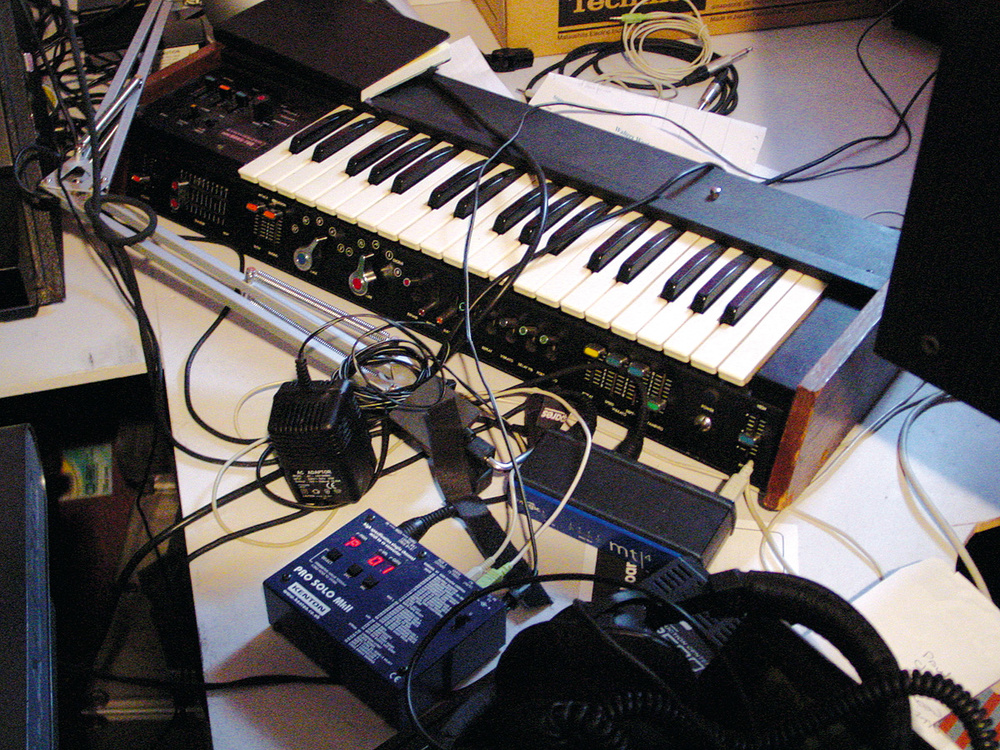 Epworth is fond of the unheralded Minikorg 700S. "It's so easy to get interesting sounds out of it just by flipping a few buttons," he says. "I use it MIDI'd up, but I'll quite happily use it without, it's quite playable for creating little sound effects or whining Dr. Dre lead lines."
When it comes to mixing and processing, he insists: "There's no hard and fast rules. If I'm going for that big, tight rock sound, I'll gate everything really hard and let the overheads and ambience fill in the blanks. But then everything ends up so compressed that you have to work quite hard to make sure everything retains its relative place in the spectrum. But it totally depends. Recently I've got into sticking overdrive plug‑ins on everything, because I think — well, that's what tape does, isn't it? Even if you're recording to tape just as a format, it adds even‑order distortion to it, and I've managed to start getting a similar effect to tape using Logic Audio distortion plug‑ins, using the tone as a bias, almost."
These days, Epworth no longer needs to do all his own engineering, leaving him free to concentrate on getting a great performance. "I work with a guy called Mark Rankin, who's got a very old‑school, purist sensibility. His skills are strong enough that it means he can buy me a little bit of space to think about music and the bigger picture, rather than just worrying about the details of the technical stuff.
"I'm a real sucker for getting a really good live take. Even if you replace everything, I'll still always work to get that live take that's really exciting. Because it's the way I always worked in the past, because I never had the luxury of time, I had to try and capture as much as I could in one sitting, I feel like if you capture that energy on a drum track, you can overdub the guitars and everything else to slot in, because you've got four people in the room and their energy's in the drum ambience. If you do everything separately, the musicians are too busy thinking about playing to the click or playing to the parts, rather than just letting themselves go and playing 'above what they know'.
"I always like to do bass last, because it's much easier to tell what's missing sonically within the track, and make sure it's in tune. I like the bass loud, and it's much easier to make sure it's right after you've got the guitars on and those are all in place. I always put a guide on first. If you're going for a big rock bass sound, unless you're going for that super‑claustrophobic DI'd distortion, I think you need an amp with a little bit of room on it, but if you're going for a warmer soul sound, all those tracks were done with DIs because you didn't want a bass amp in the room."
Bloc Rocking Beats
Epworth's trademark punchy rhythm section is very much in evidence on Bloc Party's recent third album, Intimacy. Epworth has worked with the band from their early days and helped to guide their development. "I feel like with Silent Alarm [their debut], we caught a band at the right time in the process. We recorded most of the music in Copenhagen and then came back and did mostly vocal overdubs in London, apart from 'So Here We Are', which was the guide vocal. I felt like it was a growing process. Kele [Okereke] wasn't particularly comfortable singing in front of people at that stage, and he'd had tonsil problems as well. You hear a gradual change as a band physically, professionally — it's maybe not a conscious thing.
"Russell [Lissack] and Kele are both very creative guitarists. Kele will do one thing that creates a great deal of impact, whereas Russell's very good at subtle embellishments and leading the melodic side of things outside of the vocal. I've been very lucky to work with them in that respect, because it's quite hard sometimes to get people in bands to open their minds and step outside of what they're comfortable doing, especially with guitars, because they don't want it to sound synthetic. Even with them, it took three sessions before they realised how I wanted to work. They did have a tendency to question everything to start with. I think they were scared of even using distortion pedals, because they were really into this chiming, clean guitar sound. But they gradually realised that you have to shape dynamics a bit more subtly."
Songs Of Experience
 The Akai MPC is used in conjunction with Logic and Ableton Live for programming duties. "It's great to have a tactile sampler. I've got loads and loads of sounds in there and it's easy to audition stuff, and you can pitch and tune things, and it's a bit more hands‑on than doing it in the computer. I haven't got the patience to use the EXS24, I tend to use the Ableton sampler, because it's drag and drop."
For a producer who's made his name developing new artists, is it a different process working with more established bands like Primal Scream or the Rapture? "Yeah, I think so," he laughs, "because you can't pull the wool over their eyes! And also, their expectations are higher. That was something that was possibly harder for me in my mind than it was to actually do the job — especially working with the Rapture, doing their second record, after the work they did with DFA had such an impact. That was a little bit of mental baggage that you carry into sessions, being aware of the quality of work that's gone before. You just have to try and approach each song with an open mind. Primal Scream just do their thing, and as a producer, they're looking for your collaboration, but they know what they want, and if they don't like something, they'll put you very quickly in the right direction for them. As a producer, I tend to respond well to artists who have a bit of vision and a bit of direction, better than I do to people who don't have any direction. Some people are happy to mould an artist, but I'd much rather do records that are different."
Unquestionably different from most of Epworth's credits is perhaps his biggest hit album to date, Kate Nash's Made Of Bricks. "With Kate Nash, we did a week's trial together, and in that week we wrote the first two singles, 'Foundations' and 'Pumpkin Soup'. And off the back of that she was signed. She came back at the beginning of the year to start recording some of the tracks she'd already written, and start trying to see which of those we could form into other singles. It was a balance of trying to make sure we kept the naivete of her songwriting and performances, but trying to make it into something that didn't just sound like a bunch of Garageband demos. It was an interesting record, because we were trying to go for something quite modern and something a bit timeless. That's always a difficult one. I think we hit it in places.
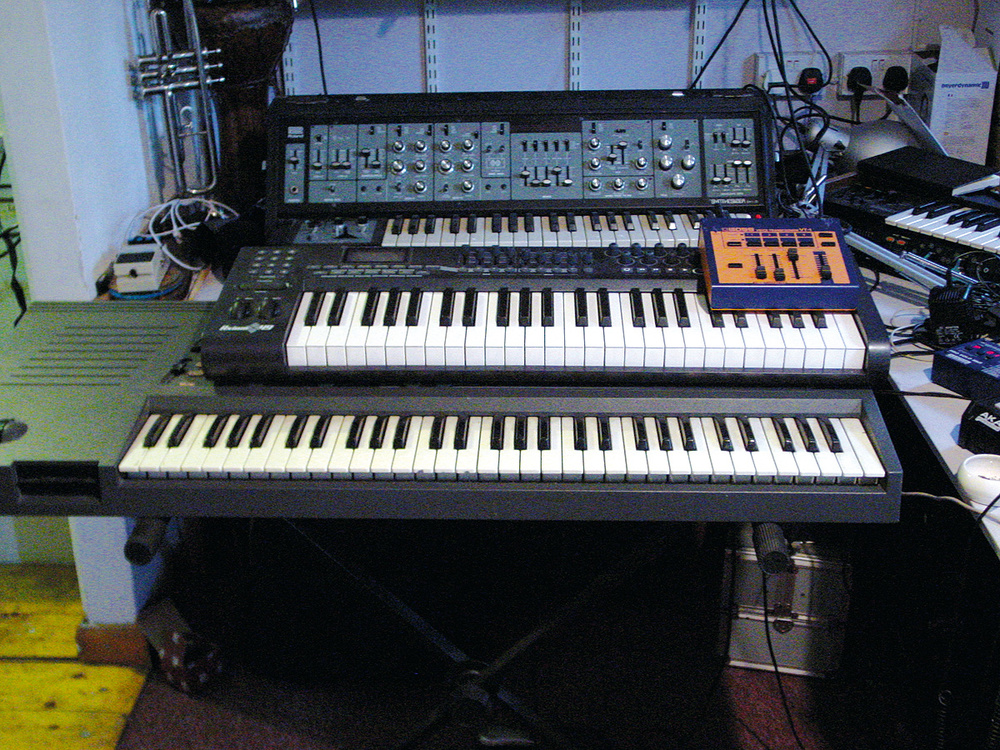 Lurking beneath a controller keyboard is Paul Epworth's old Emax sampling keyboard. "The sampling engine's the same as on the SP1200, so for sampling drum sounds it's really warm and punchy. The arpeggiator's got all these different settings, like additive settings, so that every time you add a note it increases the frequency of the arpeggiator by a notch, which is quite useful for doing interesting stuff with harp sounds and Italo‑disco stuff."
"She's got an amazing voice, Kate, and overall I think that's what stands out. She's a great singer. Two or three takes and she was done. In terms of post‑processing, because she's got a very clean voice, we'd bung it back through a mic amp and blend the two together and try to give it a bit of grit. Steve Fitzmaurice really took all the work I did up to another level with the mixing. His mix of 'Foundations' made the difference between that having potential and actually being the hit single it was."
I'm All Right Jack
At the time of writing, Paul Epworth has just completed work on the second album by singer‑songwriter Jack Penate, which was entirely recorded in Epworth's own London project studio. It's an album that's sure to surprise many fans, with an old‑school sound that marries Afrobeat and soul, and exemplifies Epworth's determination to keep both himself and his career fresh by embracing every diverse style possible. "I love being versatile," he enthuses. "I love the fact that today I'm writing, yesterday I was remixing... I try to look at it all as making music, and I'm happy to be involved, rather than thinking of it as a job description."
And, amidst all the doom and gloom that surrounds the music business at the moment, he sounds a refreshingly positive and optimistic note. "I feel like we're in a lucky place at the moment, where the technology exists for your average person to make exciting, creative music, and you can use a variety of textures and aesthetics: some old‑school recording techniques, some new digital processing, and I think genres are blurring together. I feel lucky to be working at this time."
Part Work
"I still like to think of making an album, and to some degree I still like to think of it being two sides," says Paul Epworth. It's a point of view that sits uneasily with the way record companies operate at the moment, which often results in multiple producers contributing to albums. Does that not lead to disjointed records with no flow or consistency? "I think you just have to do what you can do. Record companies are quite happy to split records up now, since the Amy Winehouse record. Maybe they're hedging their bets. With Primal Scream, we went in to do a bunch of tracks together, and ended up with two tunes that the band hadn't really thought of as singles, and it transpired that one was and one may be. It's interesting times. Either we'll end up with lots of patchy records, in the way that pop music is very much producer‑led, with one producer doing four tracks and another producer doing four tracks and another two just floating around, or you might end up with some really interesting patchwork where there are different textures and different aesthetics on the album."
The Luxury Of Pre‑production
If Paul Epworth has a regret about being so much in demand, it's that he rarely gets time to do proper pre‑production on album projects. "It's always my intention to, but because I've been so busy, often it's just worked out that I can't mentally prepare, but end up throwing myself in. Even if it's just knowing the arrangements of the songs, or the things about the demo recordings that are effective that you try to keep, things that aren't so effective, arrangement‑wise, that you want to change. I'm really looking forward to actually having the opportunity to spend a bit of time in a Rick Rubin fashion, sitting in the rehearsal room with a band or an artist, to start chipping away and refining the songs before we even go into the studio. It's just having the space to work with people where it's a bit less under pressure. The studio experience is quite intense ‑‑ it's not like you've got to try to learn a new arrangement of a track well enough to play it that second. There's something about that old‑school approach that people miss out these days, because there aren't the budgets or the time, people are expected to turn records over faster. Pre‑production wise, the biggest luxury I get is to have a dialogue with the artist running up to the recording, so you begin to bounce ideas and move in the same direction together."
Manipulate The Singer
The role of the producer varies immensely from project to project, but the challenge of getting good vocal performances from a singer is almost universal. That doesn't always mean making the singer feel comfortable. "Sometimes artists respond to being out of their comfort zone, as well. It depends what you're after. If you're after a take that's got tension to it, there's certain things psychologically you can do to an artist... I guess you have to be a little bit manipulative, really, if you can. You have to get them into a space where you think that they're more likely to perform in a way that suits the song.
"I find that when you're recording a vocal, you have to think about how you want the vocalist's voice to sit in the track. If you're doing a rock tune and you've got the singer right against the microphone, you're going to have to work really hard with EQ to try and make it sound like it sits in the track. Something I learned from John Leckie: you record the vocalist where you think you want to position them in the piece of music, and with a rock singer, it's better to record them an arm's length away so that it seems to sit on that scale in the track.
"Sometimes I use a [Shure] SM7, and sometimes a handheld mic like a '58 sounds great, but as a rule of thumb, it's usually a condenser or a ribbon. I will try different mics, but you have to make sure if you're going to do that, I always find it works better if it's a totally separate process to actually committing a vocal performance, because it gets them thinking too much. It's like it switches the brain on, when actually you want the brain off and the heart on."