

When British traditional music got a dose of rock & roll excitement, it was an American who sat in the producer's chair. Oh, and Joe Boyd also discovered a little-known band called the Pink Floyd...
Sometimes, the work of a single record producer comes to define an entire musical genre; and it's hard to think of a better example than Joe Boyd. Despite his other achievements, which range from founding the legendary UFO Club in the '60s to championing world music in the '80s, his name will probably forever be associated with the British folk-rock movement of the '70s. Boyd's work with artists such as the Incredible String Band, Fairport Convention, Richard and Linda Thompson and Fotheringay fused folk tradition with innovative arrangements and modern production values to great effect. Even records by the likes of Nick Drake and Vashti Bunyan that made little impact at the time have since become very influential.
 Photo: Mick Gold / Redferns
Joe Boyd himself was actually born and raised on the other side of the Atlantic. He began his career in Boston as an assistant to Elektra producer Paul Rothschild, who would go on to produce seminal albums for the Doors, Janis Joplin and Love, and Boyd credits Rothschild as his biggest influence in terms of how a record should sound. "To me, still, if I listen back to the records of the '60s, [the Doors'] Strange Days is the best-sounding record of the '60s. It's just an amazing job of recording. I think Paul was a great record producer, and even though I didn't get specific lessons in microphone placement or whatever, I saw the way that he ran the session and liked to listen to things — listening back to takes and saying 'more of this and that'. My ears got used to his way of hearing."
London Calling
With Rothschild's help, Boyd secured a job with Elektra's London office, and in early 1966 he landed in a city where a musical revolution was in full swing. Based in Soho, Boyd was eager to sign the new bands he encountered, but his boss wasn't so keen. "Jac Holzman, who ran Elektra, was more interested in my organising the marketing and promotion. It wasn't about me running round and scouting for new artists — he was a bit nervous about someone three thousand miles away with an Elektra chequebook in his hand."
 Photo: Mick Gold / RedfernsHowever, Boyd managed to bring with him a commitment for at least one A&R task, contributing to a Rothschild-produced blues compilation. "I persuaded them to let me add an English blues band, and I lucked into getting Eric Clapton and Stevie Winwood singing 'Crossroads'. We went to the old Olympic studios in George Street, before they moved to Barnes, and Keith Grant was the engineer. Keith just did the technical side and I worried about the music. I wasn't looking too closely at what he was doing. Everybody set up in the room, there was no drum booth or anything, and we just made the tracks, but then Jac Holzman grabbed the tape and took it back to New York to mix, which was a disappointment."
The door was open, but although Boyd later managed to convince Elektra to sign the Incredible String Band, he remained frustrated at not being able to offer a deal to other artists he believed in. "We were very conscious of the need to find artists that would be successful to make a career for yourself. I found the Incredible String Band while I was working for Elektra. Then I found Pink Floyd, but Holzman refused to sign them. I tried to sign the Move, also. You could almost describe it as a feeding frenzy — bands were appearing and getting signed a week later."
Changing Seasons
Eventually, Elektra decided to dispense with Joe Boyd's services, and he chose to remain in England and set up his own production company, Witchseason Productions. "Holzman agreed that I would continue to produce the Incredible String Band, and initially there was a production company set up in order to do a deal with Polydor for the Pink Floyd. They were going to sign to Polydor through my production company, but just before the contracts were signed, the Floyd got a new agent who said 'I can get a much better deal than this from EMI.' We made the first single and EMI said 'We like this, we'll sign the Floyd, but we don't want any outside producers.' It was an interesting cusp period, because Decca and EMI were the dominant labels and they had their own studios and they had in-house producers, and that was the way they liked it. And in a way, the success of George Martin and the Beatles reinforced them in the idea that this was the model."
Boyd's decision was, however, justified when he landed a lavish production deal with Polydor — or so he thought. "I liked Polydor because there was this German guy called Horst Schmolzi who was in charge of A&R, and he was doing all these deals that horrified the other labels. He was giving everybody complete freedom — go where you like, do what you like, just give me the master tape. In a year and a half he signed the Bee Gees, Cream, Hendrix, Brian Auger and Julie Driscoll, and the Who. It was an incredible period, but he was spending too much money so the Germans recalled him.
"When Horst got dragged back to Germany, I got very horrified by the people who replaced him. They'd given me a huge amount of money, but I had never signed a contract. So I then had a chance meeting with [Island Records boss] Chris Blackwell, and he said 'Why didn't you bring me Fairport Convention? I really liked that record.' And I said 'I thought you were just a West Indian label.' He said 'No, no, no, it's all changed now. We've signed Spooky Tooth and Jethro Tull and all these other acts.' So we did a deal, and he gave me the money to pay pack Polydor. So I ended up with Blackwell and had a great time. Island was a great company in those days."
Touchy Wood
So began a lengthy and fruitful partnership between Joe Boyd and Island, which would continue even after Boyd set up his own Hannibal label. Perhaps even more important to Boyd's work, however, was his relationship with engineer John Wood. It was Wood's technical ability that helped Boyd realise the sounds he envisioned, and together they formed one of the most enduring producer-engineer teams. The pair first encountered one another during Boyd's days at Elektra. "Holzman had this weird series on Elektra called 'Sounds of the Zodiac' — an album for Leos, an album for Cancers, an album for Libras — and because English session musicians were a lot cheaper, and particularly the string players were a lot better than what you got in New York, they would do the projects in London. So Holzman sent me a letter of instruction that I should get £200 or something out of the bank, and go down to this studio to pay the musicians cash at the end of the session. I went to the studio where they were doing this stuff, and it was Sound Techniques in Chelsea, and the engineer was John Wood.
 John Wood (left) and John Cale at Sound Techniques Studio in Chelsea.Photo: Mick Gold / Redferns
"So I met John Wood and I liked him, and I liked the feel of the studio; it was a little smaller, a little more intimate than Olympic, which was a big place. The next project I had was a record with Martin Carthy and Dave Swarbrick, and I decided to do it at Sound Techniques. John had never heard that kind of music before, he knew nothing about folk music, but it just worked. It was a pleasure to be there and to work with him, and that became my sonic home for the next four years or so. I worked with John both there and in other studios until John pretty much moved out of the record business in the early '80s."
Boyd is quick to stress that it was an equal partnership, which worked because the engineer was not simply an instrument of the producer's will. "One of the unique aspects of my relationship with the engineer in those days was that John sassed a lot. When other people who were used to working on sessions would come and work with us there were a lot of raised eyebrows. Basically, John does not suffer fools gladly, and that was the way I learned how to work, and I relied on it. If I'm working with somebody and I'm the client or I'm the boss or I'm the producer, they're going to go 'Yes sir, of course, anything you say, that's great.' That makes me very nervous, because you don't know whether you're right. And so I liked the fact that I'd say 'Let's do this,' and John would say 'You what? You must be out of your fucking mind!' And then I'd have to think about how certain I was about wanting to do something. I found it a great way of working, and John made a huge contribution to those records.
"In a way I would say that there were three stages to the process. The first stage concerned the relationship with the artist about the music — what were we really doing here? — which was my job. Then came the actual recording, in which John took a stronger role than I did, in terms of the process — we'll have the guitars here and the drums here, that was all John. And then once the sound was all set up, I got involved again, saying 'Let's do it again a little faster,' or 'Let's do it again a little slower,' or 'I don't like the way you're singing it.'
"It's very hard to separate how everything worked out. John, clearly, was responsible for the kind of sound that is on those records, but I think also I had a part to play. I like to think there are similarities between the way my records sound and the way Rothschild's records sound, that I had a kind of image in mind of the way that I wanted things to sound, and I would push John to get it more like that without knowing technically how to do it. It was just a great partnership and it worked very well. He learned about a lot of different music through the things I brought through the door, and I learned a huge amount about making records."
Old-fashioned Sound
Conscious of the risk of sounding like an "old fart", Joe Boyd nevertheless maintains the superiority of traditional musicianship and recording technique. "If you look back through the last six or seven years of the recording industry, what are the two most surprising big records that have sold millions of copies that no-one expected to sell millions? Norah Jones and Buena Vista Social Club. And they're both recorded in the most perversely and deliberately antiquated fashion. They're both, basically, done in the way records were made in the '50s and '60s. You talk about this to young producers and they look at you as if you're out of your mind, but the sound of those records is a huge factor in what's made them successful.
"The most beautiful sound you can get is running straight to stereo on half-inch tape at 30ips, with no Dolby. That's on analogue, and that's my idea of a good time. Everything else is a compromise in terms of the warmth, the space, the three-dimensionality of the sound. During my time at Sound Techniques we went from four-track to eight-track to 16-track, and then the beginning of the decline when we went to 24-track. Each doubling of tracks was simultaneous with a doubling of tape width, you got two, four, eight, 16, but then you went from 16-track to 24-track on the same tape width, and so the width of each track head was smaller. The 16-track two-inch is a fantastic-sounding medium. Twenty-four-track two-inch is not such a fantastic-sounding medium by comparison. There's just so much more air and richness of sound in a 16-track two-inch tape than there is in a 24-track two-inch tape. It's just mathematics, everything is 50 percent smaller.
"All over the world, you go to developing countries, and you go there the first time and it's this fantastic old room full of wood, full of German microphones, a lot of valve equipment, German board from the '60s or something like that. You come back two years later and it's all been ripped apart, and they say 'Oh, we've got this fantastic digital equipment, it's all much better,' and they've deadened the room, and got rid of their EMT plates. There's a whole generation growing up that's used to shiny, two-dimensional sound, and they don't see the point."
Discovering Nick Drake
It's a common complaint these days that record companies are only interested in signing safe artists with obvious commercial appeal, and that anyone not meeting immediate success will be dropped before they get the opportunity to build a career. Whether that's true or not, it's certainly hard to imagine anyone today emulating Joe Boyd's tireless pursuit of new artists. And without Joe Boyd, it seems very unlikely that artists such as Nick Drake would ever have made it into the studio.
 Photo: Mick Gold / Redferns
"Nick Drake only ever played a few May Balls in Cambridge, or for friends, and he played at a Vietnam protest at the Roundhouse. Ashley Hutchings [of Fairport Convention] saw him and gave me his phone number, and I called him up and he brought in a tape, and I thought it was great. I believe the tape he brought me had three songs on it, 'I Was Made To Love Magic', 'Time Has Told Me', and 'The Thoughts Of Mary Jane', and apart from the addition of other instruments, I don't think the final recordings, in terms of Nick's singing and his guitar part, are any different on the master from what they were on the demo. So I just heard that and I thought 'Wow, this is really unusual and really original.'"
Joe Boyd cites Drake's first album as one of his most exciting production jobs. "We never did demos that I can recall. With Nick, I think I sat down one evening and he played me all his songs. They were all great, so I wrote notes of songs and titles and we discussed how to approach them. That was exciting for me, because Fairport Convention and Incredible String Band were self-contained units, so you were pretty much playing with the hand you were dealt in the studio. Whereas with Nick, you had this opportunity to say 'Well, should we get Danny Thompson to play bass, should we get Ray Warleigh to play sax?' As a producer you could be much more creative, or much more potentially intrusive, because he was kind of a blank canvas.
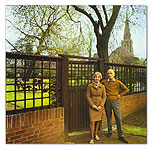 Photo: Mick Gold / Redferns
 Photo: Mick Gold / Redferns
 Photo: Mick Gold / Redferns"He agreed that he wanted strings and stuff, and he was the one who came up with [orchestrator] Robert Kirby, who was his friend from Cambridge, so he took a very strong role in all that, but he was very timid. When you suggested something, he would sort of go 'Oh, OK,' and it was very hard to tell whether he was genuinely enthusiastic or whether he was too bashful to object. I think he was very happy with Five Leaves Left, but I'm not sure exactly what he felt about [second album] Bryter Layter. I took his insistence on doing a stark, simple record [Pink Moon] to follow that as a kind of rebuke, that we'd overdone it a little bit on Bryter Layter.
"The thing about Nick is that all his vocals were recorded live because he was an impeccable singer. You didn't even have to listen to him. You could listen to everybody else, monitor everybody else and just turn him off, because you knew that he was going to be fine. All those string arrangements on Five Leaves Left were recorded live, with him playing guitar and singing, or in the case of 'Way To Blue', just singing. And even with Harry Robinson and the 12- or 14-piece orchestra on 'River Man' Nick sang it live, I think right out in the room, not in a booth. There was some baffling, but that was for the sake of the string sound, not to allow us to overdub vocals. Some of the stuff, like Richard Thompson on 'Time Has Told Me' and Paul Harris's piano on 'Man In A Shed' was overdubbed. We did a version of 'Man In A Shed' when Paul Harris was in London, and we decided it wasn't right but we liked Harris's part, so I went and overdubbed it in New York and brought it back. And John Wood said 'What the hell do you think this sounds like? This piano's out of tune!'
"Aside from Rocky Dzidzornu's conga drums on 'Three Hours', there was no percussion on Five Leaves Left, but there's drums all over Bryter Layter, and that changes everything. Generally, I would say the tracks with drums were recorded bass, drums, Nick's guitar and voice, and then we might overdub horns, we'd add a saxophone or backing vocals as an overdub."
No Going Back
During the '80s, Joe Boyd's interests turned increasingly to world music. However, a new generation of American musicians was discovering his back catalogue, and looked to him to instil their records with the same magic. The results, he now feels, were not wholly successful — in part because those musicians were not the equal of the originals. "There was a period in the middle '80s when I got rung up suddenly by young bands who liked Fairport Convention or Nick Drake or Richard Thompson or whatever, and wanted me to work with them. So I did: I did a couple of records back to back at Livingston Studios with Jerry Boys [a protégé of John Wood and Sound Techniques] for REM and 10,000 Maniacs. Both records are kind of OK, and there are critics who say they are great records, but the fact is that neither record did really succeed, and they are not, I think, my finest hour as a producer.
"There are a number of reasons, but one of the reasons I think is that I approached making those records very much in the way I approached making Fairport records. I did records in the '70s with some of the best drummers in LA playing drums, or in New York with Steve Gadd, and working with Fairport or Richard and Linda Thompson, we had Dave Mattacks. And so, to me, you go in, you get ready to play, and you record it. And you don't get everything live, but you at least get a track which feels live, and you use that as the foundation on which to add other things. You get a track which isn't necessarily perfect, but it has an energy, and even if you haven't got the vocal or the guitar solo, you've got this foundation which has so much life and energy that what you put on to it has to respond to that. So you get little moments in the vocal where it's actually responding to something that feels surprising, an energy gets through the headphones into the vocalist's head and out through their mouth, and so even though it's not quite the same as live, it gives a good impression of liveness in the mix.
"And so I approached it the same way with those groups. Sometimes in the heat of the moment it's hard to be 100 percent sure that you've got the best track you can possibly get before you say 'OK, take down the drum kit, now we're going onto the next stage.' And I've found that when you have a really good track, you add bits to it and it just keeps getting better. And when you start adding things that should be augmenting the track, but it doesn't, it just sounds worse, then you know that you haven't really got a track in the first place. And that's what happened with those two records. The more I listened to them, and the more we did vocals, and the more we added guitar parts, the more I realised that it wasn't Steve Gadd on drums. It was OK, it just wasn't really good.
 White Bicycles is published by Serpent's Tail Press on May 27th, ISBN: 1852429127.Photo: Mick Gold / Redferns
"And with both those groups, the next record they did, without me, was a huge gold record, and you listen to those and subsequent records, and I'm sure that each one of them has a click track. Clearly, my successors as producer immediately knew that these drummers were not the kind of drummers that you did tracks with. You lay down a click and you got them to play over it to build up a track that would stand up on radio, and I didn't do that. They wanted that kind of production, the life and energy they'd heard in some of the records I'd produced, so it wasn't as if I was trying to force them into something they didn't want to do, but the truth is is that what they really needed was someone to say 'Here, put on these headphones.'"
Some Trip
Joe Boyd's latest project is not a record but a book. White Bicycles is the story of the 1960s as they happened to Boyd, and it's one of the most entertaining books about the music business you're ever likely to read. Not only was Boyd seemingly at the centre of almost everything that happened in London's music scene but — as the blurb says — he can actually remember it. Some people have all the luck...