

Artist and producer Raphael Saadiq has channelled his love of classic soul records to create something convincingly vintage, yet fresh‑sounding and alive.
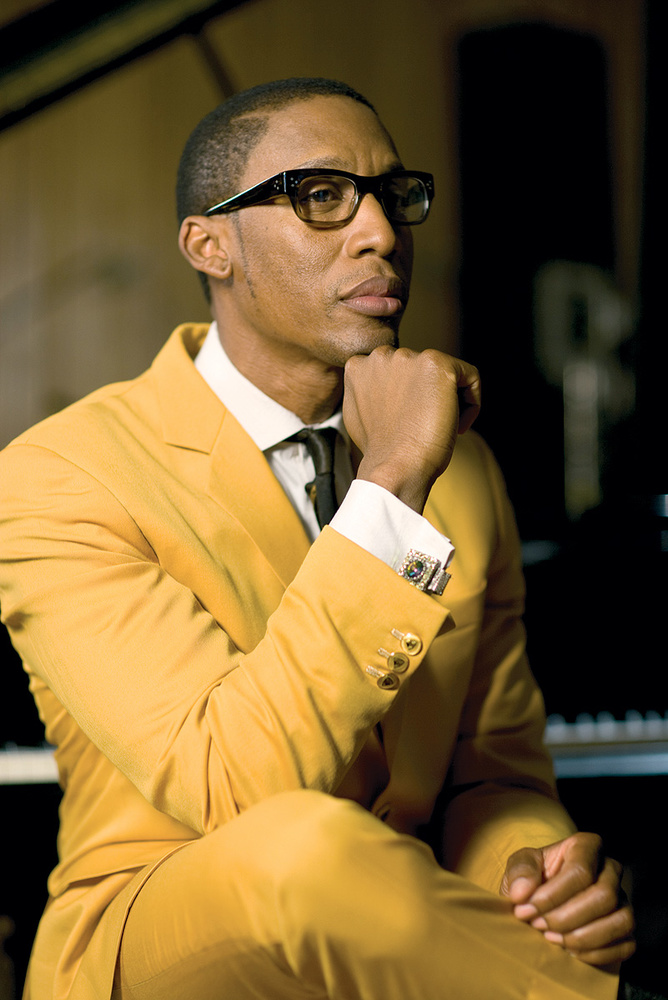
It's one thing to recreate a legendary sound, quite another to authentically recapture a specific feel, and to do so with completely new material. That's what Raphael Saadiq has achieved on his latest opus, The Way I See It. Released last year in the US to widespread praise and recognition, including a trio of Grammy nominations and iTunes' selection as the Best Album of 2008, it's finally had an official release in the UK.
Born Charlie Ray Wiggins in Oakland, California, in 1966, Saadiq was a self‑taught multi‑instrumentalist by the age of six, playing guitar, bass and drums, with the bass already his instrument of choice. By the age of nine he was singing in a local gospel group, and it was under the name Raphael Wiggins that he commenced his professional career, supporting Prince on his 1986 Parade tour before joining forces a couple of years later with brother Dwayne Wiggins and cousin Timothy Christian in Tony! Toni! Toné!, who enjoyed mainstream success with their 1990 second album, The Revival.
Assuming the name of Raphael Saadiq during the mid‑'90s, he began to expand his operations into the production sphere, with projects material by fellow artists such as Macy Gray, TLC, the Roots and D'Angelo, earning the last a 2000 Grammy Award for the song 'Untitled'. Then, just over two years later, he released his first solo album, Instant Vintage, on his own Pookie Entertainment label. A collection of what he calls "gospedelic” tracks blending samples, soul, gospel and R&B, it made him the first artist without a major label affiliation to garner five Grammy nominations.
For The Way I See It, Saadiq signed to Columbia Records, but his unique retro‑futuristic vision remains intact. "While I was making the record, I watched videos by Gladys Knight & the Pips, Al Green and the Four Tops, and fused them all together,” he says. "Once I got into this, I got almost stuck in character, the character of the old‑school singers I listened to… This album is the culmination of a lifetime of experiences informed by the music I grew up on.”
An Inspirational Trip
 Raphael Saadiq (left) and engineer Charles Brungardt at Blakeslee Studios during the sessions for The Way I See It.
In planning the album, Saadiq also drew on his experiences on a trip to Costa Rica and the Bahamas. "I was surfing and ran into people from all kinds of places,” Saadiq explains, "and I noticed everybody was listening to this classic soul music. When I came back home, the music for this album flowed organically, naturally, and since I have my own studio I was able to perfect it and take my time to make it right. I was able to live with it day after day, and I think that had a lot to do with how the album turned out. It took about four months to put it all together.
"I've always wanted to be able to sing a two‑ or three‑minute song and make people want to hear it again. Stax did that, and so did Motown and the Beatles: artists who made real popular songs that touch my soul. It's the music that brings people together, the music that can even make animals stand there and listen. I always like to make music that will appeal to other musicans, as well as to people who listen to very commercial music; the cool cats of 40 to 50, the cool kids of 15 to 16, the cool black rapper – I want to bring all of those people together, because that's how music should be instead of how it is right now, which is really segregated.”
A case in point is the part‑Spanish‑language, doo‑wop‑flavoured "Callin'”, which Saadiq describes as "a jump back to the music of the '50s. I wanted to make a track that would get the lowriders. People talk about the division between Latinos and blacks, but we all grew up together loving the same music. This song is a reminder of how we do when we get together.
"Honestly, when I made this record I wasn't paying attention to trying to recapture a particular sound. I was just being me. I wasn't trying to do a Temptations song or a Smokey song – by the time I snapped my fingers and tapped my feet on the floor, I was there. I really lived it. I wasn't immersing myself in a role. It was like having a great dream and not wanting to wake up. That's why when people ask, 'What's your next album going to sound like?' I respond, 'What do you mean? This is me.' That's why the record is called The Way I See It. It's me, more than anything else I've ever done. In fact, making it has made me feel like I've never even done another record.
"I wrote all of the songs on the fly, most of the time with a guitar in my hand. I'd come up with some riffs, sing the song in my head, and I basically did this on my own. I would love to bounce ideas off other people, do some writing with them, take the material to my band and say, 'OK, let's cut it,' with the orchestra already there. That's my dream. I'd crank records out weekly if I had staff writers like they did at Stax and Motown, whereas right now, given the state of the industry, I had to sit in a room all by myself except for Chuck Brungardt, sing each song to myself while playing the drums, and then play the guitar over the top of that, play the bass, play some basic piano, do the vocal and record the strings later.”
About The Soul

"I find it easier to produce my own vocals with nobody in the room,” Saadiq asserts, "otherwise I'll be looking for answers from somebody who may not really know. I tend to record complete takes, and if something isn't quite right but it's got a feel that I know I can never ever capture again, I'll leave it, even if it's flat. I mean, there are flat parts on my record, because it's not about perfection, it's about the soul.
"I'm pretty good at knowing when something is complete. It's pretty easy for me to figure out when it's done. The way I live with it, I like to listen for hours late at night. That's part of producing it; listening to it and knowing when it moves me. I feel like it's marinating, sitting it in the pot overnight and letting it soak. When I play it, I know how it moves me and I feel like it'll move consumers in the same way. Having said that, I do work on multiple tracks at the same time, and that's really the only way I can work. I can work on a song for one or two days, but then I'll jump to another one. I might also get an idea for a song while I'm in the middle of working on another, but ADD [attention deficit disorder] does play a part!
"I grew up playing in a quartet, and these days, even when I'm playing on my own, I'm just grooving. I'm in it and you can't take me out of it. If anyone watches me, they'll think, 'What is he doing?' Once you start clapping along to something, you're locked into it, and that's what I bank on.”
The Old School
 The control room at Blakeslee houses an SSL 9000 desk.
Saadiq's Blakeslee studio in North Hollywood combines Pro Tools, an SSL 9000 and other state‑of‑the‑art equipment with a plethora of vintage gear, including a kick‑drum mic that was purchased from Abbey Road. Indeed, as a means of preparing for the aformentioned sessions, he and engineer Charles Brungardt familiarised themselves with old techniques by reading books such as Mark Lewisohn's The Complete Beatles Recording Sessions.
Accordingly, the recording setup was fairly basic in terms of both the miking and the outboard gear, with a Neumann U47 providing character to the guitars, and a U47 and U67 alternating as the overhead on Saadiq's specially purchased '60s Ludwig drum kit, while a combination of AKG D12 and C414 were employed on the kick, and a variety of fairly standard mics were used to attain a solid crack on the snare. Some second‑hand Ampex tape machines were also acquired to add extra warmth to the kit; Brungardt followed the advice of the salesman in removing the preamps and using them as a front end for Pro Tools.
For his vocals, Saadiq sought to embellish his characteristically clean delivery with a little edge, thickness and distortion by way of singing into a Shure SM7 dynamic mic, while Brungardt added some compression before employing a Fairchild compressor and Massey Tape‑Head plug‑in during the mix.
Cheating On The Girl
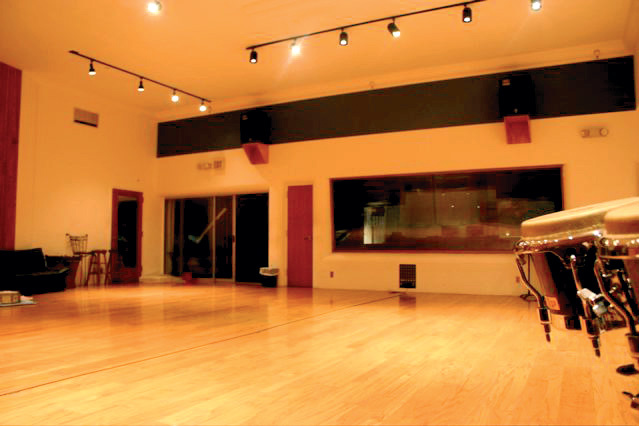 The main live area at Blakeslee.
Just like many of the classic Motown recordings of the '60s and early '70s, The Way I See It boasts an energy and an infectious quality that grabs the listener and keeps his or her attention throughout the two‑to‑four‑minute duration of each of the album's 13 tracks. And this, in turn, lends itself to some prime material for Saadiq's ongoing concert performances, having already toured Europe last summer, before spending November and December supporting John Legend.
"That's what music always used to be about,” he remarks. "People were in love with buying records because they were in love with the artists. These days, they're not in love with them, and that's why they're not in love with buying records. When you're in love with a girl, you buy her everything she wants, but the state of the industry right now is like we've been cheating on the girl. If you do that, she's going to leave you. So we've got to start loving the girl again. We've got to start making music to go perform it in front of people, and if they love it they won't care what format you put it in. They'll buy it digital or on vinyl.”
Which is why The Way I See It has been issued both on CD and as a collector's edition box of seven‑inch, 45rpm singles. Regardless of the medium, the content signals a return to the joyous and liberating feel of '50s and '60s popular music, and it is a feel that Raphael Saadiq wishes to retain well into the future.
"I want to continue to make this type of popular music,” he says. "It's the ride I want to ride on. Of course, it could change a little bit, but I don't want to do anything too slick. I love making people move in a bluesy way.”
The Wonder Stuff
The Way I See It features a number of star turns from celebrity guests, most notably Stevie Wonder, who contributes his idiosyncratic, instantly recognisable style of harmonica playing to the Motown/Marvin Gaye‑flavoured 'Never Give You Up'. A smooth, mid‑tempo number co‑written with Charles 'CJ' Hilton, Jr, it sees the main artist interrupting his lead vocal to announce, "I'd like to invite Mr Stevie Wonder to my album. Come on, Stevie!”
"It was one of those things where the stars kind of lined up,” Saadiq remarks. "CJ Hilton actually played the drums and keyboards on that song — he was in the 'B' room — while I was on bass and guitar, and I said, 'CJ, you sing your verse, I'll sing my verse. Let's get it done.' We'd both been procrastinating in terms of writing the lyrics, so we went in and got it done, and I did the whole Stevie rap before Stevie was even on the record. That meant I was either going to have to erase that part or, if Stevie himself didn't play it, sing the harmonica solo and act like it was Stevie, jokingly saying, 'Doesn't it feel like he should be here?'
"I already knew Stevie, and whenever I'd called him in the past he'd never answered the phone, but this time he actually picked it up and said, 'What's up, fool?' Those were his exact words. I told him, 'Man, I've got this record and I need you to play a harmonica solo.' He said, 'When do you need me?' It was like 12.30, so I said, 'In an hour.' He said, 'An hour, man?' 'An hour.' 'An hour?' Stevie won't go nowhere for nobody in an hour. If you say an hour, he'll show up in two weeks. However, he showed up in an hour and a half. He walked in the room, played some songs on the keyboards for a minute, and then he said, 'OK, let me hear the song.' So I played it, and he did the harmonica solo and said, 'Is that what you need?' I said, 'That's it.' 'That's good for you?' 'That's good.' 'Do you want me to do it again?' 'No, it's great.' 'Let me do it again, let me do it again.' So, he played it again, and then he said, 'Let me do it one more time.' Which is what happened, and that's what ended up on the record.”