

We have set up a new recording studio at our school. It's not huge, but we do have a separate (very small) control room as well as a live room. We were expecting to need acoustic treatment and have used bass corner traps from Studiospares as well as some general treatment in the control room to reduce reflections from the walls at the mix position. But, although most of the room modes have been cured, we have a humdinger of a resonance at about 58Hz — using the test oscillator in Logic Pro shows it up nicely. I'm at a loss to know what to do next but wondered if a tuned bass trap was the answer, as it is very specific to that frequency. I think the problem is that the height and length of the room are about the same, even though the room is not rectangular (one end wall is angled).
Tim Morris
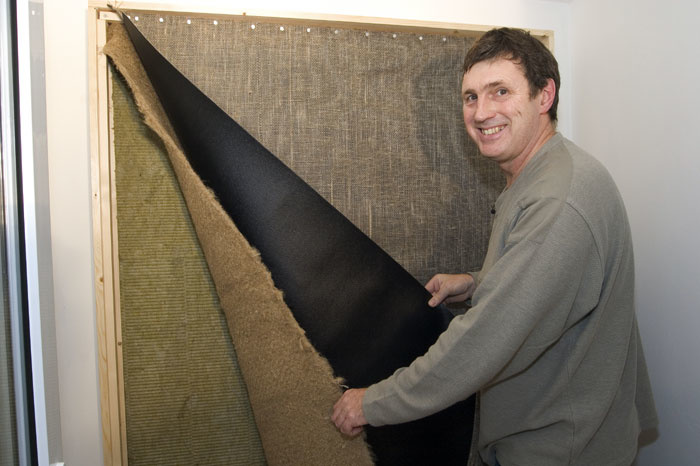 Editor In Chief Paul White admires his handiwork.Technical Editor Hugh Robjohns replies: Small rooms are always difficult to treat well, especially if some of the dimensions are similar, because the modes tend to pile up very close together. A tuned trap might well help, but I would suspect you would actually be better off extending the existing bass trapping.
Commercial foam traps are OK, but you'll get better performance if you build some DIY corner traps using slabs of Rockwool two to four inches thick in simple timber frames covered with fabric.
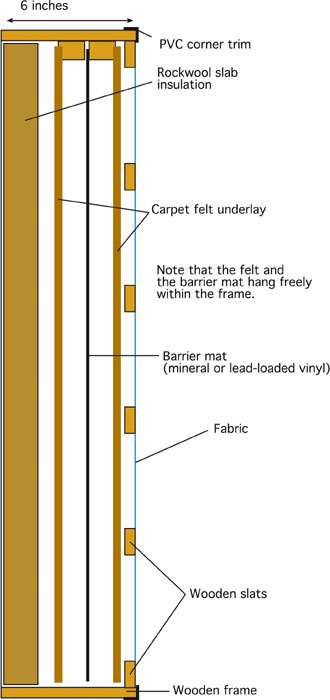 This diagram shows a cross-section of the bass trap we built in the Studio SOS article in the March 2006 issue.Suitable examples of this approach — as well as more complex limp membrane absorbers — have been illustrated in the pages of SOS recently. In the March 2006 issue, for example, we explained in detail how to build just such a trap in the course of a Studio SOS visit. We've included the diagram (right) again for reference, but I'd definitely advise reading the whole article. There's lots of other information on acoustics available on our web site, and there's always plenty of debate on the subject in our DIY Studio Acoustics forum, too.
In a small room you can't really put in too much trapping, so I would suggest treating all four vertical corners, and if possible, go for the wall-ceiling corners too. It might also pay to place Rockwool absorber panels behind the speakers to help reduce any back wall reflections at the bass end.