

Looking for a follow‑up to her smash-hit debut album, Lily Allen ditched her many other collaborators to work with LA‑based producer and musician Greg Kurstin.

Lily Allen's second album, 'It's Not Me, It's You', was released in February this year. Whereas her first album featured a long list of musicians, co‑writers, producers and engineers, there are only two production and writing credits here: Allen herself and Greg Kurstin. The two co‑wrote all songs on the album and Kurstin played all instruments, and engineered and produced. Mark 'Spike' Stent mixed the album's opening track, 'Everyone's At It', but Kurstin mixed the rest, including the album's first single, 'The Fear', which spent four weeks at the top of the UK hit parade and reached the top 10 in more than half a dozen other nations. The album, meanwhile, was a UK, Australian, and Canadian number one, and reached number five in the US.
 Greg Kurstin was one of the many credits on Allen's first album, and has also written and produced tracks for Kylie Minogue, Britney Spears, Peaches, Pink, Natasha Bedingfield and Donna Summer. So it's a surprise to learn that Kurstin's musical roots are in bebop and hard bop rather than pop or rock; and given his success as an engineer and a mixer, it's also striking that he does not have a studio background and eschews the industry standard, Pro Tools, in favour of working entirely in Logic.
"Yes, the jazz influence does seem very far away,” he chuckles. "But I really have to credit jazz music for helping me with songwriting and hearing unusual chord progressions and melodies, and for writing really quickly. In jazz you improvise so much, it's like you're composing on the spot. So when it came to writing songs with Lily, for instance, it was really helpful to be instantly able to hear where things needed to go. My jazz experience helps me to immediately play what I hear in my head, so while I'm in the verse, I may be wondering where to go with the chorus and hear something that's not necessarily in the same key. It's funny, I have always been going back and forth between jazz and pop, and I love building these tracks, even though my production approach does not relate at all to the kind of jazz I play.”
 Unusually, Greg Kurstin relied entirely on Logic 8's bundled plug‑ins for his mix of 'The Fear'. This part of the session shows most of the virtual instrument tracks which provided the song's sonic backbone. Nine years ago Kurstin began using Logic, and his current studio in Los Angeles, which he calls Echo, is based around a top‑of‑the‑range Mac desktop computer with version 8 of the DAW software. "My desktop Mac is an eight‑core Intel with 8GB of memory, and I have Apogee Ensemble for going in and out of the computer, and Brent Averill BAE 1272 and BAE 312A preamps, plus a Universal Audio 1176 compressor. Almost everything I track goes through the 312A, then the 1176 and into the computer. Everything else is done in the box. My master keyboard is a Roland A37, my monitors are the Adam 7s, and I recently acquired an Adam Sub 8 bass speaker. My room has some acoustic treatment, with stuff above my head and in front of me. I also have a large selection of analogue keyboards, organs, Moogs, ARPs. I love these things and I have about everything from the '60s and '70s. I've sampled many of them in Logic's EXS24 sampler, so I have a bunch of unusual and imperfect‑sounding sounds that I can use for writing and arranging.”
A Month In The Country
"For the tracks on the first album, we started at Mayfair Studios in London for one day, and then did the rest at my studio in LA. But we mostly wrote the new album in makeshift studios in rented countryside cottages in England in September 2007 and the beginning of 2008. Basically I'd rented an Apogee Ensemble, a Nord Electro 2 as a MIDI controller, some speakers, a Neve 1073 preamp, an 1176 compressor, a Telecaster and a Fender Precision, and a Neumann U87 mic.
"For the first album I'd brought in fully arranged tracks, over which she'd write her things, but this time round she and I were sitting in a room with me playing chords on the piano, to which Lily would write her vocals. I would play her, say, a verse idea, and once I heard the lyrics, I'd build up the track, which in turn would inspire her, maybe with a chorus, and eventually a finished song emerged. It was a process of continuous going back and forth between the two of us. I also laid down the arrangements for each track the day we wrote it. I like to have a track done by the end of the day, so I don't have to figure out everything later. I like to work as fast as I can; though sometimes this can be tricky, as every now and again a song may really stump me, and it will take a few days to figure out what direction to take it in.
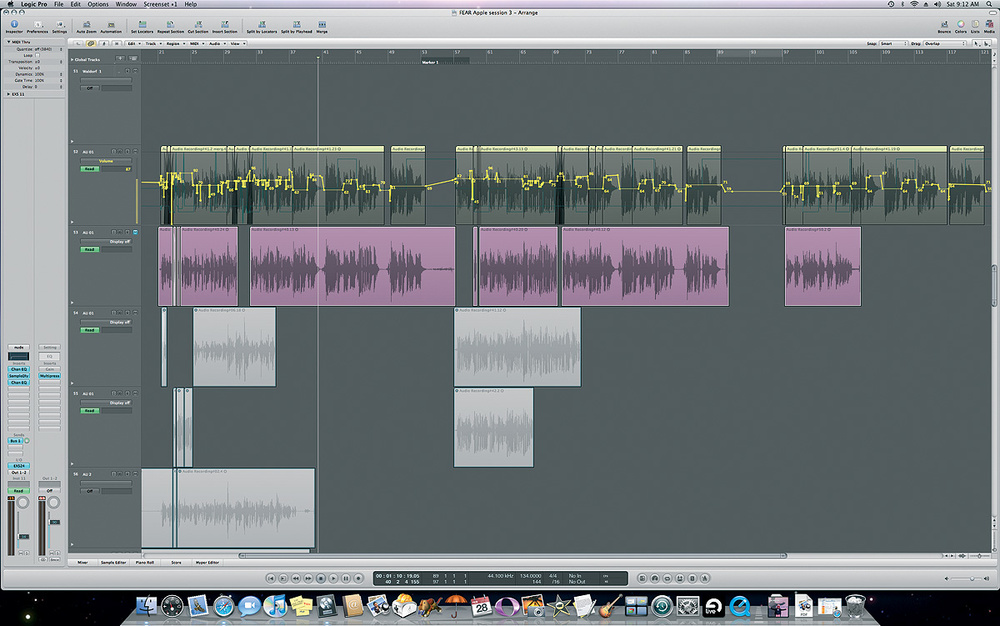 A lot of volume automation was used on Lily Allen's vocal, in part to minimise unwanted ambience from the cottage where it was recorded."Playing everything in an arrangement myself is something that gives me a lot of freedom and control. Because I'm writing and recording simultaneously, I often change the sounds as I go. In general I just throw the most radical sounds at a song that I can find, mostly using the Logic EXS24 sampler or the Logic ES2 synthesizer. I don't really use loops very much, but play everything on the keyboards, including the drum parts, using sounds that come from all over: sample libraries, things I've recorded myself, soft‑synth sounds, and so on. Doing the writing and arranging on the same day also allowed me to send the record company the songs as we were writing them. So the tracks were pretty much finished by the time I got back to LA, even though I might still change or add sounds, and the final mixes weren't finished yet.”
"'The Fear' started from the keyboard acoustic guitar intro that opens the song, which uses a patch I had made of a really primitive acoustic guitar sound from an old '80s sample keyboard, the 360 Systems one, which is very rare and very hard to play: it was a very nerdy keyboard purchase! But I love its sounds, and I particularly like its artificial guitar sound. It was one of those situations in which I just sort of started playing a chord progression to inspire Lily, and she liked it and she came up with the verse, and I then played the chords for the chorus with a piano sound. The track emerged from there.
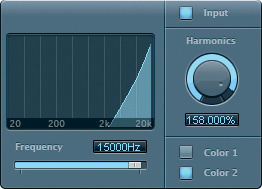
 A lengthy chain of plug‑ins was used to process the lead vocal, including Logic's Pitch Correction, Exciter and Tape Delay."I normally mix as I go while writing and recording, as opposed to getting the track ready to give it to a mixer, who then will start from square one. If my rough mix sounds good, then the final mix is just a matter of fine‑tuning things; but if I have a problem with my mix and it's not sounding right, I'll pull all the faders down and start over. Usually I'll begin with the kick drum, the snare, the vocal and maybe the bass, and see how they fit, and when they sound good together I'll add some mid‑rangey instruments, like guitar and keyboards, and work these in. In general, I try to focus on some essential elements and try to make them sound as big as I can, and fit the other elements in with that.
"I did the mixes of Lily's record at my studio here in Los Angeles, because my computers run much faster than the Macbook Pro laptop I had in England. It could barely handle the sessions. When I came home I could open up as many plug‑ins as I wanted and wasn't obliged to print the audio for the MIDI tracks, as I had done in some cases in the UK. The other reason is that I could not really get a reliable sound image while working in these cottages. They were too echoey, and I did a lot of work on headphones out there, which is terrible, but it was the only way to hear what was going on.”
No Logic
"Mixing is a lot of trial and error for me, and there's not really a great logic to what I do. The same with how I lay out the session. The tracks are not grouped or named and there's very little colour‑coding. It would be good to have all the drums and all the guitars next to each other, but when recording I just look for the next available track, and I rarely change the order later on. I'm terrible! The other day someone from Apple came round, and when she looked at my Logic session, she kept asking why I did things like this or like that. Because I work so quickly it's really important to keep a workflow going when I'm writing. Especially when working with someone like Lily I have to keep the ball rolling and the inspiration going, and I don't have time to organise anything.
 "I just open a track, put an idea down quickly, and open the next track, and carry on. So the initial acoustic guitar sample figure that inspired the track is at the top of the session, on track 2, called 'GK nylon guitar'. The audio tracks are often just called 'Audio Recording #...' There's a little bit of organisation in the edit window for 'The Fear' in that the top contains all the MIDI tracks and the bottom the audio tracks. The MIDI parts are named automatically after whatever patch I used, hence names like 'numb', a kick drum, and 'electric banana', a hi‑hat. In general, I don't print the audio of my MIDI tracks, because I find it easier to change a sound than to process it. I may print MIDI in certain cases, like I printed my main MIDI snare when working in the laptop, to save CPU power. Or I'll print things that have a lot of plug‑ins. I'll only print everything as audio when I have to send a session to an outside mixer, like with Spike — I simply exported all the tracks as audio files, which he then imported into Pro Tools.
"Incidentally, I began the Lily Allen project on Logic 7 and finished it on Logic 8. For the most part the transition went OK, although there were a few problems, because for some reason Logic 8 lost a batch of sounds that had come from Garage Band. Luckily I still had them in my laptop, from which I imported them into my desktop Logic 8 session. In addition, I only used Logic plug‑ins on the 'Fear' session. I have some others, like the Abbey Road Brilliance Pack, but in general I feel that the Logic plug‑ins give me everything I need.”
 The vocal track was sent to Logic's Vocoder to create the effect of harmonies.
Drums: Logic EQ, Compressor, Sub Bass, Overdrive, Stereo Delay, Flanger
"'Numb' [track 15] is my main kick drum. 'Jazz kit' [9] is a ride cymbal, 'real drums' [23] are my cymbals, 'SiD chip' [30] is a little electronicky sound, like from a video game sample bank, and 'burp 1' [31] is claps. These sounds all come from the EXS sampler. With regards to the kick, it was mostly a question of finding the right EQ on that. It's a kick‑drum sound that I use a lot, because it seems to sort of work. I added some EQ at 90Hz and at 3350Hz, just very simple. There's also a compressor, which is working pretty hard, squashing the sound as hard as possible, and a second EQ that adds around 83Hz, to give it some more low end.
"I had a compressor on the snare, with a lot of release to bring up the sustain, while the EQ rolls off a bit around 1560Hz; the Sub Bass adds some low frequencies, while the other EQs aren't doing very much except for level adjustment. It can be a bit tricky with volume automation to turn an individual sound up or down, and one quick solution is to use an EQ or gain plug‑in for that.
"There are quite a few hi‑hats in this song: one from Logic's Ultrabeat drum machine on track 6, 'electric banana' [20], a hi‑hat chorus pattern, 'MPC big hits' [26] is the main hi‑hat used in the song, in more or less a 16th‑note pattern, 'Street 1' [44] is a quarter‑note hi‑hat, and 'Cannonball drums' is a more electronic‑sounding hi‑hat. I think this is part of my style. It's me compensating for not having live drums. When you have one electronic hi‑hat, it can sound very sterile, but when I layer them, the sound becomes more imperfect. All the different hi‑hats kind of glue together, and it's not a very clean sound, but it works. There are a lot of plug‑ins on the MPC hi‑hat: Overdrive, Stereo Delay, Compressor, Flanger, Stereo EQ. Basically I gave it two different delay times on each side, so you get a stereo effect, added some overdrive for distortion, the compressor squashes it hard, the EQ rolls off some bottom and adds some top, and the flanger does what flangers do, adding some movement, and acting almost like a filter.”
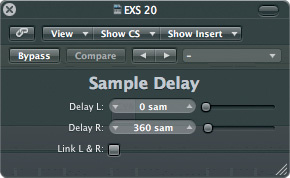 Greg Kurstin makes extensive use of very short delays from Logic's Sample Delay plug‑in to make sources sound larger and wider.
Bass: Logic EQ, Compressor, Guitar Amp Pro, Bit Crusher, Bass Amp
"The bass was a tricky element to get right in the song. The original bass that I used while writing remains in the chorus. I wasn't entirely happy with it, but I couldn't top it either. It was a keyboard bass from the ES2 soft synth and it had a weird, very subby character about it that was rather muddy. I ended up printing it. Every time I tried to replace it, the track didn't have the same vibe. I didn't add any effects to it, but because it missed some punch, I added something underneath it. It was a last‑minute thing called 'Perfect Bass', an ES2 saw‑wave bass with the highs filtered out. It doubles the kick drum, and it's in the 220Hz range. These two basses worked well together. I also played a Fender Precision, recorded straight into the computer, and you can hear that in the verses. There's no low end, it's more like a guitar sound. I put the Guitar Amp plug‑in on it, to simulate an amp feel, and a compressor, and a Bit Crusher, which added some digital‑like distortion. There's also a 'low‑endy' bass in the verse on track 22; strangely it's called 'Celeste Baby'. That has the Bass Amp plug‑in, compression and two EQs.”
Vocals: Universal Audio 1176, Logic Pitch Correction, Exciter, Tape Delay, Gain, EQ, Space Designer, Vocoder
 Logic's Guitar Amp Pro plug‑in was used both as an amp simulator and for its spring reverb emulation.
"I recorded Lily's voice with the Neuman U87, going through the Neve 1073 and then an 1176. Most of her vocals were recorded in the cottages where we wrote, which is the reason that there's so much volume automation on her vocal track; on 52/53 is the vocal double, which is muted; and 54‑71 are alternate vocal tracks that are also muted. The rooms often had stone walls and were really live and echoey, and every little background sound could be heard, so I had to do a lot of automation between words. Yeah, there are a lot of plug‑ins on the vocal track! I automated the Pitch Correction, occasionally nudging a note that bugged me. It's not there all the time. The EQ adds some top end and takes off some sub frequencies, to clean up the track. The compressor works just like a regular vocal compressor, just keeping the vocal level in check a little bit, but nothing major. I had never ever used the Exciter before, but when I was messing around with the vocal, I liked what it did, even though I'm not entirely sure what, and I left it on. The Tape Delay is just a very subtle delay that I also filtered to make it sound dark. The Gain is there just for level adjustment, and the additional EQ adds yet more top end, and was something I added as a last-minute thing.”
"I also have two buses on the lead vocal, going to the Logic reverb, Space Designer, one of them to a preset called 'Wide Vocals', which adds a little bit more dimension to the vocals, and the other to a preset called 'Bright Vocals', adding some more room, which is more like a slap effect. There are not many reverbs on the vocals, because parts of the rest of the track, like the strings on track 12, have quite a bit of reverb, and I wanted the vocals to stand out a bit more by keeping them dryer. In addition, there's also the Logic Vocoder to the vocal, side‑chained to track 33, 'LoRes Vox,' so that her vocal is triggering it. I then added chords to it. It's barely audible, but gives the sensation of added harmonies. Finally, there are five tracks of backing vocals [92‑96], that have similar effects on them as the lead vocals. There's also bus 5, which also goes to the Space Designer, with a preset called Gold Vocals, which sounds like a very high‑end reverb that brings the vocals out a little more.”
Guitars: Logic Guitar Amp Pro, EQ, Auto Filter
"There are several guitar parts. The first one you hear, from the 360 Systems, is on track 2, and then there's a counterpart to that, which happens a little later. Track 72 is the main acoustic guitar part, which I printed. All acoustic guitars are played on a keyboard, but I also played a real electric guitar, a Telecaster, which is on 75. The initial guitar on track 2 has a Guitar Amp Pro plug‑in to simulate the character of a guitar amplifier, and a sample delay, which I use a bit like a surround plug‑in. Using very short delay times of just a few milliseconds tricks your ears into thinking that the guitar is larger than it is. I use that plug‑in a lot. Track 72 also has the Guitar Amp Pro plug‑in, here used for the spring delay setting. I love spring reverbs, and I often use the Guitar Amp Pro for that. The first EQ plug‑in on 72 just rolls off some of the sub frequencies that were muddying the sound up a bit; the next EQ is pretty extreme, adding a lot of top around 9.7kHz and rolling of more of the bottom. The Auto Filter just took off some of the very high top end, filtering out some of the noise that I was getting. The rest of the EQs were added during mixing, just giving a bit of brightness. The Telecaster again has the Guitar Amp Pro plug‑in, to simulate an amp sound, and some compression to keep the level steady, and a couple of delays.”
Keyboards: Logic Compressor, EQ, Bit Crusher, Tremolo, Auto Filter, Guitar Amp Pro, Tape Delay, Vocoder, Flanger
"The main keyboards are the '360 Piano' [track 16], the '360 clav' [10], both from the 360 Systems keyboard, the 'bass lil fuzz' [27], which is a single‑oscillator sound that's very prominent in the choruses, and the 'warm Rhodes' [8 & 37], which is a sine wave‑like, spacey sound. The compressor on the '360 piano' squashes it, so it bursts more out of the speakers; I love compression and am definitely guilty of regularly over‑compressing! The EQ on the piano took off a lot of the bottom end and added at 3.9kHz to make it cut through more. Again, there's the sample delay, with the ultra‑short delays to make it sound fatter and like it's out of phase. The '360 clavinet' has a Bit Crusher plug‑in to dirty up the sound with digital distortion. It works a bit like the Lo‑fi plug-in in Pro Tools: you can lower the amount of bits and it makes it sound very digital. The Tremolo plug‑in is set to 8th notes, so you get this rhythmic, pulsing thing, and the compressor, again, squashes quite a bit. There's an Auto Filter on the 'warm Rhodes' that effectively works like a low‑pass filter, like you would have on a Moog synth. On track 37 I also have Guitar Amp Pro, this time for the simulated amp sound, and Tape Delay, which has an LFO function that sounds like a warble, a bit like a Memory Man delay pedal. I love that pedal and just purchased three to stock up in case they stop making them. The 'bass lil fuzz' is a swirling sound that has a Vocoder plug‑in on it like a slow LFO opening and closing, and a Flanger plug‑in adding more of a swirly effect. The tape delay is there to create a reverby effect.”
Strings: Logic EQ, Sample Delay, Space Designer, Flanger, Vocoder, Limiter, Tape Delay
 Most of the sound sources came from Logic's EXS24 sampler or one of its soft synths, like the ES2 'bass lil fuzz' keyboard part.
"The strings are all electronic, the main one being the 'VI Trmolo FF' [12], which is a pretty loud and washy viola string patch, and then there are the swirly sounds, 'CHMB 3 VLNS', on tracks 27 and 35. The first channel EQ on track 12 takes off low end and the second one dips at 275Hz. There's a Sample Delay to, again, fatten up the sound and confuse its exact placing. Bus 1 goes to the Space Designer reverb plug‑in. For me, using plug‑ins is a way of programming sounds, and you can see a good example on tracks 27 and 35, which have Flanger, Vocoder, Limiter, EQ, Tape Delay and the Space Designer.”
Mix bus: Logic Multipressor
"Finally, I mixed back into Logic, and put the stereo mix through a Multipressor, Logic's multi‑band compressor. Mastering people probably hate me for it, but I really like what it does, and I put it over most of my stereo mixes. Once the mixes were approved by Lily and the record company, I sent the mastering engineer the 24‑bit files.”
The Rough Mix Makes It To The Record (Nearly)
"My initial rough mix of 'The Fear' really got the record company excited,” explains Greg Kurstin. "They asked Spike [Stent] to mix 'Everybody Is At It' and 'The Fear', and I really loved what he did. His mixes sounded so good that they changed my approach to my mixes. Hearing how he had treated my sounds was an education and opened up new perspectives for me. I loved that he wasn't afraid to use dynamics, turning things up in the chorus or have things coming in really loudly. Also the way he used EQ and adjusted the vocals and the kick drum and opened up the top and the bottom ends was great. His mixes had a real life about them and they became a template for me during mixing.
"Everybody loved Spike's mix of 'Everyone Is At It', but the record company ended up using my mix of 'The Fear'. I think it was simply a case of demo‑itis, with the record company being attached to my earlier version. I think I was the only one who did not like it! (laughs) So I went back and said to them that I'd like to try a few things, which were mostly inspired by Spike's mix of 'Everyone Is At It'. My mix sounded so narrow and didn't really sound open like his mix. So I really tried to improve things and they ended up going with my new version. It was a matter of making things simpler, so that a few elements stand out and the rhythm sounds more straightforward but still driving. And of course making sure you can hear the vocals, because it's important to hear what Lily is singing.
"To achieve this I went back to mixing just the drums, the vocals, and the bass, and built the track from there. I did a lot of experimentation. I'm beginning to be more aware of what I'm doing, but for most of the time it's a matter of take this or that sound out, put something else in, and see whether it sounds better or not, and so on. I also do a lot of muting, and again, if it sounds better, I simply go with that. I'll also pile on plug‑ins, because I'm always afraid that I can't go back to where I was. So instead of altering an EQ plug‑in that's already there, I'll add a second and a third EQ plug‑in, and if it doesn't work I can just bypass it again to get back to where I was. You'll see a lot of redundant plug‑ins on my edit windows, and I'm probably breaking many rules.
"Specifically, the changes in my updated mix of 'The Fear' centred around adding more bottom and more air at the top end, particularly on the vocals and the drums. I may also have taken out some of the drums and looked for a kick drum that was a little punchier. There was a lot going on in the initial mix, particularly the low‑mid, which was a bit muddy, so I removed things in that section, until I began hearing things more individually. I also tried to EQ the guitar intro to make it a little bit less harsh, but then it felt like it was missing something, and I reverted to the way it was. It's funny, I do that a lot: go through a whole process and then end up realising that I'm making the mix worse, and return to the way it was at the beginning.”