

 The original Sex Pistols line-up, with Glen Matlock (left) on bass. Photo: Ian Dickson/Redferns
When punk rock broke in 1976, the Sex Pistols caused panic in establishment Britain — and more than a few raised eyebrows in Wessex Studios, where Chris Thomas and Bill Price recorded the band's milestone debut album.
While the Sex Pistols made their mark on mid-'70s British culture with a torrent of spit, rage, abuse and up-yours anti-heroics, their restorative impact on a music scene dominated by disco, glam, progressive and corporate rock was also undeniable. Over the course of little more than a year, under the guidance of manager Malcolm McLaren, by way of several record labels, and courtesy of topically controversial lyrics, Johnny Rotten's maniacal, sarcastically confrontational delivery, and the band's blisteringly abrasive performances on tape and stage, the Establishment was threatened, the music scene was reshaped and the three-minute single was re-established as rock's primary form of mass communication.
After getting together in 1975, the quartet of Rotten, drummer Paul Cook, bass player Glen Matlock and guitarist Steve Jones quickly attracted a large and virulent fanbase on the live circuit, and by May of the following year they were recording demos produced by guitarist Chris Spedding. Two months later Dave Goodman produced some more demos, one of which, 'I Wanna Be Me', quickly ended up as the 'B' side of the Pistols' first and only EMI single, 'Anarchy In The UK'. Produced at Wessex Studios in October of that year by Chris Thomas and engineered by Bill Price, 'Anarchy', with its simple structure and defiant, in-your-face attitude, basically defined punk, and it caused an immediate furore following its release on Friday, November 26, 1976.
This, in addition to the firestorm generated by the group's expletive-filled live television interview with Bill Grundy seven days later, as well as reports of similar antics at Heathrow Airport en route to a tour of Holland, prompted EMI to pull the plug on January 6, 1977. A&M followed suit after a stormy seven-day relationship, and when CBS pulled out of negotiations it was Virgin who finally stepped in and released the next single, 'God Save The Queen'. By then, Sid Vicious had taken Glen Matlock's place in the line-up and the band had returned to Wessex to record their seminal album, Never Mind The Bollocks Here's The Sex Pistols.
A Snotty Bunch
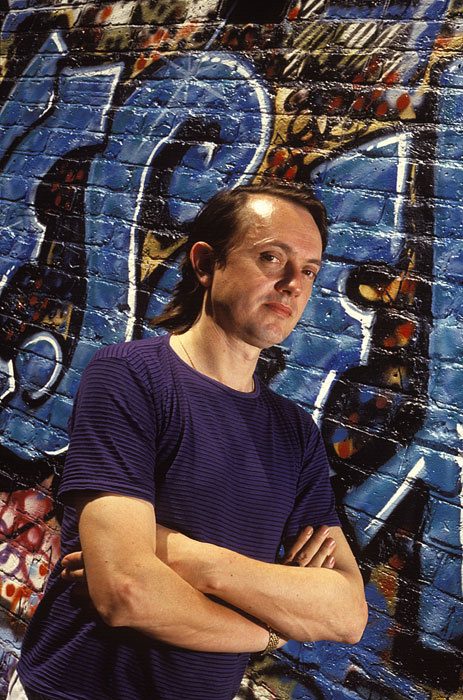 Bill Price, who shared co-production duties on the Sex Pistols' album with Chris Thomas. Photo: Barry MarsdenPrimarily an engineer since beginning his apprenticeship at Decca Records in 1962, Bill Price had worked with Eric Clapton, John Mayall, the Moody Blues and Tom Jones before moving to AIR Studios in 1970, where he helped with the design and was involved with projects by Mott The Hoople, Pink Floyd, Stan Getz, Stevie Wonder and Paul McCartney. When Chrysalis Records purchased both AIR and Wessex in 1976, Price joined the latter where, as at AIR, he was appointed chief engineer. At the same time he was also made studio manager and befriended Chris Thomas, for whom he engineered productions of records by Elton John, Pete Townshend and the Pretenders, while Price himself would go on to produce anyone from the Clash and Jesus & Mary Chain to the Waterboys and Big Audio Dynamite.
Having just produced an album by Ian Hunter, as well as another by a soft-rock outfit named Racing Cars who enjoyed chart success with the single 'They Shoot Horses, Don't They?', Bill Price experienced a little bit of culture shock when first encountering the Sex Pistols.
"They were a bit of a snotty bunch to start with," is his diplomatic understatement. "They treated the studio like the BBC Home Service and looked at me as if I was wearing a white lab coat that had a pocket stuffed full of Biros. It was as if they had walked into the arms of the Establishment, and there was also a general reluctance to comply, although that didn't last long. Johnny was the main protagonist, acting like he was consorting with the enemy, so I had a little chat with him, telling him the artists I'd worked with, what the job was, and that we were there to help, and after that the attitude completely changed. It was only an act, treating both Chris and I as if we were Bill Grundy, and it wasn't going to get them in the newspapers. All it was going to do was make the record worse, so they quickly became very pleasant, easy people to work with."
Having heard the demoed material, Price and Thomas were impressed by its raw energy as well as its commercial appeal. Melodic, no; catchy, yes. "By then there was already a lot of music biz buzz about the band," Price says, "and if you played any of the demos you would recognise they were by the Sex Pistols, not least because Johnny's voice is so distinctive. They might have had slightly different tempos and slightly different arrangements, but there was nothing too drastic... There weren't harps or violas! The energy was largely the same. I mean, it's pretty hard to make Steve Jones sound tame."
Either/Or
Bill Price and Chris Thomas collaborated on numerous projects, but only the Never Mind The Bollocks album bears one of rock's most intriguing credits: 'Produced by Chris Thomas or Bill Price'.
"That was something Chris and I agreed upon," Price explains. "When, following the success of 'Anarchy In The UK', Malcolm McLaren announced that he wanted the band to record an album, Chris himself wasn't available and so Malcolm hired me as the producer. Then, during the course of doing the album, Malcolm hired Chris to produce the singles 'Pretty Vacant' and 'God Save the Queen', and during the course of that we tried recording songs that ultimately ended up being album tracks, while during the course of me recording the album Malcolm heard songs that he wanted Chris to rework into singles. So, when it came to putting the album together, we had duplicate versions of some of the material produced either by Chris or myself, and I went to Malcolm at least three times with different running orders that utilised different versions.
"Chris and I quickly came to the conclusion that Malcolm was playing silly buggers with the pair of us, trying to get us to agree to a total production on the album that didn't even amount to 100 percent. It was as if he was trying to convince me that all of the tracks had been produced by Chris while trying to convince Chris that everything had been produced by me. So, seeing as the sleeves were mastered long before the final mastered version, Chris and I agreed on that fairly unique credit. We never really got to the bottom of what Malcolm's ploy was, but we suspected that it was to avoid paying people, so we agreed to accept 100 percent of the payment for the job and take the responsibility for divvying it up ourselves.
"All of the Sex Pistols' recordings were financed, for want of a better word — or not financed, to be more accurate — by two of Malcolm McLaren's companies, Matrixbest and Glitterbest. This meant the whole setup was completely independent of whoever the band was signed to. In fact, by the time we were about halfway through the album, it was financed by Malcolm with used notes in brown envelopes, and that was at Wessex Studios' insistence. We weren't going to record another song without him paying cash for the past week. Fortunately, he was quite happy to go along with that.
"Malcolm was often in the studio with his missus, wearing her clothes. He used to wear a pair of tartan trews and a sort of tartan nappy that went between his legs and hung from his shoulders. Very fetching. Still, at that time he didn't really interfere in the production process. That would only happen later on with lesser bands. And besides, Steve Jones would have smacked him in the mouth if he had tried to butt in. Malcolm was quite clever about not straying into territory where he couldn't command the band's respect. If he was talking about publicity or something of that nature they would listen to him, whereas if he'd talked too much about what songs he liked or how they should be played I don't they would have worn it."
Dustbins Kicked Downstairs
When Chris Thomas attended a Pistols gig before the first 'Anarchy' session, he was so taken by the band's overall vibe that, once in the studio, he asked Bill Price to "make the drums sound like dustbins being kicked downstairs". Price's response was to employ a technique that, although he'd used it before, was certainly not the norm — rather than position the musicians in the main live area and try to isolate the drummer, he placed the drummer in the middle of the studio and attempted to isolate the rest of the band, thus surrounding Paul Cook with a much more reverberant sound.
"In practice, the band members weren't totally isolated," Price explains. "Rather than placing a lot of screens around Paul Cook or putting him in a small booth, he had command of the whole studio while attempts were made to screen off the other instruments and stop them bleeding onto the drum mics. Various strategic ambience mics that suited the task were also placed around the room: a couple of old BBC ribbons were literally at floor level behind the drums to try to pick up the ambience of the bass drum and the bottom skins of the tom-toms, and a couple of Neumann KM84s were slung above the kit to pick up the ambience of the cymbals.
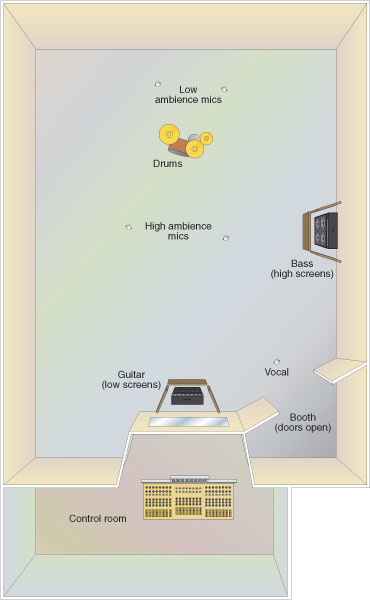 The layout of Wessex Studios for the recording of 'Anarchy In The UK'. The drums were placed near the centre of the 15 x 10 metre live room, with two pairs of ambient mics used to capture the room sound. "For the kit itself I had a standard setup: an AKG D12 on the bass drum, a Neumann KM86 on top of the snare, a Shure SM57 underneath the snare, an AKG 451 on the hi-hat, and a Neumann U67 for the tom-toms — this was before we had the Sennheiser 421s. The main effect inspired by Chris's 'dustbins being kicked downstairs' comment involved me keying different ambience mics off the drums as they were being hit, using the old-fashioned Kepexes. These were the earliest American gates available, and using them was pretty much an integral part of the sound. Chris's suggestion that we could shorten the ambience with gates, providing more without it sounding too distant, all made total sense to me.
"Paul Cook started off only just able to play drums, yet by the time we were halfway through the album he was really solid. It was definitely a good idea that he took up playing the drums, although it was also unfortunate that when we started recording the Sex Pistols he hadn't been doing this for very long. He'd only had a kit for a matter of months. He certainly hadn't been knocking around with other bands for several years. Still, within a couple of months he was 10 times the drummer he had been when we started the sessions.
"On 'Anarchy in the UK' we're hearing him at the start of this whole process. He'd often have a problem keeping time when it came to a drum fill or changing from hi-hat to a cymbal; all of the things on which learner drummers tend to skip time. However, we managed to get around that. Chris Thomas would insist on getting pretty perfect rhythm tracks, so, particularly on those early sessions, there was a lot of multitrack editing of what was ultimately used as just the drum track — although the whole band would be playing for the vibe, the bulk of the day would be spent doing a lot of takes and these would be edited together purely for the drum track. Then the guitar, bass and vocals would be overdubbed onto the resulting patchwork."
Price recalls that, in line with the rest of the band's equipment, Cook's drum kit was "pretty crappy and beaten-up. Steve Jones had a Fender Twin that had lost the benefit of its front grille, meaning that you could see the loudspeakers. People would say that made it sound better, but when I asked Steve what had happened to the grille he said 'Oh, I had to get rid of that. The name of the band I nicked it off was written on it.' And that was probably quite true!"
Adulterated Sandwiches
Wessex Studios had once been part of a Victorian church hall, and at the time, was fitted with a 32-input Cadac console, 24-track 3M M79 tape machines and 15-inch dual-concentric Tannoy Red monitors. Looking out from the control room, the drums were placed in the centre of the live area, about two-thirds of the way back, while Jones's guitar amp was directly in front of the control-room glass and recorded with a KM84 and an SM57 placed about six inches in front of the speakers. "What one had to do was balance those mics equally, grab a pair of headphones out in the studio that were turned up nice and loud, and fractionally position one of the mics so that they were perfectly in phase at high frequencies," Price says. "Because if you had one mic five inches away and the other six inches away you'd obviously get really bad phase shift that would take the top off the guitar sound. So, the best way would be to get the guitarist to play, clamp a pair of headphones to your ears as loud as possible, and gently swivel one of the mics around until you got a perfect phase correlation between the two.
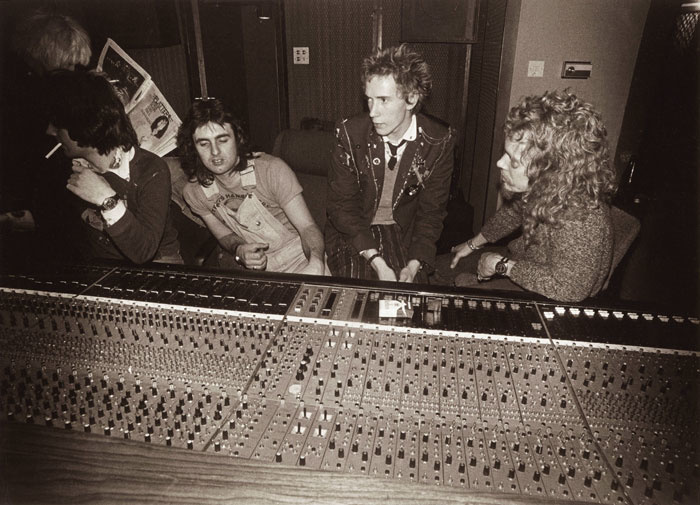 The Sex Pistols' demos were recorded a few months before the album, also at Wessex. At the Cadac desk, from left, are Wessex engineer Tim Friese-Greene, Dave Goodman, Johnny Rotten and Kim Chraves. Photo: Ray Stevenson/Retna UK
"Unlike Paul Cook, Steve Jones came fully formed. I don't know how, but he was like a veteran from the first minute — so solid, so rhythmic and so tight. And Glen Matlock was a perfectly adequate bass player, more than adequate for what was required in his gig with the Sex Pistols. I couldn't really fault him. He was very quiet, but he and Steve didn't appear to get on particularly well, and that probably contributed to his early departure. In fact, Steve had a particularly personal way of adulterating Glen's sandwiches... with added special sauce."
For the 'Anarchy' sessions Matlock's bass amp was about halfway back on the right-hand side of the studio and miked with a Neumann U87 pointing at the speakers. Johnny Rotten, meanwhile, performed rough vocals into a Shure SM58 and stood facing the band with his back to the open doors of a booth that was in the near-right corner.
"Johnny had a great attitude on stage, and it projected so well that it didn't really call for much movement," Price remarks. "It was more about posing and conveying an attitude by way of his body, his microphone and his eyes, and he did adopt that in the studio, but he was never one for jumping or dancing around, and he was therefore easy to record. Nevertheless, although we had a beautiful pair of tube U47s at Wessex, when I put one in front of Johnny for his overdubs it sounded awful and died after about 30 seconds of being gobbed at due to him using his middle register as loud as he could. So, immediately realising I wasn't going to get him over the top of all these thrashing guitar parts with a beautiful tube mic that overloaded and didn't sound particularly pleasant when it came out at the other end, I put him back on the SM58 and thereafter always used that. It tended to bring out a lot more in the voice, and even if it remained on the stand it was quite OK when he wanted to grab it.
"Within any one session Johnny would do no more than three to six passes and I would normally comp these. We certainly didn't do long vocal sessions, and if, after half a dozen passes, the results still weren't convincing, we'd probably return to that song another day."
Why You Need A Mix Room...
Whereas 'Anarchy In The UK' was recorded and mixed over the course of about three days in the main studio at Wessex, some of the other mixes took place in the facility's Cadac-equipped mix room. One such example was 'God Save The Queen', which was actually remixed on March 9, 1977, the same day that the Sex Pistols commenced their very short-term relationship with A&M.
"The ladies at EMI's pressing factory had refused to put the single into the brown paper bags that had a photo of the Queen with safety pins slapped on them," Bill Price recalls. "Then EMI decided to terminate the band's contract and stop production of the 'Anarchy' single before A&M demanded a different mix of 'God Save The Queen' for their release.
"On the day the band signed with A&M — as depicted in cartoon form in The Great Rock & Roll Swindle — Steve Jones shagged the boss's secretary in his private bathroom and ripped the sink off the wall, and he and the other guys all got pissed. Unfortunately, they'd hired one of those Bentley State Limousines that the Queen normally uses and they had the misfortune of arriving at Wessex Studios just as the primary-school kids next door were coming out. Its playground was separated from the Wessex driveway by a 15-foot-high chain-link fence, and as soon as the kids spotted this car they all plastered themselves to the fence and saw the Sex Pistols pour out with literally a bottle of vodka in each pocket. They'd completely demolished the drinks cabinet in the A&M managing director's office, and the headmistress of the school was a little bit perturbed by all this, so she started screaming at the kids to climb down off the fence and go inside, and Johnny whipped around and hurled obscenities at her. You know, 'F**k off you fascist bitch!' and other words to that effect.
"Luckily, we were working in the mix room situated at the back of the building, and since Studio One wasn't booked we just whisked the band off and put them in the mix room, where they promptly fell asleep all over the couches. Then, about two minutes later, the SPG turned up in a white transit van with black metal grilles on the windows, and about half a dozen burly coppers jumped out and said they'd had a complaint from the primary school about the Sex Pistols. I therefore took them into the control room of the main studio, which didn't have any Sex Pistols in it, and I have to say the police were actually very pleasant. One of them said 'Ooh, what's that?' and I said 'That's the mixing desk! It's got a lot of knobs, hasn't it? This one does this and that one does that...' 'I used to play guitar,' the cop said. 'It was a Fender Broadcaster.' 'Oh, that's a very good guitar,' I replied. This must have gone on for about 20 minutes before he said 'Ah well, we'd better be moving on, sir,' and I was able to continue my mixing session. And, lo and behold, the Pistols were still all fast asleep."
Perfectly In Time
Used to collaborating on records that required plenty of carefully crafted overdubbing, Bill Price and Chris Thomas in this case had to contend with Steve Jones who, according to the producer/engineer, was involved in 99.9 percent of the overdubbing. "If you came up with a guitar part that you thought you'd like to hear on the record, it would be pretty hard to get Steve to play it. He was capable of playing something that was completely different but still perfectly in time with everything else that he played. So, the technique that Chris used was to try to get Steve to play specific riffs or rhythmic variations of his riffs with an eye to using them for particular sections of the song, and without necessarily bothering Steve too much about where those sections were going to be.
"We did quite a lot of guitar overdubs with Steve, several of which were intended to be brought to the fore at one particular point in the song before being completely switched out or just taken to the bottom of the heap, so to speak. And this was made very easy by Steve, because everything he did was almost like it was on MIDI — it was always so perfectly in time, you could do what you liked with it. For example, if you said something like 'Oh, just play that on the bottom strings,' or 'Give us the same sort of riff but in double time,' Steve might play the whole song doing just that and we could then introduce it at a particular point to drive the number on. He was very good, and he was also quite good at playing the sort of root note eight-in-a-bar Sex Pistols bass parts in time with the guitar rhythm once Sid Vicious had joined.
 After the release of 'Anarchy In The UK', Glen Matlock was "theoretically" replaced by Sid Vicious (left) on bass, most of the tracks in fact being completed by Steve Jones (right). Photo: Jorgen Angel/Redferns
"Since Chris Thomas was originally contracted by Malcolm to produce a single, I don't think there was any talk of doing an album until 'Anarchy' had been released and the band's potential became more clear. However, at that point Sid was theoretically on bass, so he and Steve both played on some of the tracks and then it was a case of 'may the best man win'..."
Indeed, for the album sessions the initial backing tracks usually comprised just Paul Cook and Steve Jones, with the latter acting as the metronome.
"We tended to work on one song at a time rather than conform to the habit of recording all the drum tracks and then all the guitars and then all the vocals before mixing the album," Bill Price recalls. "I never liked that sausage-machine approach and neither did Chris, and it also wasn't terribly practical because, if you got to the week that had been set aside for doing all the guitars and the guitarist vanished or broke a finger, you'd be stuck. And if you ended up with an album's worth of finished backing tracks that didn't have any vocals, everybody would be just sitting there, looking at the singer, and that could be a problem if he wasn't in good voice or good humour. So, normally we'd try to finish 90 percent of a song before moving on to something else."
Having already established the Sex Pistols' sound during recording, Price didn't tend to leave very much to the mix. Nevertheless, since these were the days before automation, there still had to be a lot of movement on the guitar and vocal levels throughout each song. "It was quite a well charted and rehearsed manual mix," he confirms.
As for the mastering of 'Anarchy In The UK' and the band's other Never Mind The Bollocks releases, Bill Price was heavily involved in the sessions that took place under the auspices of top engineer Malcolm Davies at PRT, ensuring that the band's raw energy was preserved at the highest possible volume.
"It was a case of telling Malcolm 'It goes without saying that we want this as loud as you can make it!'" Price recalls. "After all, with vinyl mastering you could always make the needle jump, but that needle couldn't belong to the people trying to play the record. So, Malcolm was given the task of pushing things as far as they could go, and I think he did very well in that respect."
Finally, I ask, is there anything else that Bill Price would like to add with regard to the Sex Pistols recording sessions? "Er, nothing that's printable," comes the laughing reply.