Match Before You Mix, Part 2
Last month, we looked at which elements are most likely to go wrong in the mix. This month, Paul White takes a more positive line, and looks at how to record the right instrumental sound to tape in the first place.
To find the exact phrase, put the words in quotes or join them together with a plus sign e.g. live+recording or "live recording".
To find, say, all live recording articles that mention Avid, enter: live+recording +avid - and use sidebar filters to narrow down searches further.

Last month, we looked at which elements are most likely to go wrong in the mix. This month, Paul White takes a more positive line, and looks at how to record the right instrumental sound to tape in the first place.

Sampled drums may be quicker and cheaper than the real thing, but there is something special about a real drummer hitting real drums. Hugh Robjohns passes on a few ideas and tips on capturing the best possible kit sound.

Most people expect that a digital input or output will simply provide a bit-for-bit copy of the original signal. After all, bits are bits, aren't they? Martin Walker sheds some light on the various things that can go wrong.

You might expect Bjork's eclectic repertoire and capricious temperament to make the task of arranging and sequencing her live shows a nightmare. As Paul Tingen discovers, however, for Guy Sigsworth, that's half the fun...

Beethoven's amanuensis it might not be, but for dancey doodlings, you won't find a better scratchpad than the Roland MSQ700 'multitrack digital keyboard recorder'. Steve Howell reassesses the sequencer that dared not speak its name...

Cubase, in its many guises, has established itself as an industry standard on Apple and Atari platforms, and now looks set to be the benchmark by which other PC sequencers will be judged. Kevin Pawsey investigates what Steinberg has to offer the score-producing musician.

Once the artist, their record company and A&R manager have agreed the balance sheet, there are still artistic questions to be resolved. This month, continuing his look at working as a team, David Mellor explains how producer, arranger, programmer and session musician can live together in perfect harmony...

Not satisfied with pitching their previous Technox synth fairly obviously at the dance music market, German manufacturers Quasimidi have now gone all out with the in-your-face Raven. But is it capable of techno-by-numbers? Paul Ward climbs aboard and flies into a rave...

Paul White concludes this series with a look at phrase and loop sampling, the use of keygroups and mapping, and the use of the modern sampler as a synthesizer.

Legend has it that Sir Alec Guiness's character in Star Wars was named after Oberheim's original OB1 synthesizer; and, like that character, the OB-series has now overcome death to reappear in virtual form. Gordon Reid finds the new OB12 more powerful than he could possibly have imagined - at the price, at least...

Norm Leete waxes lyrical about the mega-synth that introduced sampling to the world back in 1980 and went on to appear on innumerable hit singles and albums.

Some synth manufacturers seem to be hedging their bets lately, building home keyboard auto-accompaniment features into seemingly serious synths, to appeal to both types of keyboard buyer. Will the strategy pay off for Yamaha's QS300? Derek Johnson finds out in style...

When it comes to emulating acoustic instruments, the modern orchestra probably represents the ultimate challenge. Philip Meehan shows you how to take it on and win.

Paul Tingen catches up with the musical innovator and legendary force behind BeBop Deluxe at his minimalist home studio, and finds him producing more music than ever before.

Waldorf's Q keyboard workstation definitely suffered by being released to the public before its operating system was completely finished or bug-free. Gordon Reid takes advantage of the release of the new Q Rack module to revisit the operating system and see how it's come on...

US software and hardware innovators Opcode have come far since their first MIDI-only sequencer in the late '80s; the latest descendent of that program, Vision DSP, incorporates 24-bit audio recording and compatibility with VST plug-ins. Bob Dormon focuses on the new features in this latest Vision...

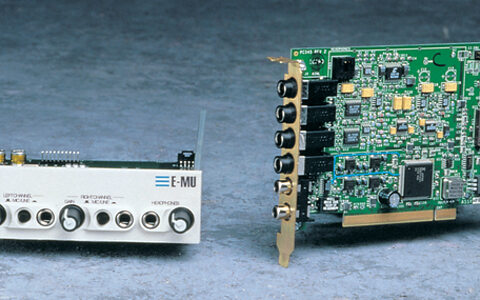
Emu's APS system takes the company into soundcard territory, but with a comprehensive spec that even includes studio-quality mic amps. Martin Walker tries out this all-in-one experience.

Paul White bolts Roland's new range of synth expander modules into his rack, seats himself in the comfy chair, then switches it on.

Paul White checks out the new features in this latest update to Emagic's MIDI recording environment.

Wilf Smarties explores the never-ending world of sample loops and how best to use them in your music.