You are here

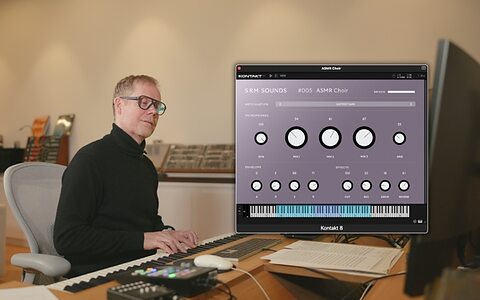
The Very Loud Indeed Co. Anniversary Sale cinematic sound design composition Kontakt sample library Omnisphere virtual instrument
link

The Very Loud Indeed Co. Anniversary Sale

In celebration of their fifth anniversary, The Very Loud Indeed Co. have announced a sale across their range of cinematic scoring and sound-design tools. 

Antares Metamorph AI vocal transformation plug-in offline native
link

Antares update Metamorph

Metamorph V1.1 introduces the ability to import third-party RVC (Retrieval-based Voice Conversion) models, opening up a whole host of new creative possibilities while maintaining the security and privacy offered by the softwares offline local processing. 

Celemony Tonalic virtual session guitarist keyboardist drummer bassist
link

Tonalic from Celemony

Described as “a musician by your side”, the latest addition to the Celemony line-up brings together a huge collection of musical phrases played by some of the world’s top session players, all of which can be adapted to play in any song, regardless of its chord sequence, tempo or groove.

Zero G Nostalgia Reborn Kontakt synth sample library virtual instrument
link

Zero G release Nostalgia Reborn

Nostalgia Reborn brings together more than 4500 samples drawn from over four decades of electronic instruments, delivering an all-in-one genre-spanning collection that promises to fit into just about any modern production.

Sound Shadow

The area behind an acoustic baffle on the opposite side from the sound source where the sound level is greatly reduced due to sound diffracting around the baffle.

Shuffling

A signal processing technique first conceived by Alan Blumlein to correct for spatial imaging anomalies inherent in stereo microphone arrays and loudspeaker monitoring. All shuffling processes involve frequency-dependent adjustments to the width of a stereo signal at different frequencies.

RAI Stereo Array

A near-coincident stereo microphone array conceived by the Italian broadcaster Radio Audizioni Italiane (RAI) in the early 1960s. It comprises a pair of cardioid microphones with capsules spaced 21cm apart at a mutual angle of 100°. The resulting SRA is 93 degrees. This technique captures both time and level differences between channels, and is comparable to similar techniques such as NOS, ORTF, DIN, EBS, and others.

Pages

Subscribe to Sound On Sound RSS