

Search
Found 26751 results
To find the exact phrase, put the words in quotes or join them together with a plus sign e.g. live+recording or "live recording".
To find, say, all live recording articles that mention Avid, enter: live+recording +avid - and use sidebar filters to narrow down searches further.
DIN Stereo Microphone array
An acronym for a German standards organisation founded in 1917: Deutsches Institut für Normung. Amongst many audio standards created by this organisation, the DIN stereo microphone array comprises a pair of near-spaced cardioid microphones with capsules spaced 20cm apart at a mutual angle of 90°. The resulting SRA is 101 degrees. This technique captures both time and level differences between channels, and is comparable to similar techniques such as ORTF, RAI, EBS, NOS, and others.
Curtain of Sound
An approach to capturing and reproducing stereophonic sound developed by Dr Harvey Fletcher (of Bell Labs in America) in the early 1930s. A multiplicity of microphones arrayed in front of a large ensemble sample the audio wavefront at different points in space. Each microphone is connected to a corresponding loudspeaker in front of the audience to recreate the same wavefronts. Although effective, this technique was deemed highly impractical at the time, and it evolved through simplification into various spaced-omni microphone techniques.
Cross-Feed Matrix
A technology often employed in headphone monitoring to recreate the acoustic crosstalk between ears which naturally occurs with loudspeaker listening, but which is normally excluded by headphones. A portion of the signal from each channel is fed into the opposite channel with equalisation and a short delay.
Critical Distance
Denoted as dc. The distance from a directional sound source at which the sound pressure level of the direct sound exactly equals that of the reverberant sound. Dc is dependent on the geometry and absorption characteristics of the space in which the sound waves propagate such that a highly reverberant space has a relatively short dc, whereas a dry-sounding room has a long dc. Critical distance is important in determining where to locate microphones to achieve a desired perspective.
Correlation
An expression of the degree of similarity between signals conveyed over two channels. A dual-mono signal would have full correlation, whereas two spaced-omni microphones would capture signals with very little correlation. Normal stereo material with a wide sound stage has a significant degree of decorrelation between channels.
Faulkner Phased Array
A stereo microphone technique made popular by the esteemed British recording engineer, Tony Faulkner. Similar in appearance to the OCCO array, it uses a pair of near-spaced cardioid microphones flanked by a pair of spaced omnidirectional mics. The cardioid pair has a capsule spacing of around 41cm while the omnis are spaced at 67cm. Both pairs have 90° mutual angles.
Faulkner explains the concept as being similar to steerable radio-frequency aerial arrays, whereby the reception beam focus is orientated by manipulating the relative phases of signals from each aerial element — although that’s not how the microphones are actually used in this array as there is no direct phase manipulation!
Another stereo mic array associated with Faulkner, and sometimes also called a ‘phased array’ employs a pair of figure-of-eight microphones spaced 20cm apart both facing directly forward (mutual angle 0°). This is essentially a spaced-omni array but designed to minimise unwanted side reflections in acoustically difficult venues by replacing the omnidirectional microphones with figure-of-eight types.
OCCO
Also referred to as the ‘Optimal Cardioid Capsule Configuration’. It is a combination stereo array typically employing both a near-coincident array and a spaced-omni array in the same system, with the two pairs of microphones being blended to achieve the desired level of imaging precision, spaciousness and LF extension.
Combination Stereo Array
A complex multi-mic stereo array typically combining two or more conventional stereo arrays mounted in the same plane. The OCCO array and Falkner Phased array are examples combination arrays, where a near-coincident array is combined with a spaced-omni array with the aim of blending the spatial imaging accuracy of the former with the spaciousness and low-frequency extension of the latter.
Blumlein-Pfanzagl-Triple Array
A development of the Blumlein Array, named after its inventor Dr. Edwin Pfanzagl-Cardone. This configuration adds a third, central figure-of-eight microphone facing directly forwards. This extra microphone’s output is typically blended 3 – 6dB lower than the level from the left and right microphones to introduce more central focus to the sound stage.
Bell Laboratories
The historical research centre of the Bell Telephone Company in America, and credited with (amongst many other inventions) the development of early stereo spaced array microphone techniques concurrent with, but independent of, Blumlein’s work at EMI in the UK.
Baffle
An acoustic screen placed between microphones to replicate the sound-shadowing effect of the head between the ears.
Auditory Cues
Elements of acoustic sound signals detected by the ears and brain which help to locate sound sources in the space around the listener using inter-aural time differences (ITD), inter-aural level differences (ILD), and spectral anomalies due to comb-filtering caused by the pinnae and shoulders.
Acoustic Pressure Equaliser (APE)
Acoustic Pressure Equaliser (APE) — A smooth spherical construction with a small-diaphragm omnidirectional microphone capsule mounted flush to the surface. APEs are typically 30-50mm in diameter and serve to modify the frequency response and polar pattern through surface diffractions. These create an HF boost for on-axis sounds, and greater directivity at high frequencies giving more forward focus and, when used in a spaced array, enhanced stereo imaging. The Decca Tree is famous for using Neumann M50 microphones in which the omni capsule is embedded within a 40mm APE.
Angular Distortion
The differences between the relative angles of physical sound sources placed in front of a stereo microphone array and their representation as virtual sources on replay from stereo loudspeakers. Most stereo arrays tend to expand the relative angles of sources close to the centre but compress them for sources close to the edge ( somewhat like a wide-angle lens).
A-B Stereo
A stereo microphone technique using two microphones spaced apart by at least 50cm. The microphones normally have omnidirectional polar patterns, but other polar patterns can be used. This format is known for capturing a good sense of spaciousness, depth and ambience, although spatial imaging tends to be relatively vague and potentially unstable.
link
Steinberg release WaveLab 13
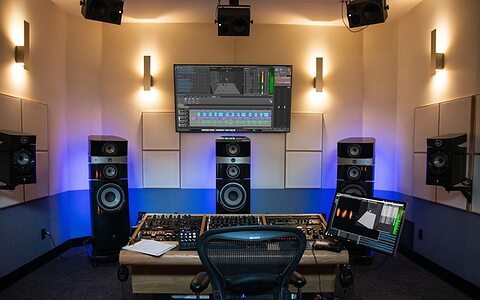
The latest version of Steinberg's popular editing and mastering software introduces a whole host of new features, many of which centre around the suite’s Dolby Atmos capabilities.
Published 30/1/26
link
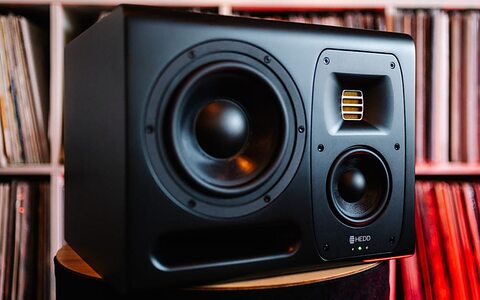
NAMM 2026: HEDD Audio Type 20 A-Core
The latest addition to HEDD Audio’s all-analogue line-up delivers a powerful three-way design that extends the company’s acclaimed A-Core range into larger professional studios and mastering environments.
Published 29/1/26

link
A statement from Native Instruments
Native Instruments' CEO, Nick Williams, has just released an official statement regarding the company's pre-insolvency filing.
Published 29/1/26
link
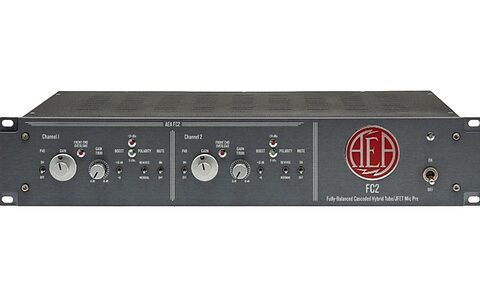
NAMM 2026: AEA FC2 & R8
Taking pride of place on the AEA booth at NAMM 2026 was a new dual-channel valve preamp that’s been designed alongside Fred Forssell.
Published 29/1/26