We move on from discussing the harmonic components of sound to explaining how they change over time, and some of the tools subtractive synths give you to emulate this process.
In Part 1 we explained how the tones of most real instruments can be reduced to patterns of harmonics, which can be generated using sine, saw, square or pulse waveforms. This month, we consider the sonic raw materials needed to imitate unpitched percussion.
Waldorf's long-awaited Q synthesizer is now shipping, but without many of the features it will ultimately possess. Gordon Reid takes a hands-on look at what's here now and what's to come.
Most US synthesizer manufacturers followed the now all-too-familiar corporate history of rapid growth in the 1970s followed by acrimonious dissolution in the 1980s. What happened to Octave, however, was a little different...
In Part 1 of this (63-part) series exploring the world of subtractive synthesis, Gordon Reid goes right back to basics. What are waveforms and harmonics, where do they come from, and how does the theory relate to what we actually hear?
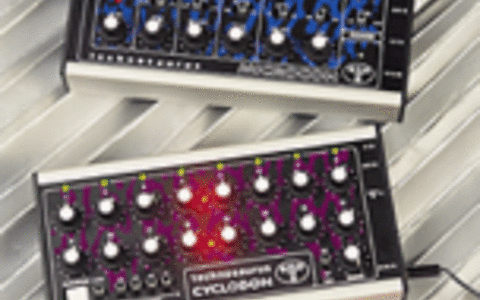
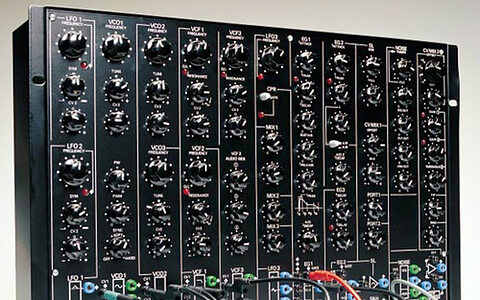
Last month, Gordon Reid reviewed the babies of the Technosaurus range, the Microcon synthesizer and Cyclodon sequencer. This month, he tackles their (very) big brother, the Selector modular synthesizer...
Two Dutch designers who were influential in the design of the cult '80s Synton Syrinx synth have recently returned to the field, coming up with the exclusive and highly idiosyncratic Fénix synthesizer.
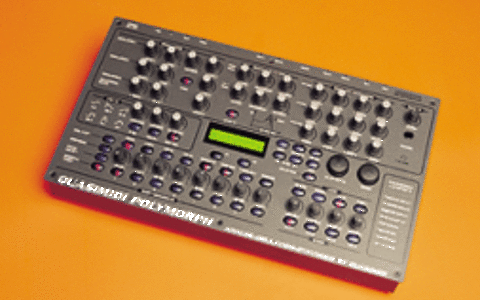
With several successful dance-oriented synth successes to their name, Quasimidi attempt to buck the trend with their latest offering. The Polymorph does offer plenty to interest the dance fraternity — real-time modulation knobs, and an analogue-style sequencer and user interface — but behind the façade lurks a powerful synth.