

You are here
link
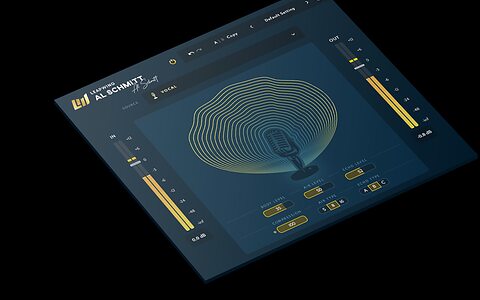
Leapwing release Al Schmitt plug-in
Belgian software company collaborate with legendary mix engineer to produce a preset-based instrument and mix-bus processor.
Published 11/2/21

link
Bright Sparks released for free
Synth documentary explores the lives of Robert Moog, Don Buchla, Peter Zinovieff, Alan R Pearlman, Harry Chamberlin, Adrian Wagner, Ken Freeman and the Bradley Brothers.
Published 9/2/21

link
Novation launch Circuit Tracks
Battery-operable standalone groovebox boasts two synth engines, a drum machine, sample playback and MIDI sequencing.
Published 9/2/21
Zero Latency Monitoring
A monitoring system that does not introduce delay. When recording into a computer the audio interface inherently introduces some latency (delay) in passing the signal in and out of the computer which may amount to several milliseconds. If trying to audition the output signal while performing, this delay can be disturbing and may even make it impossible to play/sing at all. To circumvent this situation, many interfaces are equipped with a 'zero-latency' or 'latency-free' monitoring function which passes the input signals directly to a local monitoring output, where it can be combined with any required replay signals from the computer.
Monitoring
The act of critical auditioning of an audio signal, either aurally (via loudspeakers or headophones) or visually (via a metering or visual display). In live sound applications the term can also be used in reference to Foldback systems.
Stereo Imaging
Stereo Imaging refers to the accuracy and quality of the spatial positional information being portrayed for individual sound sources within a stereo soundstage reproduced by stereo loudspeakers or headphones.
Characteristic Impedance
If a cable is long relative to the wavelength of the signal it is conveying it is said to behave as a 'transmission line' and the signal is passed as an eletromagnetic wave along the cable. In this condition, the cable itself has a 'characteristic impedance' which can be thought of as the impedance measured at the input if the cable is infinitely long, and it depends on the cable construction — the materials and their geometries — rather than the length. It is necesary to terminate each end of a transmission line with the same impedance as its characteristic impedance. if this is not done the propagating wave will be reflected from the ends of the cable, and the reflected energy can interfere with the source signals.
The characteristic impedance of typical coaxial video and S/PDIF digital cables is 75 Ohms, while AES3 and RJ45 Ethernet cables is around 110 Ohms.
Termination
Termination has two meanings in the context of audio. One application is simply the type of connector applied to a cable or wire, so a cable might be terminated in a 3-pin XLR plug, for example.
The second application refers to the electrical characteristics of some specific types of audio interface where the cable acts as a 'Transmission line'. This typically occurs where the cable is long relative to the wavelength of the signal it is carrying, so it most commonly applies to digital audio, video signals, and radio-frequency connections — although it can also apply to analogue audio cables when more than a few kilometres long.
When a cable operates as a transmission line it is said to have a 'characteristic impedance' — essentially the impedance presented at its input if the cable was infinitely long. To transfer a signal along the cable efficiently, it is vital that a end of a transmission line is terminated with the same impedance as its characteristic impedance. If it is left unterminated, the end of the cable behaces like a mirror, and signal energy is reflected back along the cable where upon it will interfere with the source signal.
S/PDIF and Video cables normally require a 75 Ohm termination. RF cables usually require either 50 or 75 Ohms, depending on their construction. AES3 requires a 110 Ohm termination and RJ45-style Ethernet cables require 100 Ohms.
Pages
