

I think it’s important to have open ears when you’re a music‑maker. I like to listen to everything, because it’s all got musical potential in some form or other. I feel like the sounds of nature, a bustling city, or even devices such as dishwashers and cars are just as interesting as acoustic or electronic instruments. I wonder if other musicians feel the same?
We often focus on craft when we’re producing music. It requires a huge time investment to acquire the skill to play an instrument well. It also takes time to develop our own style and taste. Songwriting is a craft that needs constant effort too, and engineers and producers need to learn to get results from equipment that often resembles NASA mission control... and then you also need to develop unique social skills to work with performers. When you consider all the craft that needs to go into music‑making, it might seem that simply recording things like birdsong, waves on the beach or cicadas is cheating. We might say “Anyone can do that!”, and that’s partially true. Anyone can do it — so long as they have the motivation to go and find the thing, the luck to capture it (the world doesn’t always perform on cue), the skill to record it well, and then the technique and imagination to turn everyday sounds into music that people want to hear.
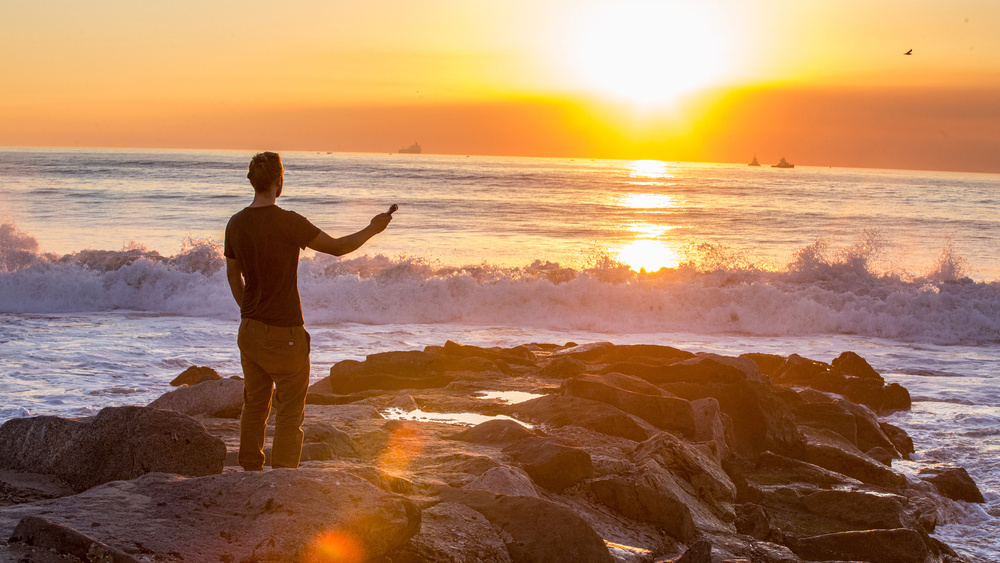
When trying to record these sounds you’ll often feel like a surfer waiting for the perfect wave.
When trying to record these sounds you’ll often feel like a surfer waiting for the perfect wave. You’re ready, but you have to be patient and wait for nature to get ready too. It can be relaxing if you’re somewhere nice, or it can be incredibly frustrating if you’re not in record when the sound appears. Sometimes it’s dangerous! You have to keep your wits about you when recording wild animals. Is it worth the effort? I think so. Listen to ‘Blackbird’ on the Beatles’ White album. The song would still be great without the bird recording, but for me the whole thing comes across so much better because Paul McCartney’s performance features a guest spot from a blackbird! It’s beautiful and unique.
When you dig into music production techniques, you realise that many musicians were inspired by sounds that weren’t from music. Loads of Björk’s albums include found sounds and natural recordings, but a great example is Vespertine — listen to it and you will feel like you’re in an Icelandic winter landscape with ice cracking under your feet, because the producers really recorded cracking ice for the songs. Billie Eilish’s producer Finneas O’Connell is known for recording interesting sounds and working them into his tracks. For example, in the chorus of ‘Bad Guy’ you can hear the sound of a pedestrian crossing recorded in Sydney. It’s a prominent part of the rhythm! Who else would have used that sound in that way? That’s why I find it so exciting. We can remix the world in our own unique style.
I’ve been recording a forest near Prague for my music recently, because it’s full of amazing sounds. Why don’t you try recording found sounds too? You’ll get the best results with a high‑end portable recorder and good mics, but you don’t need that yet. Just put your phone into record mode for a moment, go outside, and try to capture anything that interests you. What do you hear that inspires you to make music? Will you include the sounds you record, or just use them as inspiration? I promise nobody else will make the same choices as you — there’s just too much sonic variety out there!