

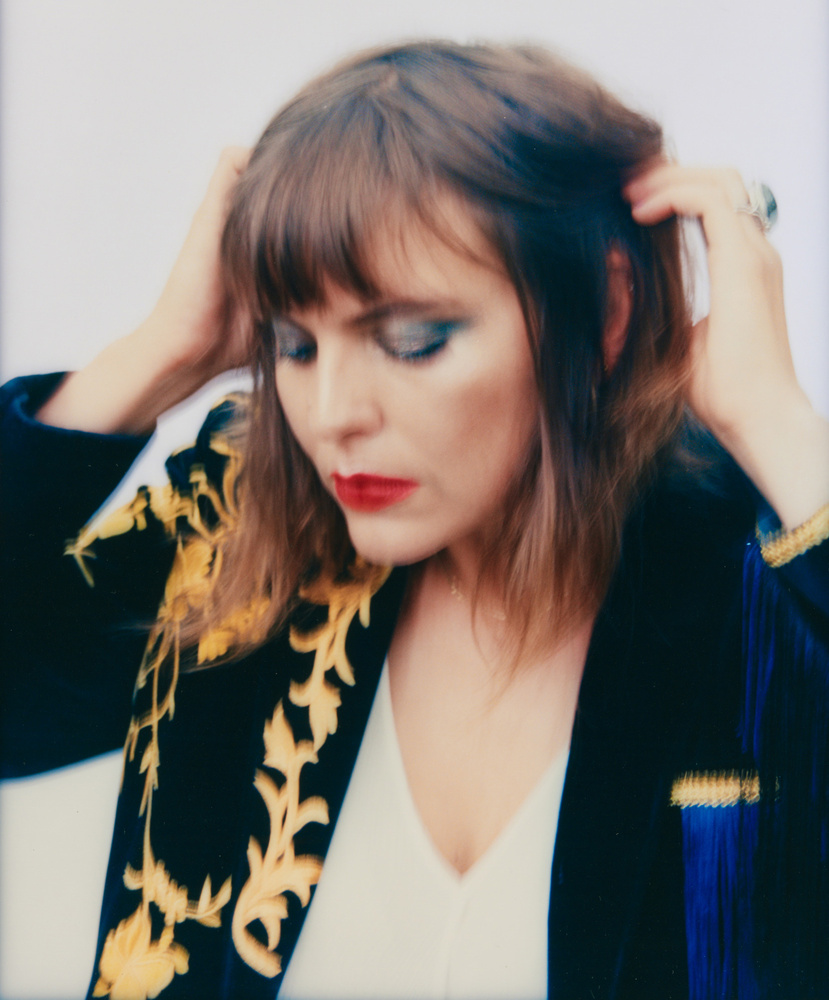
Since graduating from the University of Cape Town with a degree in Violin Performance, British‑South African artist and producer Galina Juritz has worked with groups like ShhArt Ensemble and Inclementine and composed numerous film and animation soundtracks. One Weird Trick is her first studio album, mingling jazz, electronic, ambient and orchestral sounds.
At the moment I can’t stop listening to
Alas, like many other parents of toddlers, the Go Jetters soundtrack on CBeebies is the thing I hear day in and day out. It’s got an uptempo disco intro that, to be fair, is a pretty vibey way to start the day at 7am! But some standout discoveries of the past while have been Alvarezz’s La Línea Imaginaria, Growth Eternal’s Bass Tone Paintings and Reinier Baas’ Reinier Baas vs. Princess Discombobulatrix.
Being part of the Kit Records family, I am blessed to have a world of weird and wonderful music in constant circulation — and many artists on the roster, and from elsewhere, passing through London have spent nights on my couch. At some point next year Cara Stacey and myself will be resuming our radio show Run Amok, where we dive into the vaults of music we’ve had on repeat.
The artist I’d most like to collaborate with
Again, so many! But maybe I’d form a trio with Jon Bap and the soundscape sorceress and composer Hildur Guðnadóttir, who created the Chernobyl soundtrack — two living legends of our time. I don’t really know what they’d do with me, probably sample my whimpering murmurs of adulation and reharmonise them. Jon Bap is also partial to scruffy DIY aesthetics, so maybe the two of them could rehearse and send me out into the streets with an iPhone in the hope that I might record something interesting for an interlude! Hildur may allow me to scrape a few stringy notes out, with the caveat they were recorded outside an industrial concrete carpark‑turned‑nightclub, with the groans of inebriated attendees covering a nice muddy frequency range. And if Louis Cole could pop into the room every now and then he’d lighten the mood and make sure the humour in the music was always detectable.
The first thing I look for in a studio
I look for a warm and inviting ambience. A space people would want to spend many hours in, like a kind of magical hideout den, away from regular life. You want that ease of workflow, so you can be spontaneous and capture new ideas quickly. I also always enjoy identifying unique pieces of gear in a person’s studio — maybe a warm vintage compressor or an uncommon instrument lying around — and finding out what it means to them and why. People reveal so much about their musical identities through their relationships with these inanimate objects. For me, every piece of gear I own has a story, like the very first extremely cheap and nasty guitar multi‑effects pedal I ever put my violin through that used to shriek with feedback, or the mini Fender bass I got from my partner for my birthday after recently moving back to London... or my TUL F47 microphone, dented in every direction from moving countries multiple times.
The person I would consider my mentor
From my classical violin training to my progression into composing, improvising and more electronic music, I’ve had a host of mentors along the way. During my studies in Cape Town I had a formidable violin teacher called Farida Bachorova, who had previously been the youngest female concert master in Russia. She has extreme attention to detail and doesn’t suffer fools! Then, my lovely uncle David Juritz is a wonderful violinist who I have been fortunate enough to see perform over the years. The South African composer, playwright and installation artist Neo Muyanga really modelled how to be brave and crazy, and how to put people from different disciplines on the same stage. And starting my journey as a producer, it was invaluable to be able to sit in a room and just watch producers work, asking questions along the way. The Capetonian group Mix n Blend and Zain Wolf were very kind to give me their time. Being part of egalitarian groups like the ShhArt Ensemble and Inclementine gave my friends and me a place to try out each other’s compositions and workshop ideas. Matthijs van Dijk always had great advice on my scores and Cara Stacey would always gently encourage me out of my comfort zone — and also wipe away my pre‑concert tears, of which there were many.
My go‑to reference track or album
Thundercat’s Apocalypse album has a sound that, for obvious reasons, feels centred around the low end of the spectrum, with lighter high‑end vocals and strings washed out in reverb. I still don’t know if my penchant for reverb stems from a desire to hide in a coat of shimmering obscurity, or if it’s just an aesthetic preference; how much I use may change depending on what side of the bed I wake up on! It feels raw and not overly expensively produced, and emotionally more vulnerable for it. Then, for electronic music, there is no day of the year I wouldn’t be soothed by the sound of Burial’s ‘Archangel’. The palette... those restless, unsettled drums, melancholy strings, chopped‑up fragments of frantic vocals. It’s right up my street.
Galina Juritz: When I’ve started a string section I like to build upwards and just keep going. It gets addictive.
My secret weapon in the studio is
When recording for other people, I’d say it’s some kind of masochism‑stamina‑neurosis hybrid which allows me to record a thousand violin takes and add multiple parts! When I’ve started a string section I like to build upwards and just keep going. It gets addictive. In terms of my own music, I feel something I’ve been able to hone in sessions is the ability to embrace the chaos and texture of spontaneous DIY improvisations, and then frame the results in a more solid harmonic structure. Also the Valhalla Supermassive reverb, iZotope Stutter Edit and also dramatic panning! Though the latter is probably an art school hangover from Goldsmiths University.
The studio session I wish I’d witnessed
The recording of an album called Country Cooking from 1988, by Chris McGregor’s Brotherhood Of Breath. It’s a brass‑heavy big band and very close to my heart as my dad [Robert Juritz] often played saxophone and bassoon with them during my early childhood. The Brotherhood were composed of various exiled South African and British musicians. You can’t overlook the band’s political significance as an interracial band in the height of apartheid South Africa. With roots in Xhosa choral music, free jazz and the staggered cycles of Southern African vocal polyphony, this music spoke to everything that the government was actively suppressing. There was a beautifully anarchic spirit to the band, the way they lived and the way they played.
I have memories of being a young child at the old water mill outside the French town of Agen, where before touring, the band used to have long rehearsals, and longer braais! In my mind it was a creative countryside wonderland. Country Cooking was born out of this wild time and remains one of my favourite albums to this day.
The producer I’d most like to work with
I’m going to say Tony Visconti, mainly because of David Bowie’s Blackstar. The reason being that he must have a remarkable emotional competence to have been entrusted with producing someone’s music while they were in the process of dying. To be able to hold the gravity of that, then incorporate all of the new influences Bowie was bringing in like Kendrick Lamar, or Death Grips, and a more jazz‑bound sound than he had ever explored in previous albums, while keeping everyone in the presence of those things simultaneously... I think it’s an extraordinary feat of humanity and musicianship, and watching him speak back on the experience you can feel the love he has for them all.
In an alternate life I also feel like being produced by Steely Dan would be a baptism of fire, as there is no way they would let me get away with delivering anything sh*t. And I’d have to endure a lot of disdain and glaring through the studio glass! And Arca would probably be wonderful to work with. A deep educational dive into sound‑world producing that I could get totally lost in.
The studio experience that taught me the most
When I was in high school we had to do a work experience week, and without much forethought I picked Cape Audio College and Milestone Studios, as they sounded grown‑up and cool. Walking into this space for the first time I remember the feeling of freedom I experienced. No one was in a suit and tie, no one was being buzzed orders at or hunched next to a stack of dull papers — probably my idea of what ‘real jobs’ entailed. It was the first time I felt this radioactive potential, in the padded walls of a studio. Up to this point my first‑hand experience of music had been my school training, playing in orchestras and ensembles, which were quite hierarchical and structured. It opened my eyes to a world which I knew I’d want to find my way towards one day.
The advice I’d give myself of 10 years ago
Stop operating from the outside in and be brutally honest about what you find interesting and what genuinely moves you. You could spend years trying to do things that have already been done better by other people and never achieve them, so you may as well start doing your own thing. There is a careful balance to be struck between experimenting, venturing, and then inviting critique, growth and refinement. You will make many mistakes and they won’t kill you. In fact, they are a necessary facet of your own development, testing the parameters of where you are now and where you are going. And don’t ‘accidentally’ lose a lot of your live recordings because you felt cringe‑y about listening back to them! You will wish you had them down the line, warts and all! And of course, most importantly, don’t drench absolutely everything in reverb!

