

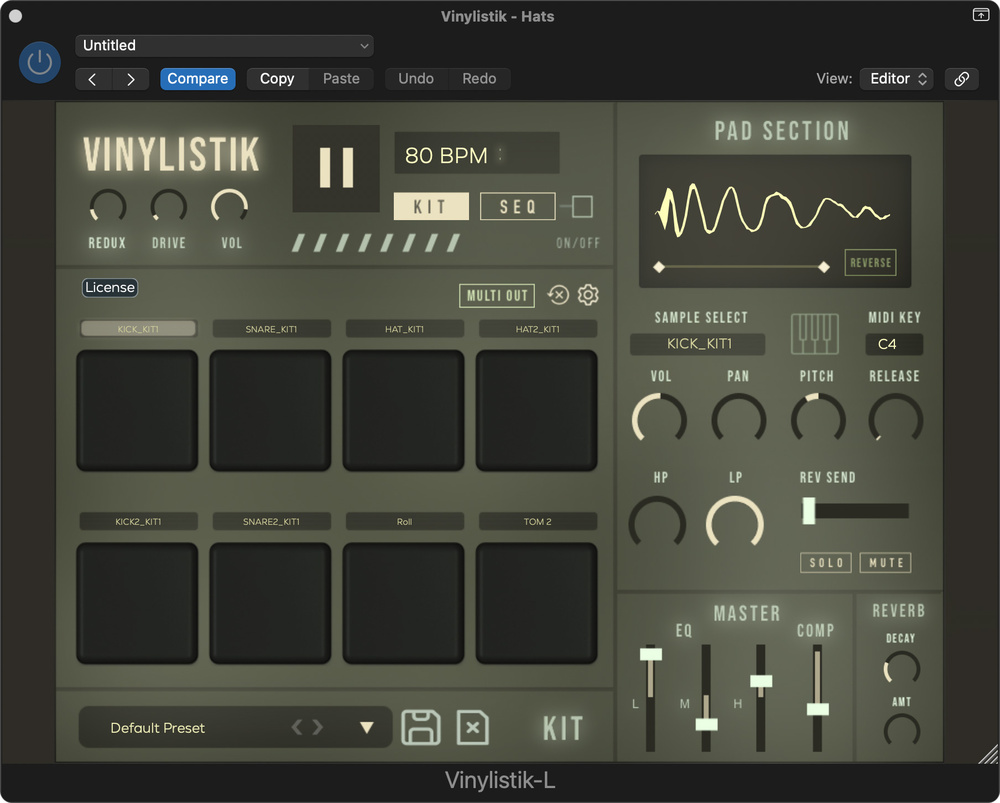
 BeatSkillz Vinylistik: a plug‑in available through SOSFA that offers a lovely collection of retro, sampled drums that are ideal for lo‑fi beats.
SOS FOR ARTISTS ecosystem has the sounds and tools you need to craft some deliciously chilled lo‑fi beats. Here's how...
At its core, lo‑fi music prioritises feel over fidelity: rather than aim for maximum clarity or loudness, a lo‑fi beat invites the listener into a smaller, more human sonic space. And while early lo‑fi recordings were shaped by people leaning into the constraints of budget equipment and imperfect recording environments — something most music makers worked hard to avoid! — today’s lo‑fi producers intentionally seek out the slight timing inconsistencies, pitch drift, softened transients, limited bandwidths and background textures that can all contribute to a sense of warmth, intimacy and nostalgia.
For this month’s SOSFA workshop, we set out to create a complete lo‑fi beat, using a selection of characterful plug‑ins available in the SOSFA subscription. While some more recent lo‑fi musical offerings might have a harder edge, we chose to stick to the gentler ‘Lo‑fi Girl’ style that’s become synonymous with the genre. Also note that we’re using the informal term ‘beat’ here to refer to a complete loopable section of music, not just drums.
Session Setup & Tempo
Our first step was to choose some samples and plug‑ins that would work with the lo‑fi aesthetic, and download them from SOS For Artists. We found plenty to choose from, including a range of effects from BeatSkillz, Yum Audio and one of our favourites, Baby Audio’s Taip. We also downloaded, from the Sample tab, a collection of one‑shots that had potential for creating the drum parts and adding texture to the finished track.
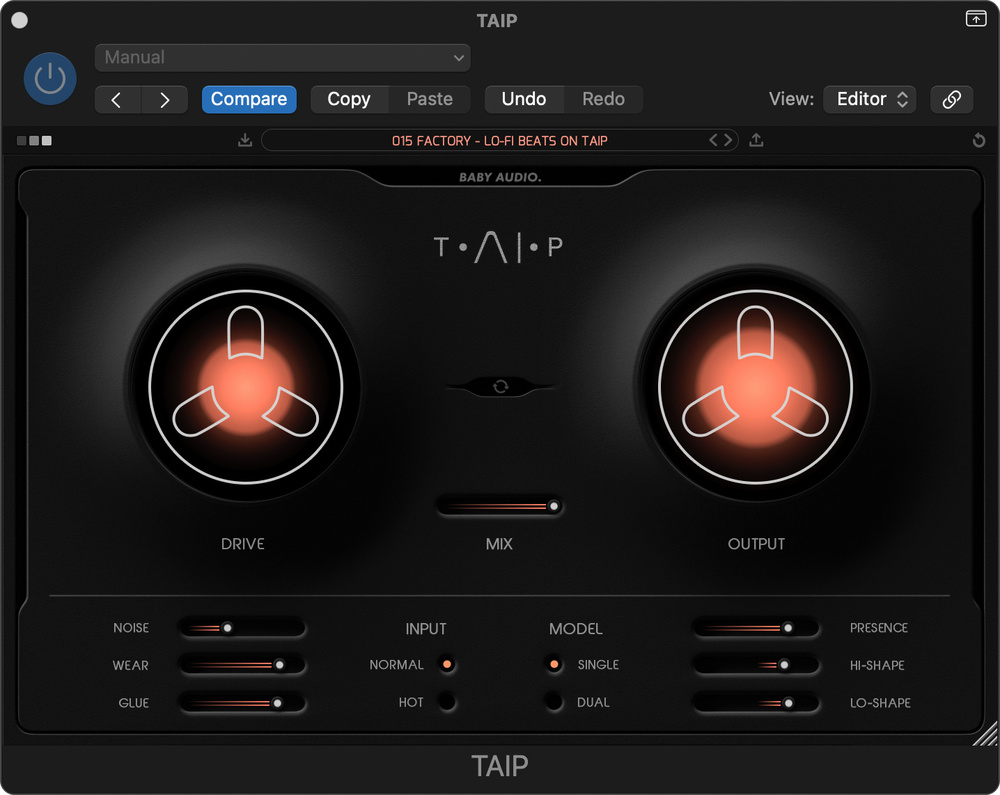 Baby Audio’s TAIP — a great plug‑in for deliberate tape‑style saturation.
Most lo‑fi beats sit comfortably between 65 and 85 bpm. It’s a pleasant sweet spot that seems to groove along nicely, since the whole ethos is built around easy‑listening vibes for study and rest. For this session, we started with a tempo of 82 bpm and chose a simple 4/4 time signature.
The emotional weight of lo‑fi tracks tends to be rooted in their chords, and extended jazz‑style harmonies (minor sevenths, ninths and suspended chords) can instantly create a reflective mood, without requiring any melodic complexity. The arrangements also thrive on restraint, so we stacked up 10 simple musical parts using a four‑chord progression: Dm9, Dm9b5/G, C9, Am9.
The electric piano part, a broken chord, was played in using the Lounge Lizard Session 4 plug‑in, from the AAS Session bundle, while the higher, arpeggiando piano part used the Spitfire Audio Original Intimate Grand Piano. For added movement, a gentle rhythmic pad was added using Gforce Axxess (with the pattern locked to the project tempo, using the LFO Retrigger switch) and, finally, Sonuscore’s Orchestra Elements was used for a simple string ensemble part, to provide a few extra harmonies in the upper register.
We used no more than 80 percent quantisation on any track and, to preserve the loose piano feel, none at all on the upper piano part.
Lo‑fi is definitely one of those styles that benefits from being played in rather than drawn in, assuming you have the skills, but it’s not impossible to program. Either way, it works best with a very ‘lazy’, lightly quantised playing style. This piece we decided to quantise a little more than usual for this style, specifically to avoid other parts clashing with the arpeggiated synth. But we used no more than 80 percent quantisation on any track and, to preserve the loose piano feel, none at all on the upper piano part.
Adding Drums
Lo‑fi drum patterns tend to be understated, often borrowing from hip‑hop but keeping things very minimal. Kicks are rounded, rather than sub‑heavy, snares feel dusty rather than sharp and snappy, and hi‑hats are muted or filtered.
For this beat, we dropped the samples we’d downloaded from SOS For Artists into Logic Pro’s side panel, and dragged them onto an empty track, for use in Logic’s Sampler. This track was duplicated twice, to put the kick, snare and hats on separate tracks — that would make processing easier later on. Vinylistik from BeatSkillz is a plug‑in offering a collection of retro, sampled drums that are ideal for this genre, and we used this to drop in some additional hats, played in real time from a keyboard, to give lots of human dynamic and timing variation.
Again, we kept quantisation to a minimum, with the kick drum being the only track fairly close to the beat, and the other parts left lagging slightly behind to create a relaxed feel.
Texture & Atmosphere
Textures are crucial in lo‑fi production, often acting as a musical layer in their own right. Instead of simply adding noise underneath a track, though, texture can be shaped rhythmically and harmonically. For this track, we used an ambient nature sound, downloaded from the SOSFA Samples tab, and enhanced it with Soundghost’s Texturize plug‑in. Texturize offers a range of options, including ambience, effects and Foley sounds, and we opted to inject a little more grit into the track courtesy of some vinyl crackle. We kept this all fairly low in the mix, so it wasn’t distracting, but with just enough presence to add a little more sense of depth and warmth.
A Simple Bassline
As with most elements, lo‑fi basslines are usually kept very minimal. They often follow root notes, or just use simple motion. Sine or triangle bass patches can work really well, especially when they’re filtered to tone down any unwanted brightness. For this beat’s bass part, we used UJAM USynth Core in instrument mode — it has a great selection of very usable sounds. For anyone that hasn’t come across them yet, UJAM were co‑founded by Hans Zimmer and Pharrell Williams back in 2009, and their core premise is offering plug‑ins with great sounds and simplified controls, designed with busy composer workflows in mind. The first bass sound fitted into the vibe perfectly, and it was softened further by pulling down some of the higher frequencies using the plug‑in’s own controls.
Intentional Imperfection
Obviously, lo‑fi is about embracing imperfections, but there’s more to it than that, and there are some common production techniques used across the genre. Overzealous use of compression is generally avoided, for example, and high and low frequencies are often rolled off to create a retro vibe. Stereo width is usually kept fairly minimal too.
For this track, we put the bass right in the centre of the stereo image, and the piano and electric piano parts were panned just a little, so that they sat opposite each other. The same went for the pad and strings — they were placed opposite each other, but slightly wider than the pianos. For the drums, the kick was kept central and the rest of the sounds were panned (just slightly) to mimic the layout of a drum kit.
We used Arturia’s excellent Rev PLATE‑140 to add a touch of analogue‑style reverb across all the parts, and looked to Baby Audio’s Taip to add some wear, glue and presence to all tracks, but more so on the drums, strings and synth pad. Yum Audio’s Lo‑fi Flux Light added a slight retro warble to the pianos. This kind of effect can be used more assertively on many lo‑fi tracks, but for this particular mix we opted to keep things fairly mild.
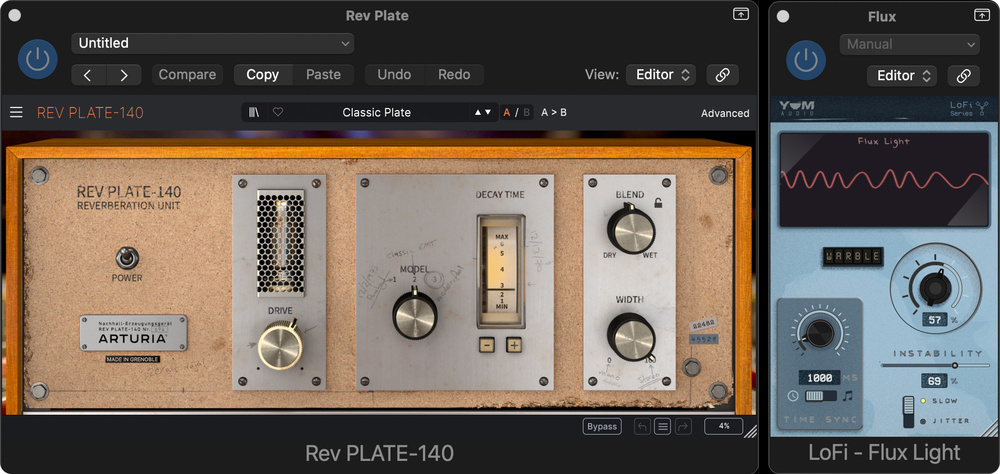 Arturia’s PLATE‑140 provided a global, analogue plate‑style reverb for all tracks, while Yum Audio’s Lo‑Fi Flux Light added a cool pitch wobble to the piano parts.
Finishing Touches
For this piece, master bus processing was pretty sparse. We used EQ to roll off some of the high and low frequencies, to give that instant lo‑fi vibe. Next, we dropped in Rekraft from BeatSkillz, a fantastic plug‑in that’s similar in style to XLN Audio’s RC‑20 Retro Color. It’s an all‑in‑one lo‑fi machine that offers compression, EQ and stereo width control, and up to five vintage‑style effects: texture, reverb, tape mod, crusher and motion. For more texture, you can drop your own samples into this plug‑in, but there’s also a good range of pre‑loaded samples that allow you to add tape, vinyl or film noise, and more besides. We tried a few things, and ended up opting for a little more gentle degradation of the sound, in the form of some mild bit crushing, a touch more reverb and some additional tape wobble. As a final step, we dialled in some light limiting just to bring the track up to a comfortable listening level without squeezing the life out of the dynamics.
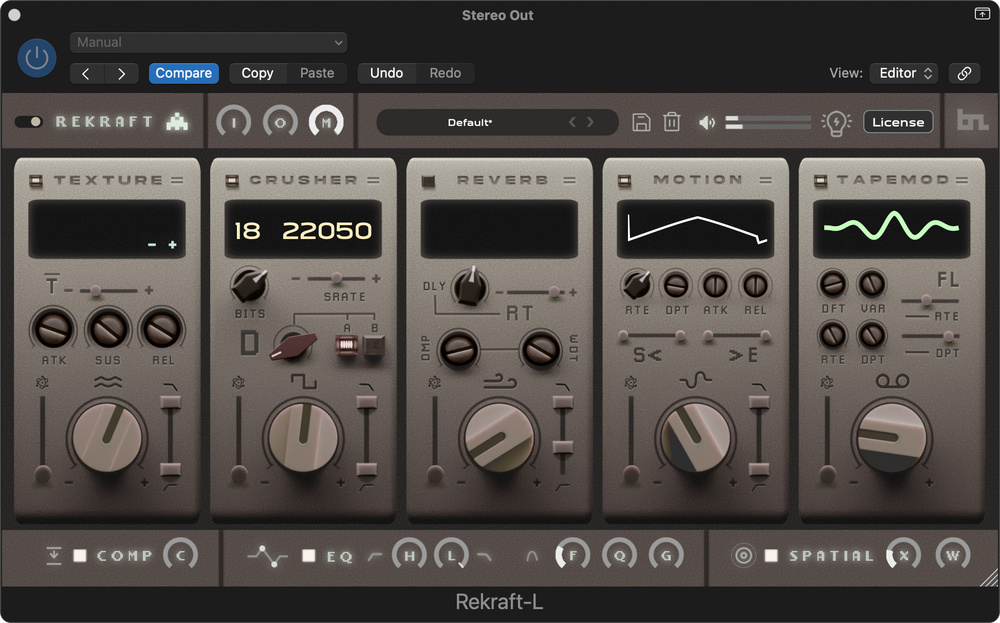 BeatSkillz Rekraft was deployed on the master bus to impose a little more lo‑fi character on the beat, in the form of bit‑crushing, and a touch of reverb and tape wobble.
With the beat now complete, the only thing left to do was copy and paste it multiple times to extend the duration of the track, then mute out parts in each section to create some musical variety. This including dropping the drums out entirely for a bar at the end of section three.
Conclusion
Hopefully, we’ve been able to show you that lo‑fi can be a quick and easy genre to explore if you want to expand your production music catalogue. It can be used in a variety of places, including sending it to labels and radio stations that specialise in this style, creating chilled playlists or submitting it to ads that are looking for a laid‑back vibe. Whether you choose a gentle, chilled style, or something a little darker and grungier, it’s a fun genre to work in, and also provides us with the perfect excuse for experimenting with the raft of retro plug‑ins that are now available.
It’s worth remembering that lo‑fi is mostly used as background music, and that makes it common to keep things as simple as we have here, and for it to be as relaxing to make as it is to listen to. But we could have spent much longer on this piece — and we’ll likely revisit it for some fine‑tuning in the future: a beat like this would definitely benefit from a dusty sax being dropped on top, or perhaps a sultry guitar lead incorporating the violining technique!