Gordon Raphael: Producing The Strokes
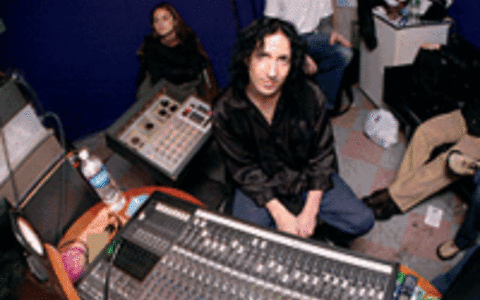
The Strokes' Is This It was many critics' choice for the best album of 2001, and has gone platinum in the UK. Remarkably, it was recorded in a basic New York project studio by a then-unknown producer.
To find the exact phrase, put the words in quotes or join them together with a plus sign e.g. live+recording or "live recording".
To find, say, all live recording articles that mention Avid, enter: live+recording +avid - and use sidebar filters to narrow down searches further.

The Strokes' Is This It was many critics' choice for the best album of 2001, and has gone platinum in the UK. Remarkably, it was recorded in a basic New York project studio by a then-unknown producer.

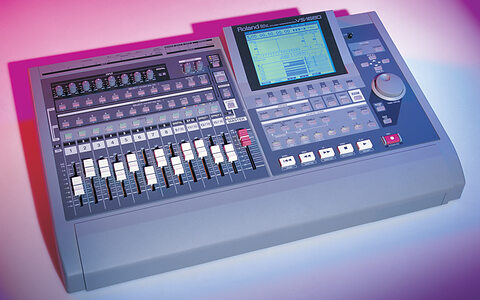
In the space of just two years, Roland have doubled the power of their hard disk multitrack concept, going from the eight tracks of the VS880 to the 16 of their latest baby. Paul Nagle admires the VS's sparkling new options.

Paul White looks at the many parameters which govern compression, how to improve your recording technique, and how not to throw the baby out with the bathwater.

Nashville is still a place of legend when it comes to music. Although overall sales of the city's flagship genre, country music, have dipped somewhat from their mid-'90s peak, Nashville still has a recording legacy matched by few cities in the world.

The M2000 takes much of the technology behind its Danish manufacturer's professional flagship, the M5000, and re-packages it with less flexibility but a much lower price tag. Paul White finds out whether it's barking up the right tree.

Catatonia's rise from indie obscurity to pop dominance seems unstoppable and, with the first single from their new album, they're even targetting Radio 2 listeners. Matt Bell talks to producer Tommy D about the track's transformation from Akai DPS12 demo to Top Ten hit.

Paul White looks at the latest incarnation of the LXP15 and finds that it neatly bridges the gap between Lexicon's budget products and their top-of-the-range pro reverb units.

Mousse T's radio remix of the song 'Sex Bomb' has sold a million copies across Europe and has once again revived sales of Tom Jones' Reload. Mike Senior talks mixing and remixing with the influential German producer.

The roles of the various signal processors and effects used in audio production are pretty well understood by most musicians, but it's not always obvious where they should be patched into the signal chain to give the best results.

Steinberg's VST Instrument technology allows software synths to be fully integrated into any VST 2.0-compatible host software, such as Cubase VST. The first major releases to arrive are both recreations of established analogue classics. Martin Walker tries them out.

Yamaha's former sampling flagship, the A3000, represented a novel but very powerful approach to sampler design. The new A4000 and A5000, as Derek Johnson & Debbie Poyser report, maintain the distinctive design ethos, but should provide even stronger competition to the established names.

In his second article on acoustic treatment, Paul White tackles the absorbing subject of acoustic traps.

Most jobbing producers would regard jetting off to exotic locations to spend a year with one of the most famous artists in the world as a fantasy. For programmer and producer Kipper, however, the dream became reality — thanks to Sting. Tom Flint caught up with Kipper in his Surrey home studio.

Yamaha pack most of an 02R96 into a unit little bigger than the 01V96. Could this be the ideal console for the quality home studio?

Irritated by the pop-fixated production values of small commercial studios, Per Villez decided to attempt a jazz recording session at home, using minimal equipment to produce master-quality results. Here he explains how he went about it on his own terms.

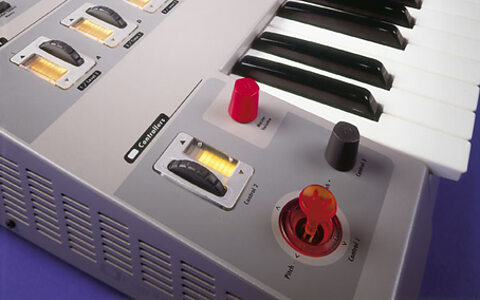
What if an instrument could combine the realism of a sampler with the complete control over its sounds that only a true synth can offer? That's what the long-awaited Hartmann Neuron claims to do. We put it to the test...

Although FM synthesis has its roots in the sixties, the instruments that popularised it were to dominate the synth scene of the eighties. Gordon Reid uncovers the origins of FM and charts its rise to fame from its unlikely beginings in academic research in the USA.

Hums and buzzes in your signal path are not the only cause of noise problems in the studio. The mechanical noise emitted by some equipment can be equally disruptive — but, as Martin Walker explains, you don't have to suffer in (lack of) silence.

Paul White catches up with the man who pioneered the art of radical remixes in the '80s, and has gone on to become a hugely successful producer and songwriter.

Paul White talks to Malcolm Toft, the man behind the legendary Trident range of recording consoles, who now has his own company, MTA, which looks set to continue the tradition of analogue excellence.