

A vintage German console EQ gets a new lease of life in 500‑series format.
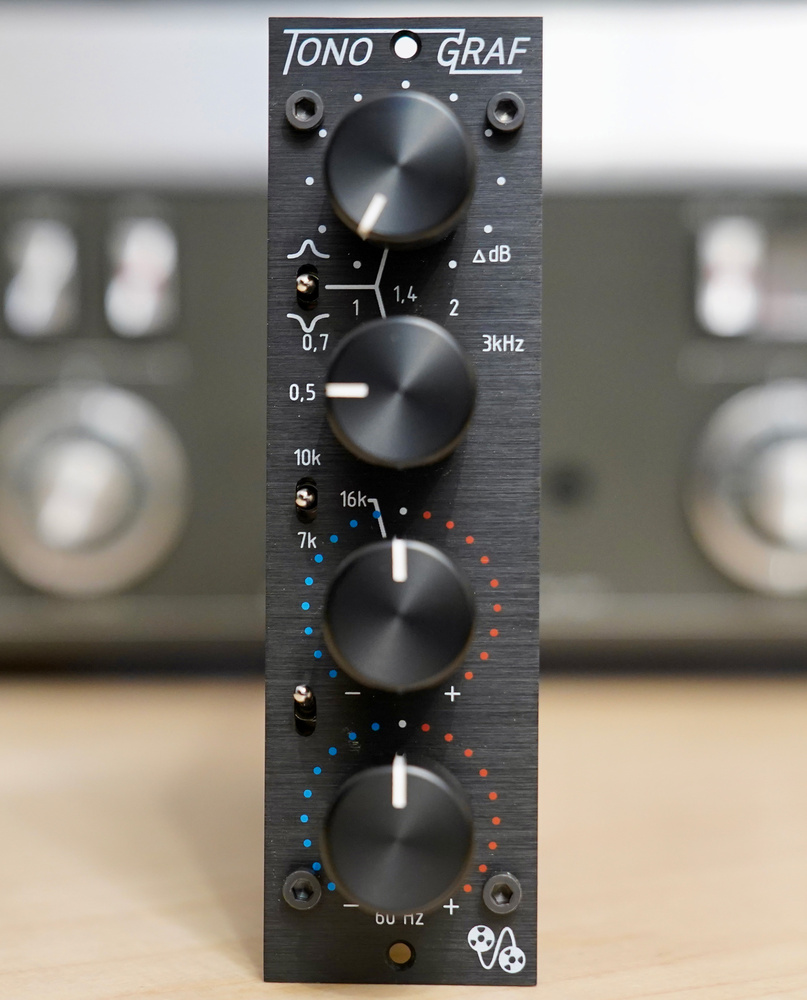 Vinny Wood is based in Iceland, and there, under the name Atomic Analog, he repairs high‑quality vintage analogue pro audio equipment and also makes his own. Back in SOS October 2024, Sam Inglis reviewed his debut release, a substantial RCA OP‑6‑based preamp called the Special OP‑6 and was impressed. Now, Atomic have released a 500‑series equaliser called the Tonograf EQ. It may be smaller than the OP‑6, but there’s ample evidence that Vinny has taken the same forensic approach to recreating another obscure but desirable bit of kit. Atomic kindly made available a pair of Tonografs for review, and that was great because it’s nice to have the option to use them on stereo sources when recording, and also I often enjoy running a stereo mix through analogue EQ.
Picking Up The TAB
The Tonograf EQ is billed as a part‑for‑part recreation of the TAB W95 equaliser module. Developed in the early 1960s, the W95 was a transistor‑based update of earlier valve‑based designs, and, like most such vintage studio technology, it commands high prices today — apparently with good reason. On first hearing it, Vinny says he was immediately taken by the sonic effect of the discrete germanium circuit, which contains both inductors and transformers. So much so, in fact, that it left him with a “blissful impression” even when no EQ boosts or cuts were applied.
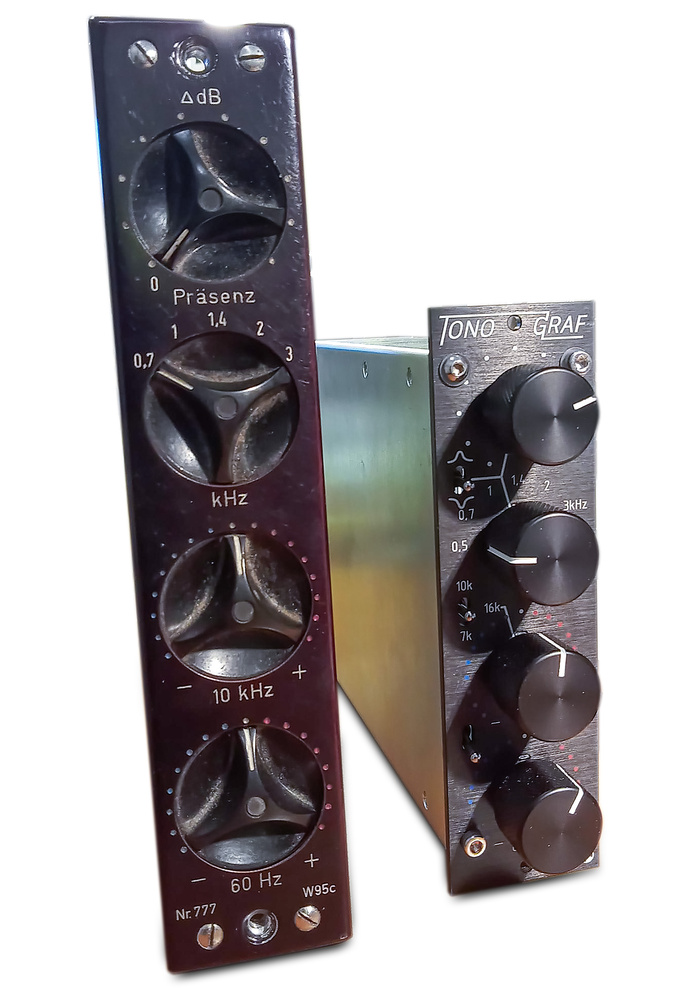 The Tonograf has more features, yet is more compact than the W95C.The R&D involved in recreating this device was a challenge for a one‑man boutique company, not least because many of the original components are simply not available now. It involved detailed analysis of the components, in the case of the inductors so that custom recreations could be commissioned, and the swapping of ‘surrogate’ parts into his original TAB unit until Vinny was satisfied that they behaved exactly as the originals did. The resulting design features Lundahl input and output transformers, those custom‑made inductors and ‘name’ components such as Panasonic, AVX and Vishay capacitors and Vishay and Yageo resistors, chosen not only to match the characteristics of the original without compromise, but also to ensure this new product endures as long as the originals have.
Working within the tight confines of the 500‑series format, Vinny opted not to adhere to the aesthetics of the original units, but wanted to retain the ‘tactile’ feel of their detented controls and ensure that all the same simple EQ options were available. Accordingly, you can find controls for low and high shelving...
You are reading one of the locked Subscribers-only articles from our latest 5 issues.
You've read 30% of this article for FREE, so to continue reading...
- ✅ Log in - if you have a Digital Subscription you bought from SoundOnSound.com
- ⬇️ Buy & Download this Single Article in PDF format £0.83 GBP$1.49 USD
For less than the price of a coffee, buy now and immediately download to your computer, tablet or mobile. - ⬇️ ⬇️ ⬇️ Buy & Download the FULL ISSUE PDF
Our 'full SOS magazine' for smartphone/tablet/computer. More info... - 📲 Buy a DIGITAL subscription (or 📖 📲 Print + Digital sub)
Instantly unlock ALL Premium web articles! We often release online-only content.
Visit our ShopStore.