

Rating: ★ ★ ★ ★ ★ 5/5 Stars
Available for Kontakt and Kontakt Player 8.1 onwards (including full NKS support), Refraction takes a multi‑mic recording of an upright piano, prepared using a very thin layer of felt, and then provides tools to process it. The end result can be far removed from a conventional piano sound, although the pristine sound of the instrument is also available. The Reverb and Atmo controls will be familiar to anyone who has used previous Sonora Cinematic instruments but the USP of this particular instrument comes from its spectral‑shaping resonators, as used in Harmonic Bloom. By balancing the sound from the resonators with the miked sounds, it is possible to use the resonator sliders, which track the harmonics of the note being played polyphonically, almost like organ drawbars. The library size is approximately 10GB.
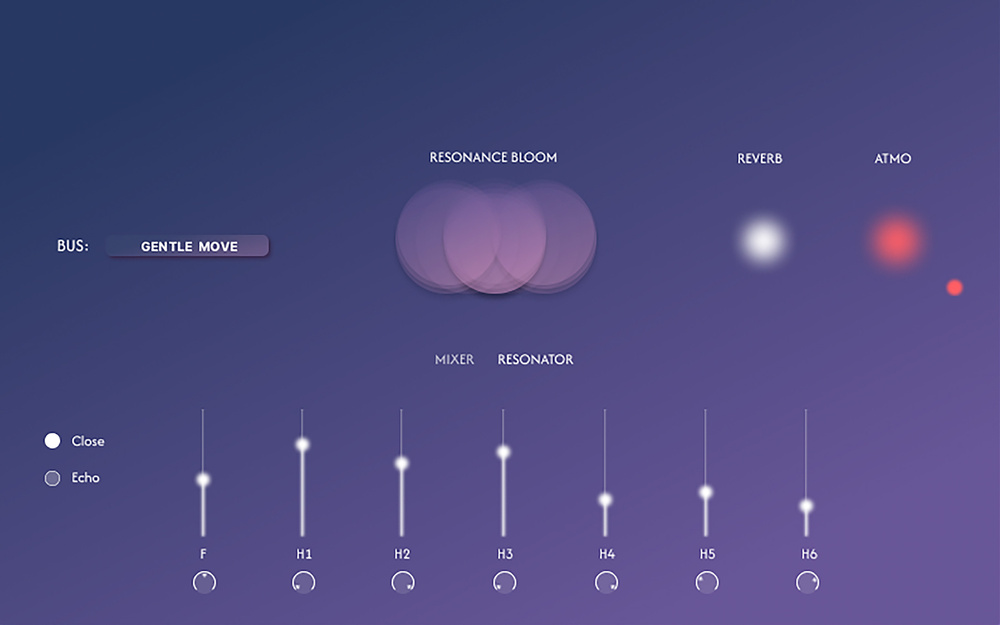
As with Harmonic Bloom, Refraction’s UI features sliders that control a series of resonant band‑pass filters — there are seven in all comprising the fundamental and harmonics one through to six. Clicking on the words Mixer or Resonator switches the fader view accordingly. The strength of the resonators can be controlled from the GUI or via a mod wheel (or reassigned to another controller) but the key point is that the resonators are independent of the Mixer level settings so you could opt to turn down all the mic faders and just play the resonators — which produces a wonderfully ethereal pad sound. The user can define a starting point for the harmonics by adjusting the individual sliders in the resonator view, after which the mod wheel (or GUI knob) will modulate this setting both in volume and the resonance of each band. Depending on how the harmonics are balanced the sound can go from a soft pad to a glassy timbre. The resonators feed from the tails of held notes and can be selected to be driven from either the Close‑mic submix or the Echo signal.
As mentioned, it’s possible to play just the resonator sound if you want to, and it’s also possible to pan the separate harmonics independently. The ambience processing used here is a tweaked version of that used in the Nocturne Electric Piano. White offers an algorithmic room reverb while the Atmo settings show Pink for a granular reverb and Red for a shimmer type of reverb. There are also several bus‑processing options to add movement and depth to the sound.
Refraction is not a typical piano instrument, because although it can deliver clean piano sounds, its resonator feature is really more about treating the piano as a sound source for additive synthesis
Refraction is not a typical piano instrument, because although it can deliver clean piano sounds, its resonator feature is really more about treating the piano as a sound source for additive synthesis, and the results can be very varied indeed. At one end of the scale you hear soft, ambient pianos but then you’ll also find evocative pads or pseudo bowed glasses with no discernible attack. Or you can dial in something in between. The range of sounds is impressive and very well suited to ambient or relaxation music, though there’s plenty of scope for using Refraction in a mainstream pop song too. A very classy‑sounding instrument.