Gain Staging
The act of optimising the signal level through each audio device in a signal chain, or through each section of a mixing console, to maintain an appropriate amount of headroom and keep the signal well above the system noise floor.

 SOUND ON SOUND
To find the exact phrase, put the words in quotes or join them together with a plus sign e.g. live+recording or "live recording".
To find, say, all live recording articles that mention Avid, enter: live+recording +avid - and use sidebar filters to narrow down searches further.
The act of optimising the signal level through each audio device in a signal chain, or through each section of a mixing console, to maintain an appropriate amount of headroom and keep the signal well above the system noise floor.

Giving yourself plenty of headroom when recording will help you get the most out of your plug‑ins and give you greater flexibility when mixing.
In the context of electronic audio equipment, a stage is a functional block of circuitry that performs a specific task. For example, a 'four-stage' phaser effects pedal employs four all-pass filter circuits. An individual stage could be a preamplifier, an insert return buffer, a section of an equaliser, or a mix-bus amplifier, for example, and the process of optimising the signal level passing through each stage is called gain-staging.

In the second episode David Mellor focuses on gain staging during recording, by balancing mic input, preamps and gain within your DAW to achieve the optimal sound level.
In this fourth and final episode, David Mellor delves into Gain Staging your plug-ins and how to avoid clipping during the mixing and mastering stages.
In this third episode David continues looking at preamps, outlines the use of VU meters, and explains the benefits of balancing a track prior to mixing.
David Mellor introduces us to Gain Staging in a brand new series of podcasts. In this first episode he explains the correct use of terminology and gives his three golden rules of Gain Staging.

Despite the immense power and flexibility available in modern DAW software, many people still find that the mixes they craft entirely 'in the box' sound unsatisfying. Why is that?
I read your feature on gain staging a few years ago, but I’ve been following some blogs that say it isn’t at all necessary if you’re just working in software. Who’s right?
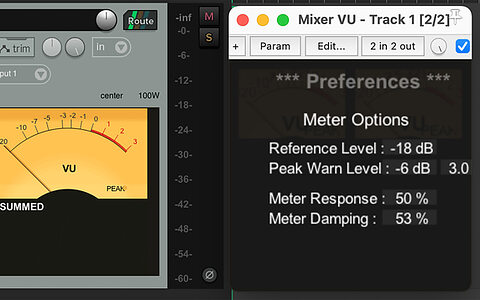
Some people say to adjust the gain until the sound sits at ‑6dBFS, and others say ‑18dBFS. And then others say it doesn’t really matter at all any more, as long as you’re not clipping at the audio interface. Is there a right answer?


Do your recordings sound like they've been made through a white noise generator? Well, don't just blame the vintage synth or battered effects unit — it could be your gain structure that's at fault. Paul White offers some tips on getting it right...

With spill between instruments and bleed from backline and monitors, live-performance recordings present unique mixing challenges. At London's PLASA show, Miloco Studios' engineer Jamie McEvoy explained how to get a great result.

Not only does this little preamp give pure class-leading performance, but it also offers clever dynamics processing on board and an optional built-in A-D converter.
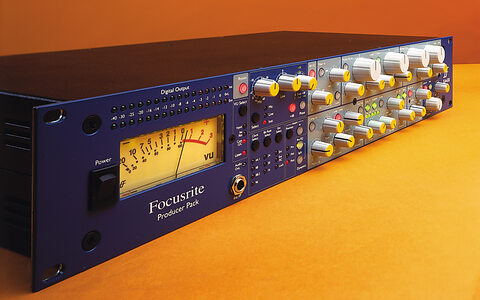
Paul White offers a few levels for soundcard-based music systems.
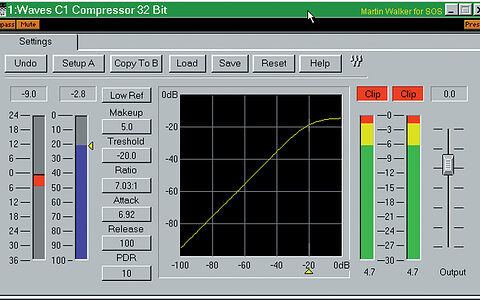
Setting up your gear for low noise and minimum distortion needn't be a nightmare. Martin Walker gudes you through the process, and shows you how to stand tall, even without headroom.

While mixing, I usually monitor with the control room level pot on my analogue console set between about four and five (out of 10)...

Manchester Music City and Horizons have announced the nine artists selected to play the Horizons Stage at this year’s WOMEX (Worldwide Music Expo).

The ubiquitous Nord Stage keyboards just keep getting better.

The latest version of Clavia’s flagship instrument boasts a new panel design, a premium triple sensor keybed, a powerful new effects section, and a new Preset Library loaded with piano, synth, and organ sounds.