

Base 4 have rethought the design of the humble mic stand from the ground up. The results are quite something!
New solutions to everyday problems don’t come along very often, but when they do, the effects are far‑reaching. Of all exotic synthesis techniques that have been invented in the last 30 years, how many have had the same impact as sample streaming from hard drives? And what breakthrough in mic design has delivered practical benefits to compare with the Rycote InVision range of shockmounts? Although it’s too early to be sure, my hunch is that the subject of this review may provoke a similar understated upheaval.
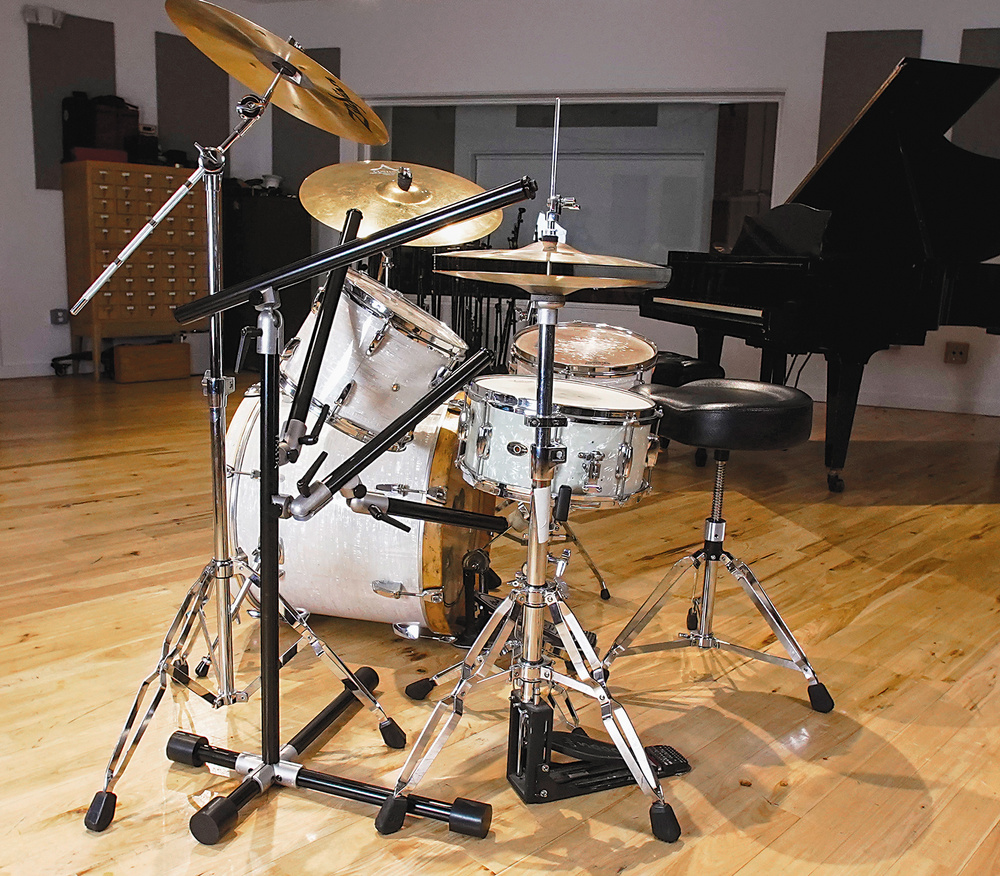
To understand why, consider what’s involved in miking up a drum kit. Around the five or six stands supporting cymbals, snare and hi‑hat we somehow need to squeeze in another half dozen mic stands. Some will be supporting heavy mics on boom arms, at angles that will make them unstable unless they’re counterweighted and the stand’s legs are carefully oriented. We need tall stands, short stands, stands with long arms, stands with short arms. Even when we want to use two mics on the same drum, we can’t attach them both to the same stand. And no matter how much care we take, recordings get spoiled by boom arms drooping, or drummers pushing them aside as they squeeze through the forest to reach their throne. Isn’t there an easier way?
That’s one of the many questions addressed by Base 4 Stands, a new manufacturer from the United States.
Base 4 Arithmetic
I’ve used mic stands from many different manufacturers over the years, but almost all of them employ the same basic design. Three legs fold down to form a tripod base, from which a steel tube extends vertically upwards. This usually contains a second, thinner tube which can be extended upwards and is held in place by friction. And on top of this, we find the familiar boom arm, which is often telescopic like the main tube. Above all, the philosophy has always been that each mic gets its own stand.
Base 4’s design rips up every single one of these conventions. Like traditional stands, the Base 4 models are constructed out of metal tubing, but they use aluminium rather than steel. Instead of being smoothly cylindrical, the tubes are quartered by broad grooves running along their entire length. At one end, they terminate in a pair of ‘jaws’. To attach one tube to another, you simply slot the jaws at the end of the second tube into the grooves on the side of the first and tighten them until they grip firmly. The attachment point can be anywhere along the tube. Since all of the tubes are the same diameter and they are all grooved in the same fashion, this makes the system fully modular. Practically any number of arms can be attached, either to the core riser or to each other. A single Base 4 stand can thus be extended more or less indefinitely, or made to hold an arbitrary number of microphones.
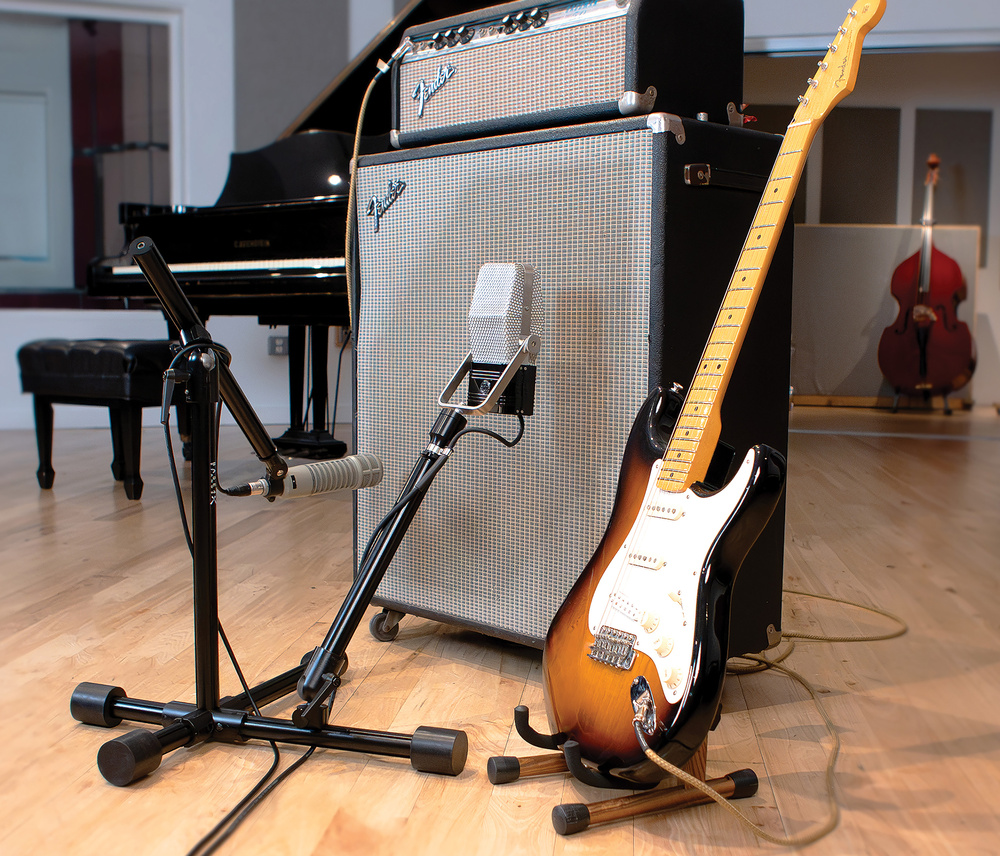 Arms can be attached not only to the riser and to each other, but to the legs, as shown here.
There are four basic models, each comprising a riser, four legs, and a single arm. The main thing that differentiates the Shorty, Sidekick, Solo and Big Tree models is the length of the riser and the arm. As the name suggests, the Shorty is optimised for miking things that are near the floor: amps, bass and snare drums, seated guitarists, cellos and double basses, and the like. Next up, with a riser about 30 inches long and a 24‑inch arm, the Sidekick is probably the model you’d choose for close‑miking drums or for vocal recording, among many other applications. The Solo pairs a 40‑inch riser with a 28‑inch arm, for applications such as drum overheads, grand piano, small ensembles and so on, while the Big Tree has a telescoping riser and a 30‑inch arm. It too would be perfect for drum overheads, and would also work well for situations such as orchestral or choir recording where you need to get the mics quite high up in the air.
All four models are available separately or as bundles, whereby the basic stand is included along with additional arms of different lengths. It’s also possible to buy individual arms as add‑ons at a later date. For the purposes of this review, Base 4 supplied the Solo Bundle and the Sidekick Bundle, which together gave me a selection of arms ranging from the three‑inch Stub Mount upwards. Both come with soft bags that help to keep everything together when you’re moving from one venue to another.
Colour Coded
Every other mic stand I’ve used in my life has been either black or chrome, and while some are more elegant than others, they’ve all been functional rather than stylish. By contrast, Base 4 have gone all in on making a visual statement with their stands, which are available in black, white, bare aluminium, or a choice of bold colours. This isn’t just a feature that will give your studio an Instagrammable edge. It’s also genuinely helpful in differentiating the mic stand from drum hardware and other black‑or‑chrome clutter, making it much easier to see at a glance where everything is.
The Base 4 name reflects the fact that each stand has two long and two short tubes that act as legs. Generous cylindrical rubber feet contact the floor, while the clamping ‘jaws’ at the inner end are mounted directly to the tube, and attach to the grooves at the base of the riser. Tightening the jaws requires the use of a supplied ball‑ended hex key, as there’s no space for a thumbwheel. The stand should be assembled so as to place the centre of gravity over the two longer legs.
You’ll find another clamp on top of the riser, but rather than being fixed directly to the end of the tube, this one is mounted on a universal ball‑and‑socket joint. This clamp grips the main arm, at any point along its length. Varying the attachment point lets you alter the overall reach of the stand, while the universal joint gives you freedom to point the arm in any direction you like. These jaws clamp firmly using a thumbwheel, and the universal joint is locked in place with a chunky lever that offers plenty of torque. This is also ratcheted, meaning that pulling it outwards disengages it from the joint and allows it to be freely rotated to any angle of your choice. At one end of the arm, you’ll find a 5/8‑inch threaded connector with one of Base 4’s Jam Nuts (see box). This, of course, holds the mic clip. Additional arms (apart from the Stub Mount) are equipped with the same universal joint and clamp as the riser, allowing them to be attached practically anywhere you like: not only at any point along the length of the riser, but to other arms or even to one of the legs.
Assembling a Base 4 stand from scratch takes longer than unfolding a standard tripod stand, but it’s not hard (unless you lose the key that tightens the leg clamps). As you do so, you quickly get a sense for how solid the system is, but also for how lightweight it is. I have a couple of large K&M orchestral stands that I use for heavy mics, or where I need something with a long reach, and have to brace myself to lift them off the ground. By contrast, the core Base 4 Solo weighs only 2.4kg, yet feels every bit as secure and authoritative in use. More so, in fact: there always seems to be some slop in the swivel joint on boom stands, but the Solo is completely rigid once assembled.
Different Drums
I keep a drum kit permanently set up in my work space, as it’s an important source for testing mics and other gear. Normally this means it’s surrounded by a forest of stands that have to be navigated on a daily basis, causing much cursing when mics need to be swapped out or compared. On receiving the review Base 4 stands, I packed away all the old stands and set about miking the kit from the ground up. It was, honestly, a revelation. I placed the Sidekick just by the left corner of the bass drum, from the drummer’s perspective. The main arm swooped almost naturally to hold a mic just above the rim of the snare. I could then attach 20‑inch and 16‑inch arms lower down the riser and angle them to hold under‑snare and bass drum mics, while a 12‑inch arm clamped to the side of the main arm made it trivially easy to add a hi‑hat or rack tom mic. And I could easily have gone further. For example, the arm that held the bass drum mic was running parallel to the drum’s resonant head. Attaching another short arm such as a Stub Mount to it would have allowed it to hold two mics, one inside and one outside the head.
Flushed with success, I then set up the Solo on the other side of the kit, with its legs tucked under the floor tom. From here, it was child’s play to attach arms holding two or more overheads, the floor tom mic, and a mic for the middle rack tom. And, again, I was only scratching the surface of the possibilities. For instance, I very often want to use two sets of overheads for comparison purposes, and the Stub Mounts would make it easy to attach a second mic to any of the arms.
You might think that multi‑miking an entire drum kit using just two stands would entail some compromises. In practice, the opposite was true.
You might think that multi‑miking an entire drum kit using just two stands would entail some compromises. In practice, the opposite was true. I was able to get every mic in the position I wanted it more quickly, more precisely and more reliably than with conventional stands. You never run into that infuriating situation where you have to move the snare mic stand after it’s already set up because there’s no other way to accommodate the stand for the under‑snare mic. You can change the position or spacing of the overhead mics without having to relocate the stands from the front to the back of the kit. Cable management is simpler and neater, because you can run all the cables along one or two paths rather than many; I did wonder whether Base 4 have missed a trick by not offering clips to keep them tidy, but in practice, this isn’t an issue. And, best of all, things stay put. There’s no wobble, there’s no droop, there’s no vagueness of position. Having taken a couple of weeks off over Christmas, I returned to the studio to find my drum mics exactly as I’d left them.
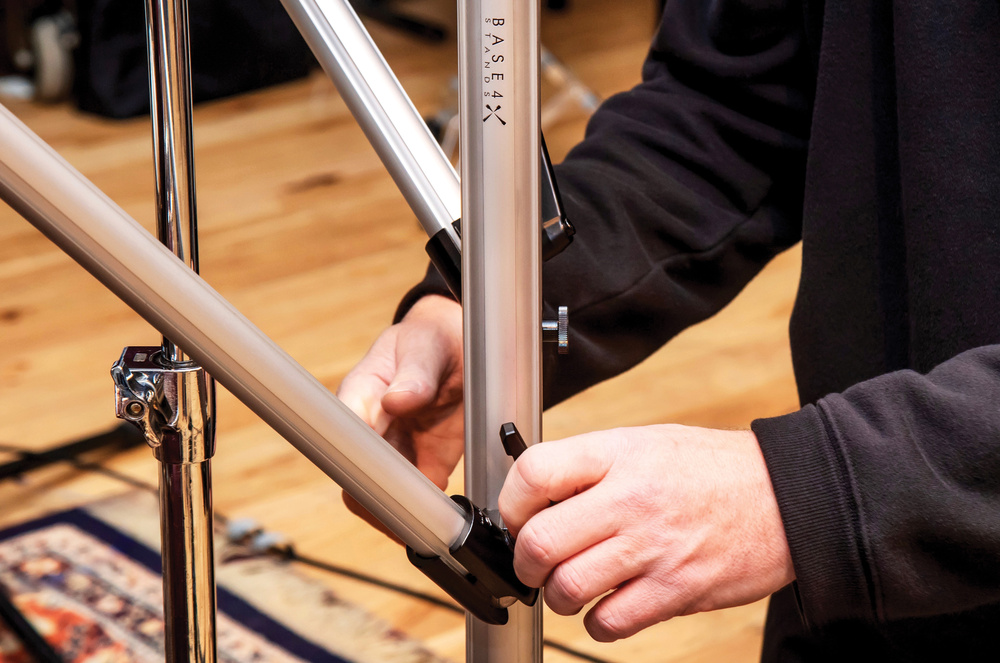 The universal joint that determines the angle of each arm is adjusted using a ratcheted lever.
Touching Base
It’s a reviewer’s duty to look for negatives as well as positives, but very few revealed themselves over the testing period. From a Eurocentric perspective, some might wish that the Base 4 arms were available with 3/8‑inch threaded connectors as well as 5/8‑inch ones, but in practice I found this to be a non‑issue. Nearly all the clips and shockmounts in my collection are natively 5/8‑inch and have a 3/8‑inch adaptor that can easily be removed. The only exceptions are the Rycotes, and reverse adaptors for these are easily found. Other aspects of the Base 4 system just require a little bit of mental recalibration. For example, there are no counterweights included in the range, but it would be easy to attach something heavy to a spare arm to balance things out if you felt the need. And because the arms don’t telescope, they can’t be shortened, but the attachment points can almost always be slid up or down the riser to achieve the desired position.
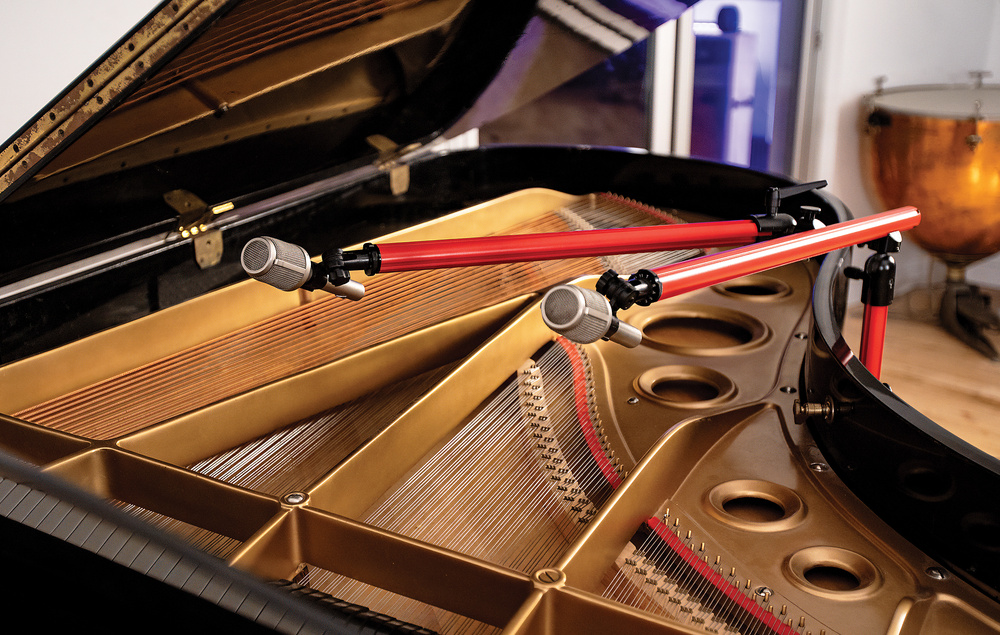 Other than the Big Tree, all Base 4 stands are available in a range of colours at additional cost.
All in all, I think the only circumstance under which I’d consider the design to have a significant down side would be if I needed to fully pack it down and reassemble it on a daily basis, as might be the case if you were bringing it on tour with you. Not that doing this is difficult, but removing the legs takes somewhat longer than folding or unfolding the equivalent number of conventional boom stands. The flip side is that, once packed into its soft bag, even a complex Base 4 setup with multiple arms remains lightweight and portable. It probably isn’t exaggerating to claim a health and safety benefit here: I have done my back in a couple of times shifting the case in which I keep my tripod stands, and weight just isn’t a factor with the Base 4 system.
Do the benefits of the Base 4 stands justify the cost? Given that the arms alone have a three‑figure retail price, and the core stands will each set you back several hundred, this is not a trivial investment. But good‑quality boom stands are not particularly cheap either, and a Sidekick or Solo with additional arms does more than just replace multiple tripod stands: it’s a major improvement. When multi‑miking is called for, a single Base 4 stand with extra arms looks better and is functionally superior to a collection of other stands. Going further, I actually think the level of innovation and quality on display justify comparison with premium brands such as Latch Lake and Triad‑Orbit, and Base 4 win out on the value front here. At this sort of level, you’re looking to buy once and buy right. The first time you set up a Base 4 stand in your studio, I think you’ll realise that you’ve done exactly that.
Jam Nuts
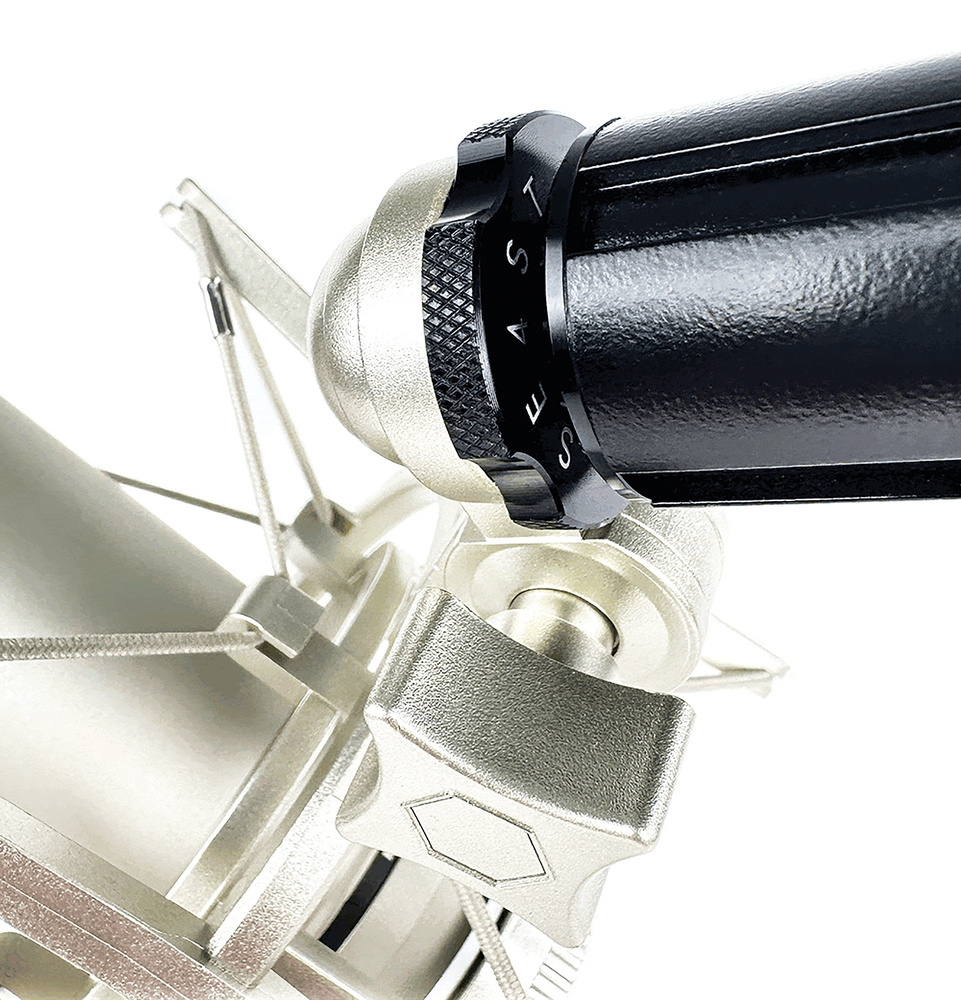 All Base 4 stands and arms are supplied as standard with the company’s Jam Nuts, which are also available separately for use with third‑party stands. The name suggests a type of biscuit or breakfast cereal, but a Jam Nut is actually a large threaded washer with scalloped edges that make it easy to grip.
A Jam Nut can be fitted to any mic stand with a 5/8‑inch connector, and the idea is that it screws onto the connector below the mic clip. Once you’ve attached the clip above it, you then ‘unscrew’ the Jam Nut until it butts hard up against the base of the clip, holding it securely in place and preventing it from rotating under the weight of the mic.
The idea of using a threaded washer for this purpose is not new, but all the examples I’ve seen previously have been much smaller. The sheer size of the Jam Nut makes it a lot easier to tighten with bare hands, and it certainly inspires confidence. Naturally, it can only prevent unwanted rotation in one direction, and it might be less useful in situations where you have to use a thread adaptor as well, but I think most studios could benefit from having a few Jam Nuts available.
Pricing
Prices for Base 4 stands vary depending on the exact configuration, and coloured finishes are a cost option. In the bare aluminium finish, the Shorty retails at $229, the Sidekick at $249 and the Solo at $259. The Big Tree is available only in aluminium, and costs $499. Additional arms start at $45 for the Stub Mount in aluminium finish, up to $119 for the longest 24‑inch arm. Base 4 also offer a very impressive‑looking stereo mic mounting system for the Big Tree, which retails at $219. Jam Nuts cost $15.99 for a pack of four. Shipping costs will be determined at checkout.Shipping for stands is free within the USA.
Pros
- A single stand can hold multiple mics with no compromise over position.
- Visually striking, and available in a range of finishes.
- Very lightweight yet stable.
- Once locked into position, the arms stay exactly where you put them.
- Jam Nuts effectively hold mic clips in place and prevent unwanted rotation.
Cons
- Takes some time to assemble and pack away.
Summary
If you thought mic stands were a boring, mature technology with no room for improvement, think again! Base 4’s range upends all the conventions, and their innovations translate into practical benefits for engineers and studios.