

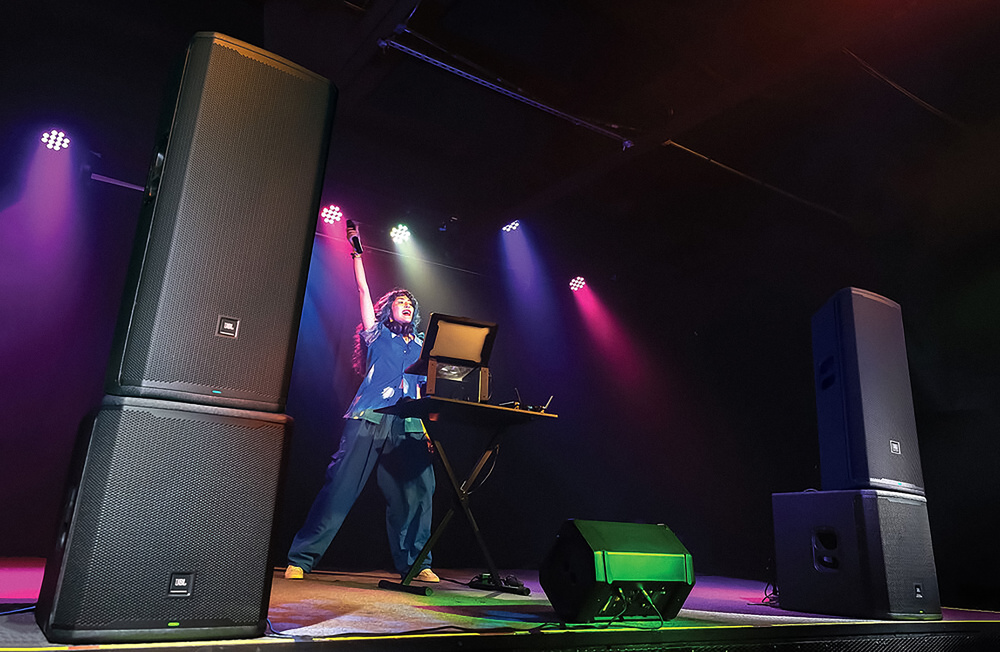
You are here

JBL PRX925 & PRX935

Active PA Speakers By Mike Crofts
Published February 2026

PRX925 & PRX935

The two big beasts of JBL’s PRX900 family are similarly sized and identically priced — but they’re very different speakers! We put them to the test.

Back in SOS July 2023 I reviewed the first models in JBL’s then‑new PRX900 series of self‑powered speakers. I liked very much what I saw and heard and, assuming they would continue to update the range as they had for the PRX800s, was looking forward to trying out the larger models. Well, the PRX925 and PRX935 were recently announced and are now available for purchase, and I have had a pair of the PRX935 units on loan for long enough to put them to good use in a number of different live scenarios.

The nice people at JBL’s UK distributors Sound Technology were kind enough to put on an extensive demonstration at their facility, where I also got to hear some of the mighty top‑end JBL rigs which were all set up and ready to go (it would have been rude not to, really...).

Family Values

The PRX925 and PRX935 are the larger members of the PRX family, and follow the form factor of their predecessors in the PRX800 line‑up, in that the 825/925 model is a two‑way speaker with two 15‑inch woofers, and the 835/935 is a three‑way, with a single 15‑inch woofer and a six‑inch midrange driver (both sport 1.5‑inch compression‑driver tweeters). I know that this family grouping goes back at least to the PRX600 series, as I still own and regularly use a powered system comprising a pair of PRX635 three‑way tops over a pair of PRX618XLF subwoofers. I use this combination (or sometimes just the PRX635s on their own) for community theatre shows, larger school productions, church services and other events where I have lots of acoustic instruments and different voices to work with, as I have always found that the three‑way design works really well — and therefore makes my life easier — when clarity and smoothness are needed above all else. As I had a particularly challenging gig on the horizon that would require exactly these qualities, I chose to take away a pair of PRX935s, but not until both of the new models had been given a thorough going‑over in the demo room!
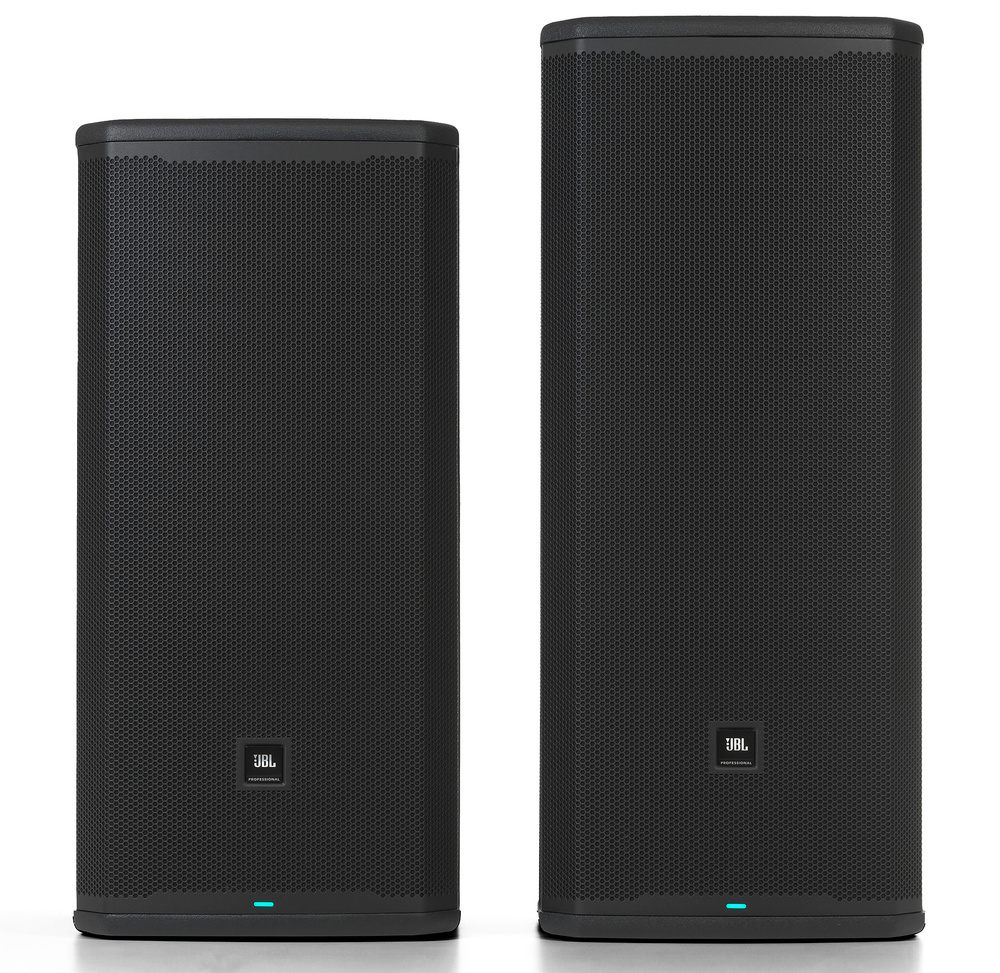
The PRX925 and PRX935 are both 45cm wide and 43cm deep, but the former is 106cm tall and the latter slightly shorter, at 939cm. Despite their similar sizes, they have very different driver configurations, with the 925 being a two‑way speaker with twin 15‑inch woofers, and the 935 a three‑way with a dedicated midrange driver.The PRX925 and PRX935 are both 45cm wide and 43cm deep, but the former is 106cm tall and the latter slightly shorter, at 939cm. Despite their similar sizes, they have very different driver configurations, with the 925 being a two‑way speaker with twin 15‑inch woofers, and the 935 a three‑way with a dedicated midrange driver.

I covered most of the technical details in my first review of the PRX900 series in SOS July 2023, but it’s worth noting that the power modules fitted to all PRX900‑series tops are essentially the same (the subwoofers have their own variant), in that they all provide exactly the same functionality and power amp capability, but tuned to the particular model in which they installed. This suggests an efficiency and cost‑saving in design and manufacture, which should benefit users down the line in making repairs more straightforward if they are needed. On that subject, it’s also worth pointing put that JBL have such confidence in the product line that all PRX900‑series models come with a seven‑year warranty (yes, seven years!). I for one would be pretty reassured by that, even if I hadn’t personally owned and operated various JBL Eon, JRX, PRX, SRX and VRX speakers over many years without a single failure in all that time.

Working 925

Before taking a pair of PRX935s away to review, I had a bit of a play with the slightly larger PRX925 in the demo room too. I was able to try both models in various configurations with different DSP settings, both with and without paired subwoofers. I listened to the same programme while A/B switching between them and with all the rear‑panel controls set exactly the same. I was expecting them to sound different, but I didn’t think there would be so much difference in sound character between the two models. The PRX925 delivers an astonishing amount of impact for a two‑way twin‑15‑inch box, and it’s voiced to provide a big, thumping, solid output that would sit very well in DJ territory and suit your more ‘forward’ rock bands.

Of course in a demo room you have the ability to run things quite loud if you feel so inclined and, as I felt so inclined, we gave the speakers a serious hammering with all sorts of test material from dance and rock, to tight thumpy ’70s, some very full‑bodied Berlioz, and anything else that came to mind. We ran the PRX935s right up to limiting and then played around some with the limiter settings themselves just to see if we could cause any problems. The man from Harman just waved his hands encouragingly and said ‘do what you like, it’s what we do’, and I was impressed with how clean and clear the output remained well into the zone of discomfort. In their natural state with the DSP at factory settings, you should be able to produce full output from the cabinets, and the onboard protection cleverness will kick in if it needs to but without affecting the material unduly unless any kind of fault condition is detected. As I understand it, the drivers and power stages are both fully monitored and protected against accidental or deliberate mismanagement, and the DSP will handle anything you can throw at it so long as it’s connected up properly to start with.

Three & Easy

The PRX935 is not intended simply to be a smaller, more polite version of the PRX925. As well as the obvious three‑way speaker configuration, it uses a completely different 15‑inch driver (JBL 275G versus the 925’s dual 915H drivers), which is designed to work more like a sub driver and provide a more rounded, fuller low end, working in conjunction with the dedicated mid driver to give an overall smooth output for contexts where clarity and especially vocal balance and projection are the top priorities. That’s not to say that the PRX935 is in any way lacking in volume, because it still produces a hefty 136.1dB SPL output (the two SPL figures are not that far apart), but maybe it does it with different listeners in mind!

One of the PRX900 series’ coolest new features is the adoption of the JBL Pro Connect Bluetooth LE remote control function, which allows remote user control of the full DSP suite built into the speakers, plus muting, grouping and identification. Detailed equalisation is fully controllable using either the back panel LED screen or with a compatible BLE device, and the PRX935 has limiting, delay and automatic feedback suppression processing taken from the dbx Driverack, all built in and ready to go. After the speaker is paired with the Android/iOS control device (which I found to be a straightforward, quick and bug‑free process), running the JBL Pro Connect app can put you in control of up to 10 individual speakers from any compatible JBL range, including Eon One Mk2, PRX One and Eon 700 loudspeakers. In contrast, while the previous PRX800 models also offered remote control, they did so over Wi‑Fi and required a PRX‑specific app.

Pro Connect provides full access to the whole DSP set, and individual speakers can be muted and given names for easy identification within a system. If you forget which speaker you’re working on, there’s a useful ‘here I am’ function that flashes the LED on that particular speaker. Using the app it’s also possible to store snapshots of speaker settings and group setups. For direct hands‑on management, all the usual controls and connections are on the rear panel, and should offer enough flexibility for most setups; there are two combo XLR/TRS inputs, an aux 3.5mm stereo input, two XLR thru outputs, and a balanced XLR mix out. The controls are simple and intuitive to operate, and the bright, clear LED screen displays the parameters under adjustment at any one time.

The control and connection panels on the PRX925 and PRX935 are identical, offering the same analogue I/O and basic control over the internal DSP.The control and connection panels on the PRX925 and PRX935 are identical, offering the same analogue I/O and basic control over the internal DSP.

On The Outside

The external styling of the PRX range has stayed fairly similar as new upgraded versions have been introduced, and the familiar black Duraflex finish is still looking good on the PRX935. We also still have the strong full‑face black steel grille with black foam lining to protect the front of the drivers and horn mouths. Little touches of attention to detail are always welcome, and one example of this is that the retaining screws that locate the grille are treated with a locking compound to make sure they don’t shake loose.

The side handles are large and allow a good easy grip; the weight and size of the PRX935 make it easy to move around without help, and the rubber feet on the bottom are chunky enough to take the strain. There are eight M10 fly points built into the cabinet and a pole socket on the bottom, and it can be used on a heavy‑duty tripod stand if necessary, although its size means that isn’t something I’d be all that keen on. Tall cabinets like this one (and even more so the PRX925) do present a bit of an issue when it comes to finding suitable places to put them, especially at smaller gigs — even putting them above subs doesn’t always get them high enough and they just look a bit bulky on stands. I did find an ideal solution that worked for me by cutting down a pair of M25 poles to give a lift of about 15 inches, which worked perfectly above my PRX618XLF subs for party‑type gigs, and looked ‘right’ into the bargain. I have since found ready‑made short‑distance poles of about this height for sale, but I didn’t have time to spare and the hacksaw was handy...

In Concert

Sometimes the timing of a review falls just right for a real‑world road test, and as it happened, I was preparing for a theatre concert involving three singer‑songwriters performing with a rhythm section and supported by a full‑scale 60‑piece orchestra. The audience would be in raked seating and the acoustics were fairly good, tending toward theatre rather than concert hall. The audio brief was all about vocal clarity and doing full justice to the songs, with a natural balance required between the PA and orchestra. The orchestra were not going to be close‑miked, which meant that the sound system would be handling only the rhythm section (piano, double and electric bass, drums, and DI’ed acoustic guitars on some numbers) and vocals. The priority was to make everything sound as smooth and natural as possible, with an ‘in‑the‑room’ balance preferred over an engineered mix, although in the end we did decide to feed a little bit of the orchestra’s recording mics into the house mix as they were positioned upstage of the soloists and rhythm section.

I removed the theatre’s installed front‑of‑house speakers and replaced them with the JBL PRX935s stacked on top of my PRX618XLF subwoofers, positioned each side of the stage area and in line with the vocal mics and rhythm section. As the theatre had raked seating with the front row being at stage (and speaker) level, the height of the PRX935s was just right, although I did tilt them back very slightly so as to aim them gently upward, which seemed to me to even out the balance between front and back rows. As the older PRX618 boxes didn’t have the sophisticated DSP of the PRX900 series I just used the high‑pass preset output as it was, and left the PRX935s set on their flat, default, no‑nonsense state. A very quick check with a bit of recorded material proved that everything was working well, at least as a starting point.

In the interests of logistics, aesthetics, simplicity and (not least) time management, we were using my vintage Soundfield mic above and slightly behind (ie. downstage from) the orchestra conductor, and fed just enough of the stereo mix output from the Soundfield processor into the PA, taking advantage of the afternoon rehearsal to refine the balance until everyone was comfortable. Monitoring via floor wedges was kept to a minimum — just enough for performer confidence, and to overcome the quite considerable physical distance between, for example, the pianist in front of the orchestra and the percussion section right at the back.

The rhythm section out front with the singers were quite punchy for some of the numbers, so the vocal PA was by no means just coasting, and had to keep up with them and get the words across without compromise across a wide range of material — some piano‑led songs, some with strong driving acoustic guitar and others with full‑on orchestra powering it all along.

The afternoon schedule was really tight, with regular slots for sound checking and problem‑solving built in as the three soloists worked through their respective sets, but everyone involved was so happy with the sound that we were able to spend more time rehearsing and almost no time playing with the PA; it all worked beautifully. The PRX935 speakers gave us the crystal‑clear and very hi‑fi sound that we needed, with a lovely balance between vocals, acoustic instruments and the orchestra, whether using lush strings or punchy brass and wind. Throughout the afternoon rehearsal and evening concert I wasn’t in the ideal location to judge how it all sounded because I was conducting the orchestra, and although I knew it was in capable hands, I spent a lot of the afternoon getting out front and listening when I could, so I was confident that all would sound well on the night. I had planned to canvass the opinions of various audience members, several of whom I knew were likely to be unforgiving in their appraisal, after the show; in the event I didn’t need to, as the concert was a great success and I received many overwhelmingly positive comments about the sound, especially praising the balance between all the elements on stage. Words like ‘perfect’, ‘crystal’ and ‘immaculate’ were — most gratifyingly — being offered, and I concluded from all this feedback that expectations had been generally exceeded, and therefore by definition the PRX935 had been exactly the right speaker for the job. For this type of challenging event I really can’t think of anything — especially anywhere near the PRX935 price point — that I’d rather have used in their place; they simply did the business.

PRX‑ercise

I took the PRX935s out on a couple of other gigs too, including one for a covers band at a private function, where I used them without subs because (a) the marquee was fairly compact and (b) access was via a flight of stone steps. The other was an altogether louder and more thumpy function, where to be honest I’d have liked to have a pair of PRX925s as an option, although the 935s did a great job paired with my PRX618 subs. I didn’t have cause to make much use of the Pro Connect functionality other than to see it worked and impress the band members (which it certainly did), and I didn’t have a ‘live’ opportunity to use the built‑in AFS function, although I often use my standalone AFS2 processor so I know exactly what it does and how useful it can be. I use it a lot when doing presentations, school concerts and other shows where ‘expect the unexpected’ is what it’s all about!

Summary

I admit that I started this little project with a liking for three‑way speakers in general, and my own PRX635s in particular, so I knew I wouldn’t be disappointed with the PRX935. It’s good to see that JBL have retained the basic overall design and outward appearance, while at the same time managing to produce a significant upgrade in terms of power, processing and user‑friendliness.

The inclusion of the dbx technology is a bit like having a Driverack at the end of every speaker feed.

I’d say that the PRX935 lives up to JBL’s marketing claims as a professional‑grade product. It combines tried and tested technology with a new improved feature set and uprated specifications, all of which adds up to an impressive package. The inclusion of the dbx technology, for example, is a bit like having a Driverack at the end of every speaker feed (how many times have I wished for extra processing channels on my Driverack!). With the Pro Connect app giving easy control over individual speaker EQ and delay, this would be especially useful for a multi‑speaker install.

Even without the DSP, though, if you need a smooth, full‑range output with exceptional midrange and vocal clarity, the PRX935 will surely deliver.

Pros

  • PRX925 offers a huge amount of impact and ‘thump’, and would suit DJs and rock bands very well.
  • Three‑way PRX935 model excels at smooth midrange and vocal delivery.
  • Unified JBL Pro Control app makes remotely configuring speakers easy.
  • dbx Driverack processing on board.

Cons

  • None.

Summary

The PRX925 and 935 sound surprisingly different but both are excellent performers, with the former offering perhaps more attitude and the latter better suited to live acoustic instruments and vocals. With their extensive DSP and improved remote control functionality, they are both useful updates to their PRX800 series equivalents.

Information

£1915 per speaker including VAT.

Sound Technology +44 (0)20 8962 5080.

sales@soundtech.co.uk

www.soundtech.co.uk

www.jblpro.com

$1899 per speaker.

www.jblpro.com

When you purchase via links on our site, SOS may earn an affiliate commission. More info...

Sweetwater Affiliate logo 14px