

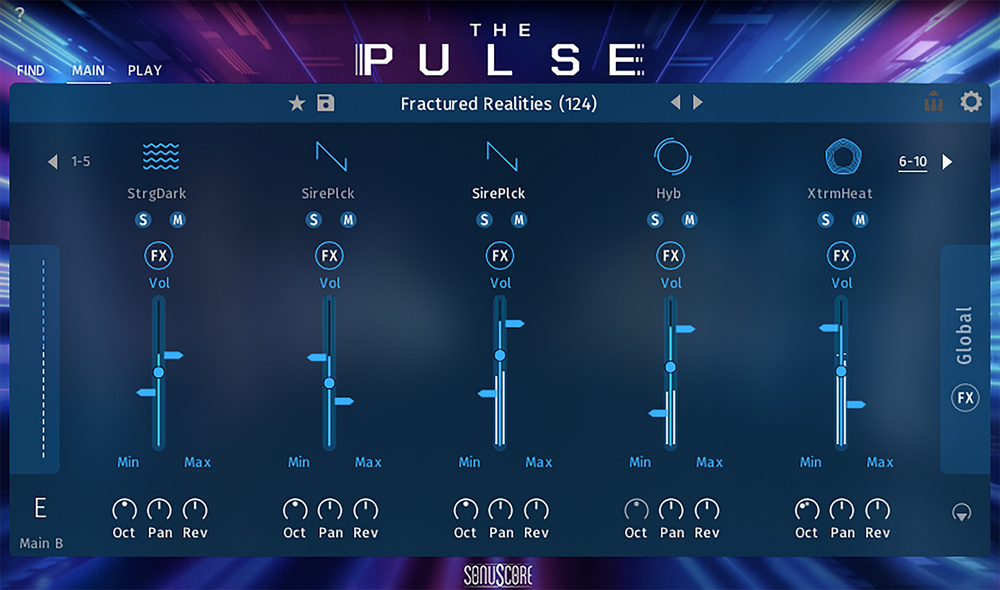
 With just a few MIDI chords as input, Sonuscore’s Ensemble Instrument engine provides instant orchestration from up to 10 individual sounds.
Sonuscore orchestrate modern electronic music production.
If your personal music production ventures into the worlds of film, TV or video game scoring, then Sonuscore’s virtual instruments will undoubtedly be familiar to you. Their latest release — and the subject of this review — is The Pulse. Sonuscore describe this as a “creative powerhouse for modern electronic music” so, is this a further product aimed primarily at media composers or is it something for contemporary electronic music‑makers? The answer is ‘perhaps both’. Let’s explore...
Follow That
It’s possible to think of The Pulse as a follow‑up or companion to The Score. For me, The Score was a personal highlight release for 2024 (see SOS February 2024), and a big reason for that was the brilliant ‘Ensemble’ performance engine. This allows you to sketch out a full musical cue from The Score’s underlying sound set using just your choice of chords, a few keyswitches and some suitable tweaking of the mod wheel.
The Score’s sound set is focused on conventional orchestral sounds with a compact section of synth, ‘band’, world and other sounds to provide some more contemporary flavours. The Pulse takes the same Ensemble Instrument performance engine (there are some differences; more on this in a minute) and populates it with a much more contemporary sound set consisting of drums (acoustic, electronic and hybrid), various synth‑based sound groups and a miscellaneous selection of keyboards, guitars and orchestral sounds. Clearly, on paper at least, it’s a sound set you could create EDM or modern pop with but, equally, it would suit modern scoring work.
Like The Score, The Pulse is delivered with three different Kontakt‑based front ends. As mentioned, the Ensemble Instrument engine — essentially a 10‑instrument sequencer‑based performance engine — is very similar to that found within The Score (although minus The Score’s Chord Studio feature). I described this in the February 2024 issue so, in what follows, I’ll not repeat all the details here. Yes, the engine itself is both powerful and feature‑rich, but the supplied Session presets — organised into Ensemble, Cinematic and Modern Genre categories — provide a very easy access point when you first dip your toes into The Pulse’s potentially deep waters.
The Pulse’s two other engines — Drum Kits and Singles — do pretty much what you might expect. The Drum Kits UI lets you use a nine‑pad drum kit (with plenty of presets included, although you can also build your own), while the Singles UI lets you load single instrument sounds. Both of these are compact, easy to use, and include a range of sound‑shaping options and effects.
Instrument Roll Call
The Pulse’s instrument collection is focused on drum (both acoustic and electronic) and synth‑based sounds. These will undoubtedly work well within a film/TV/game scoring context and provide a perfect complement to The Score’s orchestral focus, but they might also work in a modern pop/EDM‑style song‑based production. Indeed, Sonuscore provide an impressive ‘Live Performance’ video available on their website to demonstrate just that; it’s well worth watching.
In terms of drum sounds, the combination of acoustic and electronic kits covers lots of ground. For example, the Acoustic presets provide conventional pop/rock sounds (both drums and percussion) through to an effective Epic Trailer Kit preset. The Drum Machine presets include familiar options (808 and 909 inspired, for example) that would work for any ’80s and onwards electronic style. You also get a number of ‘hybrid’ kits with presets such as Cyberpunk, Synth Wave and Chasing giving a flavour of what’s on offer. The Drum Kits UI offers ADSR, tuning, EQ and effects options, so there is plenty of scope to make the sounds your own.
The melodic sound set is organised into various categories including Basses, Plucks, Leads, Pads and Hits/FX, plus a compact catch‑all ‘Misc’ collection of keyboard, guitar and orchestral sounds. As with The Score, it’s worth noting that the sounds are categorised as either Sus (sustained) or not (shorter sounds such as plucks) and this dictates how they respond within the Ensemble engine. Shorter sounds can be used with the arpeggiator, while sustained sounds employ an envelope. However, both within the Singles or Ensemble engines, you also get EQ, attack/release, and multiple effects options to customise the sounds to taste.
I’d have no problem imagining The Pulse being used for some serious scoring or song production work.
Yes, individually, you may have access to ‘better’ virtual synth or drum options elsewhere but, as with The Score, The Pulse’s compact sample set still provides some excellent — and very usable — sounds. With plenty of editing options, and options for blending multiple sounds, I’d have no problem imagining The Pulse being used for some serious scoring or song production work.
All Together Now
Of course, the stars of The Pulse’s show are the Ensemble Instrument’s 80+ Session presets. These are divided into Ensembles, Cinematic and Modern Genre categories and can be easily searched via a straightforward browser. The Ensembles category is the most straightforward. These bypass the performance engine and provide freely playable blends of (up to) 10 sounds. Yes, you can create your own Ensembles presets, and with mod wheel macro‑style control to dynamically alter the blend, you can coax some fabulous pad/soundscape textures out of the underlying sounds.
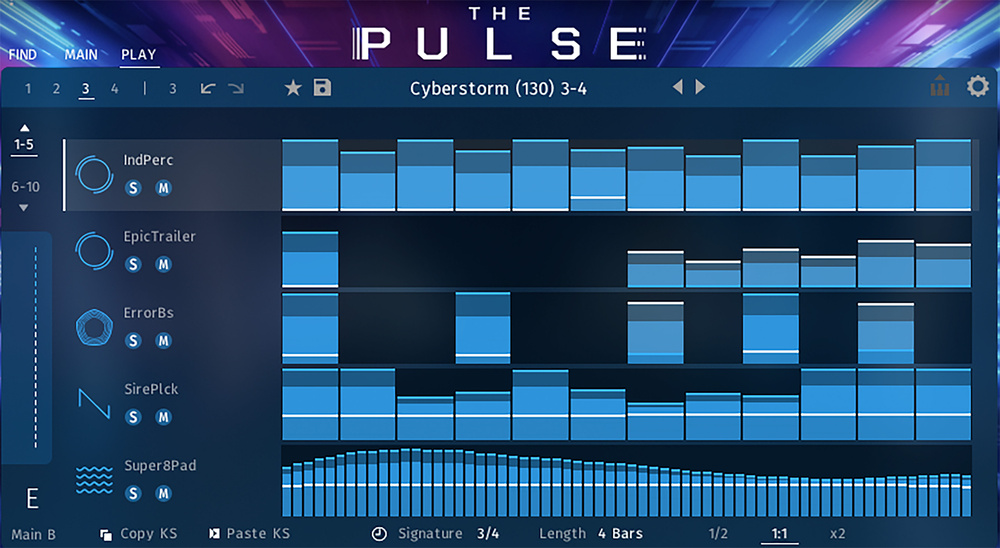 The Ensemble Instrument performances are fully editable by the user.
Things get particularly epic, however, with Cinematic and Modern Genre, where the arpeggiator/pattern sequencer and sound envelope features are fully exploited. With the mod wheel providing both dynamic and blending control, and the options to keyswitch between four different arpeggiator/pattern sequences within a single preset, the performance options provide instant gratification. For scoring work in particular, I could easily imagine creating a short cinematic‑style cue based on just a single Session preset.
As suggested by their names, these two categories of Sessions are aimed at somewhat different musical targets. The former are more obviously aimed at scoring tasks and, while they include drum/percussion elements, this is done to provide a ‘pulse’. In contrast, the latter often include a more obvious drum beat element. However, in both cases, the different pattern presets provide variations in the intensity of any rhythmic sounds, while you can also mute/solo individual sounds to adjust the intensity further. From Stranger Things to techno tunes, The Pulse’s Sessions have you covered. I really do hope Sonuscore consider offering Session expansion packs for both The Score and The Pulse; I’m sure there would be a market for that.
While the engine provides a whole suite of creative options, two features are particularly worth highlighting. First, full MIDI export is possible, essentially capturing the most recent performance pass each time your DAW is put into playback. You can then drag and drop the MIDI output from the engine to 10 MIDI tracks, allowing you to fully edit the performance and, if required, assign the MIDI to alternative virtual sound sources. Second, each instrument’s FX panel includes a Ducker tab. This essentially provides a built‑in side‑chain compressor, allowing you to duck the currently selected instrument based upon the signal from any of the other instruments within the same The Pulse instance. The obvious use case is to tuck bass or synth sounds out of the way of kick drum sounds. It’s neatly implemented and easy to use.
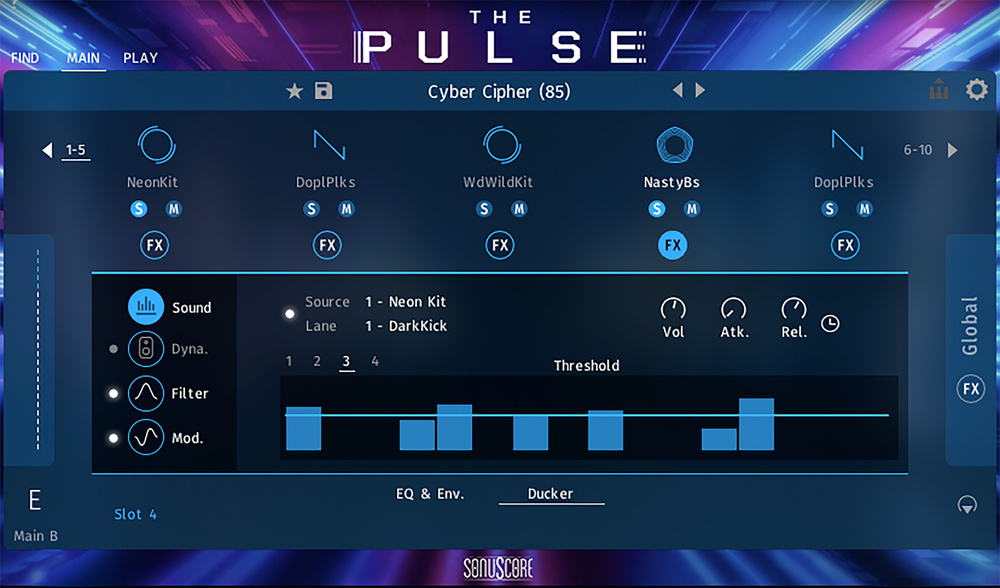 The Pulse’s feature set includes a very neat Ducker option for easy side‑chain compression.
Oh, and finally, it’s worth emphasising that you can create and save your own Session presets. Instant gratification from the supplied Sessions aside, this is where the true longevity of The Pulse lies as a scoring or production tool. The initial time spent learning the engine is, however, well spent.
Take Your Pulse
The speed with which an initial idea — score or song — can come together within The Pulse makes for a very creative writing tool. Instant gratification from the preset Sessions is undoubtedly a big part of the appeal but this is also an instrument that provides some tremendous sound design potential for those prepared to go beyond the supplied preset ensembles, sounds and kits.
If you are a media composer who has invested time in The Score, then The Pulse makes for a compelling companion instrument. The UI and engine will be instantly familiar while the more contemporary sound set will expand your compositional options into more modern and hybrid scoring styles. Sonuscore cite Tenet and Stranger Things as obvious musical references in their description of The Pulse and I think these are right on the money. Film, TV and game composers will, therefore, find a lot to like here. However, the Modern Genre Session presets also provide plenty of potential for more song‑based projects, and I’d encourage electronic music producers to audition some of the excellent audio demos available on Sonuscore’s website.
As with The Score, putting your finger(s) on The Pulse is inspiring, instantly creative and a lot of fun. If the sound set fits your musical needs, The Pulse comes highly recommended.
Pros
- Great for media composers wanting a contemporary palette of synth and drum sounds.
- The Ensemble Instrument is instantly creative.
Cons
- Not cheap, but good value for money if you are prepared to fully exploit the potential.
Summary
Sonuscore’s The Pulse does for modern drum and synth‑based scoring what The Score did for orchestral scoring. Inspiring, instantly creative and a lot of fun to boot.