Recording Real Drums
Sampled drums may be quicker and cheaper than the real thing, but there is something special about a real drummer hitting real drums. Hugh Robjohns passes on a few ideas and tips on capturing the best possible kit sound.

Sampled drums may be quicker and cheaper than the real thing, but there is something special about a real drummer hitting real drums. Hugh Robjohns passes on a few ideas and tips on capturing the best possible kit sound.

Commercial singles and albums are incorporating ever-more-sophisticated interactive audio and visual content, often using the Enhanced CD format. Janet Harniman-Cook starts this two-part feature with a look at how the format is being used by record companies, and the possibilities that are open to independent musicians.

If you need to operate your sequencer from a distance, there are many ways to stay in control. Martin Walker explores a variety of low-cost and purpose-built options.

We move on from discussing the harmonic components of sound to explaining how they change over time, and some of the tools subtractive synths give you to emulate this process.

This month, Martin Russ steps back and overviews the Macintosh for any newbies, and revisits an often overlooked bit of routine maintenance.

Derek Johnson & Debbie Poyser find out how you can use the Internet for promoting, distributing and selling your music, and for getting it heard by the right people.

The craft of mixing is all about controlling and balancing the relative levels of different instruments. Most of this balancing is done by riding the faders, but dynamic compression can also be a very useful and powerful tool if used appropriately. Hugh Robjohns explains some of the techniques and traps involved in mix compression.

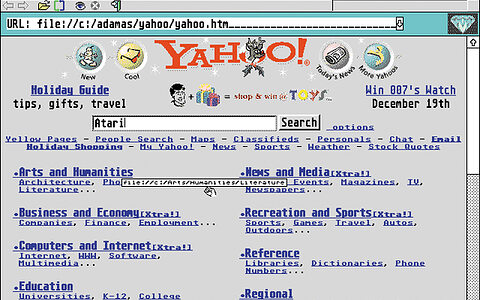
Derek Johnson reports on Atari shows in Stafford and Germany, and rounds up some more ST and Falcon news.

The plug-in compatibility of most audio software means that you can add new effects and processing capabilities — but not all programs support the same types of plug-in, and some require additional hardware. In the first part of a comprehensive roundup, Paul White and Martin Walker look at the different plug-in formats available.

Having looked at the history and development of built-in effects on synths over the last decade and a half, Paul Wiffen now explores the practicalities of using them, and how to get the best from the keyboards and modules which contain them.

As much as we'd like to buy all the latest PC software, no-one's coffers are bottomless. Martin Walker looks at some of the many free or low-cost alternatives for the PC musician.

If you fancy making music on the move, a laptop PC looks ideal. Martin Walker looks at some of the options. Norton Utilities Integrator; USB Tips.

You don't necessarily need a multitrack recorder or audio sequencer to make a master-quality recording. Paul White explains how good results can be produced using stereo recording techniques married with MIDI sequencing.

The theremin is one of the oldest electric instruments around, and its distinctive sound is instantly recognisable. However, real ones are hard to find, and even harder to play. Sam Inglis tries to work out a way of cheating.

In Part 1 we explained how the tones of most real instruments can be reduced to patterns of harmonics, which can be generated using sine, saw, square or pulse waveforms. This month, we consider the sonic raw materials needed to imitate unpitched percussion.

Paul White comes up with a few tips for using the processing power of your computer audio sequencer to turn one or two voices into a complete backing ensemble.

Studio management software, Cubase mixer maps, sounds and editor/librarian programs for a range of older synths are all up for grabs as an Atari developer posts his previously commercial work for free on the Internet. Derek Johnson tells you what's available and keeps an eye on the Atari news scene.

Multiple inputs and software-based mixers allow both audio and MIDI signals to travel some convoluted routes inside the PC. Martin Walker untangles his virtual cables to how best to get them out at the other end.

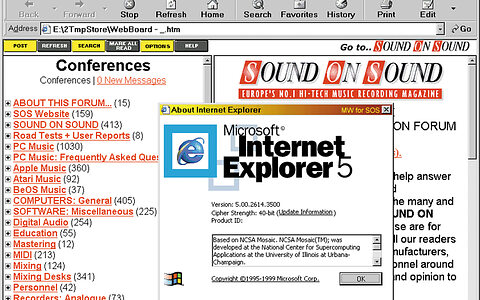
Tracking down the information you need on the Internet can be a joy or a nightmare, depending on whether you're idly browsing or desperately searching for a small specific piece of information. In this month's Net Notes, Martin Walker passes on a selection of basic tips to make browsing easier.

This month sees Martin Walker meeting the men from Microsoft, burning CDs faster, listening to new SoundFonts and testing out utility software. Does he ever sleep?