Mac OS X Tiger: A Musician's Guide
The latest version of Apple's Mac OS contains some excellent new features aimed at musicians and audio engineers. Is this one OS upgrade you won't mind performing on your studio computer?
Mark Wherry has been a contributor to Sound On Sound for around two decades and was formerly SOS Reviews Editor.
Since 2003, Mark has worked as Director of Music Technology for Hans Zimmer at Remote Control Productions in Santa Monica, California. In this capacity he’s contributed to over 50 feature film scores, from the Dark Knight trilogy to Frost/Nixon, Dunkirk, and Wallace & Gromit: The Curse of the Were-Rabbit, as well as developing the first 64-bit, multi-core sampler to be used on such projects.
After studying the organ whilst growing up in England, Mark was finally able to put the lessons to good use performing as the hands of Davy Jones in the Pirates of the Caribbean movies.

The latest version of Apple's Mac OS contains some excellent new features aimed at musicians and audio engineers. Is this one OS upgrade you won't mind performing on your studio computer?

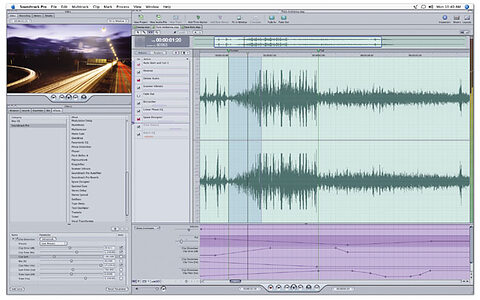
We offer a brief preview of the features musicians can look forward to in Mac OS X Tiger, take a first look at a major new version of Soundtrack, and examine why the iPod Shuffle is hard to resist.

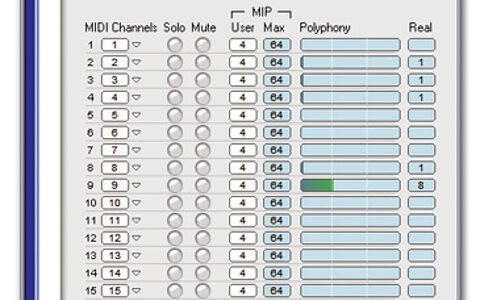
We look at the possibility of DSD higher-quality audio support in Cubase, a plug-in to help you write ringtones for Nokia phones, and a new patch for Windows users of Cubase SX/SL 3.02.

We take a look at the concepts of audio files, clips, events, parts and regions in Cubase, and explain how you can manage these objects in the Pool window.

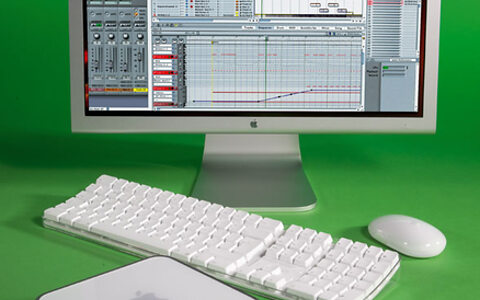
Apple have long been criticised for charging a premium for their products, making the Mac platform a more costly choice than the alternatives. With the newly released Mac Mini, Apple hope to change this perception, but is there enough Mac in the Mac Mini to make it useful for musicians?

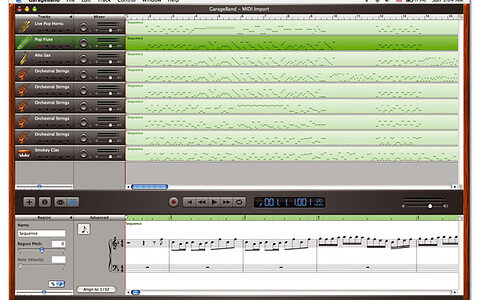
Although intended as an entry-level application to introduce new people to computer-based music making, Apple's GarageBand has received acclaim from beginners and professionals alike. We look at version 2, which adds score editing, multitrack audio recording, and more...

Steinberg originally introduced the concept of Folder tracks in Cubase VST, as a way of organising the track list in the Arrange window. This month we look at how this feature became even more powerful in Cubase SX, and how to make the most of it.

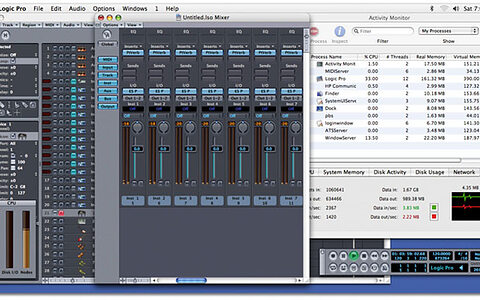
We've discussed Logic's distributed audio processing in past Apple Notes columns, but this month we offer some tips on setting up Logic Node to run on a network of headless Macs, along with some advice on Firewire-based networking.

While processing 100s of channels with effects in real time has increasingly become the norm for most of us, there are still occasions when not processing audio in real time can be useful. We look at how to achieve this in Cubase SX.

Device Panels were introduced in Cubase SX 3 to enable the creation of on-screen interfaces for controlling MIDI devices. Here we look at how you can create one to control plug-ins.