

No Repetition
"The process is different every time” appears to be a bit of a mantra for Blanco, as he repeats it time and time again when asked for specifics about his work; for example, when asked how he starts a track. "It's all different. Sometimes I'll start with a keyboard, sometimes I'll start with drums, which I program by dragging and dropping into Pro Tools. I've built up my own sound library over the years — whenever I'm in a room with a drum kit that sounds good, I record me playing a beat on it and I then chop that up and maybe put it somewhere later on. You never know how you're going to start. I rarely use samples from other songs, unless I need something I absolutely cannot recreate and the sample embodies exactly what I need. But normally, I simply treat my own sounds and my own playing as if it is a sample. The other day I sampled myself putting cups down on the table and that sound became the drums. I also once sampled myself opening a door and closing it again with the lock sound, and that became a drum beat.
"Sometimes someone will say a word that will make me go 'What a great song idea!' I often use the voicemail on my cellphone to record my ideas, but half the time when I later come back to them, I wonder what exactly I was singing! I once was in a gym and there was some shitty song going on in the background at such a low volume that I was making up things to fill in the gaps. I then heard a whole song in my head, from beginning to at least the second chorus. I was on a treadmill and asked my brother to pass me my cellphone and sang it into that and went back to my studio and began work on it. That eventually, after we did a lot of things to it, became the song 'Dynamite' by Taio Cruz.
"With Ke$sha, when we were recording 'Tik-Tok', we were working on a demo for the verses and I had just recorded this little melody idea. I can't sing at all, so I was using [Antares] Auto-Tune. I then asked her to sing the verse and accidentally left the Auto-Tune on while she was rapping, and I thought that sounded cool, and that is how that style happened. It is all different. The best part of making music can be the mistakes. They can be your biggest accomplishments. Sometimes wrong is right. You can't be afraid. And it has to be loose. Everything I do is for feeling. I was not classically trained and I don't know much about the technical side of things. It's all trial and error and it's all about getting the feeling right, and I don't care how long it takes or what you need to get there, as long as you get there.”
Despite the makeshift nature of Blanco's bedroom studio in New York, he's happy to record everything there. "Actually, it doesn't matter where I am. As long as I have a place to work, I'm good. The process is different every time, and it's very unexpected. My studio is not very glamorous, and I tend to do everything myself when I work at my studio, but sometimes someone else records the vocals for me, whether I'm working here or at another place. I recorded all the vocals for 'Moves Like Jagger' [Maroon 5 featuring Christine Aguilera] and 'Stereo Hearts' [Gym Class Heroes], but when I'm working with Ke$ha, Max [Martin] will record her vocals. He's the best vocal producer on the planet.”
Passing The Torch
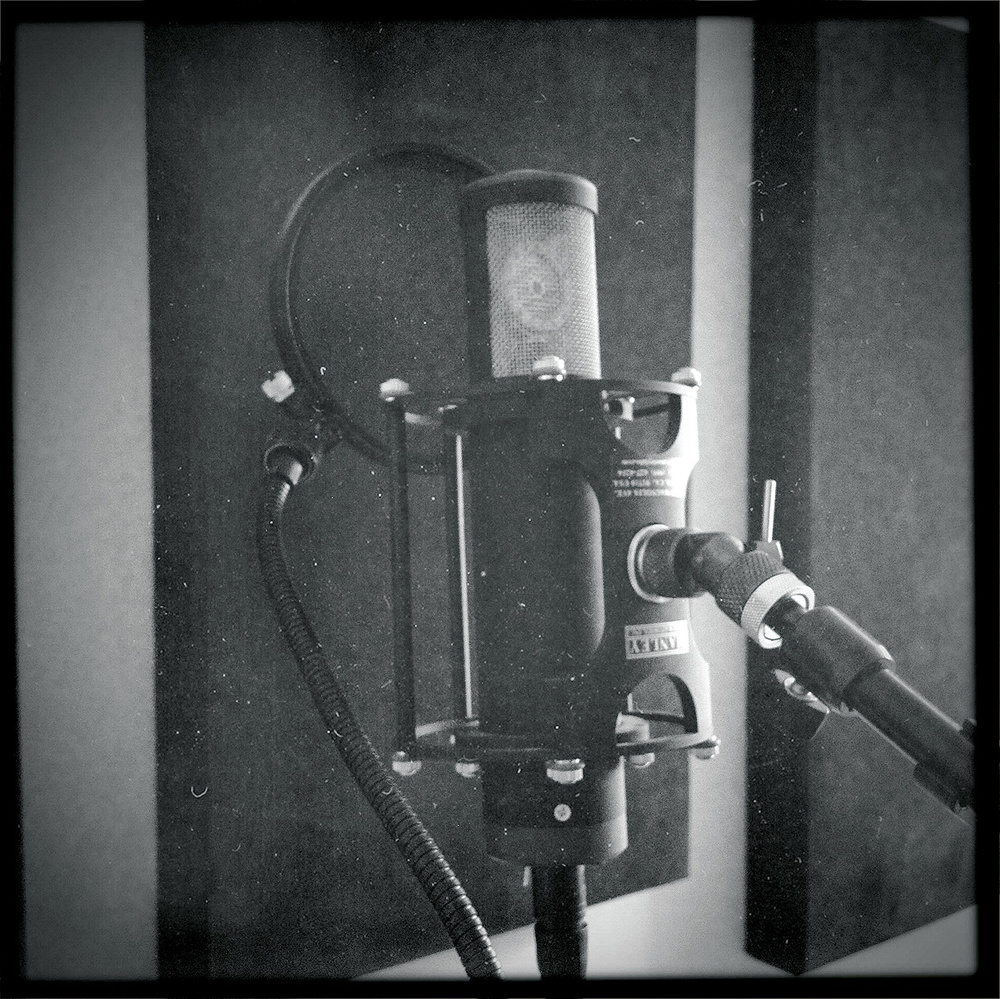 Despite claiming not to be very technical, Benny Blanco does much of his own recording, often using a Manley Reference mic through a Chandler preamp and Universal Audio 1176 compressor.
Having been mentored by Dr Luke, Blanco is now a mentor in his own right. His protegés include Dan Omelio, who was co-responsible for the arrangement and production of Lana Del Rey's mega-hit 'Video Games' (as described in April's SOS: /sos/apr12/articles/it-0412.htm) and who also co-wrote and co-produced, with Blanco and several others, the Gym Class Heroes hits 'Stereo Hearts' and 'Ass Back Home'. Another is Ammar Malik, who also worked on the two Gym Class Heroes songs, as well as on Maroon 5's mega-hit 'Moves Like Jagger', which was co-written and produced by Shellback and Blanco.
Blanco: "That song started with Shellback playing me a melody idea via Skype, because he was in Sweden. I thought it was fantastic so I started messing with it on my laptop. We pitched the song to a few artists, who all turned it down, but I'd been working with Adam Levine, who had really wanted 'Stereo Hearts', and I thought that this might work for him instead. So Shellback and I got into the studio and wrote the lyrics and recorded it, and the rest is history. We wanted to keep it very simple and not overproduce it. We wanted it to be a very soulful dance song with a vibe that was almost reminiscent of Jamiroquai.
"Sean Paul's 'She Doesn't Mind' was another song I did with Shellback. We actually wrote that song as a rock song, it used to have a completely different beat. I got to speak with Rick Rubin one time and we were talking about production, and he said, 'Look, man, a great song is a great song, no matter how you produce it. It could be a country song and you can turn it into a rap song.' Some friends of mine thought that the rock idea Johan [Shellback] and I had would never work for Sean Paul, but we stripped it down and totally re-produced it, and Johan put a great melody over it, and suddenly it turned into this thing. He was in Sweden, so we did all this over Skype.”
Control Freak
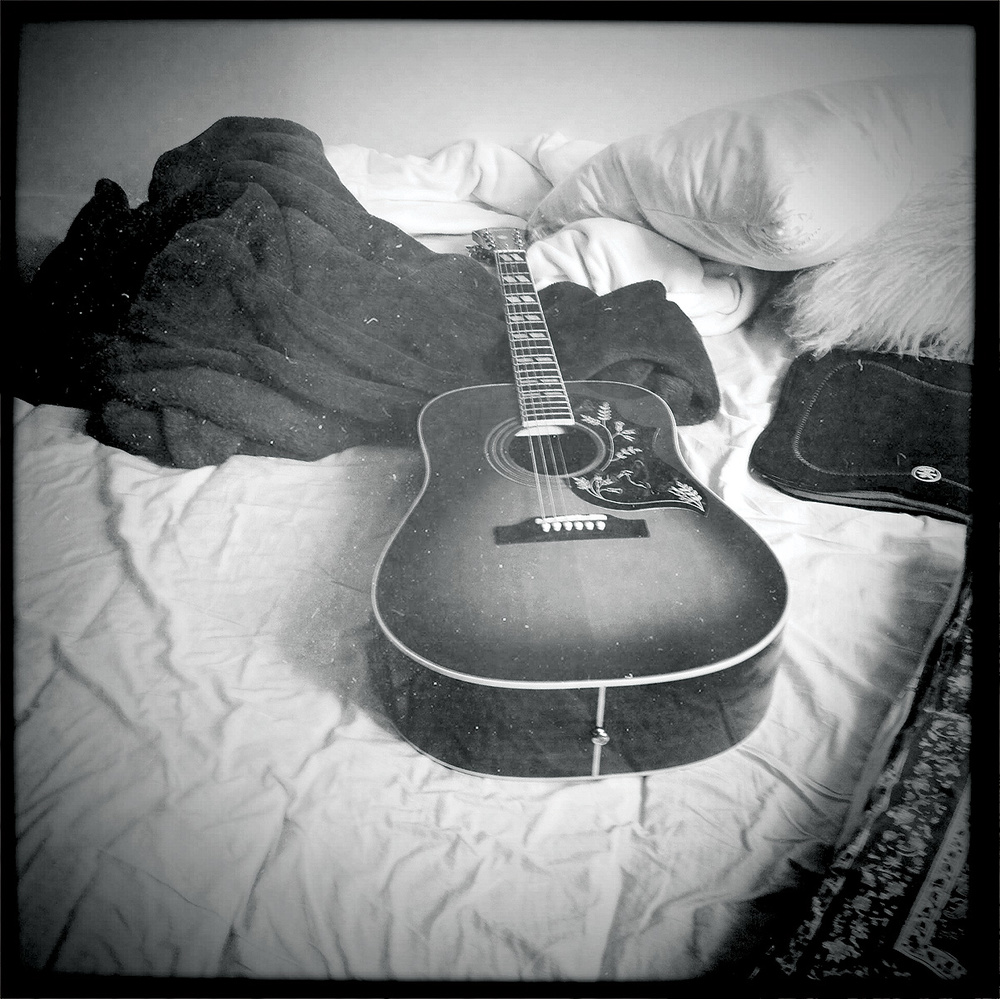 Putting the bed in 'bedroom studio': despite his massive success, Blanco continues to work where he sleeps.
Benny Blanco's bedroom studio is exceptionally simple. There's his Pro Tools HD rig, which he uses purely because Pro Tools is the DAW he knows best. In addition he has, he says, "a Manley microphone and a Chandler TG2 mic pre, plus a [Universal Audio] 1176, one or two effect boxes and the guitar pedals, and that's it. I also have the shittiest speakers in the world. They are entry-level speakers that cost me 200 bucks a pair, but I am really used to the way they sound. I often record vocals, and when I work in other studios I may use the Neumann U47 for vocal recordings, the AKG C12 is also great, or an old ribbon mic. It depends on the singer. Or I'll use that shitty dynamic mic, what's it called again… the Shure SM57. Sometimes you cut a vocal and you feel there's too much top end on it and you try something else. At the end of the day it is whatever sounds good on a person's voice. But I'll always use an 1176. I'm not a great fan of Neves, even though the Chandler is also a Neve. But they sound different. Neves don't sound crispy enough, and don't get the vocal to cut through enough, but they are great on bass and drums.”
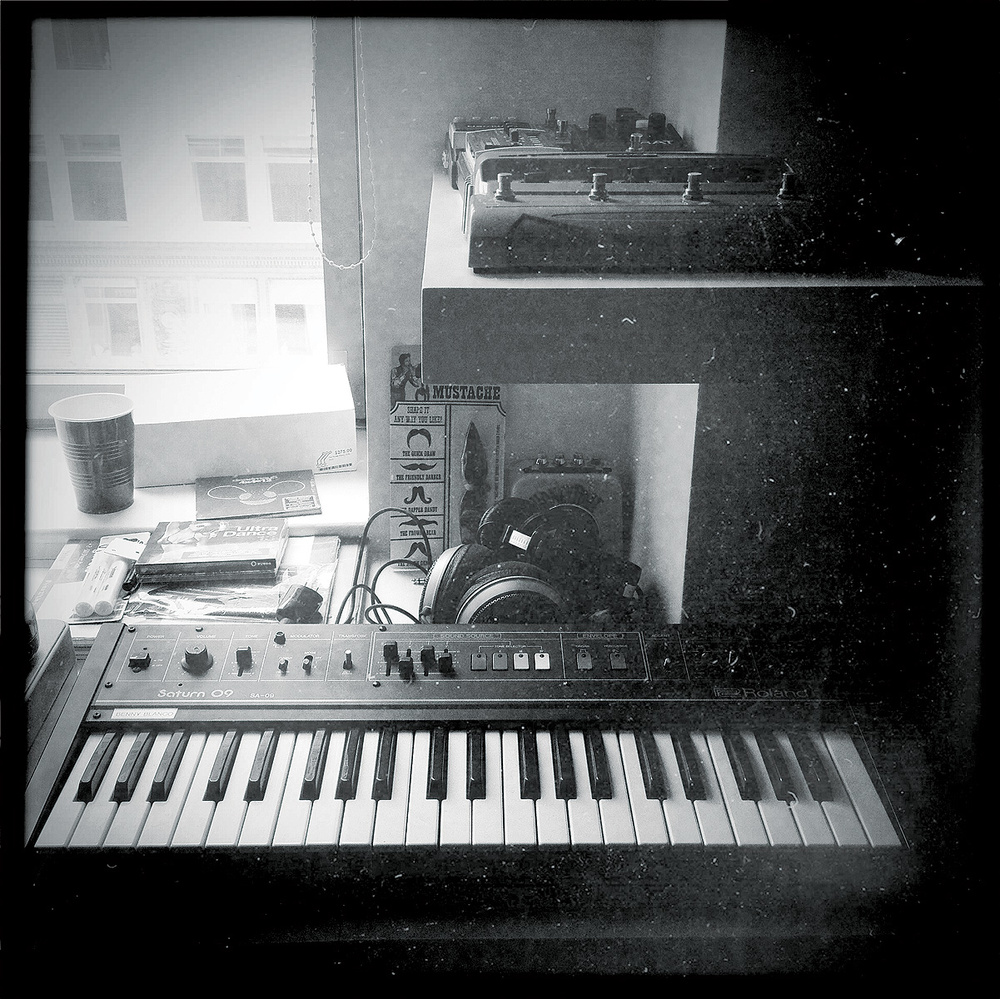 It's not all toy keyboards: Blanco's collection also features vintage analogue designs like the Korg Polysix and Roland Saturn 09.
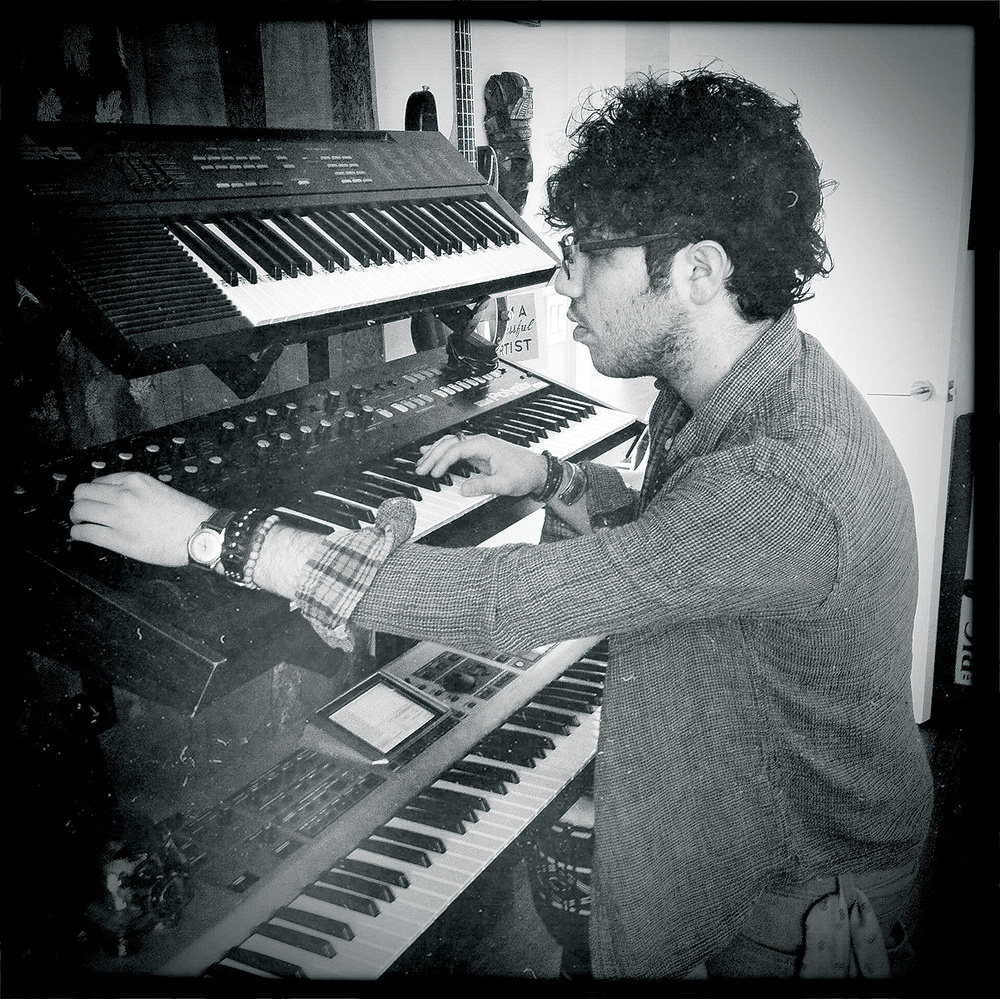 Perhaps surprisingly, given that Blanco professes not to know much about the technical side of things, he explains that he does quite a bit of the engineering himself. "Yeah, I'm always at the desk or at the computer when I'm making music. I'm just too much of a control freak. As we record, I do my best to get the track to sound exactly the way I want it. I will use the same plug-ins I told you about before, and things like the [Metric Halo] Channel Strip for my EQ, and I actually use a very regular reverb, the D-Verb [Avid's bundled plug-in]. I also use Serato Pitch 'n Time quite a lot. Sometimes I want to change the key of a song after I've already recorded it, and we only have 30 minutes, and that's where Serato is very practical. Or I'll use Sound Toys' Speed plug-in. Artists are a lot more impatient these days. They go: 'OK, you need to change the key? I'll go to the bathroom!' When I'm finished with the track I send it to Serban [Ghenea], who is hands-down my favourite mixer. I just say to him: 'Make it sound better.' He doesn't mess with what I do too much but takes off where I left off, rather than reinvent the wheel. I don't like mixers who change the way the track sounds so it ends up sounding like a different song.”
Blanco acknowledges that there's a down side to today's collective approach to song writing and producing, with labels, managers, A&R managers, and so on all wanting to have input. He reckons that it's important to stick to one's guns. "The main thing in general to trust yourself. If you start listening to all the input everyone wants to have, you're not the producer any more, and that will show. You have to trust your own ears and your own vision. I constantly try how much I can get away with, it's almost like a game. Can we really have a breakdown at this point for 20 seconds, without any vocals? Maybe put some John Coltrane influences in there or vocal harmonies like the Temptations did. I'm trying to really push myself to do different stuff this year. For example, I've been working with Paul Epworth recently, and we've been making some amazing music together. I really want to be able to give these kids something that they're not used to hearing. When you play them the original of a sample in a modern song, they often go: 'Wow, that had an original?' I don't want to conform to what the kids want, I want to influence them!”
No MIDI Here
Like many modern musicians, Benny Blanco almost proudly admits that he is "not particularly good at playing any instrument. I'm actually not even mediocre at anything. Everything I do takes a long time. When I play guitar, I play one note at a time and layer that, until it becomes a chord. The same with keyboards, although I can play them slightly better: I can play chords on them! I guess it was good that I switched instruments every week when I was a teenager, because I can now pretend to play any instrument!”
The tracks Blanco is involved in making tend to be tight and muscular-sounding, and there has been speculation on various Internet forums as to what kind of software synths and other computer-based tools he likes to use. Surprisingly, the answer is none. It turns out that Blanco is the ultimate 21st Century musician, who doesn't compensate for his lack of instrumental prowess by using MIDI and all the sequencing and programming tools that come with it, but instead has jumped straight to the next stage, which is to play and record traditional instruments in his own very limited way, and then rework what he records using his recording software's audio manipulation tools. As a result, his bedroom studio in New York only contains the most basic equipment needed to run a DAW, in his case Pro Tools, with the main focus being stacks and stacks of instruments, including guitars, basses, ukuleles, weird percussion instruments and, most of all, dozens of keyboards, many of which are obscure units from decades ago, often never intended to be more than kids' toys.
Blanco: Yeah, I collect instruments. My studio is, indeed, keyboard upon keyboard. I have 50 or more!
"Yeah, I collect instruments. My studio is, indeed, keyboard upon keyboard. I have 50 or more! My favourites probably are the Roland Juno 60 and Juno 106, the Sequential Circuits Six-Track, and the Korg Polysix. I also have the Teenage Engineering OP1, which is made by a Swedish company and really cool, and I use a few MIDI keyboards, like the Access Virus. I like analogue keyboards, because I like faders and buttons. It's very inspiring. I have only a couple of digital keyboards, and I never use in-the-box keyboards. But most of all I collect small toy keyboards, like old Casios and Yamahas, and so on. Many of them do not even have a jack at the back, so I had to mod them to be able to plug in an eighth-inch [plug]. I also have a few accordions, some pump organs from the '30s, [Suzuki] Omnichords, keyboards that you play with your mouth, I have everything.
"I play everything myself. I don't even know how to use MIDI. Everything in my sessions is recorded as audio. Honestly, all my keyboards go direct into Pro Tools, without compressors or anything. I use the toy keyboards a lot. Ke$sha's 'Tik-Tok', for example, was done on the same old Yamaha keyboard that I got for $25 at a yard sale, on which we did 'California Gurls' and 'Teenage Dream'. When I go to another studio, I will usually just rent a few keyboards, or buy one at a yard sale or something. I will then ship them back home. Often we retire keyboards, and a year later or so we'll bring them back out. I rarely buy keyboards that are expensive — I can count the number of expensive keyboards I bought on one hand. People don't really want cheap keyboards, so no-one knows what they sound like.
"My main reason for using these keyboards is that I don't want to make music with stock sounds. I always want people to wonder where the fuck I get these sounds from. That's why I don't use any soft synths. But I put a lot of plug-ins on these keyboard sounds, and always try to find strange plug-ins and use them in creative ways. My go-to plug-ins? There are tons of them. The Sound Toys stuff is probably my favourite. I love the Decapitator, I love Echo Boy and I love [Line 6] Echo Farm. Surprisingly, I use the AIR plug-ins that come with Pro Tools a lot. I often use a plug-in called Sausage Fattener [from Dada Life], I use Vengeance plug-ins, I use [Sound Toys] PitchBlender, and so on. I do have some outboard, like the [Roland] Space Echo, and I have a lot of guitar pedals that I run stuff through. I tend to use those on keyboards.”