

You are here

Pro Tools: Splice Integration

Avid Pro Tools: Tips & Techniques By Julian Rodgers
Published November 2025

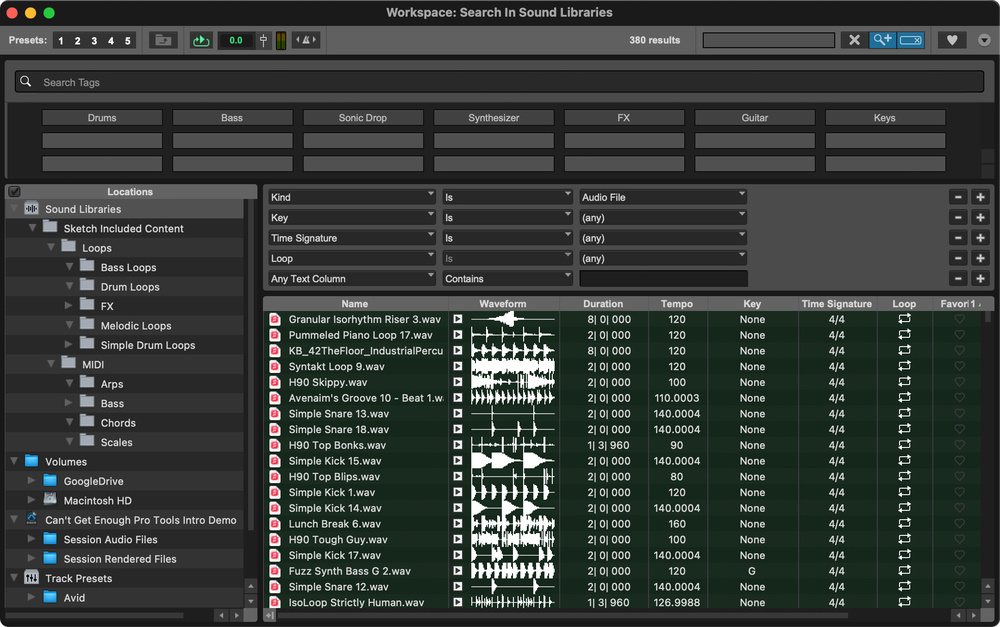
The Workspace Browser is traditionally where you’d manage your sample libraries within Pro Tools, and is still a viable option for homemade and non‑Splice content.The Workspace Browser is traditionally where you’d manage your sample libraries within Pro Tools, and is still a viable option for homemade and non‑Splice content.

With Splice integration, Pro Tools opens the door to a world of samples.

Pro Tools has long been the go‑to platform for professional audio recording, mixing, and post‑production. Yet there are areas where users have voiced frustration, and a persistent weakness has been sample library management. This is somewhat at odds with Pro Tools’ dominance in post‑production sound, where handling large sound effects libraries is a daily necessity.

For musicians, the problem with large sample libraries, whether home‑grown or third‑party, has always been navigating the choices available. The more material you collect, the harder it becomes to find what you need. A productive writing session can quickly dissolve into file management.

With Pro Tools 2025.6, Avid introduced full integration with online sample library Splice. Having Splice integrated into the DAW itself removes the tedium of switching between Pro Tools and a browser or other app. Full access to Splice’s content requires a Splice subscription, but the included free collection of 2500 samples offers a taste of what is available, and while not enormous, it is large enough to be useful.
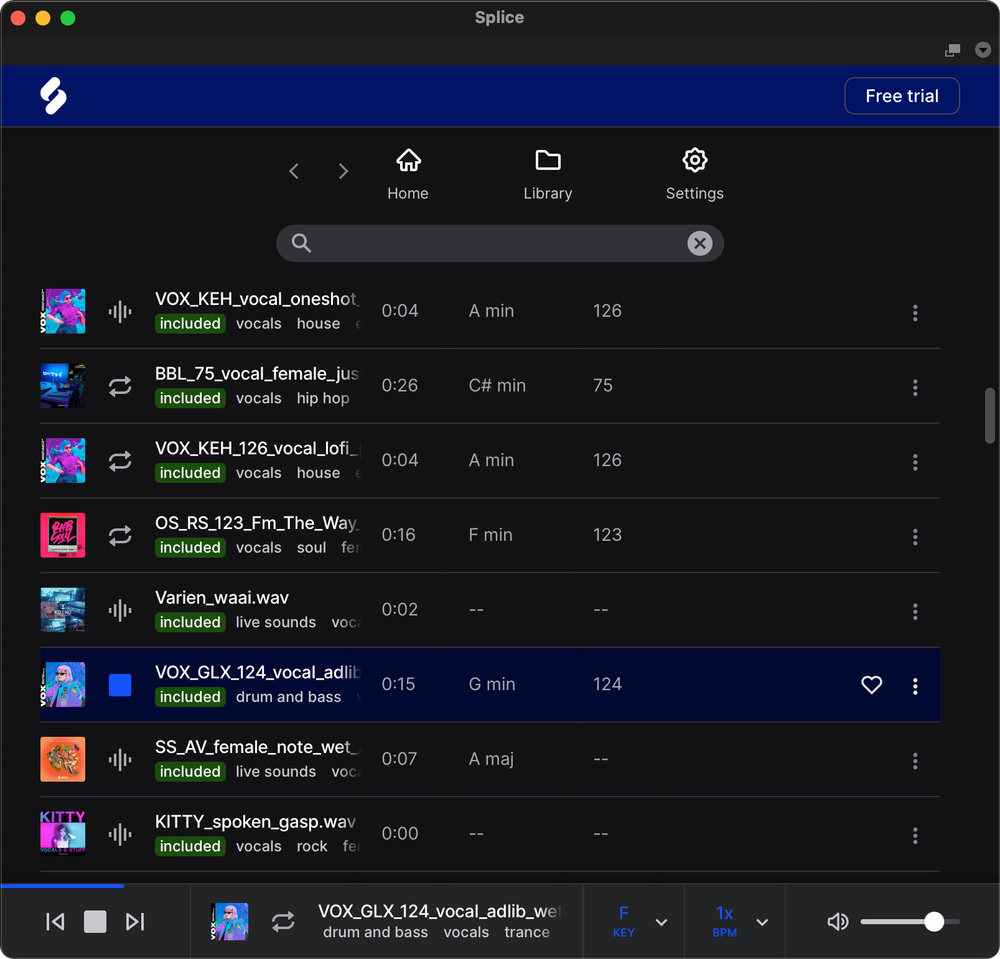
The Splice browser offers tag‑based searching of all of Splice’s content, and can even time‑stretch and transpose samples so that you can audition them in context.The Splice browser offers tag‑based searching of all of Splice’s content, and can even time‑stretch and transpose samples so that you can audition them in context.

The Splice Must Flow

Until this new Splice integration, the only way to manage and access sample libraries from within Pro Tools was using the Workspace Browser, which was introduced in 2013 with Pro Tools 11. With it, users can build catalogues, tag material, and audition loops in sync with session tempo thanks to Elastic Audio. Of course, a key difference between the Workspace Browser and Splice is that any material held locally can be accessed from the Workspace Broswer, whereas Splice accesses the online Splice library only — although it does so extremely well.
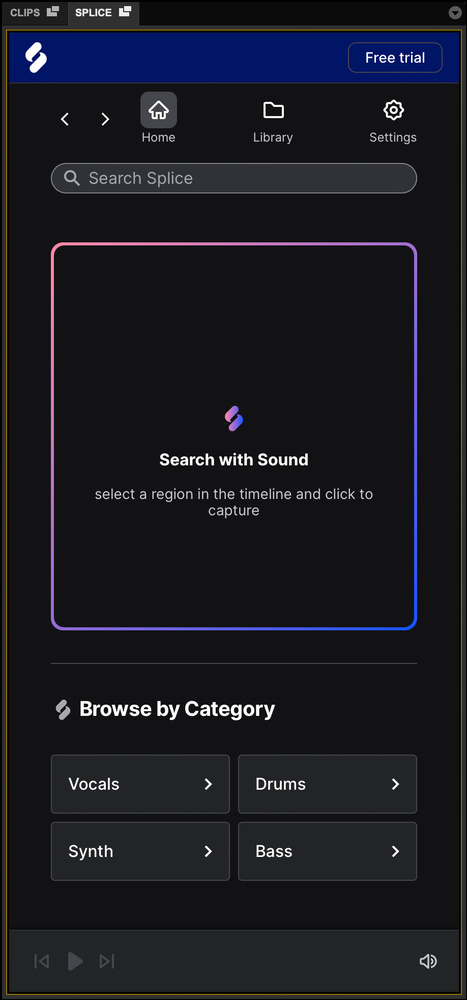
The Search With Sound feature lets you upload an audio file, whereupon Splice will use AI to find a match for it in its extensive library.The Search With Sound feature lets you upload an audio file, whereupon Splice will use AI to find a match for it in its extensive library.Splice has become a key player in the online sample library market, along with rival services such as Loopcloud and SOS’s own SOS For Artists. Where these services really stand out is in discovery. Users can search by keyword, instrument, tempo, genre or key, but Splice also offers AI‑assisted suggestions, as well as the powerful Search With Sound feature, which allows users to upload their own audio to find well‑matched material. Importantly, Splice make clear that uploaded audio is not used to train AI models.

In Pro Tools 2025.6 and later, Splice is integrated together with the Clips List as its own tab. If you don’t wish to use it, you can hide it by unticking it from the drop‑down menu in the Clips List sidebar (note that this setting is saved with the session). It’s available in all tiers of Pro Tools, and the interface is deliberately simple. Filters cover instrument, genre, bpm and key. Auditioning during playback allows loops to be heard in context with your timeline. The Splice integration uses the Audition Path as set in the I/O Setup window, and level is controllable from a fader in the Splice window. You can sync to session tempo and enable real‑time pitch transposition to match the session key. The included samples are always available; the full Splice library requires a $12.99/month subscription.

Free & Easy

The free sounds are clearly labelled ‘Included’ and can be filtered using that tag, so while searches might present other Splice content, there is no confusion about what belongs to the free tier and what belongs to the subscription catalogue.

This free collection is clearly intended to tempt you into the paid Splice ecosystem. Nevertheless, the collection is well chosen, and the samples are ripe for creative manipulation in Pro Tools.

For example, I began with a drum loop as the basis of an idea. After filtering to better isolate the kick and snare, I generated MIDI triggers using audio‑to‑MIDI, then layered the sounds using entirely different samples. Using Beat Detective, I extracted a Groove Template and applied it to an arpeggiated synth part. In the end, none of the original loop remained, but its rhythmic DNA informed the finished part. Techniques like this show how even a small library can become a springboard for original results.

Like & Subscribe?

The unavoidable drawback of Splice integration is that it introduces the reality of a subscription within a subscription. Many Pro Tools users already pay monthly or maintain an upgrade plan, and full access to Splice requires a separate $12.99 subscription. For some, this will feel like an unwelcome doubling up.

On the plus side, because Splice is integrated directly into Pro Tools, installation is effectively non‑existent. The Splice tab appears in the Clips List, and a short guided tour walks you through setup. Creating a free Splice account is simple: despite the website’s emphasis on paid plans, you can bypass them and register at no cost. Linking the Pro Tools sidebar to your account unlocks the integration, with the bundled library already pre‑installed and clearly marked.

In daily use, the system feels fluid. Filters for instrument, genre, tempo and key return quick results. Auditioning during playback is seamless, and loops drag directly onto the timeline, conforming to tempo automatically and behaving like any other audio clip once placed.

When you drag audio from the timeline into the search box, Splice generates context‑aware suggestions with impressive accuracy.

The Search With Sound feature is particularly striking. When you drag audio from the timeline into the search box, Splice generates context‑aware suggestions with impressive accuracy. This is, however, effectively locked behind the subscription, as matches are taken from the full catalogue. Still, it feels like a killer feature.

The Splice integration in Pro Tools is extensive, and designed to keep the workflow smooth rather than obstructive. The bundled free tier will be more than enough to let you explore the workflow and judge whether the full service is worthwhile. And thankfully it’s non‑invasive. If you don’t want it, simply un‑tick it in the Clips List drop‑down and it will be hidden in the UI.

Looping In Pro Tools

If you drag and drop a loop from Splice onto the timeline it will be automatically copied to the Audio Files folder of your session, whether or not you have Automatically Copy Files On Import ticked in the Pro Tools settings. If you want to import to a new track, drag the clip to some blank space below the existing tracks or over the tracks list on the right, and a new track will be created. Once on the timeline you have a choice of ways to repeat it along the timeline.

The Loop Trim tool is specifically designed for working with loops. Trimming from the top corner will loop aliases of the original loop down the timeline. This is different from duplicating the clip, as the looped copies reflect changes in length to the original clip. You can demonstrate this by trimming the original clip shorter from the bottom corner. You’ll see how the copies are also trimmed but the length of the looped section is maintained, resulting in more, shorter copied clips.

A familiar method to repeat a clip is to duplicate it using Command+D (Control+D on Windows). A faster way to duplicate many times down the timeline is to use Option/Alt+R to access the Repeat dialogue, where you can specify any number of repeats. A more recently added alternative, which I now prefer, is using Duplicate and Extend Edit, accessed by holding Command+Opt+Control+Shift+D (Control+Alt+Start+D on Windows). With each subsequent repeat of this command, twice as many clips get created. If you ever need it you can even duplicate backwards by holding Command+Option+Control or Control+Alt+Start on Windows and clicking with the Grab tool.