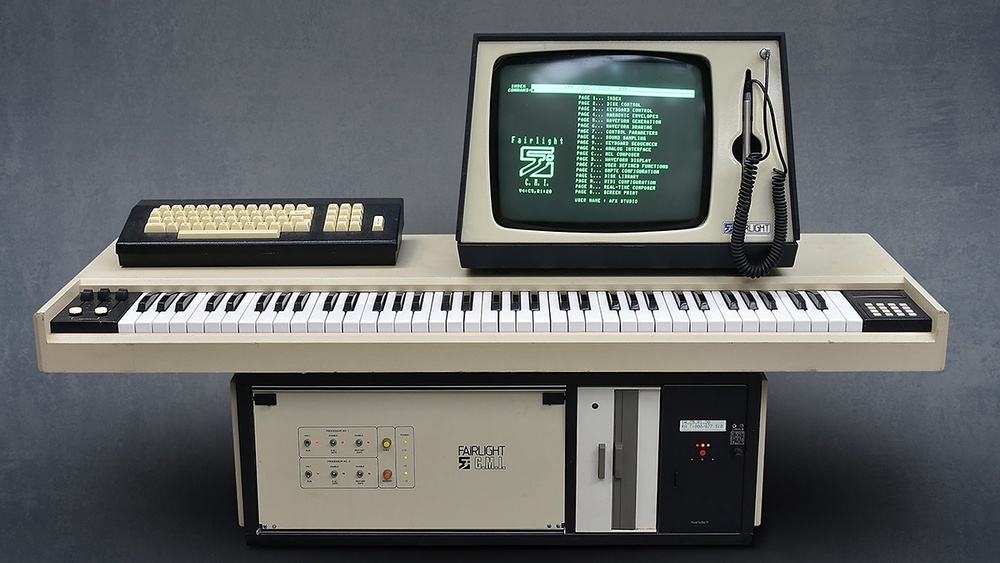
 Fairlight CMIPhoto: VEMIA
December 2025 marks the 50th Anniversary of the founding of Fairlight in 1975 by Kim Ryrie and Peter Vogel. The founders — and many of the staff who worked for Fairlight, including Michael Hornsby (software engineer #1) and Andrew Cannon (software engineer #2) — gathered in Sydney to celebrate this milestone year for Australia's pioneering music technology company.
The Fairlight CMI Series I instrument they created in the late 1970s went on to influence the design of so much of today's recording and music technology. In 2005, the Fairlight CMI was inducted into the TECnology Hall of Fame, an honour awarded to "products and innovations that have had an enduring impact on the development of audio technology”.
Initially set up to develop a digital synthesizer, Fairlight's early experiments resulted in the development of the eight-voice QASAR M8 CMI, which ultimately ended up being too bulky and expensive to be deemed marketable. In 1978 Vogel focussed on the idea of recording a piano sound and playing it back at different pitches on a keyboard. It was then that Vogel and Ryrie coined the term 'sampling’, and that led the two engineers to bring together various pieces of computer hardware such as the green-screen VDU with a light pen to control the software and draw waveforms, plus an eight-inch floppy disk drive to store the software and samples, and a keyboard to trigger the sounds.
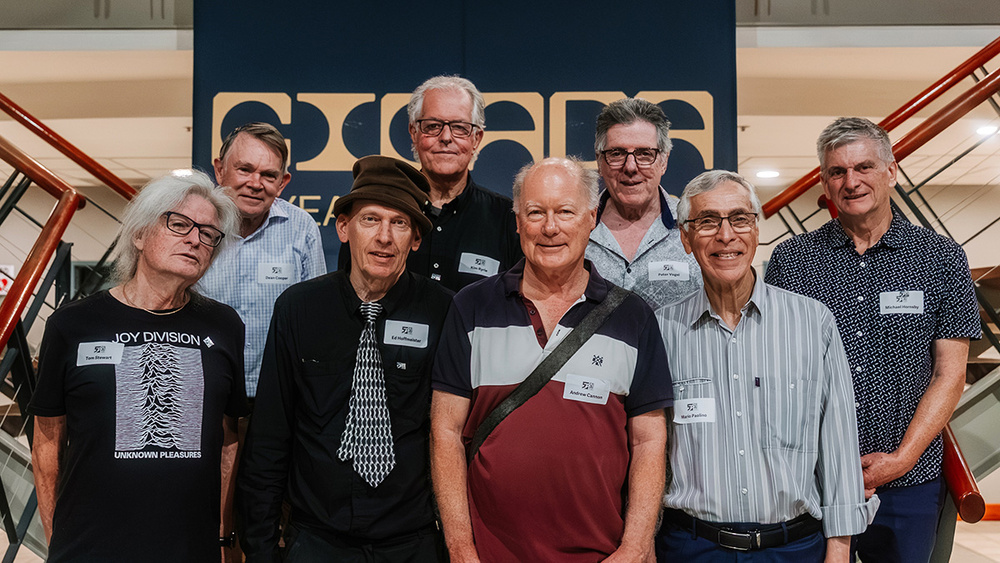 Eight of the original Fairlight team. Back Row: Dean Cooper, Kim Ryrie (Co-founders), Peter Vogel (Co-founders), Michael Hornsby (software engineer #1). Front row: Tom Stewart, Ed Hoffmeister, Andrew Cannon (software engineer #2) and Mario Paolino.
The result was the Fairlight CMI Series I, which was launched in 1979 and attracted the attention of many well-known musicians around the world. In the UK, Peter Gabriel was one of the first to acquire a Fairlight, and he went on to co-found Syco Systems in London to act as the company’s distributor. The Fairlight grew in popularity and appeared on many hit records throughout the 1980s as its sound manipulation features appealed to both musicians and producers. Other early adopters included Stevie Wonder, Led Zeppelin's John Paul Jones, Kate Bush, The Pet Shop Boys, Herbie Hancock, Jan Hammer, Art Of Noise and Thomas Dolby, along with producers Trevor Horn, Steve Levine and Alan Parsons to name but a handful.
The Fairlight CMI established the idea of a workstation instrument that was much more than a synthesizer. It brought together a sampler, waveform manipulation, an eight-track rhythm sequencer (composer) known as Page R, and a means of 'fast' storage (at least by 1980s standards!) thanks to its use of floppy disks rather than tape. All of these ideas were copied by several competitors as the 1980s progressed and computer memory became cheaper. The Synclavier was the first direct competitor before E-mu, Ensoniq and Akai all entered the marketplace with instruments of varying power and functionality that appealed to budget-conscious musicians.
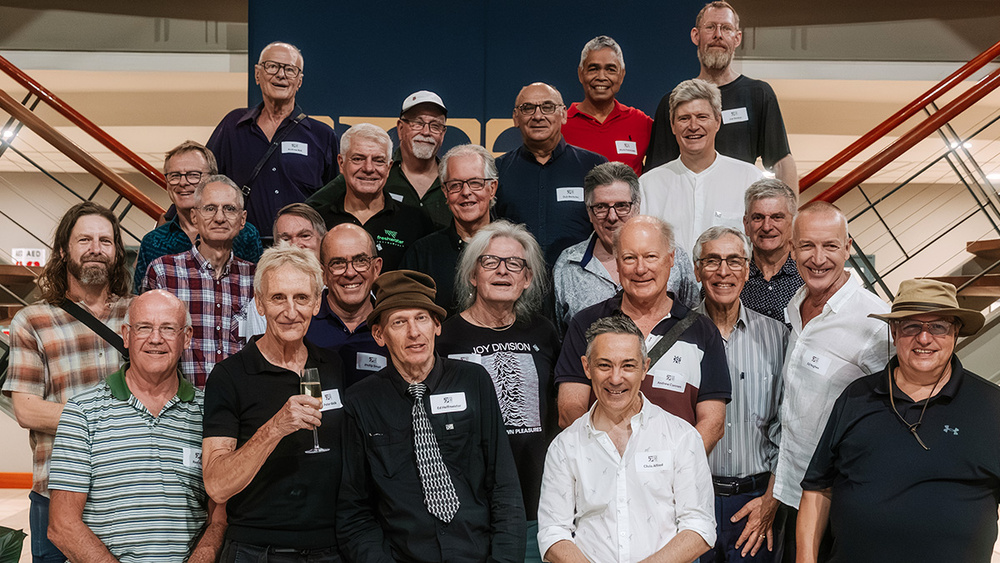 A group photo of all Fairlight employees at the 50th anniversary event.
Today, many of the then-cutting-edge features — including sampling, sound manipulation, sequencing, drum machines, digital multi-tracks and mix automation, plus the instant retrieval of songs, are the mainstay of all modern DAW-based recording and production systems.
Retrozone
For an in-depth look at the Fairlight CMI, take a look at our Retrozone article from SOS April 1999.
SynthFest 2019 Presentation
You can also watch the 40th anniversary video presentation from 2019’s SynthFest UK event. During the presentation, Fairlight enthusiast Rob Puricelli talks about the history of the instrument and plays some of its iconic sounds before interviewing Steve Levine about his use of the Fairlight CMI Series II.