

Room calibration is more accessible than ever, and some DSP‑equipped monitors now come with it entirely onboard.
Many monitors now incorporate complex onboard DSP designed to enhance their performance, carrying out everything from crossover filtering and phase optimisation to dedicated EQ profiles designed for different placement options. Many even allow users to tweak settings to suit their own requirements. Some manufacturers have taken things a step further, though, offering systems that can self‑calibrate to a specific room using a measurement microphone, with the resulting correction run directly from the monitors’ DSP. The most obvious benefit to this approach is that having the calibration run from the monitoring system itself means that there’s no need to have a plug‑in or software application running on the studio computer. As such, any other sources that are played through the system are still subject to the same correction — and of course, it makes it impossible to accidentally bounce a mix with your calibration processing ‘baked in’!
ADAM Audio A‑Series
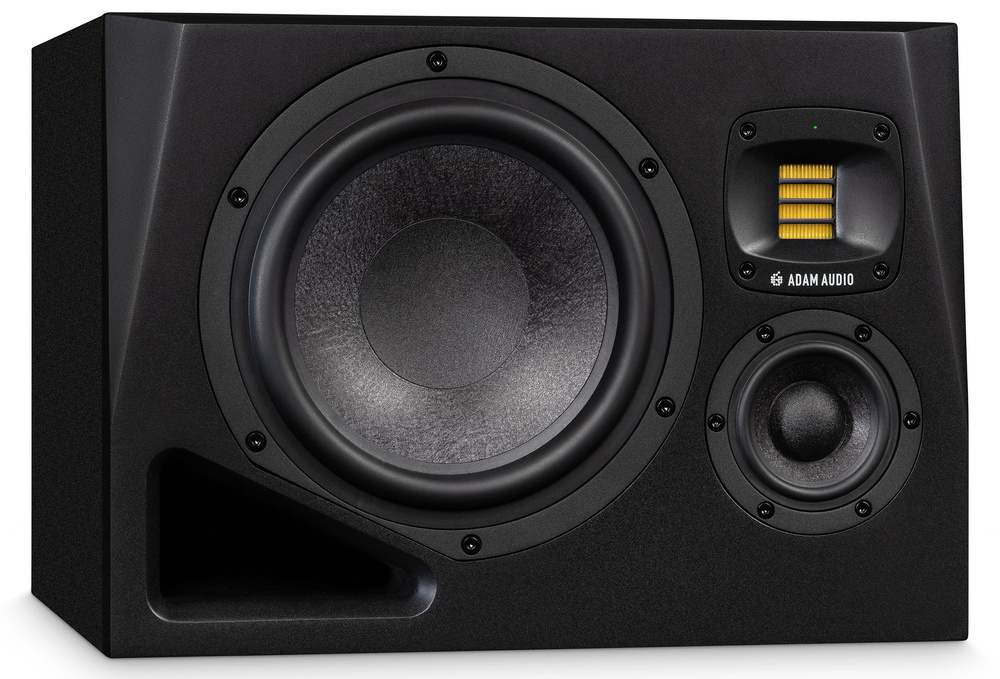 ADAM Audio A8H
ADAM Audio’s current A‑Series comprises five active models that feature the company’s X‑ART ribbon tweeter and Multi‑Layer‑Mineral (MLM) low‑frequency drivers. Helpfully, the tweeter is housed in a rotatable waveguide, allowing all five models to be used in horizontal and vertical orientations while maintaining the appropriate high‑frequency dispersion. The entry‑level model in the range is the A4V, a compact unit with a four‑inch woofer that can serve as a primary system in smaller rooms or take on surround and height duties in surround and immersive rigs. The A7V steps things up with a seven‑inch woofer that extends the low‑frequency response down to 40Hz compared to the A4V’s 52Hz (at the ‑6dB point), along with a higher maximum SPL (104 vs 100 dB). There’s also the A44H, which offers similar performance to the A7V, but sports a low‑profile horizontal design that makes it a great choice for a centre‑channel speaker — its width also means it’ll sit neatly on top of a standard 19‑inch rack. Next up are a pair of three‑way designs that feature a dedicated midrange driver in the form of ADAM’s Dome Cone Hybrid (DCH) unit. The first, the A77H, features a pair of 7‑inch woofers that are capable of playing down to 34Hz, while the flagship A8H opts for a single eight‑inch woofer that extends the response to 31Hz.
Room‑correction duties for the ADAM A‑Series are taken care of by industry experts Sonarworks: thanks to an official partnership between the two brands, SoundID Reference profiles can be loaded onto, and run directly from, the monitors’ built‑in DSP. Getting set up requires a suitable measurement mic and a licence for SoundID Reference, and Sonarworks have published written and video tutorials that talk users through the process of calibrating their system. Once the configuration is complete, a calibration profile can be exported and saved to the A‑Series’ DSP, allowing all of the necessary processing to be carried out by the monitors themselves and negating the need to run a correction plug‑in or application on the host computer. All A‑Series customers are provided with a 60‑day trial for Sonarworks SoundID Reference, and can also take advantage of a 25 percent discount on all SoundID Reference products on the Sonarworks web store — the discount can be obtained by by registering one or more A‑Series monitors in the MyADAM user area. It’s worth noting that the A-Series line-up was refreshed in 2022, and that it’s only the current models that benefit from onboard Sonarworks integration.
From £399 each including VAT.
From $599.99 each.
www.soundonsound.com/reviews/adam-audio-a8h
www.adam-audio.com/en/a-series/
Fluid Audio Image 2
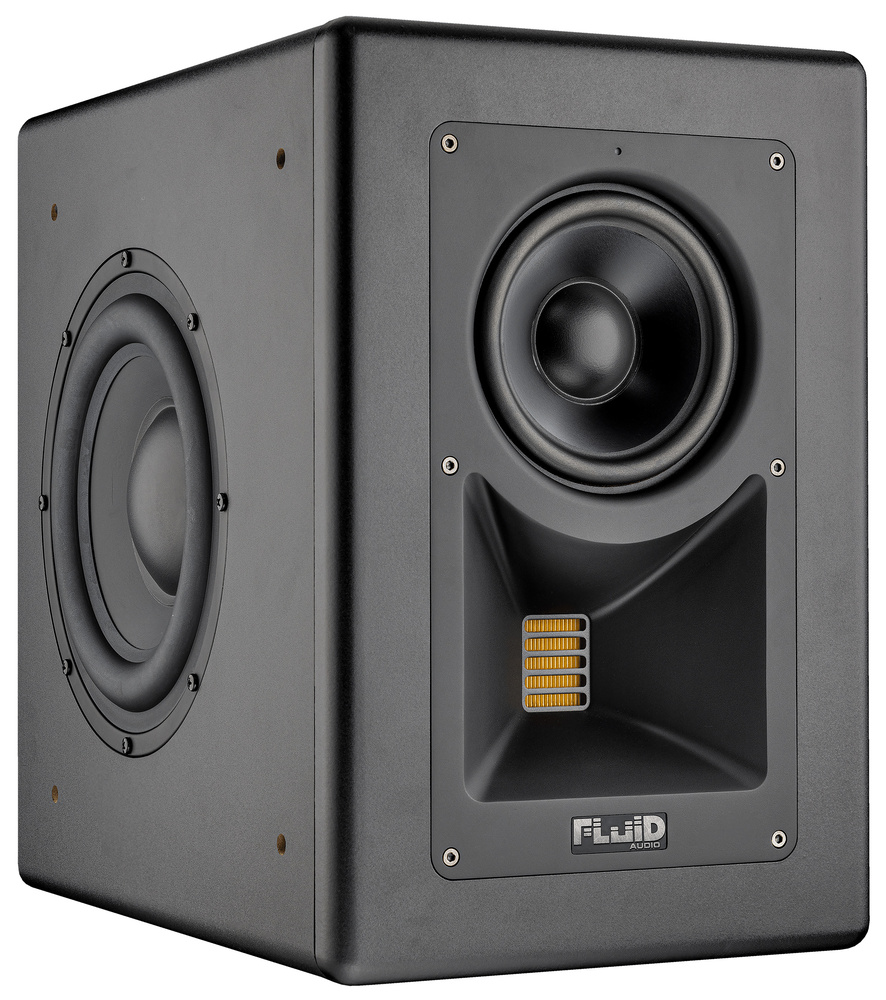 Fluid Audio Image 2
Fluid Audio’s Image 2 is the larger of the company’s two monitors, and features a sealed three‑way design that promises to deliver accurate stereo imaging, an extremely flat frequency response, impressive bass extension and low distortion. Low‑frequency reproduction duties fall to the company’s Vi‑bracer system, which employs a pair of opposing side‑mounted woofers designed to cancel internal reactions before they reach the cabinet. The technique is said to improve dynamics and reduce room interaction, as well as maintaining clean low‑frequency performance that extends down to 38Hz (‑3dB). The front face is occupied by a dedicated five‑inch aluminium‑cone midrange driver, and an Air Motion Transformer (AMT) tweeter that has been optimised to deliver a precise, detailed high‑frequency response while exhibiting minimal distortion. Analogue (line‑level via XLR and TRS) and digital (AES3 and S/PDIF) connectivity options are present, and the Image 2 is equipped with a footswitchable Cubemix function that curtails the monitors’ frequency response in an effort to emulate ‘grotbox’ speakers for mix‑checking purposes.
Fluid Audio are another of the handful of companies to have an official partnership with Sonarworks, and offer the ability to transfer SoundID Reference calibration files onto their built‑in DSP. Those wishing to try out the room‑correction functionality can take advantage of a 60‑day trial for SoundID Reference.
£1992 each including VAT.
$1899 each.
www.soundonsound.com/reviews/fluid-audio-image-2
Genelec SAM
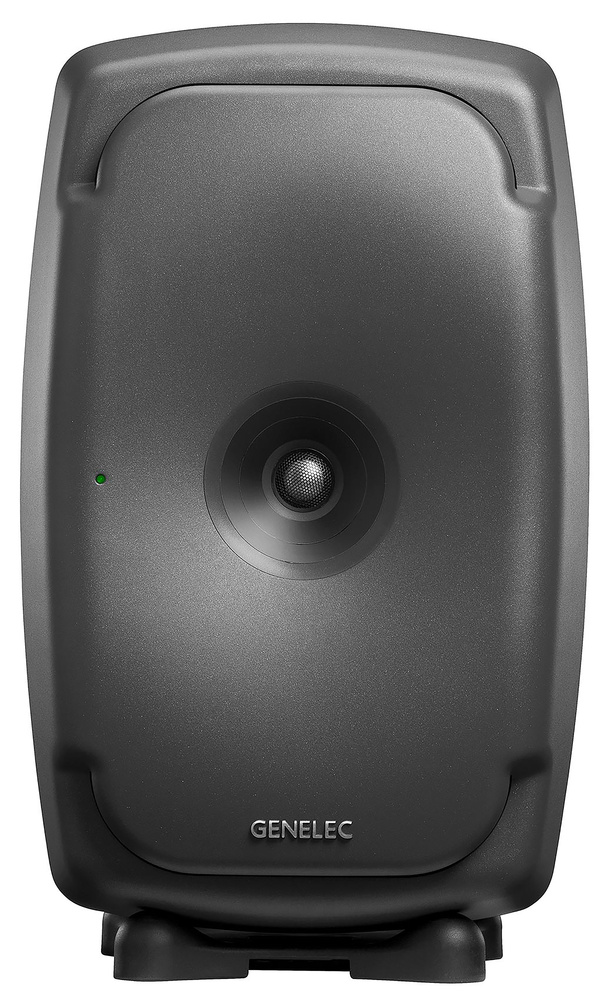 Genelec 8361A
There’s no shortage of contenders in Genelec’s extensive Smart Active Monitor (SAM) family — if you include subwoofers, there are 26 models to choose from! To simplify things a little, the range is divided into three categories. First up is The Ones, a set of point‑source three‑way monitors that employ the company’s innovative Minimum Diffraction Coaxial (MDC) drivers. The smallest in the range is the 8331A, which is comparable in size to most compact two‑way designs, yet still manages to reach 45Hz (‑6dB) and produce 104dB SPL, while the flagship (the 8361A) delivers 118dB and extends down to 30Hz. Those in search of more low end for The Ones can add a W371A sub, which will happily play down to 23Hz.
Next, there’s the Smart Active 2‑Way range, which sport a more traditional Genelec style and design. The 8320A serves as an entry point into the SAM ecosystem, offering a compact design that’ll output 100dB SPL and play down to 55Hz, while the larger 8350A extends performance to 112dB and 33Hz; the middle ground is occupied by the 8330A and 8340A, and the range also includes the 1032C, which adopts the straight‑edge cabinet design of the 1000 series and so is suitable for soffit mounting. Additional low end for the 2‑Way line‑up is taken care of by the Smart Active Sub range, which comprises five models of increasing size, the largest of which plays down to 15Hz!
The most powerful models on offer can be found in the Main Monitor range, which includes a number of sizeable designs aimed at high‑end mixing, mastering and post‑production rooms — both soffit‑mounted and freestanding options are available, including the impressive 8381A that we previewed in SOS July 2024.
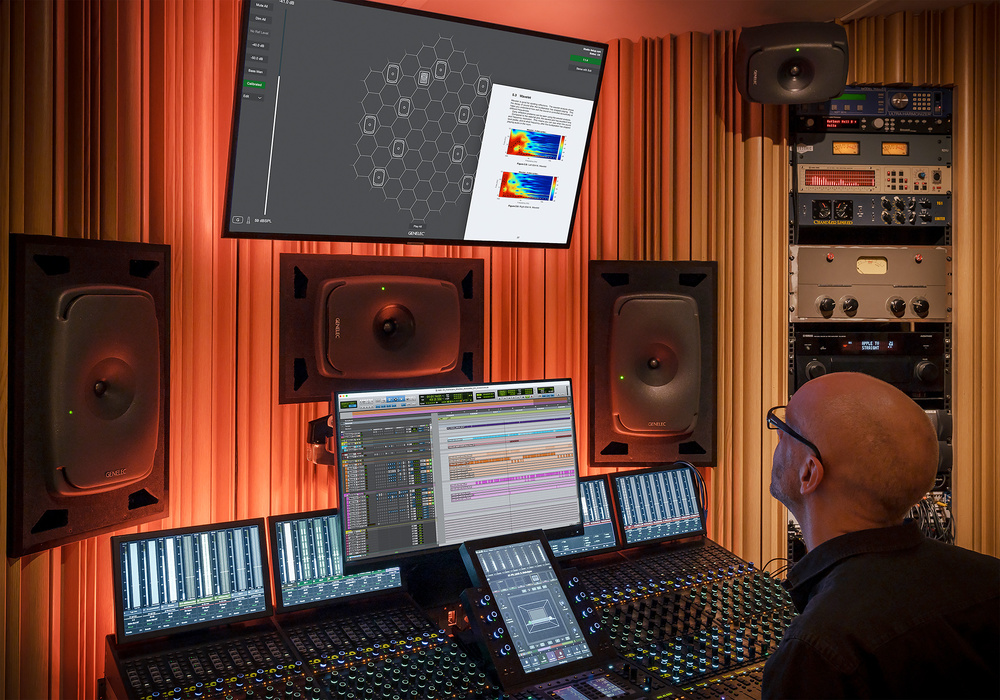 Genelec GLM
Room calibration is carried out by Genelec’s own GLM software suite, and all of the models in the SAM series have the onboard DSP that’s required to host the resulting calibration files. The simplest, and most cost‑effective way to carry out the task is with the GLM Calibration Kit, a hardware bundle that includes a GLM Network Adaptor, a measurement mic and the necessary cabling; Genelec provide resources that guide users through the process of measuring and calibrating their system in their room. Those with more advanced requirements are catered for by the 9320A SAM Reference Controller, which includes the same measurement mic and functionality as the GLM Calibration Kit, but combines it with comprehensive monitoring control, the ability to manage high‑channel‑count immersive systems, and Genelec’s powerful headphone monitoring tools.
From £599. GLM Calibration Kit £268. Prices include VAT.
From $795 each, GLM Calibration Kit $425.
www.soundonsound.com/reviews/genelec-ones
www.soundonsound.com/reviews/genelec-8340a-8350a-sam
www.soundonsound.com/reviews/genelec-8381a
www.soundonsound.com/reviews/genelec-glm-42
IK Multimedia
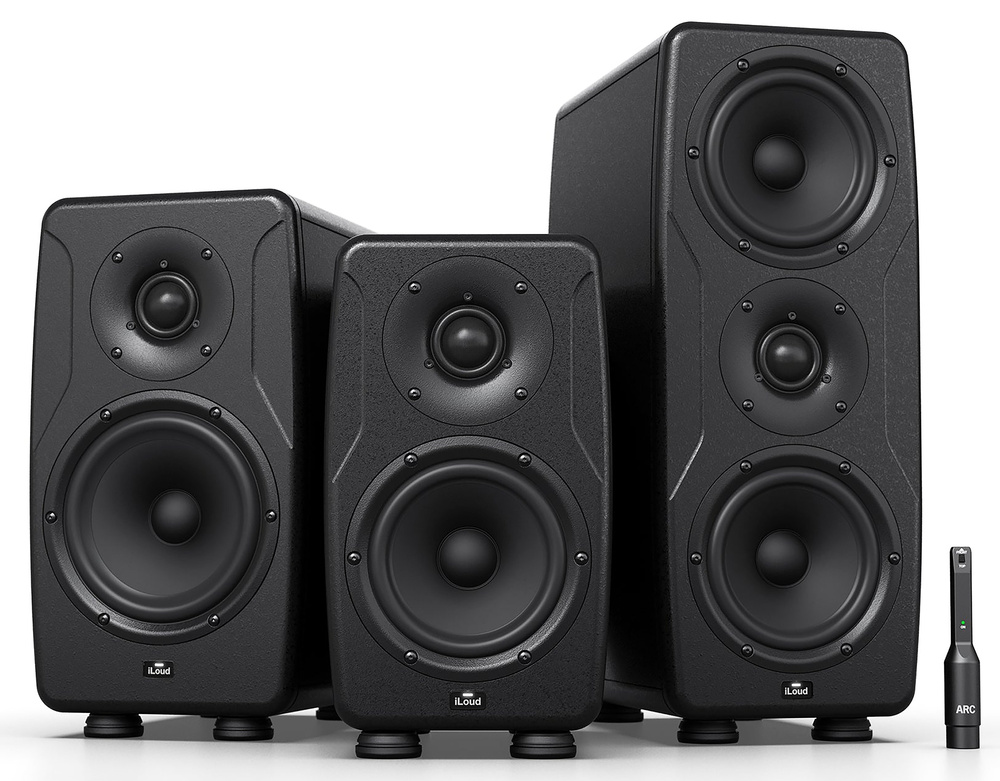 IK Multimedia iLoud Precision Series
First up from IK Multimedia is the iLoud Micro Monitor Pro, the latest and most advanced version of the company’s popular compact monitoring system. Despite its minimal footprint, the system boasts some impressive specifications, with low‑end reproduction extending to 50Hz (‑2dB) and a maximum SPL of 109dB; as well as being a compelling choice for portable setups and working in small rooms, IK say that the iLoud Micro Monitor Pro can also serve as a high‑quality secondary reference in larger setups.
The next step up comes in the form of the iLoud MTM MkII, which occupies a larger cabinet and employs a pair of 3.5‑inch woofers and a one‑inch tweeter, extending the low‑end response and maximum SPL to 48Hz (‑2dB) and 112.5dB respectively. The largest and most powerful models can be found in the iLoud Precision line‑up. The Precision 5 MkII and Precision 6 feature a typical two‑way design that employs 5‑ and 6.5‑inch woofers along with a 1.5‑inch tweeter, while the Precision MTM MkII opts for a dual‑5‑inch driver layout that delivers a slightly higher SPL. Both the Precision 6 and Precision MTM MkII boast a frequency response that’s within ±1dB between 45Hz and 30kHz, while the Precision 5 rolls off slightly higher at 46Hz. There’s also the iLoud Sub, an ultra‑compact subwoofer which can be used to extend an iLoud system’s low‑end response to 25Hz (‑6dB).
All of the above offerings feature built‑in room‑tuning powered by IK Multimedia’s ARC X system. Bundles are available for stereo and immersive systems alike, and come supplied with the company’s ARC Mic, providing users with everything they need to get their system calibrated for their own space. The setup is carried out using the ARC X software, which as well as tailoring the monitors’ frequency response and tackling time‑alignment and output levels, is also capable of simulating over 20 different speaker systems that range from high‑end monitors to consumer playback devices.
From €599.99 per pair.
From $599.99 per pair.
www.soundonsound.com/reviews/ik-multimedia-iloud-precision-mtm
Neumann KH Series
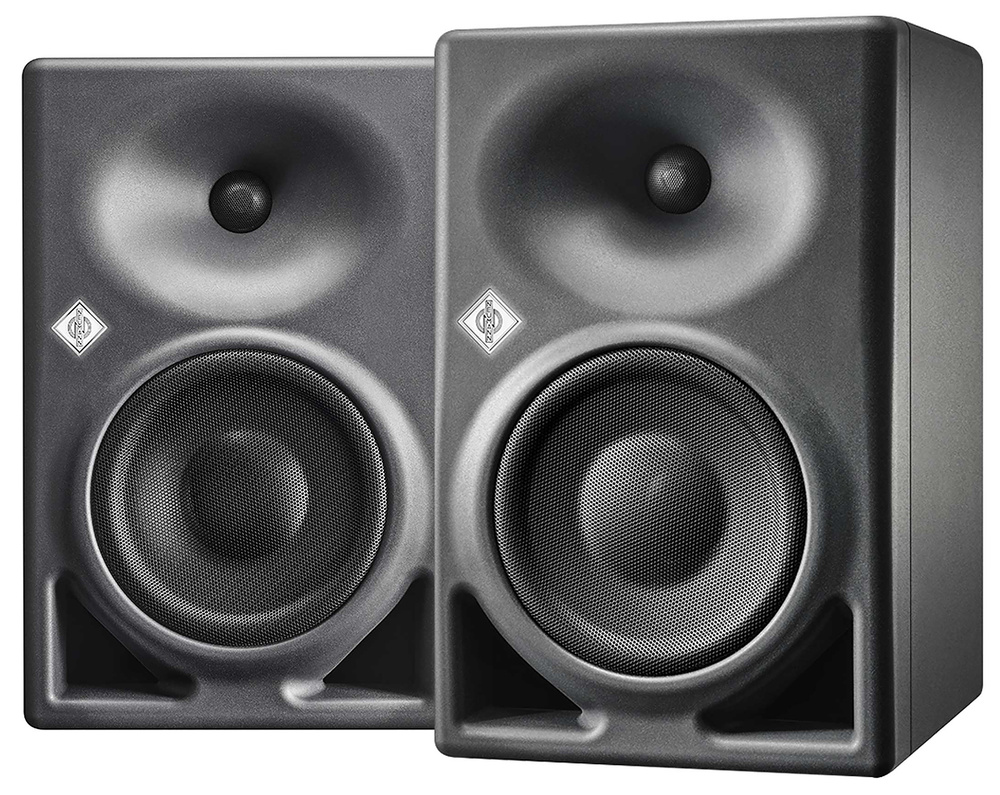 Neumann KH 120 II
Neumann’s ever‑popular KH line‑up has been expanded recently, and now includes a selection of analogue and digital monitors. The entry point to the range is the KH 80 DSP, a compact two‑way unit that’s renowned for punching well above its weight; frequency response is within ±6dB between 53Hz and 21kHz, and it’ll produce a maximum SPL of 108.8dB. Stepping up to the KH 120 II extends low‑end performance to 44Hz, while the larger KH 150 II gets you down to 39Hz — both are equipped with onboard DSP. The KH 310 and KH 410 both feature a three‑way design with fabric‑dome midrange drivers, with the former’s sealed design extending down to 34Hz and the latter’s ported cabinet capable of reaching an impressive 26Hz. The company also offer a selection of DSP‑equipped subwoofers: the KH750, a compact unit designed to pair with the KH 80, KH 120, KH 150 and KH 310; the KH 805 II and KH 810 II, mid‑sized units that offer some additional headroom and and extended low‑end response; and the KH 870 II, a much larger beast that offers enough outputs to integrate with a 7.1.4 Dolby Atmos system.
Room‑calibration duties for Neumann’s KH Series are taken care of by the company’s own system, which comprises an MA 1 measurement microphone and an accompanying software application. Interestingly, users of the all‑analogue offerings (the KH 310 and KH 420, for example) can still benefit from the calibration by adding one of the DSP‑equipped subwoofers, as the correction processing that takes place is passed on to the analogue outputs.
From £444 each, MA 1 £230. Prices include VAT.
From $599 each, MA 1 $299.
www.soundonsound.com/reviews/neumann-kh80-dsp
www.soundonsound.com/reviews/neumann-kh120-ii
www.soundonsound.com/reviews/neumann-kh150
Wayne Jones Audio
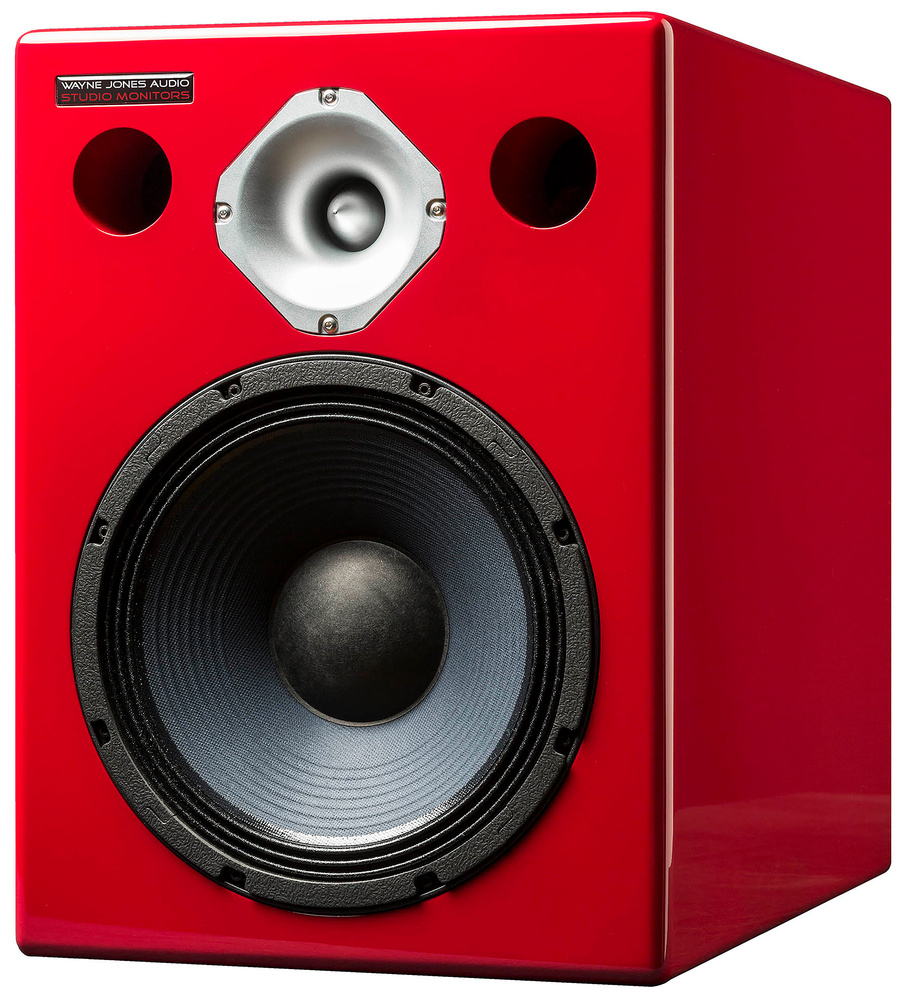 Wayne Jones Audio Reds
Australia‑based Wayne Jones Audio have three choices that feature built‑in room‑correction. The first, the Baby Reds, feature a two‑way design with a 6.5‑inch woofer and a 1.46‑inch aluminium tweeter, while the larger two‑way Reds employ a 10‑inch woofer. Both the 6.5‑inch and 10‑inch two‑way models are available in two versions: a ‘standard’ model that uses 18mm MDF for the entire cabinet, and a version that features a carbon‑fibre construction with 18mm MDF front and rear panels.
The Big Reds, as their name suggests, are the largest model in the range, and sport a three‑way design that combines a pair of 10‑inch woofers with a dedicated 6.5‑inch midrange unit and the same aluminium tweeter. Wayne Jones Audio were the first company to partner with Sonarworks and offer built‑in integration, and all of the models in their current range will host SoundID Reference calibration files ‑ it’s possible for users to transfer files to the monitors via USB or Ethernet, and have them run by the onboard SHARC DSP.
From £4756.40 per pair plus shipping and VAT.
From $6544.86 per pair plus shipping and taxes.
www.soundonsound.com/reviews/wayne-jones-audio-jones-scanlon-monitors