

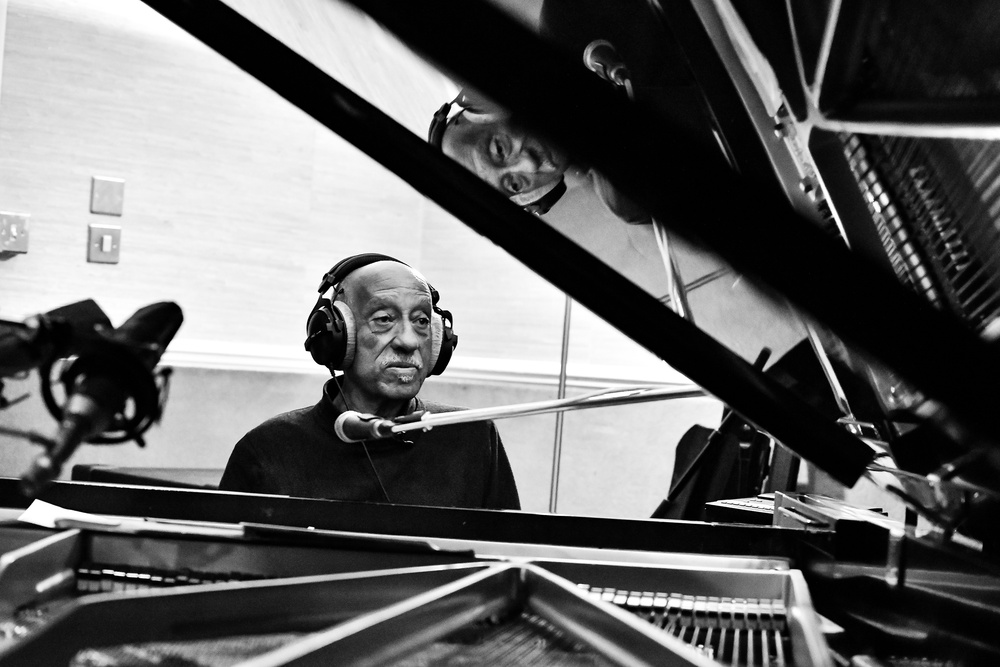
 Mulatu Astatke, now 81, is considered the father of Ethio‑jazz.Photo: Alexis Maryon
Recording a band live in the room is always a challenge — especially when it’s led by a jazz legend who switches instruments without warning!
“In engineering culture, there’s this idea that everything is always being recorded with the perfect microphone in the perfect position,” says Isabel Gracefield. “But my experience of really big, high‑pressured sessions is that often it’s that first, instinctive decision. You check it’s OK and it’s working, and then you move on.
“A lot of times you’re doing these quite prestigious projects and it’s just: that mic was spare, it was sat on top of the piano, so I grabbed it and put it on the stand. And I’ll often say to the assistants, ‘Can you just put it somewhere you think is sensible?’ and I’ll listen to it — and if it’s OK, great, because there’s eight other things that we’re dealing with. And so, it’s not always micro‑finessed. It’s just if you don’t like it, it changes.”
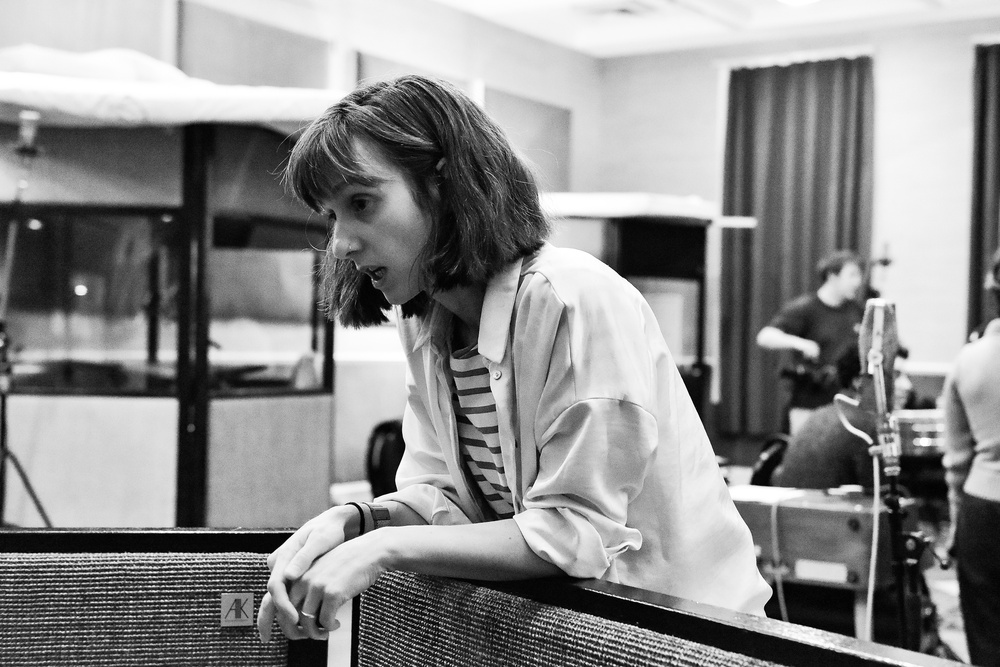 The sessions for Mulatu Plays Mulatu took place at RAK Studios in London, under Head Engineer Isabel Gracefield.Photo: Alexis Maryon
The sessions for Mulatu Plays Mulatu were at the top of the scale both for pressure and prestige. Over six days at London’s RAK Studios, with Isabel and her team engineering, Mulatu Astatke took his band through new interpretations of 11 compositions drawn from his own back catalogue. Producer Dexter Story then flew to Addis Ababa to track overdubs by musicians there, before Gracefield mixed what may prove the valedictory album by the 81‑year‑old father of Ethio‑jazz.
Slow Cooking
The complex live sessions tested the resources of both RAK and its Head Engineer Gracefield. Meticulous planning was vital, but so too were pragmatism and adaptability. Above all, it highlighted the importance of the technical team’s ability to serve the artist and the music.
“We started talking with the label at least three months beforehand,” recalls Gracefield. “We had multiple Zooms with the label and the producer and James Arben, who plays sax on the record and is also the MD. They were really clear that they needed to keep to the stage plot as close as possible in the studio, because when Mulatu turns to this side, he expects to see this person. Obviously their live plot is amazing for playing live, but instinctively I looked at it and just went ‘That’s not a recording plot!’ All the drums and percussion were on one side.
“So there was a lot of negotiation about whether we could put the drums and the percussion on opposite sides, because I wanted to have a coherent stereo picture. All those choices had to go through the label, the producer and the MD, to make sure Mulatu was going to be comfortable when he walked into the room. It took a while to negotiate how everyone was going to be in the space.”
All Together Now
The Studio 1 live room at RAK is a large space that can optionally be divided into two, isolated areas. Gracefield’s original plan had been to set up the louder instruments such as drums and brass in one of these, with Ethiopian instruments and other delicate sources in the other. However, rehearsals for the sessions forced a major change of plan, when Mulatu Astatke decided that RAK sessions would not include the Ethiopian instruments after all. It also became clear that dividing the space wouldn’t work from the point of view of Astatke communicating with his band.
This left Isabel and her team with some serious engineering challenges, because alongside drums, congas, trumpet and saxophone, the band also included much softer instruments such as cello, upright bass and Astatke’s vibraphone. With lines of sight being vital, hiding these away in booths was not an option, so microphone choices became as much about managing spill as they were about getting the perfect sound for each individual source.
Screens and gobos were used to reduce spill as much as possible, and Gracefield employed a lot of dynamic mics, often positioned very close to the instruments they were capturing. Happily, the results were often in line with what the musicians had hoped to hear. “We originally had a Neumann FET U47 on the cello, and we were just getting two percent cello and 90 percent percussion. I grabbed a Sennheiser MD441, and interestingly, the cellist was like, ‘That’s much closer to the sound that I want to hear on myself anyway.’ It was much more pokey and nasal. There were a couple of tracks where there was no percussion, and I asked if he would like us to swap, and he was like ‘Nope, this is the sound.’ So that was a really interesting lesson for me, because I would never have considered a 441 on cello.
“Then James came in and he just went, ‘It’s an SM58 on the flute. That’s the only microphone you need.’ He put it right at the mouthpiece, and it sounds amazing. It is quite a classic sound, and I hadn’t come across that before. I’m always doing posh things with 87s and Schoeps, but I’ve used it quite a lot since. The trumpet was a Coles 4038, and the bell was almost touching the mic.
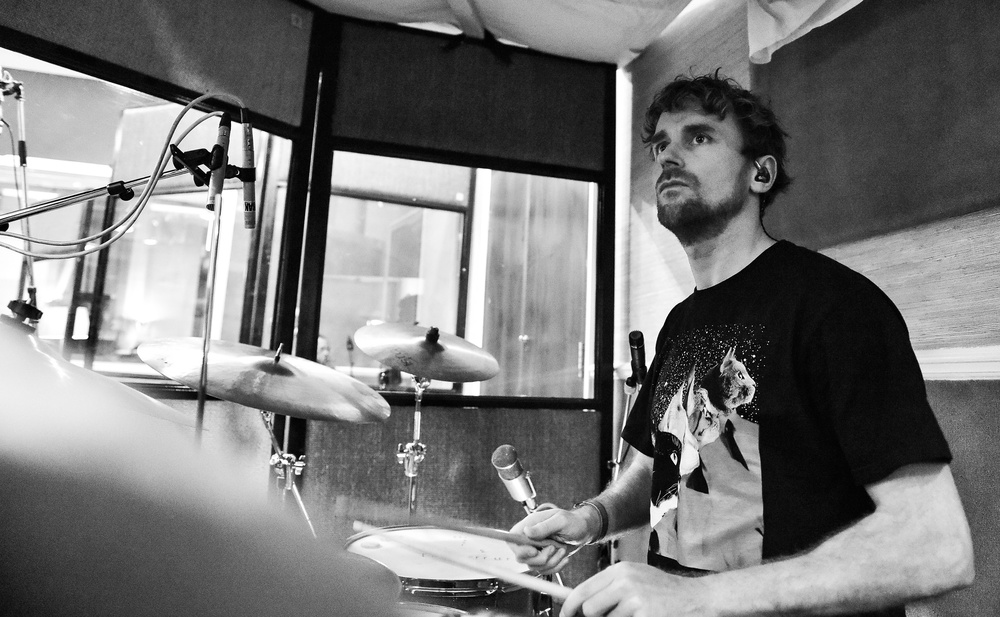 Jon Scott’s drum kit was tracked using an ORTF pair of Schoeps pencil mics with MK4 cardioid capsules, plus close mics.Photo: Alexis Maryon
“We did stick with Schoeps as the overheads on drums, on a stereo bar very close above the kit. They are just so soft in the top end, and I think especially in an ORTF setup, you get this very natural stereo picture with a ton of detail but you don’t get harshness off the cymbals. The internal balance of the drummer’s got to be immaculate and it helps if they’re a quiet player, but I use them a lot.
Isabel Gracefield: The studio environment is really different, and it requires everyone to recalibrate who they’re listening to and why.
“The first couple of days that the band were in, they were still very much in live mode, and I had no separation on the drums. So the drums were just in everything, and we were getting this big boomy room sound. The studio environment is really different, and it requires everyone to recalibrate who they’re listening to and why. And so there was a real dialogue between Dexter and the players to try and get a softer sound.”
Good Vibes
As well as leading the band, Mulatu Astatke himself switches between a variety of instruments, often spontaneously, and the setup had to be flexible enough to accommodate this. “We had a set list, but we never knew exactly what instrument he might play. So we had a Wurlitzer piano, we had the timbales, or there’s quite a lot of places on the record where all he’s doing is he’s playing wood block and he’s setting the time, but he’s not really playing anything else. Or he might play vibes. Sometimes it would be piano. He would just get up and move, and we would just have to chase after him and make sure we were recording it!”
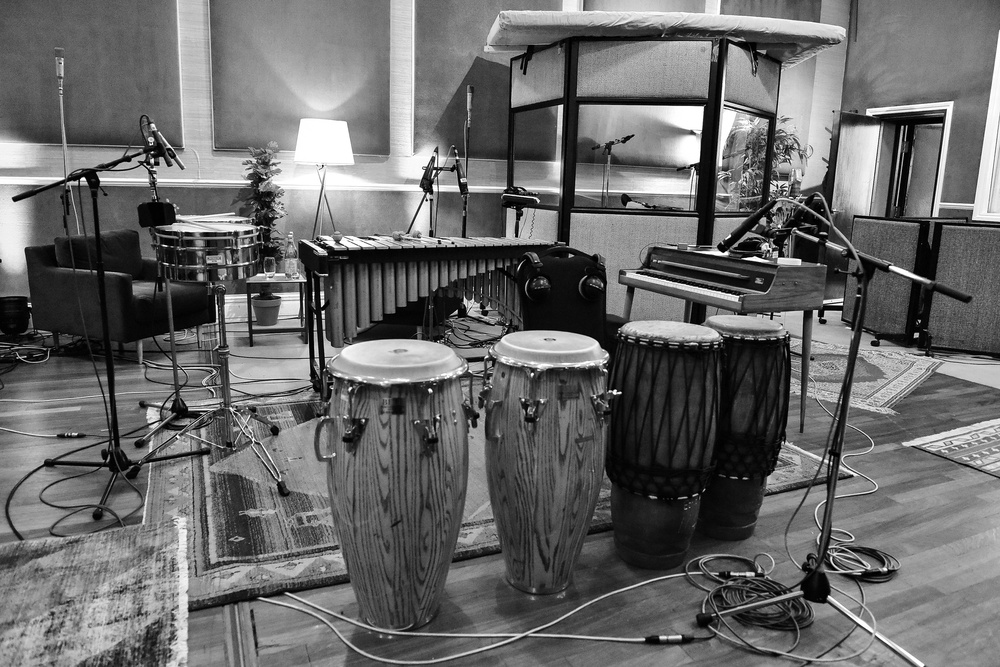 The live room at RAK Studio 1 was configured to allow Mulatu Astatke to move freely between instruments.Photo: Alexis Maryon
Probably the most important, and the most challenging of Astatke’s instruments to mic was the vibraphone. “Vibes is an instrument where I don’t think there’s a definitive sound,” explains Gracefield. “People aren’t going to know if you’ve put something slightly weird on the vibes. So I think it’s an instrument where you can grab whatever’s handy, have a listen, and if it’s not good, change it. Where spill’s not been a concern, I’ve done C414s on vibes before and they’re lovely. Sony C48s are really lovely.
“On this record, it was like, ‘I’ve got to be able to put them on a stereo bar. They’ve got to be directional enough to control spill, and they’ve got to have some definition.’ It could have been SM57s, but I think they’re a bit too aggressive. The 421s are a bit fatter and it could have been Schoeps, but they’re not directional enough. So we just narrowed into that.”
Sennheiser MD421s were also used on congas and timbales, whilst the studio’s grand piano was miked both conventionally with Neumann U87s and less conventionally with a pair of Tandy PZMs (see box).
Maxed Out
Mulatu Plays Mulatu was recorded to Pro Tools through the vintage API console in RAK Studio 1. This is not an inline console, and is usually used in a split configuration, with 24 of its channels handling mic inputs and the other 24 tape returns. However, this wasn’t an option for the Astatke sessions, which required up to 70 inputs to Pro Tools. “Normally, channels 25 to 48 are your mic pres and sends to tape, and then you do the returns on the left side,” explains Gracefield. “But in this case I just reserved two channels for my output, and then 46 channels going to Pro Tools on the preamps. It’s a very simple desk. It’s just mic pres and EQ. Every channel’s got either a 560 or 550, which is incredible. And in general, I drive the preamps quite hot, because they just sound really good hot.”
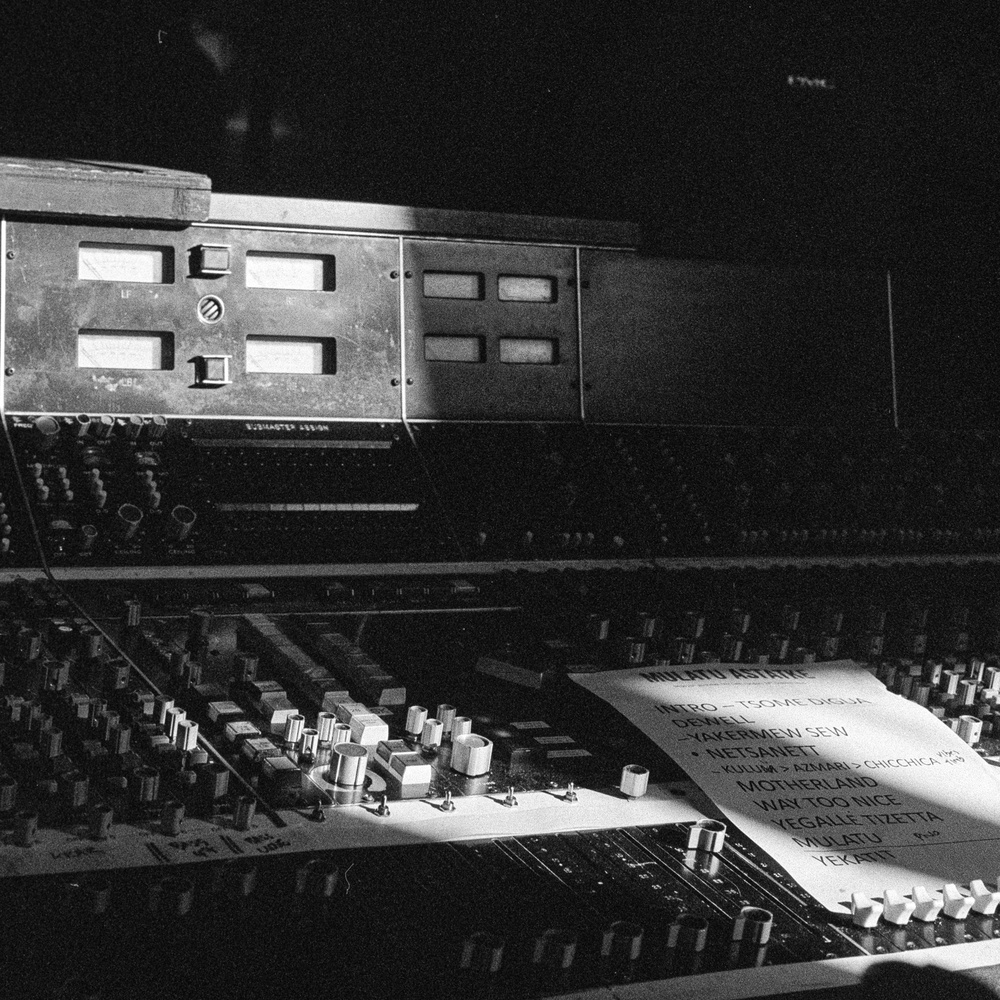 RAK’s vintage API console was the main source of mic preamps and EQ for tracking.Photo: Matty Deveson
Additional signals were tracked through standalone preamps, including the studio’s unique ‘traffic light’ units that were built by a former tech to match those of the API console. The complexity of the session necessitated running cue sends for the musicians from Pro Tools rather than the mixer.
“I think the biggest aspect of this session, in a lot of ways, was headphones,” says Gracefield. “We’ve got 16‑channel Aviom [personal headphone mixers] and we were using all 16 channels. We had one stereo channel, which was Mulatu on vibraphone, because he’d been really clear that he wanted that stereo picture, and then everyone else was in mono. While we were setting up, we would keep going out onto the floor and putting their headphones on and adjusting their mixes. I had an assistant, Sam, in the control room with me, and then we had another assistant, Adele, who had a set of headphones that were a copy of Mulatu’s mix, and she was in there 24/7 with him, constantly adjusting the mix. And one of the key things was that his stereo field matched what was in the room behind him, so he could always just turn his head and know what was going on. And that was a really tough job, because his level on his headphones was just the loudest thing you’ve ever heard. But it actually became this really beautiful relationship between them. He’d start playing one instrument and then with no warning move to another instrument, and so she could just move a microphone in.
“There’s a piece we recorded called the Tizita. There was one lunchtime where he just went in and he started playing the piano, and it was like, ‘Are we in record?’, and we just caught it. And as far as I understand, there’s no piano recording of him playing like that, and this Tizita is an incredibly important cultural piece that we just managed to catch. And then everyone’s sort of creeping in the background of the live room to do their bits with him, a little bit of saxophone and cello. I think he played for half an hour. Just absolute magic. It’s quite a big thing to get him comfortable enough to play in that way and feel relaxed enough to do it, and a lot of that was to do with Adele’s work on the headphones.”
In The Cans
“For this project, I mixed in the box,” says Isabel. “I did the initial month of mixing on my own, 80 percent on headphones. I’ve got Genelecs at home so I was checking with those, and then we had three or four days attended in RAK Studio 4. Since lockdown, I’ve been mixing on headphones so much that as long as I know that I’m going to go into a space where I can hear everything on really good speakers, I’m happy to defer some decisions until that point. I also use a little Bose Mini SoundLink because if you’ve got too much low end or midrange, it really shuts down and sounds crappy. In headphones you can have way too much midrange detail, so I use the SoundLink to counteract the headphones and then just check it on my Genelecs to make sure nothing crazy is happening.”
The main decisions that were deferred until the attended sessions in RAK Studio 4 related to the low end. “Studio 4 in RAK has Genelecs with two subs, so I really get to see what’s going on. A lot of the low end got carved away in that environment. On this project, the mixes are 90 percent EQs, very little compression. if it needs something, I’ll ride it manually. I wanted the record to feel soft, so there’s a lot of pulling out midrange resonances on things to just soften all the time, and I think my master bus was an SSL compressor just barely moving, and one limiter, and then again a bit more corrective EQ.”
“I had to do a lot of really careful riding of the piano mics, because there were a lot of places where the piano is quiet. Where there’d be a specific movement or note I’d just let the piano come up, and then it would have to pull straight back down, because otherwise you get this big roomy drum sound and then you lose all the detail on the close mics. Cello and percussion were also a tricky combination. In the mixes the cello mic is only open when it absolutely has to be, so that I think if you concentrate you can hear during cello solos that suddenly the percussion sounds roomier, but hopefully you’re so drawn to the cello that you’re not thinking about it!”
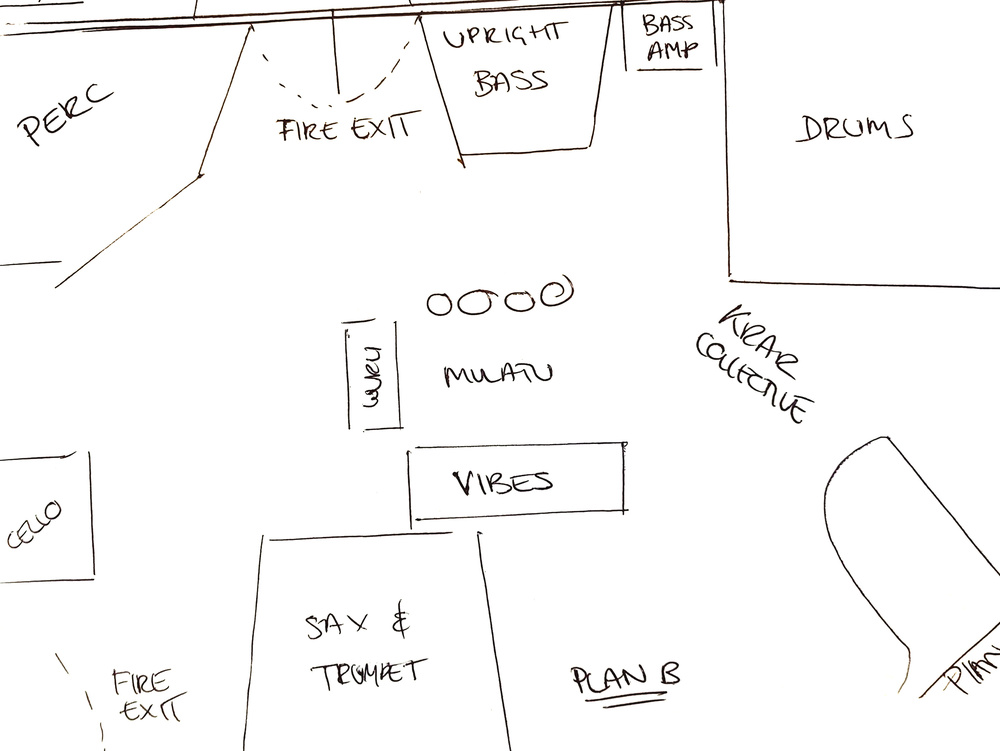 Isabel Gracefield’s hand‑drawn sketch showing the planned layout of RAK Studio 1 for the sessions.
The other major challenge at the mix was integrating the overdubs recorded by Dexter Story in Ethiopia. “There was an instrument called the begena, which is very buzzy and aggressive‑sounding, but it’s got a huge cultural importance. Mulatu really wanted it to run all the way through the track, but we were all finding ‘We’re not sure this is listenable!’ And that was a really complex thing to handle, because it’s so important to the label to honour his culture and his history, but also the audience that they’re selling to is primarily listening with Western ears and is maybe not capable of listening to eight minutes of begena 8dB louder than everything else. And so we really had to think about how to mix the cultural instruments for our ears while still keeping Mulatu’s vision intact. So that was a really complex, sensitive area of the record, and I think they’ve managed to find that line in the final masters where you do feel the cultural instruments, but you’re not overwhelmed by that aspect of it.”
Make It Personal
Mulatu Plays Mulatu isn’t only a great‑sounding album. It’s a project that illustrates how the role of the engineer extends beyond purely technical realms, into enabling the artist to deliver performances that are worth capturing in the first place. “This is a group of people who’ve been playing together for a long time, so there’s a really deep interpersonal history,” reflects Isabel Gracefield. “You’ve got to get inside all of that and make sure that everyone feels really looked after and respected in that space, and that their wishes are being met. And I think in all my years of doing this, this was the session that was most about that interpersonal care: making sure we had extra assistants who were really carefully briefed and able to look after everyone, and sending people out on the floor to check on people, and managing talkback. You can’t allow there to be one person in the band who doesn’t feel like their instrument has been given the time and respect that it needs.”
PZMs & Piano
Recording grand piano in a band context can be challenging, because most techniques that work well in other scenarios capture too much spill from other sources, and rely on having the piano lid open. Isabel Gracefield has devised an ingenious trick using inexpensive Tandy / Radioshack PZMs, or pressure zone microphones.
“I tape them to the inside of the piano, on the curve of the wood. Basically, one goes down at the bottom to catch more of the low end, and then the other one goes nearer the hammers, and that’s the brighter of the two mics. So that’s sort of roughly your left‑right, and then that enables you to close the lid. They can be pretty great. And I prefer PZMs that still have the battery pack attached. When you buy them, off eBay or whatever, they’ll have an AA battery and then people mod them to make them phantom‑powered. But if you use the battery, the amazing thing is you get this compression curve on them because the battery can’t draw enough power. So, you get a little, free, very natural compressor in your microphone!
“The PZMs are good from a separation point of view, but they are really bright, and sometimes that brightness wasn’t sitting with everything else. So then we had to switch to the [Neumann] U87s, and I think I had some Coles up at one point as well.”
On Talk
A universal challenge when running large sessions is for the engineer to notice and hear comments made by musicians between takes. It’s not hard to create a separate cue mix for listenback or ‘reverse talkback’, but routing that to the main studio monitors can cause problems, as Isabel Gracefield explains. “You often have that experience of turning it up to hear them talking, and then they’ll start playing, and suddenly you’ve got this really intense drum sound that isn’t the drum sound. And if you’ve got someone from the band in the control room, they’re like ‘Why does it sound like that?’ It can become quite a stressful thing to look after.”
Gracefield’s solution is simple and effective. “I set up one of those Fostex mains‑powered speakers [6301NB] that has a jack input next to my rig, so I could route any signal from Pro Tools to that Fostex speaker. And the idea was that talkback did not come out of the PMCs in the control room. It came out of this speaker, and I could just switch it on and off with a manual switch when I wanted to hear people. I needed a way to be able to hear the band at any time, but in a distinctly different world than on the main speakers. This separate speaker just solves it, because everyone understands that’s a different signal path. You just set up a Pro Tools send that’s labelled talkback, and then at any moment I can use that person’s mic to hear them talking to me.”
Adventures In Addis
“In rehearsal, we had an Ethiopian band and his European band, and the original intention was to record it all at once,” says producer Dexter Story. “Ethiopian musicians have a different relationship to rhythm and pulse and energy, and those two approaches confronted each other at that rehearsal. We only had one day of rehearsal, and it was not going to happen in one day. Even Mulatu said ‘We need to use musicians from Ethiopia.’ So, we’re looking at each other like: somebody’s going to Ethiopia to record...”
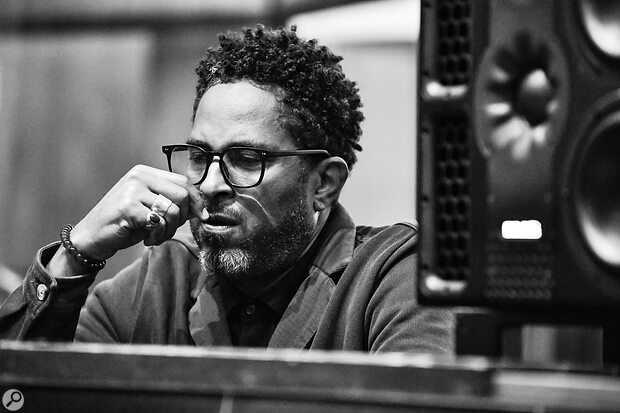
A plan was quickly hatched for Story to fly to Addis Ababa after the RAK sessions and record local players at Mulatu Astatke’s own club. “Mulatu is very sensitive about who’s in the room when he records. He has a jazz club, and I knew I had to come with the recording gear, because he did not want to go to a studio.”
Things started badly when Dexter’s entire recording rig was confiscated by customs officials, who demanded $15,000 for its release, and only relented when Astatke himself intervened.
“I brought a small interface, the [Universal Audio] Apollo x4, which allowed me four ins. It has two headphone outs as well, and two quarter‑inch jacks in the front if I need them, because a lot of those instruments they play from their pickups now. It allows me two monitor outs, so I was able to play through the house PA and also play through some small monitors. I brought a little two‑channel Rupert Neve Designs 5211 mic preamp. I took my Neumann U87, my Audio‑Technica 3035, and some small stereo Sennheisers to get a stereo impression on drums. I took my Sennheiser MD421, that worked really well, and then I took a couple of [Shure] SM57s, of course.”
The next challenge was to fit the recording sessions into the club’s busy schedule. “I took a fixed amount of cash with me, and I don’t have access to keeping a musician all week long. I have one musician a day, one musician per afternoon or per morning to capture all that. So, I had to grid out where these musicians are going to be on songs and make sure I can capture them for what Mulatu envisions them doing, and I had to be clear with him: ‘Hey, are these the only pieces you want him on?’”
Recording the instruments themselves also required some lateral thinking, especially as the jazz club was anything but a quiet and peaceful environment. “The instruments that we recorded are the traditional instruments of Ethiopia: the massenqo, which is the bowed lute; the krar, which is the five‑ or six‑string lyre; and the washint. The washint is the end‑blown flute; they blow it with the side of their mouth. It’s one tonality, but pentatonic, so the musician has to bring 24 of them! The begena is the 10‑string upright plucked lyre. It’s only used in the church. Then there’s the two‑sided drum called the kebero, both the religious one, which is huge, as well as the kebero drum set, which is more of a one‑sided set with about four drums, sometimes five, which are made with hardware that sits them above the ground about two feet, and they put mics right inside of the tub, right up against the head, to get the sound. The larger one is used as more of a kick drum, but it’s played with the hand, and then the smaller ones are kind of used like toms and snares, like high‑pitched darbuka kind of sounds, so they got a spectrum of tonalities and pitches. That’s played like a drum set but with no kick. And we recorded traditional handclaps. Ethiopians have a particular, intentional way of clapping on their own music.
“The massenqo and the krar have now been electrified, thanks to someone that I study named Ateweberhan Segid, an Eritrean man, and Tewolde Redda. These two geniuses electrified the krar, so now that’s the modus operandi, as they say, and they like to go direct. I tried miking them as well, but what worked were actually the direct ins.
“I had to put four mics on that drum set. I had two mics spatial on top so I would catch the little snare, high pitch, and then two up underneath it then catching the lower tom tones. And then for the big drum, I had to put it by her hand. I wanted to catch the slap of the hand, but then also caught the room a little bit. With the washint, I put stereo mics above him, but I caught something with the Neumann U87 catching him right below where I saw the wind coming out, so tried to catch the flute in that way.
“Fortunately I knew the session enough to know how Isabel records. I watched her and her people and then tried to do the same. I knew I had a big job to do, and once I knew I had takes, then I was able to kind of package it up. I took it back home. I did some of the edits and stuff while I was there. But for the most part I didn’t put many effects on the instruments; I just kind of placed them within a Pro Tools session and shipped them to her, ’cause I still wanted her to have control of mixing her record.”