


Five years in the making, Netflix’s smash hit animated movie tested its music production team to the limit.
Released on 20th June this year [2025], KPop Demon Hunters has already become the second most‑watched movie on Netflix, with over 200 million views. Its soundtrack album has reached number one in more than a dozen countries, while the single ‘Golden’ has topped both the UK and US singles charts. At one point, seven of the soundtrack album’s songs could be found in the Billboard Top 100.
Ian Eisendrath was producer on all seven tracks, in addition to producing all of the vocals, jointly vocal arranging alongside EJAE, conducting the orchestral sessions, and supervising the music editing and mixing processes, which were handled by music mixer Curtis Douglas.
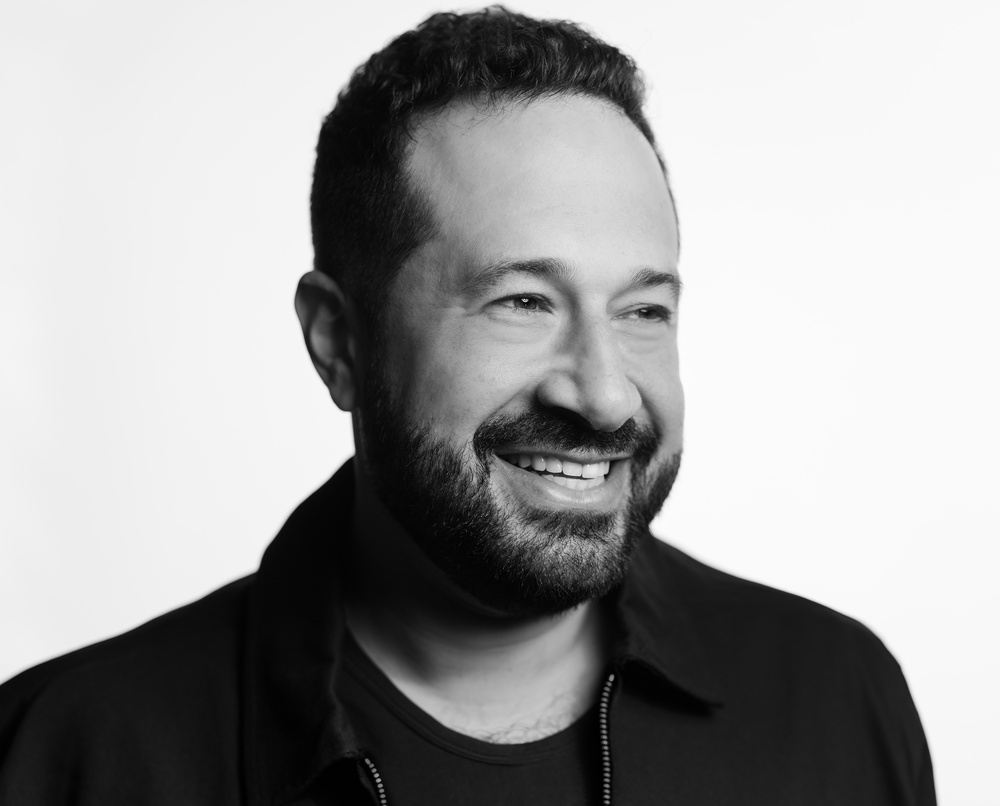 Producer Ian Eisendrath coordinated the fantastically complex production process behind the music for KPop Demon Hunters.A graduate from the University of Michigan who has always been strongly interested in “music that drives story”, Eisendrath has worked as executive music producer and music director/supervisor on many Broadway productions, as well as several movies and TV productions. In 2022, he was hired by Spring Aspers, President of Music at Sony Pictures, to be at the heart of the music‑making for the KPop movie.
“We had a really wonderful process where the directors, Maggie Kang and Chris Appelhans, Michelle Wong, and I, would spend many hours in meetings, delving into what each moment in the movie should sound like. What was the character arc? The tempo and tone of the music? What did the feeling need to be? How does the story progress from the first line of the lyric to the last? What are the references we want to share with the songwriters? Sometimes these references were the demos that EJAE and [Costa Rican composer] Daniel Rojas had made. More often, we worked with various groups that had stabs at creating these musical moments.”
Many different songs were written for each moment in the film, of which there often were dozens of different versions. Vocal sessions were extraordinary, with hundreds of backing vocals and over 1000 vocal takes for most songs. Eisendrath worked with recording engineer Derik Lee to carefully comp the vocals on each song, often “syllable by syllable”, and they handed up to 500 vocal tracks per song to mixer Curtis Douglas, who spent weeks working on them in similar levels of detail.
To The Max
EJAE started work on the project at the end of 2020, before the movie had been given the green light. Born Kim Eun‑jae in Seoul, EJAE is currently living in New York. A singer, songwriter and producer, she has written material for K‑pop acts like Aespa, Twice and others. She also ended up being the singer for the main character in the movie, Rumi.
 As well as co‑writing many of the songs, EJAE is also the singing voice of lead character Rumi.
“I got onto the project via a friend, Daniel Rojas. In the beginning it was just the two of us creating demos for the directors to use in early screenings, there wasn’t a script yet. Our job was to try to figure out the sound of the girls in the movie, to develop a blueprint for the kind of K‑pop songs in it, and for the traditional Korean aspects. None of our early demos ended up in the movie, apart from some melodies of ‘How It’s Done’.
“With regards to K‑pop, it differs from American pop in that there are many more things going on. Whether it’s chord or melodic changes throughout the songs, or tons of stacked vocals, K‑pop is very maximalist. K‑pop is usually girl groups with multiple members, and each member has to shine. There may be a rapping section, or a high note section, where a vocalist shows off her vocal skills. Because it’s a group thing, there are many background vocals. Harmonies are huge in K‑pop.”
“EJAE and Danny wrote many, many songs,” recalls Ian Eisendrath. “When I joined the project, these demos allowed me to understand what kind of songs the film‑makers were thinking of in specific moments. Spring [Aspers] then handpicked and hired an unbelievable stable of writers who were all experienced K‑pop hit‑makers. They included The Black Label producers like 24, Ido, Teddy Parks and Kush, as well as Lindgren, Stephen Kirk and Jenna Andrews.
“Early in that process, we realised that bringing in EJAE as a collaborator for The Black Label instrumentals was a real win, because they have their distinctive sound, and EJAE has hers, and combining their forces worked really well. After things started to get going, a good friend of mine, Mark Sonnenblick, who I met while working in theatre and on other film projects, and who is great at writing lyrics for narrative songs, came in to collaborate with EJAE, as well as with Jenna and Stephen.
“The challenge for them was to write lyrics that work as a pop lyric, while also fitting the story and the character. These songs needed to have great hooks, and also allow the movie characters to reveal themselves and push the narrative forwards. You can have the most beautiful songs, but if nothing happens during them, except for someone sharing a feeling, the song will be cut down or cut entirely from the movie. You can have maybe one of those songs, because there are only 80 to 90 precious minutes to tell a story.
“My role was working closely with the directors, producer and songwriters to help craft the brief for each song, what they would do, what we needed from them dramaturgically. Spring and I worked closely together to decide what writers should be launched on each song. We ended up with five or six different songs for each moment, and every song had multiple versions, often dozens. It certainly wasn’t clear from day one what team would end up being the writers for the song for particular moments. It took a bit of time to find out which writers work best together, but it was a gift to realise that EJAE and Mark are this incredible super team that when they joined forces with The Black Label created something that I don’t think has ever been heard before in film and K‑pop.”
Story Time
The Black Label was founded in 2015 by YG producers Teddy Parks and Kush, in association with YG Entertainment, one of the ‘big four’ companies in K‑pop. “The directors, producer and I would meet remotely with The Black Label at least once every couple of weeks,” remembers Eisendrath. “We spent a lot of time working through the vibe and feel of the music. These tracks were sent to EJAE and Mark, and they would add their toplines and lyrics. Then we’d send them back to The Black Label, and discuss what adjustments they needed to make. Since we had so many writers in so many time zones, my role was to be the hub of the songwriting process, to make sure everyone’s connected, and to keep the songwriters up to speed with all of the story and picture development happening at Sony Pictures Animation in LA.”
“Ian worked with The Black Label and all these amazing producers to create beautiful tracks,” confirms EJAE. “Their awesome fire beats were sent to Mark and I, and to start with, I would lay down a bunch of melodies and some rough lyrics and concepts. Mark and I were given guidelines of what the song needs to say in the scene, and what the characters were trying to emote. Me being a K‑pop person and him being into theatre was a very interesting mix. Our aim was to make K‑pop bangers, but lyrically we kept coming back to the storyline. We wanted it to be authentic K‑pop, so bringing Korean lyrics into it also was really important to the film‑makers and I.
“I write in my small bedroom studio, where I have Ableton, a Universal Audio Apollo Twin, and I love my Neumann TLM 102. I’m also very proud of my vocal chain, which has a gate, a de‑esser, EQ, Waves CLA‑2A, Valhalla reverb and Waves H‑Delay. I know how to vocal produce and all that stuff. So I imported the track, and put down some ideas for the lead melody, and if I have ideas for the background harmonies already, which I usually do, I recorded them as well. I record every idea I have. Once I had a bunch of ideas, Mark and I would meet on Zoom and we dissected each melody, edited it, and he also would have his input. That was our writing process. Once we Frankensteined the melody to what we thought was great, we worked on the lyrics.”
Black Gold
‘Golden’, the biggest hit from the soundtrack and movie, also plays a central role in the film’s narrative. Eisendrath explains, “Before the song that you heard was written, there were five songs also using the word ‘gold’ or ‘golden’ in the hooks, written by three different teams. None of them quite worked for the film. The directors and myself spent a long time talking about this. This song was particularly hard. It is what’s called an ‘I want song’ in film and theatre. It articulates what the characters are going to run after for the whole film, what they want. And the audience has to get invested in that. In this song, it’s Huntr/x’s desire to dominate the world. It’s a first‑half‑of‑life goal, a very immature, binary, simplistic thing: ‘Kill the demons, become superstars. We’re good. That’s what we want.’
“At the same time, the audience doesn’t know the characters that well yet, so the song also has to provide some exposition. We had a breakthrough when we realised that this song is also our opportunity to show the audience a little bit about each of the girls, with them singing about their pasts, and feeling victorious about what’s going to happen. Of course, something is going to knock them over, so that what they want is thrown into disarray. Then it becomes one of those stories where, through facing trials and tribulations, they change. And the thing they want changes. It’s not what they thought they wanted. That’s how we get to the finale.
“We asked The Black Label to work on the music and then we pulled in Mark and EJAE to work on the melody and lyric. I will never forget when we first heard the instrumental track. It was the first time the directors, producer and myself were like, ‘That’s it. This is thrilling.’ It was like we’d gotten to a half point of a marathon, and the end was in sight. After that, EJAE and Mark got going on it. When we heard the result, I’ll never forget the joy we felt, having gone through so many versions, ‘This is perfect!’ Plus it sounded like it could be a number one. Of course, it’s incredibly ironic that it actually went to number one!”
Rumi At The Top
By contrast, EJAE recalls ‘Golden’ as one of the easier songs to write. “I’m not kidding, that melody came out really naturally, and fast. I wrote it in the car on the way to the dentist! I have a voice memo of that. By contrast, the song ‘How It’s Done’ had 30 demos or so! When I spoke with Mark on Zoom, I said, ‘I have this melody, and I think it’s kind of cool.’ He replied, ‘Oh, this is great,’ and then the lyrics came quite naturally.”
EJAE had, unwittingly, laid a trap for herself in the melody: “I sang the high note an octave lower when creating the melody, but the filmmakers were like, ‘Hey, Rumi needs to belt, and she has to show her range and her vocal abilities.’ I could have gone somewhere else, melodically, to make my life easier. But I had to hit that high note, or it would not be an earworm. Honestly, at that moment, I forgot that I was also the lead singer. It’s not the easiest to sing. I found my range writing these songs!”
 Co‑writer Mark Sonnenblick helped shape song lyrics to move the film’s narrative forward.Photo: John Ward
Mark Sonnenblick: “We knew it’s important to the story that there’s this crazy high note in the song, because she’s not going to be able to sing it by the end of when ‘Golden’ first appears in the movie. Her voice is failing her. So you’re figuring out what the character is feeling, and what information has to be in the song. And the high note first happens at the beginning of the song, so how do you build up to that and after that? In this situation, lyric writing is kind of problem solving. It was like, ‘There’s six things this song needs to do aside from being a great song.’ It’s part of what I love in lyric writing.”
More twists ensued before ‘Golden’ was finished, as Ian Eisendrath recollects: “At that point we had a song that tells you what the girls tell the world about their stories. Then we realised that the film was missing a vulnerable moment from Rumi, our hero. So we decided we needed a bridge with Rumi singing her innermost thoughts, and there is this huge visual reveal. I’ll never forget the gasps around me at that moment the first time I watched the film with an audience. To have an intimate moment of close to 45 seconds in the middle of what we hope would be a number one pop song was a risky thing to do, it was wild! The moment made sense in the movie, but I worried that it might not work for the soundtrack album. I remember sending the entire song to Spring Aspers by the time we started to look at the soundtrack versions of the songs, and I asked, ‘Do we need to do something else here?’ And her reply was, ‘No. Leave it.’ Fantastic! That’s how the song was released.”
One’s A Crowd
After EJAE and Sonnenblick had written the toplines, Eisendrath collaborated on the vocal arrangements with EJAE, who explains: “As a K‑pop writer I have vocal arrangements in my demos. I’m recording tons of harmonies and vocal stacks. I also did the crowd noises in some songs. That was me in my room screaming. I felt so bad for my neighbours! And if there was a lyric change, I had to do it again. I’m talking stacks of 200 vocals that I had to re‑record in some cases.
“Many of the effects, the crowd noises, harmonies, doubles, ad libs and so on, I did at home, but I sang the leads and main harmonies in recording studios, mostly the Power Station in New York. The chorus in the beginning of ‘Your Idol’ in the movie is my voice, that I transposed down four half steps, because they were supposed to be sung by a dude. There were 200 vocals that I had to transpose down, it took so long! Ian would then come in and transcribe my arrangements and make them way better. He’s a musical genius. He’d edit what I’d done and add new harmonies and parts. It was a great collaboration.”
As the vocal arrangements were finalised, Eisendrath embarked on the task of recording and then comping the main vocals, with engineer Derik Lee. “There was a lot of recording all over the world over the course of a year and a half. I would do sessions in South Korea, LA, New York, Thailand, London, and if I could not be present there were many remote sessions, using Zoom and Audiomovers. Modern technology being what it is, this was shockingly seamless.
“I produced all the vocals during the sessions, one singer at a time. The first thing I did was teach the melodies and rhythms to the singers, with me at the piano. Derik and I would record four bars or so at a time. We kept extensive notes about every single take, because some songs had over 1000 takes, if not more. I spent time talking with the singers about pitch, tonality, sound, phrasing, timing and groove, vocal style, what the primary word to hit is in a phrase, when to breathe, and so on. And we’d focus on storytelling. What is the character trying to communicate, how do they feel?
“Once we had the lead vocals, we’d record backing vocals. Whether they’re my own vocal arrangements or a collaboration, like with EJAE, I’ve scored exactly what everyone’s going to sing. Many backing vocals had 30 to 40 different parts, that would be recorded at least tripled, if not more. In the songs that had bigger vocals, we’d bring in an ensemble of 16 singers. For most of the recordings the directors and producer were beside me giving me feedback, offering insight and clarity about what they needed from each moment of every song.
“Once we’ve captured the audio, Derik and I would comp the vocals. This would be word for word, syllable by syllable. Some people want straight full takes, but I feel that with this kind of music, it is never going to be the way. We had recorded three to four measures, one phrase at one time, many, many times, and then comped together the best bits. ‘I love that syllable.’ ‘I love that word.’ ‘I love that breath.’ We settled on really detailed comps, resulting in hundreds of vocal tracks for each song, which we sent to Curtis, who worked his brilliant magic, editing the comps and all the songs, then mixing the songs in a way that defied our imagination. The whole thing was like a song production factory that never stopped working until we had to put our tools down. We could have kept going forever.”
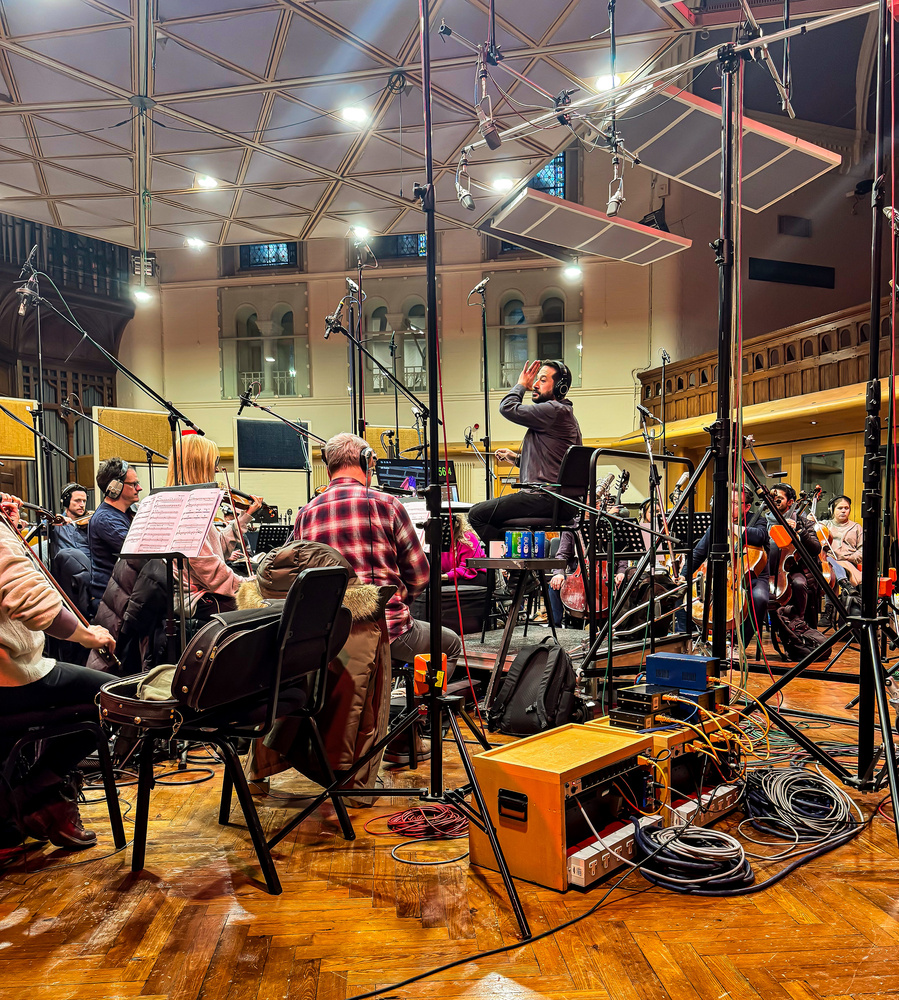 Rob Mathes’ string arrangements were tracked at AIR Lyndhurst, with Ian Eisendrath conducting.
Eisendrath’s “song production factory” also hired the legendary Rob Mathes, whose string arrangements were played by a 26‑piece string section at AIR Lyndhurst Hall in London, with the ceiling baffles lowered as much as possible, to get “the driest, most immediate sound with more of a pop edge”. Eisendrath conducted and Andy Dudman engineered. All these recordings added up to many hundreds of tracks for each session, which were sent to Curtis Douglas, who worked on them for close to two years, off and on, at his studio in Phoenix, Arizona.
Perfect Symmetry
A Phoenix native, Curtis Douglas spent 15 years recording and producing rock and indie bands. Five years ago, he made the switch to mixing pop music, with remarkable success. ‘Golden’ is his sixth Billboard number one. Douglas has worked with the likes of John Legend, Steve Aoki and Snoop Dogg, and enjoyed number one hits with K‑pop acts Twice and Stray Kids.
Douglas’ studio is extremely minimalist, because “I want nothing in it that can distract me. I’ve gone to extreme lengths to get the room as symmetrical as possible. I even brought in lasers to perfect the azimuth and elevation of my monitors. I did most of the acoustic design myself, with help from a company called Music City Acoustics. I added a Trinnov Nova room correction unit as the icing on the cake. The monitors I use are Amphion Two15s, which I love and couldn’t live without, and my interface is the RME Fireface UCX II with the ARC controller. It’s the best interface, in the sense that I never think about it. I never touch it. It just works.”
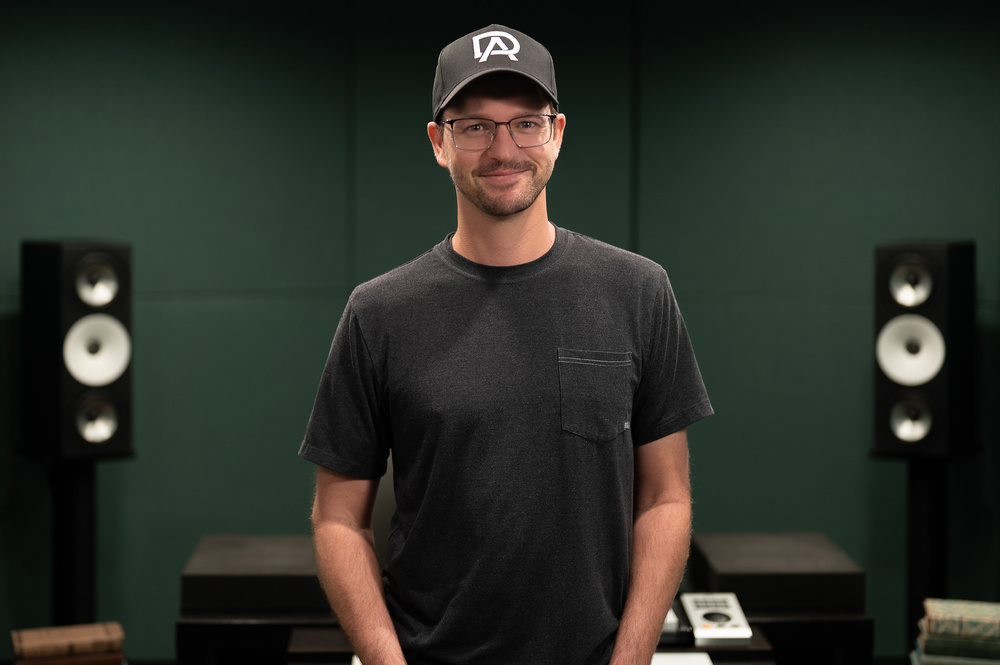 Music mixer Curtis Douglas works out of an impossibly minimalist studio in Phoenix, Arizona.
The same attention to detail also informs his work, particularly on the gargantuan KPop Demon Hunters project. “When I first got involved, two years ago, Ian asked me what mic, pres, and compressor I thought would be best for this project. I suggested the Telefunken ELA M 251, going into a Neve 1073, into an 1176‑type compressor. Derik ended up using a Serpent Splice 500 compressor for most of the vocal tracking, which is one of my favourites. The 251 is the Holy Grail for pop music, if you can find a nice one. We also decided to use a Neumann U87 as a failsafe. The 87 generally went into an API or a cleaner mic pre, without compression. Eighty percent of the vocals were cut on those two mics. Multiple times, the U87 saved me, although it was laborious to have two mics for hundreds of vocal tracks on certain songs!
“I would often receive a lead vocal — and this is not an exaggeration — with 100 takes or more for each part. On a song like ‘Golden’, there were only 30 vocal tracks, but ‘Soda Pop’ and ‘Your Idol’ each had over 300. In general, it was my job to clean up the comps, look at alternative takes where needed, pitch‑correct and time‑correct, or ‘pocket’ all the vocals — really whatever it took to get them feeling and sounding good. Ian was involved in every step of the process, via Zoom and Audiomovers. He’s an exceptional talent.
Curtis Douglas: “I would often receive a lead vocal — and this is not an exaggeration — with 100 takes or more for each part. On a song like ‘Golden’, there were only 30 vocal tracks, but ‘Soda Pop’ and ‘Your Idol’ each had over 300.
“The vocal editing alone on ‘Your Idol’ and ‘Soda Pop’ took me a week per song, before I even touched the mix. On ‘Your Idol’, there are 16‑piece choirs with each singer tracked separately, so I had the control to edit every singer for each take. I would nudge them to be really tight timing‑wise, then pitch‑correct each vocalist separately. With that many backing vocals, you have esses and tees all over the place, competing with each other and with the lead vocal, so I would dramatically reduce or cut out those consonant sounds in the backing vocals. After weeks of questioning my sanity, hearing the vocals edited in such detail made the time and effort spent well worth it! The vocal editing honestly took just as long as the mixes.”
Tune, Tune, Tune Again
“In terms of tuning, on a lead vocal, I’m very particular. Often I’ll tune each part three times using Melodyne, Auto‑Tune and Waves Tune, and I then make the final comp from those. They each work and sound slightly different. I also manually tuned and time‑corrected all the backing vocals using either Auto‑Tune Graphic Mode or Melodyne. Luckily, the approach to tuning for this project matches my personal taste, in the sense that I like vocals to be in tune, but I don’t want to hear any obvious tuning or have retune speeds too high. My goal is to make tuning as invisible as possible, but also make sure that things are very, very in tune.
“After finishing the vocal editing, I’d do a first pass of the entire mix and send that to Ian and the team for feedback. Ian and I would then get into the details of the vocal mix, fine‑tuning automation on harmonies, vocal arrangement dynamics, trying to get one syllable of the backing vocals to pop, and so on. When dealing with multiple vocalists in each song, which is typical in K‑pop, the best approach for me was to not think of them as separate vocalists, but as one singer with different personalities. This mindset helps me craft a cohesive lead vocal throughout the song. If one singer was much brighter or darker than another, I’d have to tame down the bright singer, or brighten up the darker singer more than I normally would to make them feel right with the others.
“In addition to the hundreds of vocal tracks, when it came to mixing, I’d have 300‑plus tracks of drums, bass, synths and other instruments. The mix sessions for ‘Your Idol’ and ‘Soda Pop’ were over 500 tracks in total! ‘Golden’ and ‘Free’ were the two most conventional mixes that came across my desk. With ‘Golden’, being a straightforward pop song, the mix really came together in just a few hours.
“My mix template also made consistency from song to song much easier. I’ve really refined it over the years. The very first thing I do is make sure that, with everything off the master bus, the entire mix is hitting at around ‑10dBFS. When I then instantiate my master bus, it’s already hitting each plug‑in, particularly any compression/limiting, in the sweet spot. From there, it’s almost immediately obvious whether there’s enough or not enough low end, and whether vocals are too loud or quiet. I have a system of checks and balances to ensure consistency from mix to mix. I use the same master bus chain on every song, and being so comfortable with the chain makes it easy to tweak each plug‑in for the desired result. That said, I will go through upwards of eight different limiters on every single song, just to find the one that feels right to me.”
Compare & Contrast
“Generally, when I start a mix, my main focus is on kick, snare, bass and lead vocal. If I can get those feeling good, I’m headed in the right direction. Then I’ll spend the rest of the day on all the other stuff. But really, once you have the kick, snare, bass and the lead vocal right, a mix feels right. Everything else is a cherry on top. I don’t think of mixing K‑pop any differently than mixing American pop. I think of the songs as what they are — big pop tunes. My main goal is always ‘How can I make this sound really big, futuristic, larger than life? How can I make everything extra, everything a little brighter, a little heavier, with a little bit more low end?’
“To achieve that, referencing is an important part of my workflow. Referencing is a really underappreciated aspect of mixing. I use the ADPTR Audio Metric AB plug‑in and also look at a spectrum analyser in real time to see how my mixes compare to others and find ways to push mine beyond them. How close am I to my brightest reference, or my darkest reference? For example, a song like ‘Soda Pop’ needed to be really bright, so I compared it heavily to the brighter mixes in my reference library.
Curtis Douglas: Of course, I’m using my ears all the time, but I look at a spectrum analyser a lot.
“Of course, I’m using my ears all the time, but I look at a spectrum analyser a lot. Where is my sub relative to other songs? I pay close attention to headroom. If I’m not able to get a song as loud as I want it, where am I losing headroom? Often, there’s too much unnecessary low end somewhere, so I EQ low end out of every track that doesn’t need it. Most of all, there’s tons of side‑chaining. The amount of side‑chaining that went on in these KPDH mixes was enormous. Every time the kick hits, the 808, the bass and the low end of my entire instrument bus are ducked. Every time the lead vocal hits, I duck a little bit of the mid/centre of my instrument and bass busses. I’m using the Wavesfactory Track Spacer for that. It creates micro‑movements in the mix that keep it exciting while making room for everything. There’s never a time something isn’t being ducked to some degree.
“Ian would regularly check in with the directors and come back with their combined feedback. Like in ‘Your Idol’, they wanted the vocals to sound more demonic, so I experimented with five or six different ways to formant‑shift the lead vocals and the choir. Do you shift every single person individually, or do you shift the entire choir? What sounds better? When you’re dealing with 200 tracks, sometimes just rendering them to listen back can take quite some time. I tried Melodyne, Auto‑Tune, zplane Elastique Pitch, Soundtoys Little AlterBoy, just to see what sounded coolest. I also mixed in distortion and a gothic‑sounding reverb with the formant‑shifting.”
Hitting Harder
Right at the end of the music‑making process, when re‑recording mixer Michael Babcock blended all the audio for the movie, the team took another unusual step to maximise impact. Ian Eisendrath explains: “Normally, you first mix the film versions, with all their quirks and visual references, and then you go back and mix the soundtrack versions. For this, because the directive was to have really hard‑hitting K‑pop tracks, we did the soundtrack mixes first and then pulled them into the film and made the necessary adjustments.
“When everything went to the re‑recording mixer, who was also working in Atmos, there was a lot of concern from all of us about not losing how hard these songs are hitting once they were brought into a theatrical space. Ultimately, a crazy thing ended up happening. We realised that there’s no way to deliver 20 to 50 mix stems, as is normal, because of how Curtis had mixed and mastered. There’s too much side‑chaining and dynamic EQ and every track reacting to every other track, which is what gives the songs their glue and makes them sound like music today. So we ended up delivering just an instrumental stem, a bass stem, a drums stem, and a vocals stem. They were all pre‑mastered, and Curtis’s mastering chain for each song was then run during the mix stage. I don’t know if that’s been done before, but I really think that helped the songs in the movie feel and sound as vibrant and hard‑hitting as a record.”
Curtis Douglas: Plug‑in Choices
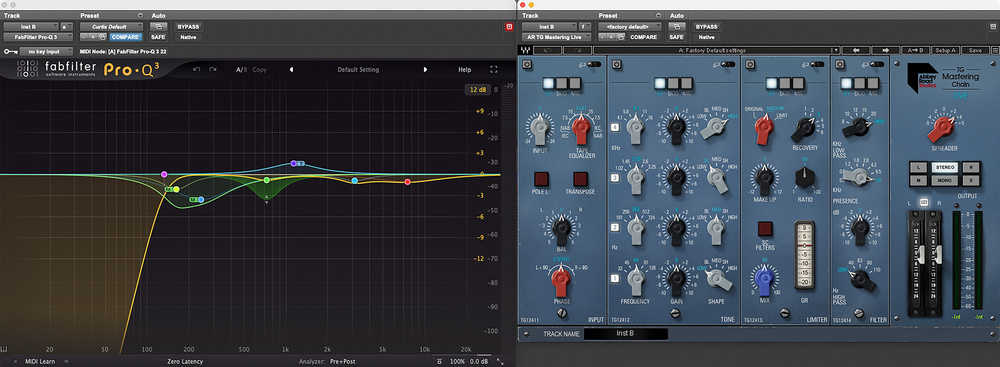 Instrument bus.
Instrument Bus
“I used the Waves Abbey Road TG Mastering plug‑in in this case only for the Spreader. I wanted to get all the instruments out of the way of the lead vocals. I find this widener to be exceptional. I have 10 or more stereo wideners, but this one seems to do what I want it to without any negative effects. I often get pretty tweaky with the FabFilter Pro‑Q 3. It feels like home to me, and it’s easy to make moves in Mid‑Sides, which I do a lot. I wanted a little bit more midrange in the sides, so I added a little bump at 1.2kHz, and took out a lot of mud in the middle around 200Hz to make room for the bass.”
Kick Drum
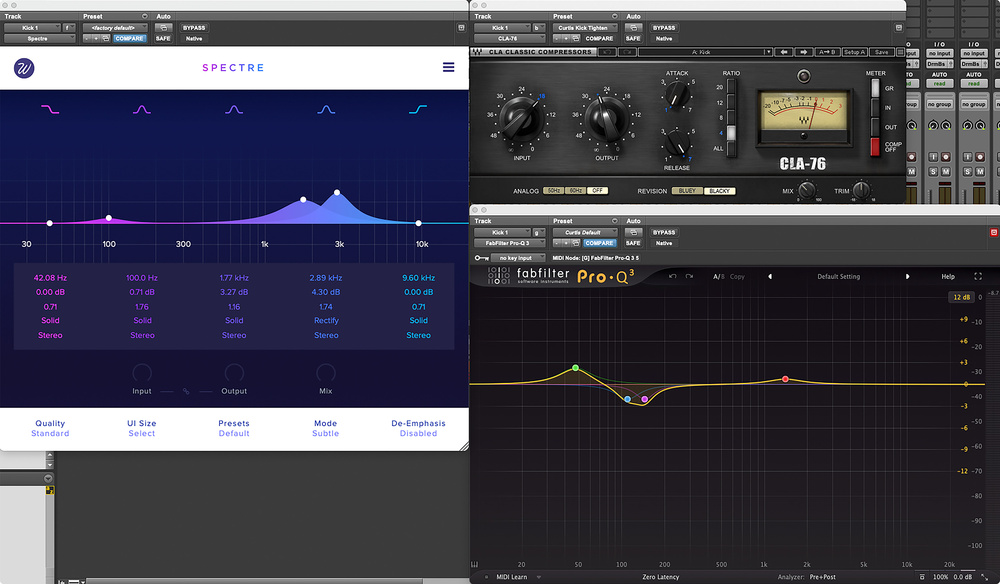
“I love the [Wavesfactory] Spectre plug‑in. I dialled in some punchy upper mids, so the kick could be heard on systems that don’t have tons of low‑end bandwidth. The Waves CLA‑76 is on my Curtis Kick Tighten preset, to tighten up the low end of the kick. I increased the mix until the kick felt as tight as I wanted it to. There’s also some Pro‑Q 3 going on, not too much, just getting rid of some of those honkier upper mid frequencies. Last, I wanted a little bit more sub at 45Hz just to make the kick feel more weighty.”
 Master bus.
Master Bus
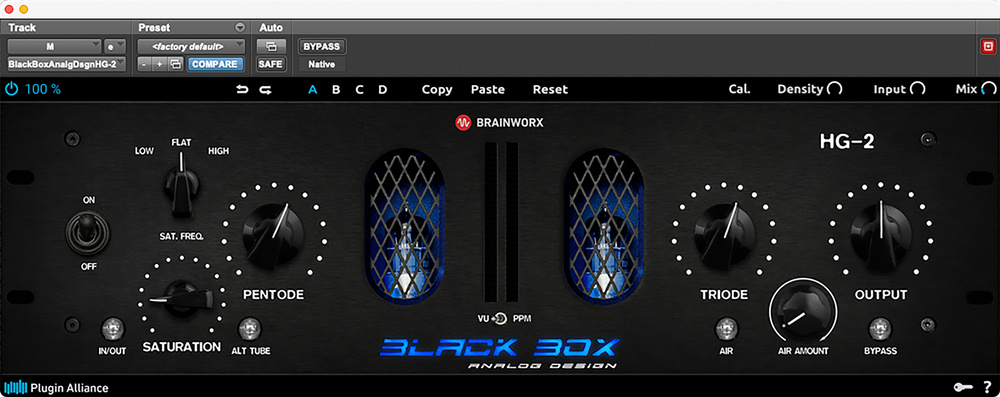
“The mix knob on the Plugin Alliance Brainworx Black Box is pretty low. I use this plug‑in to increase perceived loudness without lowering headroom. It’s on nearly every mix I do, and I mix into it early on. The Submission Audio Flatline 2 is a hard clipper. I had it right before my final limiter to catch any stray peaks. Sometimes it’s doing nothing, and other times it’s knocking off three or four dB. I didn’t want random bursts of energy to hit the limiter, because they can cause unpredictable moments of distortion and make the limiter momentarily work too hard. The clipper gives the limiter a more consistent level. It also has a handy delta button that allows you to hear the distortion that it’s adding in solo.
“The iZotope Ozone Maximizer is set to IRC IV Modern. Oddly enough, this is the only song on the album that ended up with the Modern algorithm. The UAD SSL G Bus Compressor has an attack of 0.1ms. If I were to put that up to say, 30ms, the low end would get much looser, as more lows would be sneaking through to hit the limiter. I took quite a lot of time choosing the attack time of the SSL, and almost always ended up in one of the fastest three attack times. The attack time, in combination with the amount of side‑chain filtering, helped shape the low end. The higher the side‑chain filter, the more low end is getting through to the limiter, which ends up making it feel looser.”
 Curtis Douglas’ snare processing chain.
Snare Drum
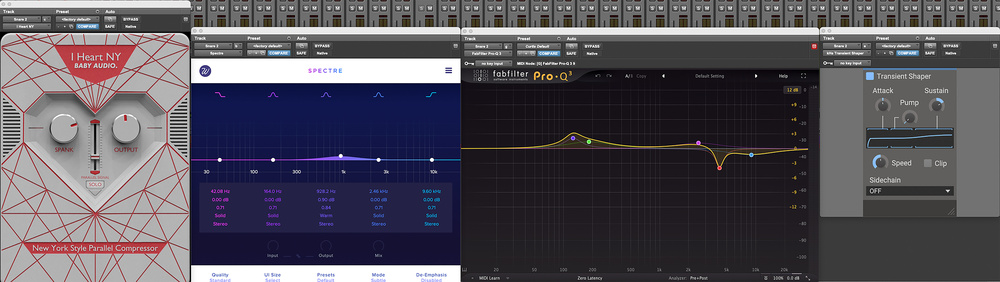
“The Baby Audio I Heart NY is a parallel compression plug‑in. Spank is how much it’s compressing, and the Parallel Signal slider is the blend between the original and the Spanked signal. I didn’t blend in too much, but it made the snare feel as if it was being hit a bit harder. Spectre added a bit of harmonic content to the upper mids, trying to add some weight. I wanted more low end in the snare, so I added some with the Pro‑Q 3. The 4kHz area was a little harsh, so I took some of that frequency out. Then I used the Kilohearts Transient Shaper to make the snare feel longer, and fairly significantly so.”
Vocal Delay
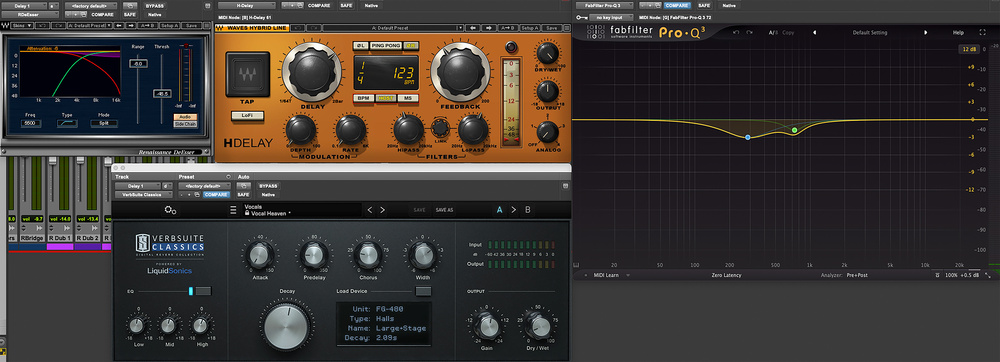
“I generally put a de‑esser as the first insert on every delay or reverb because I don’t want consonant sounds flying all around the mix. I want the verb and the delay on the meat of the vocal. I had one side of the H‑Delay phase inverted, so it pushed the delays to the outside of the speakers. The EQ, post‑delay, took out some midrange. One thing I did to help homogenise the delay with the main reverb in songs is put the main reverb on the delay as well, just with a fairly low mix, 12 percent in this case. The LiquidSonics is one of the verbs I used as the main vocal verb.”
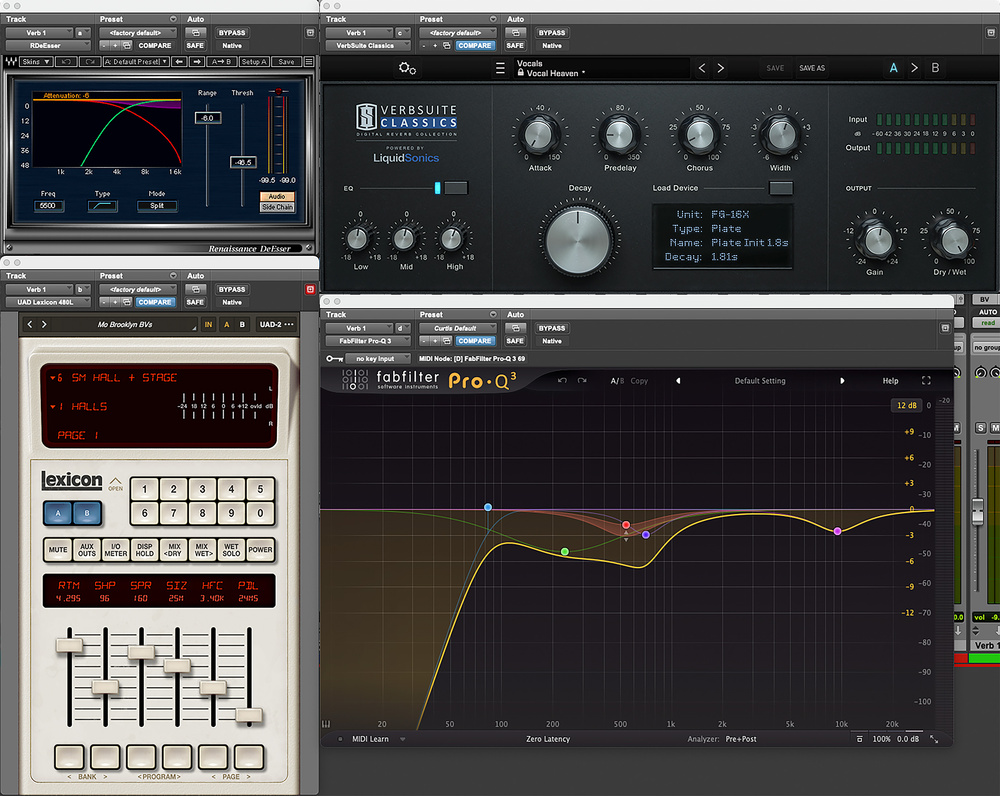 The vocal reverb chain features two reverb plug‑ins in series.
Vocal Reverb
“This one was interesting. I had something very specific in my head and experimented until I got there. First, my usual de‑esser, set fairly aggressively, into the Lexicon 480L, with a mix of 25 percent into the main vocal verb: the LiquidSonics Verb Suite Classics, fully wet. It’s the same verb I used on the delay. Then a fairly intense EQ, because I really didn’t want low end in the reverb, or any of the mids clouding up the fundamental vocal frequencies. I wanted the verb to be heard, but not get in the way.”