

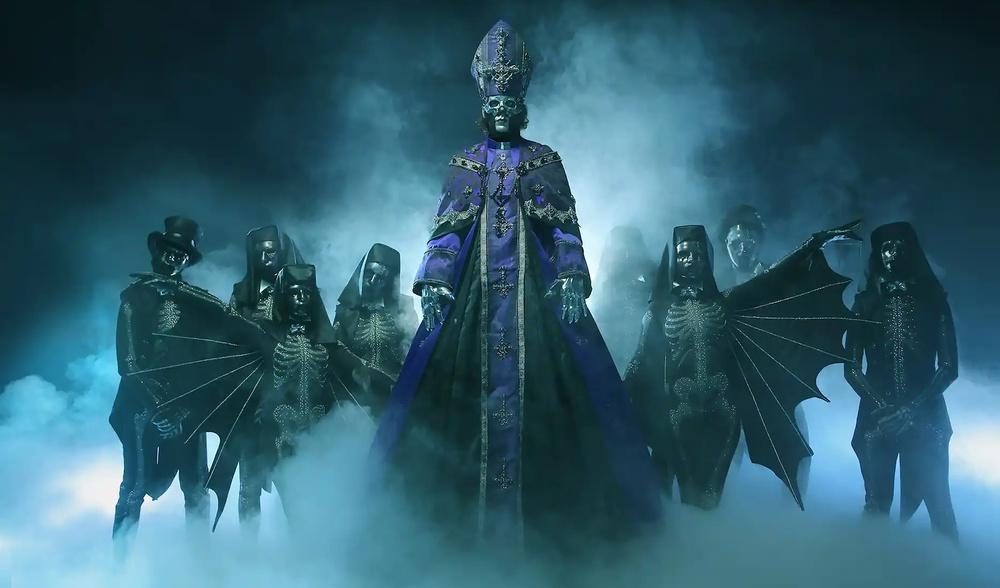
 The members of Ghost are, notoriously, anonymous.
Swedish hard rock band Ghost have topped charts worldwide — with an album that was mixed twice!
“One of the most interesting things of my career happened in November last year,” reports Dan Malsch. “Andy Wallace and I had mixed the entire Ghost album, Skeletá, over three weeks in August 2024 at my Soundmine Recording Studio in Pennsylvania, on my SSL 4000 desk. A few weeks later I received a call asking whether I could come to Stockholm and touch up all the mixes. This turned out to be a huge learning curve, because I ended up in a studio that I had never worked in before, with monitoring and a console I’d never used before, so I could not do recalls.
“It was a tall order for a mix engineer. Over two and a half weeks I was at the studio, IMRSV, with 16‑hour daily marathon sessions and no breaks. It was a lot of pressure, and very stressful. I mean, I didn’t want to be the one messing up a bunch of Ghost mixes! The entire Ghost team wanted the record to be great, and there was no shortchanging anything. They could have gone with the Pennsylvania mixes. They were great mixes. But they still wanted to go that extra mile, trying to get the mixes to another level.”
How far the commitment to excellence of the Ghost team and Malsch’s upgraded mixes helped steer Skeletá to major success is hard to say, but the fact is that Ghost’s sixth studio album is the theatrical Swedish heavy metal band’s most successful to date, in terms of chart positions. It was the band’s first album to top the Billboard 200 in the US, it went to number one in many other countries as well, and it reached number two in the UK.
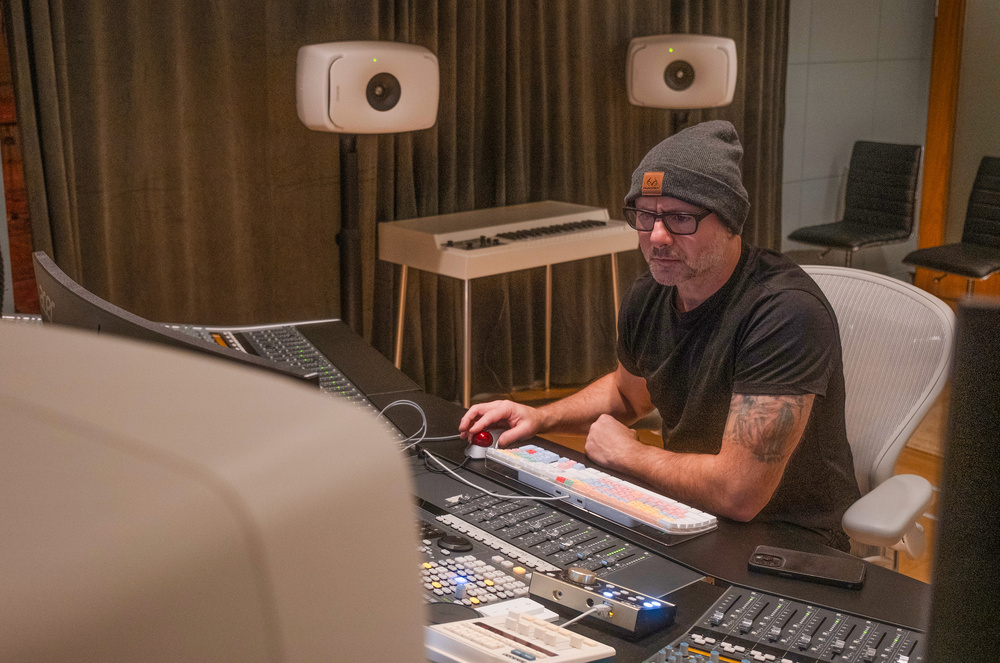 Dan Malsch at Stockholm’s IMRSV studios, where Skeletá was remixed.
Ghost Story
Naturally, a commitment to excellence starts right at the beginning. In the case of Skeletá this involved band leader Tobias Forge writing two of the album’s 10 songs alone, another two songs with Salem Al Fakir and Vincent Pontare, and the remaining six with Max Grahn. In all cases, these Swedish songwriters also co‑produced the songs they co‑wrote, with the exception of the two tracks written by Forge alone, which were co‑produced by him with Pontare.
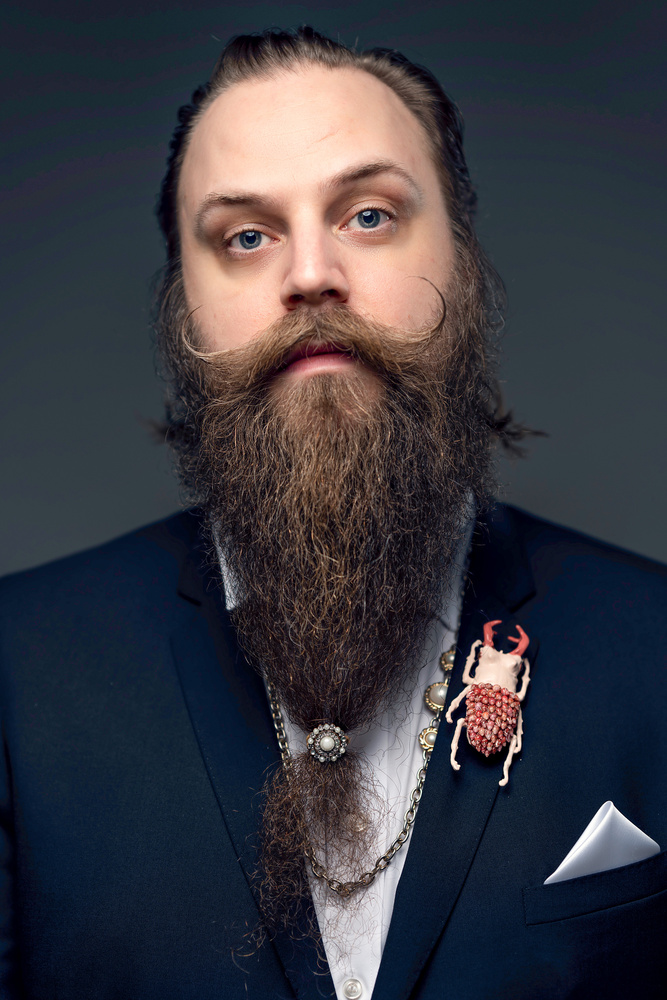 Max Grahn co‑wrote and co‑produced six of the tracks on Skeletá.Photo: Nikola StankovicMax Grahn belongs to the colossally successful Swedish pop songwriting scene that started with ABBA and spawned Max Martin. Grahn has co‑written songs for Conan Gray, Kim Petras and Lewis Capaldi, and performed on music by Justin Bieber (drums), the Weeknd (guitar), and more. Grahn is signed to Max Martin’s MXM Music, and works from the publishing company’s studio complexes in Sweden and the US.
“Max [Martin] is a mentor and a colleague, and we have written a few songs together,” explains Grahn. “Before that, I played in 30‑something bands. One of them was a hardcore band, and the singer was Karl Schuster, who left to sign with Max and write pop music under the name Shellback. He quickly had big hits with Pink, Taylor Swift, Justin Timberlake and so on. But I thought, and still think, that being in a band is the coolest thing you can do. I would record the bands I was in, and gained some merit from being on the computer. But it turned out that being in a band with multiple grown men, creating, rehearsing and aligning your goals and sacrifices is harder than I thought. So I started going my own path in production, writing pop music, which I’ve always loved. Turns out writing actually good pop is harder than I thought.”
House Of Hits
Max Grahn first connected with Tobias Forge in 2021, and the two co‑wrote the lead singles for Ghost’s fifth studio album Impera (2022): ‘Hunter’s Moon’ and ‘Call Me Little Sunshine’. The latter was nominated for a Best Metal Performance Grammy.
“Tobias and I hit it off right away. We went into the studio, sat down with a guitar each, started playing and writing, and found this really good synergy. We fed off each other’s ideas and kept building stuff, and wrote those two songs. At some point in 2024, we decided to go back in the studio again to see what might happen. We kept coming out of the studio with new songs and material. I actually don’t think we’ve written anything that hasn’t been released. We have had no misses yet, only ‘hits’.”
Tobias and Grahn conducted their songwriting sessions for Skeletá at MXM’s studio complex, designed by Jochen Veith, who was interviewed in SOS May 2022. “The whole house is filled with a group of 10 people or so who are signed to MXM, and each of us has their own studio, plus there’s a big live room. Next door to me is Elvira [Anderfjard] who’s crushing it with the new Addison Rae stuff now, and she’s done Taylor Swift, Ed Sheeran and so on. Next door is Oscar Görres, who’s done Ariane Grande, Troye Silvan and so on. Then it’s LIOHN, Holter, Mattman & Robin and more. I can go out of my door and hear this cutting‑edge pop music from the best people in the world. I’m fantastically spoiled.
“Gear‑wise, I have ATC SCM45A Pro monitors, built into the wall, with a pair of 1x12 custom ATC subs. I have a UA Apollo x8p audio interface, and then the magic part: a Xilica XP 4080 audio system processor, which coordinates the speakers and allows me to tune the room to my liking. And I use Yamaha NS10s with a sub as alt listening. My setup is essentially in the box. My accumulated outboard so far is an Alesis Midiverb II, which I heard Aphex Twin uses, an Alesis 3630 compressor, an Evol Audio Fucifier Bloodmaster Edition Distortion, and I got a Roland GP‑8 guitar effects processor, because Kee Marcello, the guitarist of Europe, used that in the ’80s, and we wanted that kind of guitar tone for this Ghost album. We ended up not using the GP‑8, but I’m still experimenting with it. I also have some synths and cool guitars.”
Conducting Traffic
For the writing sessions he did with Tobias Forge, Grahn says: “We were mostly in the big live room, where we had drum kits and guitars and stuff hooked up. For us, playing instruments is the cornerstone of every song we write. We both play drums, guitar, bass and synths. It’s very important that things feel fun and, weirdly enough, both intuitive and unintuitive to play. Writing should not only be fun, but also be the right amount of challenging.
Max Grahn: I have kindergarten level knowledge of how stuff works in a live studio. I don’t know my way around a patchbay, but I can press Record. Once in the box, in Pro Tools, I’m at home.
“We both grew up in rehearsal spaces, where we learned to write songs. It’s a way of writing that automatically creates an identity, because playing is so physical and personal. During writing we didn’t have engineers in the room. I have kindergarten level knowledge of how stuff works in a live studio. I don’t know my way around a patchbay, but I can press Record. Once in the box, in Pro Tools, I’m at home.
“While writing we used a Shure SM7 going into a Fairman and then an 1176 for vocals. We’d play electric and acoustic guitars, the former through a Rockman, made by Tom Scholz from Boston. They’re like a portable cassette player that you can clip to your belt and plug into your computer. With headphones you sound like you’re a rock star on a rock stage.
“All of the songs that we’ve done are 50/50, him and me. When we hammer out songs and arrangements, we are both like little conductors. We like to have a full overview of the full ‘score’ in our heads. We always come back to the guitars when writing, but we are all over the place with instruments, creating the basic arrangements. Once we had written and mapped out the songs in enough detail, it was time to take them into the big studio for proper tracking, which was Atlantis Studios in Stockholm.”
Pin Sharp
Famously, the members of Ghost are anonymous, calling themselves ‘Nameless Ghouls’. Even Forge’s identity was not revealed until 2017. As a singer on Skeletá, his name is Papa V Perpueta, while he’s credited as songwriter ‘A Ghoul Writer’ and producer Gene Walker. With band proceedings shrouded in secrecy, Grahn has to be discreet in how he describes the tracking process.
“Let’s just say that all music appeared magically in Atlantis Studios! But I can tell you some technical details. We started by building a drum kit, with cymbal shootouts and stuff like that. At the same time we built guitar and bass rooms with amp stacks. Once we knew what the drums were going to be, we recorded them, while still figuring out the guitar tones, which was a whole chapter in itself. Atlantis Studios is legendary, for example many ABBA songs were recorded there. The piano used for ‘Dancing Queen’ is in the middle of Studio A, and we used it on Impera and on the new album. It’s a magical place.
“The guitar sounds are never just one sound. For this album we had a few combinations of sounds. For the main guitars on most of the album we used Vincent’s Rockman amp, modified by his guitar guy, Göran Elmqvist. That went into a Roland Jazz Chorus amp and a Marshall Plexi with a Hiwatt 4x10 guitar cabinet. For a more distorted sound, we also had a Mesa Boogie IIC+, the same one that James Hetfield of Metallica used in the ’80s. The blend is pretty special and gives a weird guitar sound that I’m super happy with. For the solos we used a Boss OD‑1 from between 1977‑1979, which is important because it had a 14‑pin chip, which was replaced by an 8‑pin chip in 1979. They’re all played on Fredrik Åkesson’s custom PRS guitar, sometimes by him, sometimes by me.
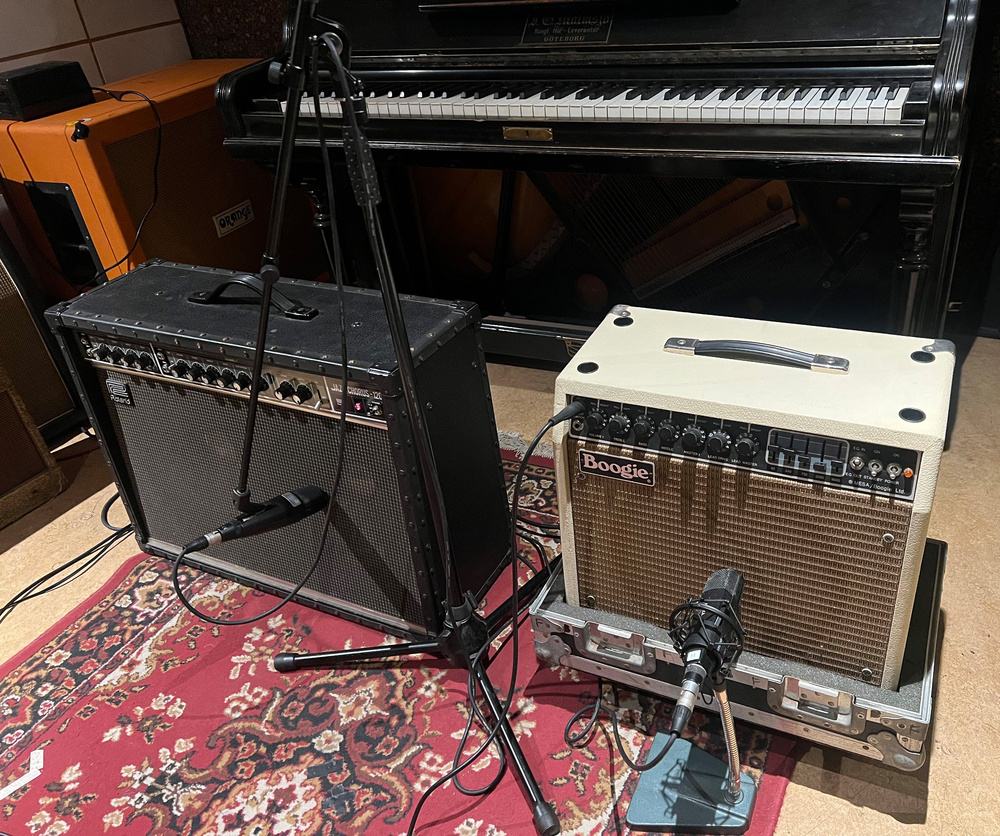 Many of the guitar sounds on Skeletá were tracked at Atlantis Studios using a combination of the Roland JC‑120 and Mesa Boogie IIC+ amplifiers, miked with Sennheiser MD421s.
“Although we had mapped out the songs, they shape‑shifted a bit once we got into the real studio and got the final takes. This allowed us to hear new possibilities, like using eight toms, or there’d be a cool new guitar lick. With one of the songs in particular, ‘Cenotaph’, we had an emergency situation where we liked the song but not the shape the song was in. It ended up in a different bpm, different time signature, and in a different key. And now it’s the best song on the album.”
Legends Of Atlantis
During the tracking sessions at Atlantis, four engineers were in action, recalls Grahn. “We were blessed to have Martin Sandmark Ericksson, who is Tobias’ guy; Mark Rankin, who’s a brilliant person as well as a Po Tools ninja; and two Atlantis house engineers, Niclas Lindström and Calle Gustavsson. It was essential to have these technical people there, because as I mentioned, I do not know my way around a patchbay! But with regards to the microphones, I do recall that we used two Telefunken ELA M 251s for the overheads of the drums. Quite luxurious!
“For the vocals we’ve worked out a certain way to go about it. ‘Papa’ [Forge] has like five frequency spikes in his voice that are impossible to turn down. It’s almost like an autonomous polyphonic overtone chanting. There is no other singer that sounds like him. And the SM7: if Michael Jackson can record the whole Thriller album on an SM7, we should be able to make do with that. It just delivers. Also, sometimes the first demo take is irreplaceable, so we keep that. I always go for character over perfection.
“The bass sound is a combination of five components. We had a SansAmp pedal, and an 8x10 SVT rig. We also sent the bass through a Tandberg Båndopptaker 2, a small Norwegian tape recorder from around 1954 with a built‑in speaker. The speaker sounds beautifully broken and kind of lo‑fi, and we recorded it with a mic. And we had a mysterious chorus pedal. Also, Atlantis has a renowned echo chamber that we used on the bass.
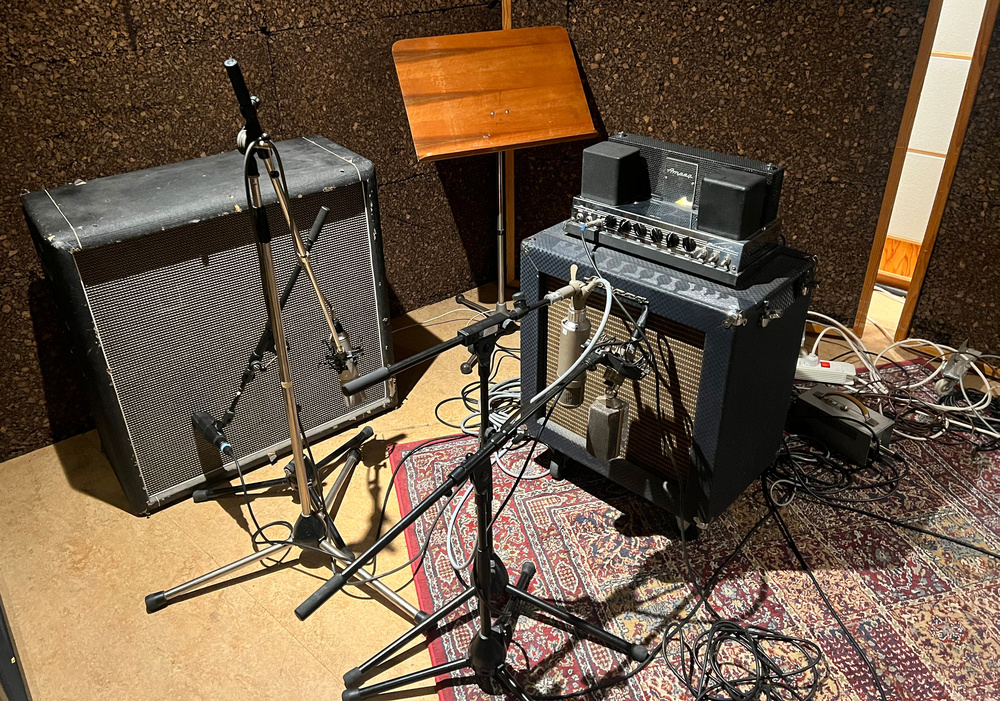 Bass guitar was tracked using no fewer than five separate rigs. This photo shows one of them.
“In general during the sessions we used a healthy mixture of synthetic reverbs and actual room mics. We opened the doors a little bit to the guitar rooms, and then put mics outside in the historical live room of Atlantis. And we printed all these separately. We used an EMT 251 for many things. For instance, on a percussive organ that’s doubling the bass guitar in the verses of ‘Lachryma’. ‘Kih Kah Kih Kah.’ It sounds like a giant clock ticking towards your imminent death.
![A Neumann KU100 binaural ‘dummy head’ [shown to the right on a mic stand] was used at Atlantis to track sources such as choir and glockenspiel.](https://dt7v1i9vyp3mf.cloudfront.net/styles/news_large/s3/imagelibrary/I/IT_07_25_06-be6nzRhW1mzZ3bUtPOvrVDZJ4zUSlfSS.jpg "A Neumann KU100 binaural ‘dummy head’ [shown to the right on a mic stand] was used at Atlantis to track sources such as choir and glockenspiel.") A Neumann KU100 binaural ‘dummy head’ [shown to the right on a mic stand] was used at Atlantis to track sources such as choir and glockenspiel.“Engineer Mark Rankin and I kept an overview of all proceedings at Atlantis, until we started feeling like we had an album. Also, managers and label people were hammering in some deadline dates. This meant that we needed to get started with final mixing. We finished a few songs so that we could start rolling them to Dan and Andy. In the beginning Mark and I did rough mixes together, but then I rough mixed and mix‑prepped the six songs I had co‑produced in my own studio.
A Neumann KU100 binaural ‘dummy head’ [shown to the right on a mic stand] was used at Atlantis to track sources such as choir and glockenspiel.“Engineer Mark Rankin and I kept an overview of all proceedings at Atlantis, until we started feeling like we had an album. Also, managers and label people were hammering in some deadline dates. This meant that we needed to get started with final mixing. We finished a few songs so that we could start rolling them to Dan and Andy. In the beginning Mark and I did rough mixes together, but then I rough mixed and mix‑prepped the six songs I had co‑produced in my own studio.
“Vincent [Pontare] would do the same for the songs he co‑produced, ‘Peacefield’ and ‘Satanized’, and Martin Erickson Sandmark and Tobias did the rough mixes for the two remaining songs, ‘Massilia Amori’ and ‘Marks Of The Evil One’. I wanted to listen to what we had in my own room, so I knew where everything’s at. Like the relation between kick, snare, vocal and making sure the wetness of the all reverbs sits right and so on. I’m really used to my ATCs in this ridiculously acoustically well‑designed room by Jochen [Veith], who is a genius.”
Perfecting Perfection
On the other side of the Atlantic, Wallace and Malsch received the rough mixes as Pro Tools sessions. “Andy and I spent about three weeks mixing Skeletá during August 2024,” says the latter. “I started out as Andy’s assistant six years ago, and our process has grown as we got to know each other. It’s really cool and works really well. I was mix engineer on the previous Ghost album, Impera, which Andy and I also mixed at my studio, Soundmine. With Skeletá, Andy and I began with our current routine, which starts with me trying to better the demo, and Andy then coming in and doing his thing. We’re a kind of tag team.
“In this case, I’d first of all make sure I had every plug‑in. My Pro Tools sessions needed to sound exactly like what I was sent. I can’t have missing plug‑ins. There’s no room for interpretation at that point. Max and I worked directly with each other, sending tracks and notes back and forth, and checking every plug‑in. I think in the end I only had to buy a Baby Audio plug‑in. Each session had lots of tracks, well over 100, with pretty much every instrument and mic separated and many effects printed.
“After I’d made sure that what I had matched what they had, I spent probably five or six hours trying to beat the rough mix. This was not easy. The production and rough mixes of the Ghost tracks that we received were great — in my opinion, probably good enough to release. Andy and I would look at each other, like, ‘How are we going to make it sound better than this?’”
“That’s way too flattering!” laughs Max Grahn. “Of course, we take it as far as we can. But what happens when we get the mixes back from Andy and you, is that there’s more 3D. Even though the mixes are stereo, they sound 3D. You add depth and extra flair that we would not be able to achieve alone. Also, we’re a solid gang of control freaks, so we were not looking for surprises from your mixes, even as there were a few. We simply wanted you to perfect the rough mixes, which you did.”
[SSL] Desk Job
Wallace and Malsch’s process still centres on a hardware mixing console. “I have a 56‑channel SSL 4040 EG+ with Total Recall from 1986,” elaborates Malsch. “It came from Backstage in Nashville. I have a great tech, so my SSL is very well maintained. Andy uses every single knob — it needs to work flawlessly! My studio also has tons of outboard, too much probably, and I have an Atmos room. My desk is old, and has character, and many bands and artists still request that we mix on the 4k, like Avenged Sevenfold, whose recent album [Life Is But A Dream...] we mixed here.
“I like mixing on a desk because of the tactileness, the fact that you’re working with your hands and touching buttons. You’re not looking at a screen, it’s an intuitive way of working. It’s about the process. We use the EQ a lot on the console, and I can get basic levels and EQ on a mix in 45 minutes to an hour. It’s a lot quicker on a console. We’re also driving the mix into the 4k master bus, which has a particular sound. You can hit it pretty hard, though not too hard, or it gets squishy. It’s about that overall sound that the SSL brings, just like a Neve will bring a certain sound, and an API will bring a certain sound.
“The way we mix is that I first stem the Pro Tools session out to the SSL. There are a lot of tracks, and I try to get as many tracks separately to the console as I can: every guitar mic, every backing vocal, every printed effect. We want maximum control. I don’t want to miss anything. I don’t want to miss a guitar that has a specific reverb on it. When there are more Pro Tools tracks than desk channels, I create groups in Pro Tools. In fact, I have a mix template, and I usually have two kick channels, inside and out, and one for a low‑frequency kick. So there may be three different kicks in a mix. Heavy rhythm guitars are grouped and we take them to a stereo channel on the console, or two mono channels. Overdubbed guitars, any kind of jangly guitars or ethereal guitars, we take to another two channels of the console. Whatever effects are on the guitars, like rooms, digital reverbs or delays, go to another two channels. And so on.”
In The Clear
Malsch stresses repeatedly that most of Wallace’s and his mix process “takes place on the console. We want to have control. We do a lot of EQ’ing, compression, level riding and panning. Both Andy and I are very detailed tweakers, looking for every space and separation that we can get, because we’re trying to open up the mix as much as we can. We use the SSL desk EQ to filter certain frequencies out. It’s very delicate because you don’t want to upset what’s there. They are delicate moves. What you’ll notice most from the rough mixes to the main mixes is more space and a depth and a width.
Dan Malsch: One interesting thing about Ghost is that they have a subkick that changes with the chords, around 40, 50 Hz. It’s quite unique for a hard rock metal band.
“Clarity is a huge thing for me. I want to have as much bottom end and sub as I can, but if I hear any mud in a mix, I don’t enjoy it. One interesting thing about Ghost is that they have a subkick that changes with the chords, around 40, 50 Hz. It’s quite unique for a hard rock metal band. I think that comes from the pop world, and it really helps with the bottom end. I’ve been called a clinical mixer because I need to hear every instrument cleanly. If it’s there, I think you should hear it. Sometimes you’ll have to shave off a little more than you might want to, because there might be three or four different guitar parts or different key parts, and to make sure they are all heard, you have to take out some 300Hz, 400Hz or 500Hz, which are problem frequencies in a lot of music that I work with.
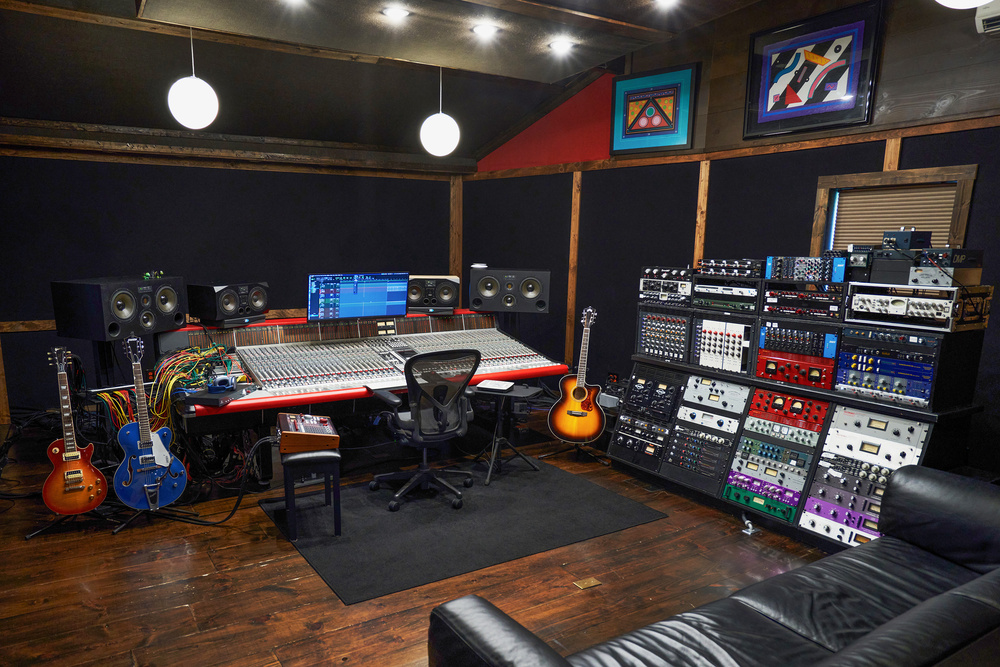 Dan Malsch’s Soundmine Studio, where he and Andy Wallace undertook the first mix of Skeletá.
“I do all this on the desk. The only thing we’d really change in Pro Tools is if a track is pushing a little too hard into the console or not pushing enough into the console. For instance, if a kick drum is hitting the input of the SSL too hard, there’ll be weird compression and distortion, so I’ll have to lower the kick drum 4 or 6 dB in Pro Tools and then raise it another 4‑6 dB on the console. Actually a lot of what I do is bringing all the clips in a session down by perhaps 5‑6 dB because they’ll distort the console. It’s tricky because sometimes you all of a sudden lose some of the energy, and then you have to bring that back with the console. But if you hit any console too hard going in, the mix just collapses. There’s an art to bringing tracks out of a DAW into a console. Gain structure is huge. It’s the same thing with balancing levels. If you’re volume riding in Pro Tools before going into the console, you’re going to distort the console. We do the bigger rides on the console, and tiny little volume tweaks in Pro Tools after that.”
In The Balance
Once Malsch has taken the mix as far as he can, Wallace comes in. “He’ll say, ‘How’s everything going?’ and then he’ll sit down at the desk. Andy is a balancing genius. He’s a tweaker, tweaker, tweaker. He is very, very detailed. He’ll listen quite loud for a while. And then he’ll listen quite low for another few hours. That’s our process. I’ll get the song to where I could almost sign off on it, and then he still finds something to improve.
“While we mix, the master bus compressor on the 4k is always in, and it’s almost always set the same: auto release on, the slowest attack possible, and a threshold of no more than 3dB. On the 4k even the slowest attack is fast. We also have outboard on the master bus, which is the DW Fearn VT7, a big, clunky, great stereo tube compressor. We’re not compressing with it, just running the signal through the tubes. And then a Bettermaker Stereo Passive Equalizer, which is a solid‑state version of the Pultec. The settings on the DW Fearn never change, but we’ll be boosting on the Bettermaker. It has a really broad boost. So if I’m boosting at 30Hz, it’s boosting a good amount at 60 also. And then we often boost top‑end air, like 16kHz. It’s really broad strokes.
Dan Malsch: “I can’t send a mix for review to clients at ‑12 LUFS because every other mix they’re listening to is, unfortunately, ‑6 or ‑7 LUFS. So before sending mixes off I’ll have to use a limiter in the box, often the FabFilter Pro‑L 2."
“I can’t send a mix for review to clients at ‑12 LUFS because every other mix they’re listening to is, unfortunately, ‑6 or ‑7 LUFS. I’ve seen mixes at ‑5 and even less, which is crazy. It’s tough because if I send out a mix at ‑10 with some dynamics, clients are probably going to think there’s something wrong with the mix, because it’s 4dB quieter. So before sending mixes off I’ll have to use a limiter in the box, often the FabFilter Pro‑L 2. Especially if it’s a loud rock mix, I’ll mix into the plug‑in limiter, because I want to know what it’s doing. The Ghost record is probably ‑6.5 LUFS. Andy and I work almost exclusively with Ted Jansen from Sterling. When I send him the mix, I’ll take our limiter off.”
Epilogue
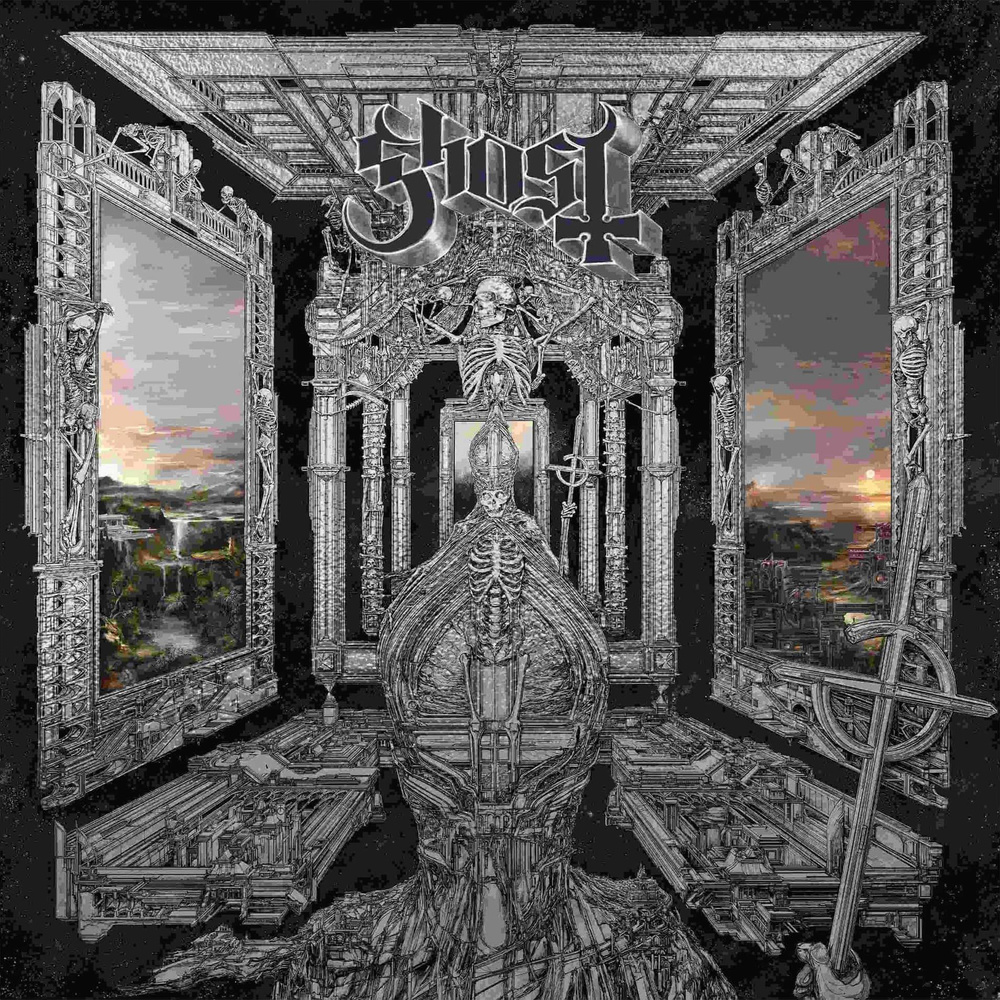 Skeletá is Ghost’s sixth album and their most successful to date.As mentioned at the beginning of the article, Wallace and Malsch spent three weeks mixing Skeletá in Pennsylvania with their regular process. There were the usual recalls and mix adjustments, and once they delivered the final mixes at the end of August 2024, all parties signed off on them, and the two mixers assumed that it was a job well done and completed. So the request in late October to re‑adjust the mixes came as a big surprise to Malsch, and led to one of the most unusual and challenging mix experiences of his career.
“I got a call from Tobias’ manager, asking if I could come over to Stockholm in less than a week. I was told that there were a couple of sonic things that Tobias, after living with the mixes for a while, wanted to change. Also, he had not been able to be there for the mixes in Pennsylvania, and wanted to be present for the mix reviews.
“Andy could not make it to Stockholm, so I went alone. The first thing we did was try to find a studio in Stockholm with an SSL 4k, so I could bring the floppy disks and do recalls. We could not find a studio with a 4k that was available, and booked IMRSV Studio 1, where they have the newer SSL Duality Pro Station Delta. It has 48 split channels, so I did not have to regroup things in the Pro Tools sessions.
“In hindsight, I’m glad that we didn’t find a 4k, because the Duality suited the record a little better. It sounds more open and cleaner than the 4k. As soon as you put a session on a 4k, it automatically does you some favours, especially in the rock world, as it adds some dirt and glue. You can’t get around that. The Duality doesn’t have that. The Duality is a little more open and much cleaner. So you have to work a little harder. But if I had to choose between the two at this point, I would mix on a Duality over a 4k. It’s also quicker and more efficient to use, and easier to maintain.
“It was the first time I used a Duality. So I was unable to recall our existing mixes, on a different desk in a different studio with monitors I did not know. It was a huge challenge and quite stressful. I’ve been mixing on ADAM monitors with ribbon tweeters for the last 15 years. ADAMs have a very distinct sound. You love them or you hate them. At IMRSV I was mixing on Genelec The One monitors, which are completely different. And the room took some getting used to. Initially I did not understand the monitoring at all. Basma Jabbar, the assistant at IMRSV, was a lifesaver for me. She was exceptional. She knew the Duality inside out, and was positive and kept my energy up when I was weighed down by the 16‑hour daily marathon sessions.
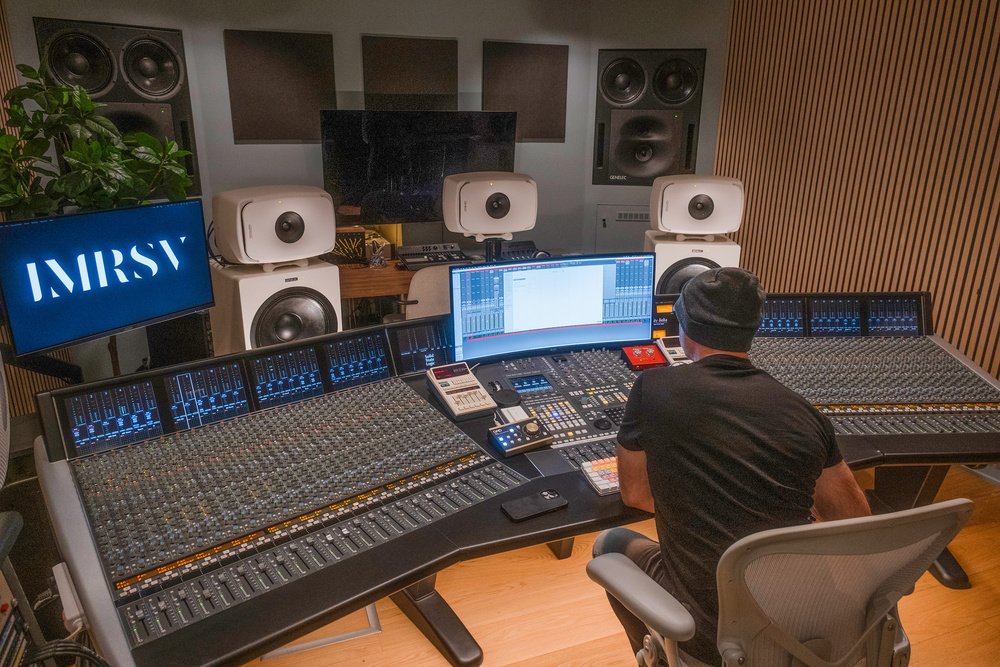 For the second mix of Skeletá, Dan Malsch worked on an SSL Duality rather than his own 4k.
“My first target at IMRSV was to get back as close as possible to the existing mixes. I had some memories of what we had done, and for the rest I had to use my ears! After that, with Tobias in the room, we were able to take the mixes further sonically. Tobias wanted specific changes. Snare drum changes were a big one. We swapped around some keyboard parts, and changed the balances of certain solos and keyboard parts. Adjusting the panning, particularly of the guitars, was one of the bigger changes. Also, I knew what the flaws were in the original mixes, so I did my best to iron these out. I always second‑guess my own work! For example, the original mixes may have been slightly over‑compressed, and I could make the new mixes punchier. And the EQ on the Duality is a little sharper and cleaner, which helped.
“Another problem to solve was the master bus chain. The Duality bus compressor is pretty much the same as that of the 4k. Understandably, they kept that signature SSL sound. But when I tried to get a DW Fearn, which is part of the signature sound of Andy and I, I could not get one. Not having that was a big deal. I was sweating quite a bit, and in the end substituted the Fearn with a UAD Pultec EQ, because it has a tube‑like sound. It’s cleaner and wider‑sounding. That was the ‘analogue’ piece for me, and the only thing on the master bus. So no Bettermaker. And none of the mixes you hear on the album were touched by the 4k.
“I sent every mix to Andy, management, the producers, and everyone would give their feedback. Andy gave detailed comments on the mixes, so he was involved. I was supposed to be in Stockholm for 10 days, but it ended up being two and a half weeks, without any breaks. It was gruelling! I have to hand it to Tobias and the producers that they insisted on going that extra mile. I’m very satisfied with the end result. And obviously, the album is doing really well. I think it’s a great record!”