

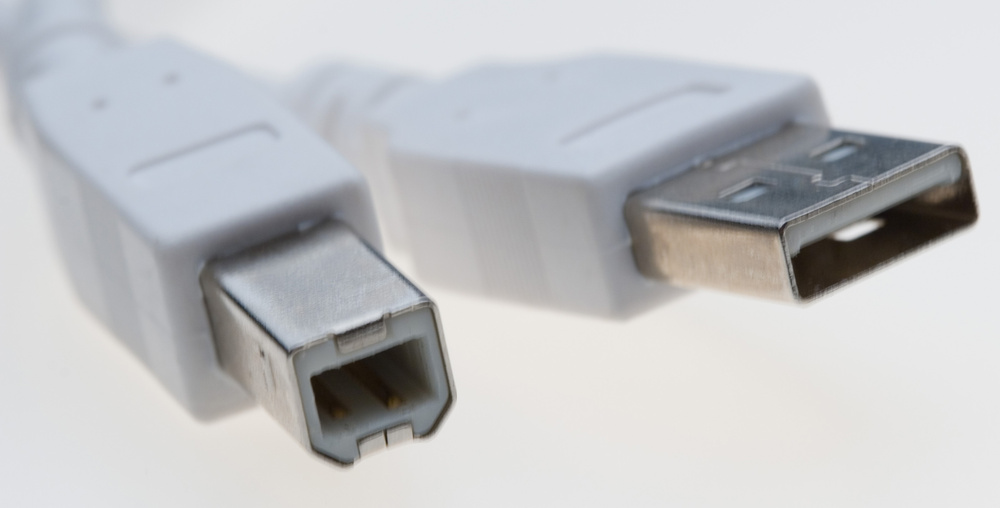
 (Left) A USB Type-B connector with the classic Type-A (right).
Why are almost all audio interfaces still USB 2 devices? And does it matter?
Audio interfaces mostly connect to computers over Universal Serial Bus, or USB. Back in the day, computers used the rectangular Type‑A USB socket, while peripherals used the house‑shaped Type‑B socket. Today, both computers and interfaces use the smaller Type‑C socket.
Depending on how recent your computer is, you might find your Type-C sockets labelled USB 3.1, USB 3.2, USB 4 or Thunderbolt. But delve into the specifications of your audio interface, and the chances are you’ll find it’s actually a USB 2.0 device. How can this work? And why are interface manufacturers apparently stuck in the past?
What’s The Difference Between Type‑C And USB 3?
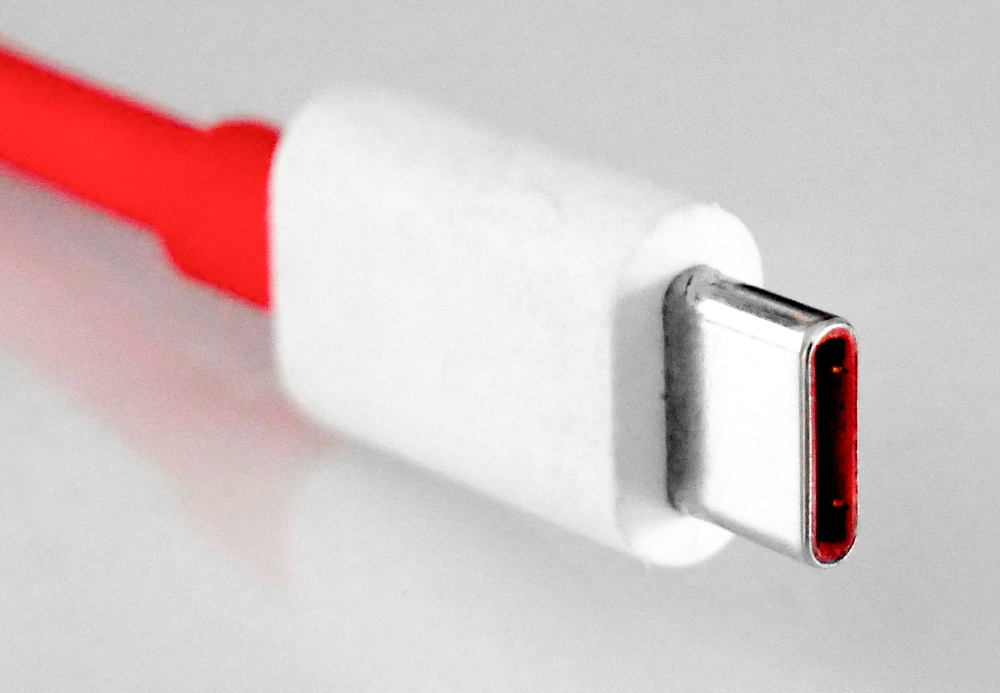 The reversible Type‑C connector (above) is newer than the original Type‑A and B connectors (top of article) — yet most interfaces that use it are actually USB 2.0 devices.
The lettered connector type and the numbered USB standard refer to related but different things. The connector type determines how electrical links are made between the host and destination devices. The USB version determines how those paths can be used to transfer data, and hence how audio and MIDI flow from interface to computer and back again. It’s even possible to use Type‑A, B or C connectors purely for charging, without supporting any form of data transfer.
One of the central pillars of the USB standard has always been backwards compatibility. The idea is that older USB devices should never be left behind as computers move to newer versions. When you plug a USB 2 device into a computer’s USB 3 port, it’ll be recognised for what it is, and the computer won’t attempt to do anything that isn’t supported under USB 2. What type of physical connector it has makes no difference.
In this sense, then, the fact that most audio interfaces are USB 2.0 devices isn’t a problem. There is no risk of them becoming orphaned by newer connectors or computers. But even so, it’s reasonable to ask why that’s the case. Since the rest of the world has moved on to newer versions of the standard, why haven’t interface manufacturers followed suit? And wouldn’t Thunderbolt be even better?
Is USB 2 A Bottleneck?
Some interface manufacturers will tell you the reason they haven’t moved to USB 3 or later is because there’s simply no need. The USB 2 standard is more than adequate for audio interfaces, and thanks to USB’s backwards compatibility, a USB 2 interface can be connected to any modern computer. Because USB 2 ensures maximum compatibility without compromising performance, there is no reason to use anything else.
There’s a lot of truth in this answer, but it isn’t quite the full story.
It’s certainly true that USB 2 offers plenty of bandwidth, at least on paper. If that bandwidth could be fully exploited by an audio device, it would be able to handle more than 400 streams of mono 24‑bit audio at 48kHz. In practice, though, this isn’t possible, because the ability to control the data flow is exceeded long before the data flow itself becomes overloaded. In terms of channel count, one of the highest‑performing USB 2 interfaces on the market at the time of writing is RME’s MADIface USB, which provides 64 inputs and 64 outputs at 48kHz.
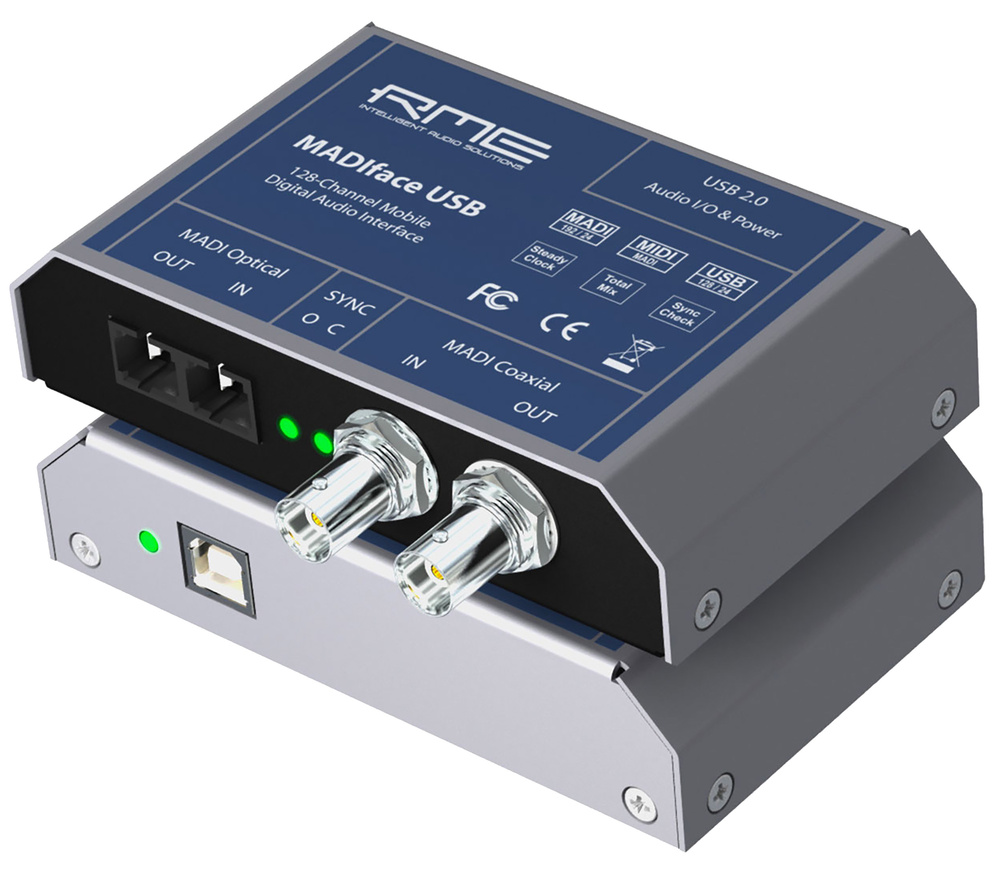 Thanks to its use of custom hardware and drivers, RME’s MADIface USB can provide 64 inputs and outputs at base sample rates over USB 2.
That’s just about at the limits of what is achievable with USB 2, and is more than most people will ever need.
So, in that sense, USB 2 is certainly ‘good enough’ — except that if you look around, you’ll find that very few other interfaces get anywhere near this. The large majority of USB 2 interfaces offer only 24 ins and outs, or less. Why?
What Other Limitations Are...
You are reading one of the locked Subscribers-only articles from our latest 5 issues.
You've read 30% of this article for FREE, so to continue reading...
- ✅ Log in - if you have a Digital Subscription you bought from SoundOnSound.com
- ⬇️ Buy & Download this Single Article in PDF format £0.83 GBP$1.49 USD
For less than the price of a coffee, buy now and immediately download to your computer, tablet or mobile. - ⬇️ ⬇️ ⬇️ Buy & Download the FULL ISSUE PDF
Our 'full SOS magazine' for smartphone/tablet/computer. More info... - 📲 Buy a DIGITAL subscription (or 📖 📲 Print + Digital sub)
Instantly unlock ALL Premium web articles! We often release online-only content.
Visit our ShopStore.