link
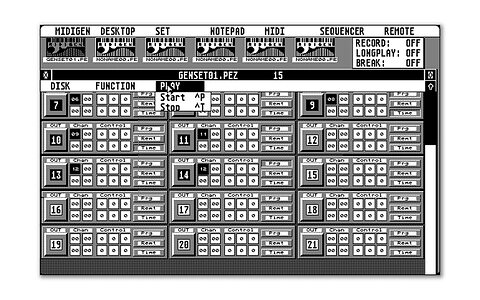
Zeus; Midigen
Atari Notes
Derek Johnson rounds up the latest Atari news and software availability.
Published August 2001

 SOUND ON SOUND
Derek Johnson rounds up the latest Atari news and software availability.

This month, Digital Performer's useful but little-known Clipping window falls under the Performer Notes spotlight. Plus tips on where to find top VST freeware plug-ins for use with DP, and advice on setting up side-chain access to MOTU plug-ins.

Surround sound in one form or another has been a part of the film industry for many years, but the emergence of affordable digital technology has now pushed it into the domestic mainstream. Hugh Robjohns begins SOS's definitive guide to surround and its implications for the hi-tech musician.


Having dealt exhaustively with the mechanics of brass instruments and how to go about synthesizing them, we turn to instruments that use plucked strings to generate their sound, taking the complexities of the acoustic guitar as an example.

Do you find that your MIDI tracks lack the magic of real performances? Simon Millward looks at the inner workings of one of James Brown's most famous songs and shows you how the musicians' techniques can be used to improve the feel of your own sequences.


Like a phoenix from the ashes, Martin Walker's PC rises once again, in a new (and hopefully more robust) configuration.

More invaluable MOTU-related user tips, including effective mix automation and the use of grouped controls, as well as customised Mixing Board layout editing, plus loop editing and crossfading.

As with any recording system, the first goal of recording on a PC is to preserve as faithful a copy of the source sound as possible. Achieving this, however can be a complicated business. Martin Walker goes back to basics.

Ear training - learning to intuitively recognise note intervals, chords and progressions, and even absolute pitches - is something that many musicians could benefit from, although few actually attempt it. Richard Leon explains the skills involved, and rounds up some software which can help you improve in this area.

Craig Anderton shows you how to get the best results when combining miked and DI'ed feeds from a bass guitar.

EQ is a vital tool in modern music production, and an understanding of how each type of equaliser works is important if you are to choose the most effective one for each situation. Paul White and Mike Senior explain the basic principles of equalisation and the different practical implementations.

This month we focus on the score editor in Cubase VST Score and Cubase VST/32, and offer a handy tip for recovering corrupt Songs.

This month, we show you a powerful compression technique available in Logic, as well as describing a workaround which increases the bank range of your Multi Instruments. Also, there are instructions on how to control a large range of Logic's parameters in real time from your MIDI master keyboard's mod wheel.

Your Atari can connect to loads of peripherals you might not expect it to be able to use, including removable hard drives, DVD-RAM drives, and CD writers. Derek Johnson plugs in.

Want to write really great songs, sell millions of records and discover that money can't buy you happiness? There are plenty of sites on the web that aim to help you be a better songwriter, but there's also a lot of worthless rubbish out there. Sam Inglis tries not to waste too much time...
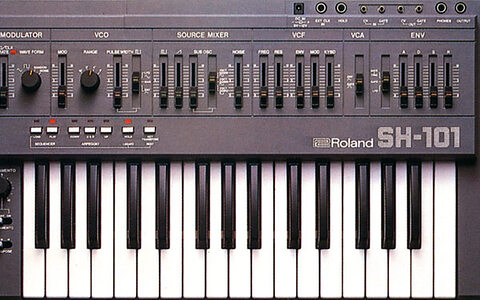
Gordon Reid concludes his attempts to adapt an idealised analogue brass patch so that it can be programmed on real synths. This month, he looks at the Roland SH101 and ARP Axxe.

This month we show you, step by step, how to correct the timing of multitrack drum recordings using the powerful editing capabilities of Logic, as well as showing you how to make the most of your audio storage space.
