Basic Overdubbing
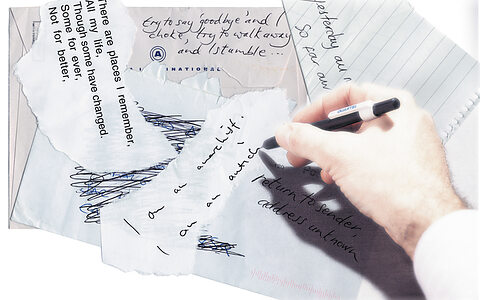
Hugh Robjohns and Mike Senior explains how to get great results when creating arrangements one track at a time.

Hugh Robjohns and Mike Senior explains how to get great results when creating arrangements one track at a time.

This month Martin Walker takes software samplers as his theme, offering advice about avoiding glitches when using them with other applications, and bringing news of a forthcoming sampling VST Instrument.

When your studio just won't co-operate and there's no-one to turn to, the pool of knowledge and expertise offered by fellow web users can be a life saver. Chris Carter investigates troubleshooting on the open-all-hours Internet.

Ever heard a synth talk? If you have, it's due to formant synthesis. Gordon Reid explores the theory of analogue formant synthesis, how it relates to the human voice and modern digital synths like Yamaha's FS1R.

Derek Johnson explores a way of creating exotic tunings with your Atari, and recommends a fresh source of shareware and freeware.

This month, we look at using folders and screensets, as well as showing the Score window needn't be a no-go area for guitarists.

With drum machines and samplers becoming increasingly prominent in music production, mixing real drums is becoming something of a lost art. Paul White explains the basics of this important mixing skill, and shares some secrets on how to get the best drum sound.

The Studio Module allows PC and Atari users to select configurations and patch names for their synths within Cubase. Paul Nagle guides you through the basics of creating a Studio Module setup.

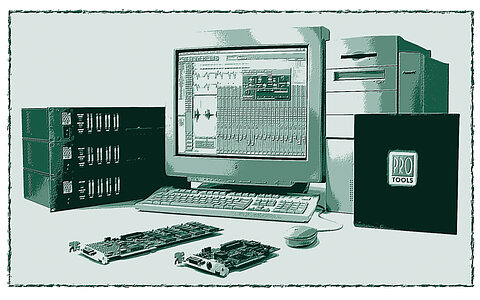
Simon Price begins a three-part series designed to demystify that staple of modern music production, Pro Tools. This month, he looks at the various components that make up Digidesign's systems.

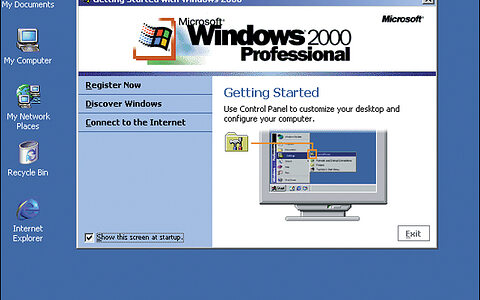
Microsoft's latest operating system, although primarily designed for business and network systems, seems to offer many features that are attractive to musicians, including greater stability and support for dual-processor machines. But is there enough software support to make upgrading worthwhile? Martin Walker investigates.

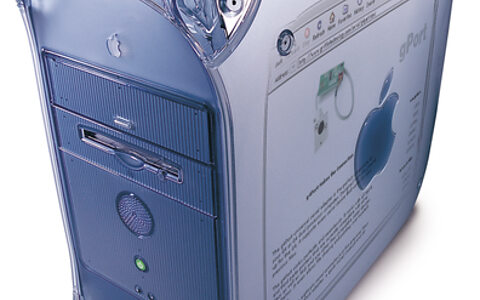
Paul Wiffen concludes his investigation into reliable means of audio interfacing on new-style Macintoshes when the traditional PCI card route is not available to you. This month, he tests two more USB audio-only interfaces, and reaches some definitive conclusins about Tascam's US428 MIDI and audio interface.


In this month's installment, Sam Inglis looks at how you can use the sounds and rhythms of words to make your song lyrics more memorable.

Martin Walker buys a new quiet hard drive for audio and looks into ways to eradicate any remaining noise, for a silent PC.

This month Paul Wiffen takes up residence as SOS's Apple expert. After relating his own Mac history, he turns Agony Uncle and addresses a few readers' problems...

Onboard effects may seem like a relatively recent synth innovation, but even old modular synths offered analogue effects. Although they were basic, the freely patchable nature of modular synths allowed them to be used to create convincing acoustic instrument sounds — thus effectively physical modelling. Gordon Reid explains how.

Dave Shapton explores part of the MPTEG4 specification: Structured Audio, which allows music to be streamed with absolotely no loss of quality at extremely low data-rates. Is this the way that all media will be encoded in the future?

Logic's Transform window is often under-used, due to its apparent complexity. John Walden explains all.

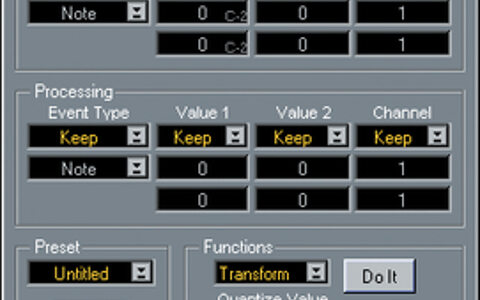
Continuing his in-depth explaination of the Logical Edit functions of Cubase in Easy Mode, Paul Sellars looks this month at the role of the Processing stage settings, in conjunction with the Filter and Function operation, before moving on to the greater complexities of Expert mode...

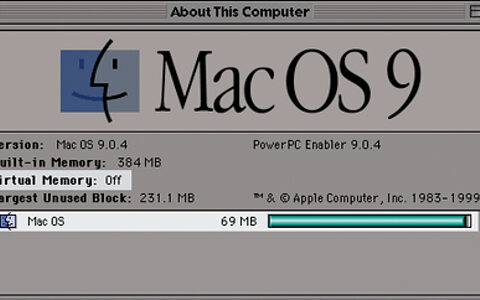
Vic Lennard signs-off as SOS Apple Notes columnist with a look at VM.