MIDI Master Drummer
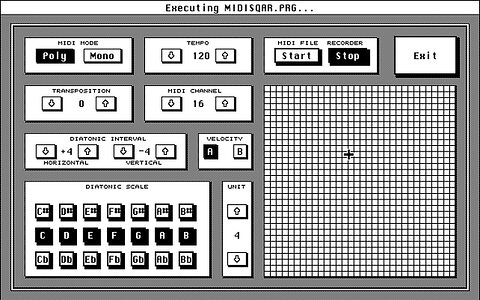
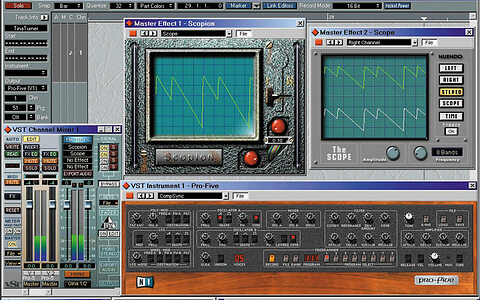
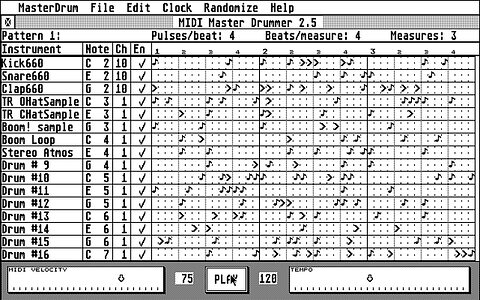
Derek Johnson gets into the groove with an 'emailware' rhythm-creation program and goes analogue with an updated step-sequencer...

Derek Johnson gets into the groove with an 'emailware' rhythm-creation program and goes analogue with an updated step-sequencer...

This month Vic Lennard looks at the practical implications of DirectConnect and possible problems when using the wrong system updaters...

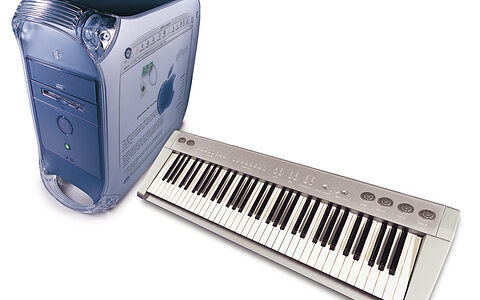
The recent G3, G4 and iMac computers are fast and attractive to musicians, but they present various dilemmas when it comes to connecting your MIDI and audio interfaces. In part 1 of this short series, Paul Wiffen looks at the various ways to get MIDI data flowing reliably in the absence of ADB and serial ports.

Part 1 of a 2-part Net Notes in which Dave Shapton explores the theory and the practice of broadcasting your audio and video on the Internet.

Most people are familiar with basic reverb, delay and modulation effects, but what lies beyond? In the first part of a new series, Paul White explores the twilight zone of effects processing.

In the first of our new regular software columns based on the leading sequencer packages, Paul White gets Logic Notes off to a flying start with some invaluable hints and tips.

The music production software we now use has become so sophisticated that valuable features and techniques can often go unused simply through unfamiliarity. With this in mind, SOS has added new regular monthly columns dedicated to making the most of the leading programs. In this inaugural Cubase Notes, Martin Walker explains the use of the Scale Correction feature.

This month Martin Walker improves his aural skills and reports on progress with Cubase 5.0.
![Figure 3: [top] Creating a. Figure 4: [bottom] The chromatic scale generated by the configuration in.](https://dt7v1i9vyp3mf.cloudfront.net/styles/teaser_large/s3/imagelibrary/s/synth7_8-9-1100-.g2YuyNMEcoE4NEQGZlUQfrubZowD_Co.gif)
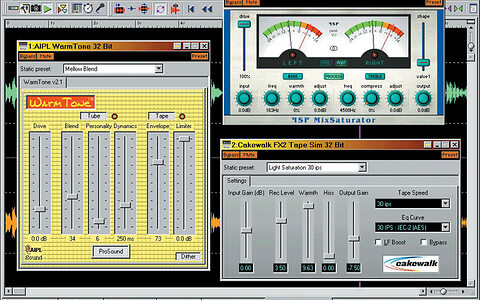
Soundcard and computer technology has advanced to the stage where even modestly specified PC systems can make recordings of incredible clarity — and DSP algorithms now allow us to add in the warmth that is characteristic of analogue recordings. Martin Walker explores the options.

Paul White explores how you can give your mixes more stereo depth and width — not only using the more commonly recognised methods, but also with a few lesser-known tricks of the trade...

Proofing music with MP3 and SoundJam MP Plus is on the agenda for Vic Lennard this month...

The Atari goes back to the future with the help of the Electron SidStation, and Derek Johnson finds out why it's hip to be square...

When it comes to MIDI files on the 'net you have two options: either trawl through the myriad of illegal pirate sites or deal with a professional. Paul Farrer separates the pros from the cons.

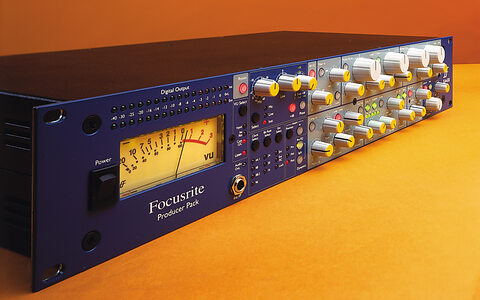
Paul White offers a few levels for soundcard-based music systems.

This month Martin Walker seeks out the suppliers of products aimed at reducing noise from your PC.
![Figure 3: [top] Creating a. Figure 4: [bottom] The chromatic scale generated by the configuration in.](https://dt7v1i9vyp3mf.cloudfront.net/styles/teaser_large/s3/imagelibrary/s/synth6_7-1000-vKJbimsIirZB2IjPodseBZkNla8G0DVZ.gif)
In these days of 64-note polyphony and 32-part multitimbrality, it's easy to forget the importance of note-priority systems in analogue monosynths — yet they can have a drastic effect on what you hear when you play or trigger an old synth. Gordon Reid provides a refresher course.

Some of the most common problems encountered when working in a home studio arise from having to record in the same room as your recording equipment. However, good-quality recordings are still perfectly possible in such conditions. Hugh Robjohns advises on how to obtain the best results.

In order to get the most out of your audio equipment, you need to be able to line it up correctly. Most PC users, however, may already have all the necessary tools and, as Martin Walker explains, they are easy to use when you know how.

The root of PC problems can often be found in incorrect or incomplete software installations. Martin Walker shows you how to avoid pitfalls when upgrading and adding to your existing applications.