CD Mastering On Your PC
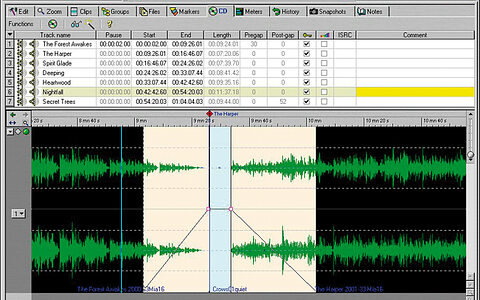
The final stage of production - turning your mixes into a finished CD - requires some specialised tools. Martin Walker runs through the options and considers how best to set up and use the necessary PC software.

The final stage of production - turning your mixes into a finished CD - requires some specialised tools. Martin Walker runs through the options and considers how best to set up and use the necessary PC software.

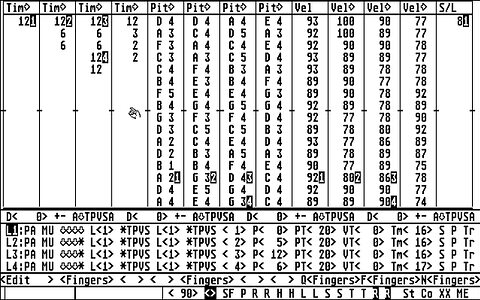
Derek Johnson experiences the weirdness that is Dr T's, in the shape of MIDI-Ax, and helps out a reader who wants to use his Atari as a dedicated TX7 editor.

Martin Walker has had more than his fair share of computer hassles recently, including exploding monitors, audio glitches, and the mysterious death of Word...

Paul White shows you how to get that massive dance sound. Additional material by Mike Senior.

This month's crop of Cubase tips covers the multitude of options available when exporting audio, plus ways of incorporating external MIDI instruments and effects into your mix.


SOS's resident MOTU expert Robin Bigwood looks at ways of working with audio loops in Digital Performer, and hands out tips on using Propellerhead's Rewire to interface DP with software synths.

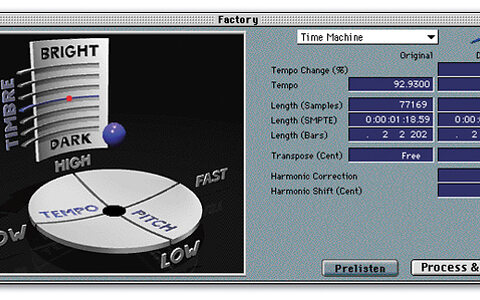
In the final part of this series, Oli Bell gives you some practical tips and tricks on looping, re-grooving and time-stretching.

Last month we looked at how analogue modules can reproduce the sound of a real trumpet. All very well if you own a wall-sized modular system — but what if your means are more limited? Gordon Reid adapts theory to practice with a Minimoog.

Martin Walker muses on whether there is really any such thing as a bad soundcard, and extends some helpful advice on how to make sure you get the right one for your needs.

Paul Wiffen has a sleep problem, sees the mLAN light, and rounds up the best of the Frankfurt launches for Apple musicians.

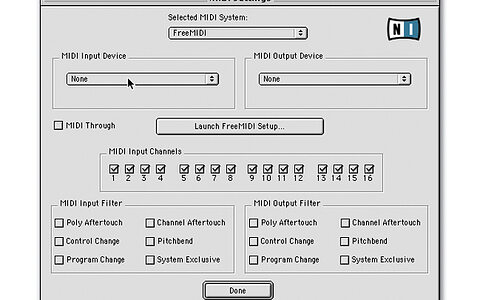
This month Robin Bigwood concludes his look at MOTU's RAM-based recorder POLAR, and explains how to get software instruments working with Digital Performer via FreeMIDI and OMS.

Wouldn't it be nice to have two PCs — one for office or games use and the other optimised for music? As Martin Walker explains, multiple booting may allow you to achieve the same effect without splashing out on a new computer...

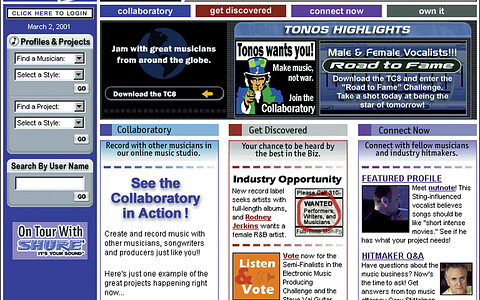
With music professionals at the helm and software from Emagic, Tonos.com is another way for musicians to collaborate online. Mark Wherry makes some connections.

This month we look at how to fix vocal tuning and timing, as well as showing how the recent Logic v4.7 upgrade improves working with Emagic's EXS24 virtual sampler.

In part 2 of this series, Oli Bell offers advice on choosing a sampler for modern styles, finding and using samples from the Internet, and deciding which sample CDs to buy.

If you're an Atari owner who would also like to work with other computers, you may not have to lose access to your favourite Atari applications. Derek Johnson offers some platform-crossing suggestions.

This month's Cubase Technique introduces more features of the Interactive Phrase Synth, offers some handy hints on merging MIDI Parts, and provides some words of bitter experience on creating your own instruments in Steinberg's LM4 drum machine.

Gates are far more than just problem-solvers for reducing spill and noise. They can be used to add punch to drum sounds, put rhythmic interest into sustained parts or even as mixing automation.

Gordon Reid builds on the acoustic theory of wind and brass instruments he introduced last month, and explains how to produce a convincing analogue trumpet sound.