We look at the reliability of hard drives and investigate some innovative video-related products from Sony, which could soon be commonplace in the audio world.
Which PCI slots you use for your expansion cards can make the difference between a music computer that runs flawlessly and one plagued by clicks, pops, crackles and interference.
As studio computers get faster, they grow noisier. Is it possible to build a machine that\'s not just quieter than a standard PC, but completely inaudible?
The most dramatic overhaul of the Mac OS ever was ignored by most musicians until recently — and rightly, as established music applications and standards no longer run under it. But lately, there have been more and more reasons for musicians to leave OS 9 behind. If you're considering making the switch, read on...
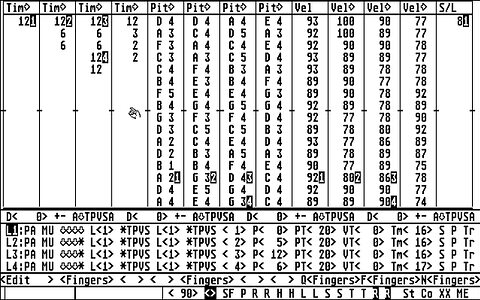
This month we look at why MIDI interfaces aren't always to blame for your MIDI timing problems, and report on the latest news regarding Yamaha's Open Plug-in Technology.
When you launch a new product, it's always best to have a clear message. You buy a dishwasher because you hate washing up, you buy a car because you can't walk 20 miles to work, or wait for the bus that comes once a week; and you buy a Microsoft Smart Display because, um...
There are many reasons why the digital delivery of media hasn't replaced traditional physical methods, but could one reason be that files just aren't very collectable?
It's been 12 months since we first evaluated Windows XP as a music platform, and it now seems to be the OS of choice for most manufacturers. So should musicians who have been holding back now take the plunge and upgrade?
Cheap, writable optical media have revolutionised the way PC users store audio and back up their data. However, setting up your CD-R/W drives and persuading them to work at their best can be more complicated than it seems...
We transform the humble and inexpensive games joystick into a simple but effective MIDI controller, and find a word processor that will have minimum impact on the clean music partition of your PC.
Your computer's most fundamental system settings are stored in its BIOS. Modifying them can help increase performance and eliminate glitches, but it's not something to approach lightly...
We take a look at the EQ response of the Yamaha SW1000XG soundcard, the possibility of disabling the SMBus to gain an extra IRQ, and more advice on managing your updates.
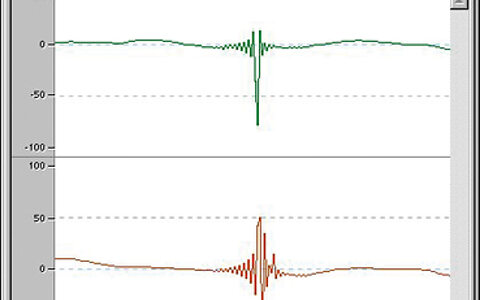
An hour spent fine-tuning the performance of your soundcard can yield permanent improvements in background noise, distortion levels and frequency response.
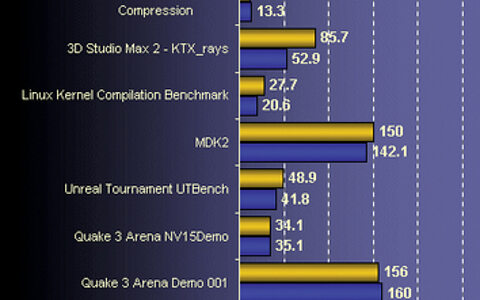
Many UK music technology retailers are now building specialist PCs to order, and Digital Village are no exception. Their Pentium 4 systems promise careful optimisation at a very competitive price.
Applied Acoustic Systems, known best for their Tassman software synth, have now used their modelling technology to create an electric piano plug-in. But of course, theirs isn't the only one around...
In the second part of our investigation into the real-world delays caused by PC hardware and software, we consider the differences between different MIDI applications and versions of Windows. Are some sequencers really 'tighter' than others?
Theoretical figures and manufacturers' measurements may suggest that the latency of your soft synths is negligible — but that's no use if their timing is all over the place when you actually play them. Our real-world results give you the true picture.