

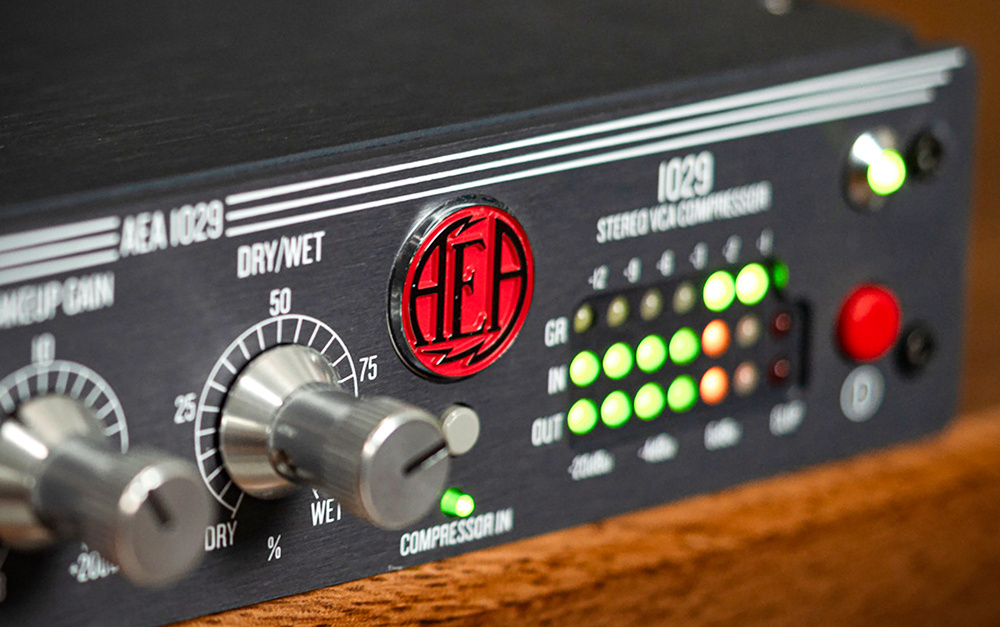
 The dry/wet mix control makes parallel compression easy — and with the superb transient control of this compressor, it can be really effective.
The debut compressor from ribbon‑mic legends AEA is a classy and versatile affair.
Founded in California in the mid‑1960s, Audio Engineering Associates are more familiarly known by their initials AEA, and best known for their range of high‑quality, handcrafted ribbon microphones and preamplifiers. Their involvement in this area dates back to 1976, when they took over the repair of RCA’s ribbon mic range. 1998 saw the release of the first AEA mic, the R44C, and 27 years on AEA still produce it — but their range has grown considerably since then, to include 10 ribbon mics, five mic preamps, and two phantom‑powered, active DI boxes. Now, the company have moved further along the signal chain, with the recent release of the AEA 1029, a stereo VCA compressor.
First Look
The AEA 1029 takes the form of a 1U half‑rackmount device, and shares the classic aesthetic of its preamp stablemates: a dark grey chassis and fascia; white lettering and scaling; a circular, retro‑styled red and silver company logo; and AEA’s signature tall, knurl‑tip silver knobs with black position indicators. Despite being small, the knobs’ combination of knurling and narrow diameter ensures that the controls feel nicely spaced, even to my large hands. Depressing the Compressor In button activates relays that switch the compressor out of a hard bypass. An associated green LED illuminates to indicate that the compressor circuitry is active.
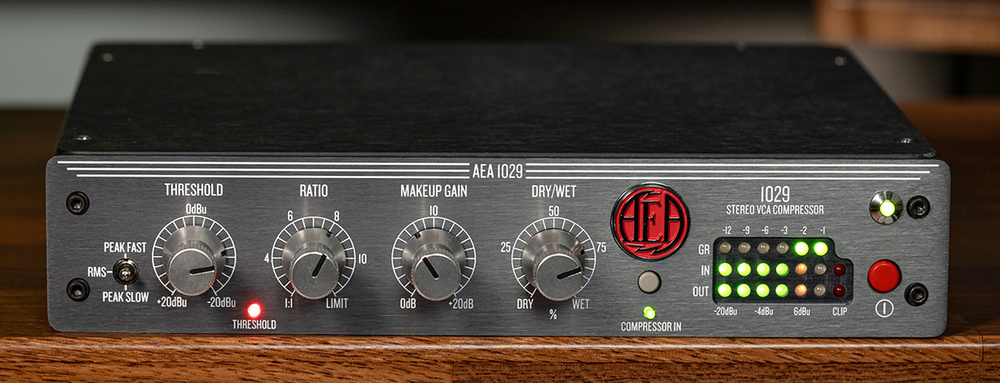
The compression characteristics are set by a three‑position mode and timing toggle switch (Peak Fast / RMS / Peak Slow), and continuously variable rotary threshold and ratio controls. Up to 20dB of make‑up gain allows you to compensate for any loss of level due to compression, and a dry/wet control encourages you to explore parallel compression. Below/between the threshold and ratio controls, a red LED illuminates when the set threshold level is exceeded and gain reduction occurs.
Three horizontal LED ladders indicate the level of gain reduction (six segments, 1‑12 dB), and of the summed input and summed output signals (seven segments, ‑20dBu up to clipping). Finally, there’s a comparatively large red power on/off button, and a green power indicator LED. The 1029’s rear panel carries the 5‑pin XLR connector for the external switching power supply, and balanced XLR I/O connectors for each channel.
Lifting the lid of the AEA 1029 reveals a single, beautifully laid‑out circuit board that hosts all the componentry and each channel’s Fred Forssell‑designed discrete op‑amp. The majority of components, even on those op‑amps, are surface‑mount types, though a number of full‑size, electrolytic capacitors are employed in the audio circuits.
The stereo‑linked...
You are reading one of the locked Subscribers-only articles from our latest 5 issues.
You've read 30% of this article for FREE, so to continue reading...
- ✅ Log in - if you have a Digital Subscription you bought from SoundOnSound.com
- ⬇️ Buy & Download this Single Article in PDF format £0.83 GBP$1.49 USD
For less than the price of a coffee, buy now and immediately download to your computer, tablet or mobile. - ⬇️ ⬇️ ⬇️ Buy & Download the FULL ISSUE PDF
Our 'full SOS magazine' for smartphone/tablet/computer. More info... - 📲 Buy a DIGITAL subscription (or 📖 📲 Print + Digital sub)
Instantly unlock ALL Premium web articles! We often release online-only content.
Visit our ShopStore.