

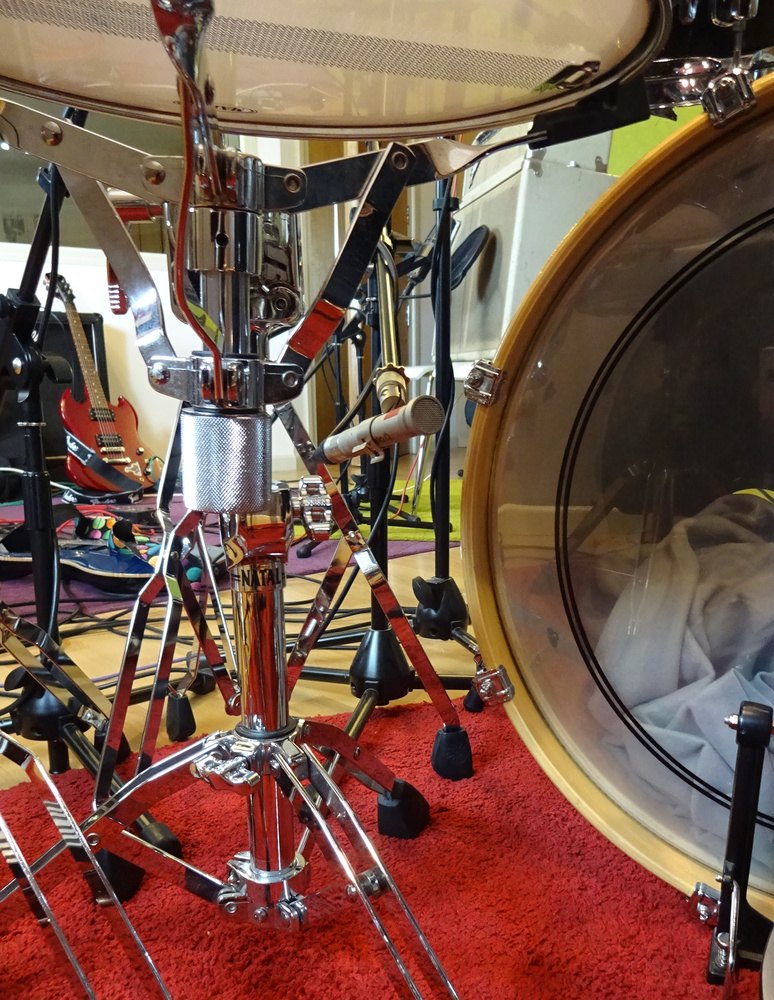
 Here you can see the ‘fifth mic’ position discussed in this article — in this case using an Oktava MK012 small‑diaphragm omni capacitor mic.
When opting for a more minimal approach to drum miking, a compressed omni mic beneath the snare can pay dividends...
Recording drums is one of the most challenging project‑studio tasks, and it’s only made more difficult if you’re battling against the clock and have limited numbers of mics or recorder inputs to work with. As such, we’ve often encouraged SOS readers in these pages to streamline the process with a four‑mic setup, where you first position a stereo mic pair to capture a fairly natural full‑kit sound, and then add in kick and snare close mics to add the extra focus and punch those instruments require in most commercial music styles. In recent years, though, I’ve started recommending a fifth mic to supplement this setup — an addition that I think significantly enhances the mixed result, despite requiring very little extra setup time.
The Fifth Element
The mic in question is placed a few inches under the snare drum, and although it might at first glance seem to be just a regular under‑snare mic, there are a few crucial differences:
- It’s further away from the drum than you’d expect — a good eight inches, usually, and quite close to the side of the kick drum;
- It’s an omnidirectional mic, not a cardioid one;
- It’s pointing horizontally towards the drum stool, rather than up towards the snare wires. (Omnidirectional mics may be designed to pick up sound equally from all directions, but in practice the physical presence of the mic’s body makes them a little directional at higher frequencies.)
Now, clearly, this mic will still fulfil some of the function of an under‑snare mic, and that’s all well and good, seeing that a basic four‑mic drum setup will almost always underplay the snare’s noisier sustain elements. As a bare minimum, then, this fifth mic should already usefully enhance the snare sound. But because my fifth mic is positioned further from the drum, it also captures useful shell tone from the kick and toms, without overemphasising any of the cymbals (the microphone is naturally shielded from them by the snare and toms). In this respect, the omni polar pattern really helps too, because the low‑end presentation and off‑axis pickup both inherently tend to be more natural‑sounding than with cardioids — especially when you’re working with budget‑friendly models. The omni pattern also allows you to angle the microphone away from the snare wires so that their high frequencies aren’t overhyped by the inherent on‑axis upper‑spectrum boost of most microphones.
The omni polar pattern just seems to be very forgiving in terms of placement, as long as you make sure the mic’s shadowed from the cymbals.
If you play your cards right, this fifth mic should give you a reasonable balance of all your drums, but with an emphasis on the snare wires and with pretty understated cymbals. This makes it a great complement to the overheads, which will usually be a little cymbal heavy and lacking in snare‑wire contributions. And, in practice, I’ve found that you can usually get a usable result first time by simply eyeballing this mic’s position: the omni polar pattern just seems to be very forgiving in terms of placement, as long as you make sure the mic’s shadowed from the cymbals. So if you’re too strapped for time to even listen to this fifth mic before pressing Record, it’s still likely to prove useful at mixdown!
Mixing Suggestions
When it comes to mixing this microphone with the other four drum‑kit mics, the most important thing to say is that you’ll almost always want its polarity to be inverted relative to the over‑snare mic, given that it sees the snare drum from the opposite side. And you may also find you want to use an EQ to cut a few decibels in the 4‑6 kHz zone, to smooth the snare‑wires contribution — just so as to balance that better with the kick‑drum and tom elements of the signal.
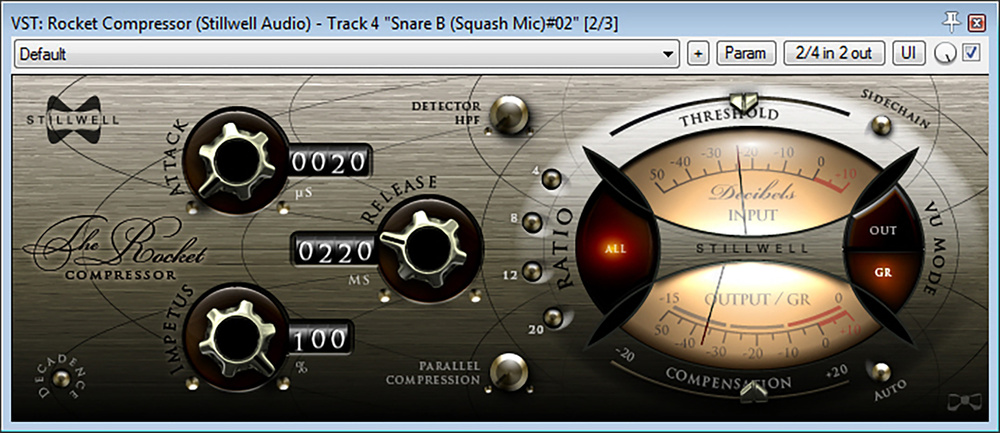
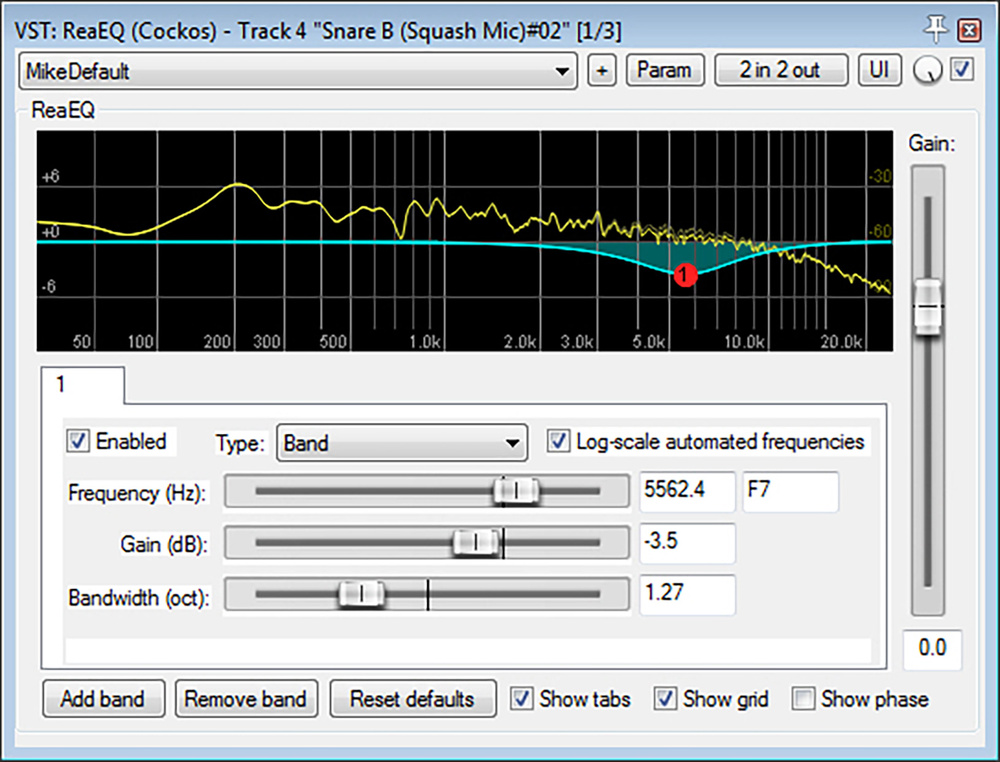 A little EQ cut in the 4‑6 kHz zone (top screenshot) can help smooth the snare‑wires contribution of this additional drum mic, while a hefty dose of fast compression (bottom screenshot) is great for enhancing drum sustain and boosting low‑level details such as ghost notes.
But for me, the real ‘secret sauce’ with this microphone is to add a bucketload of fast, heavy compression — I usually call this microphone my ‘squash mic’ for this very reason! To start with, try 10‑12 dB gain reduction, at a 10:1 ratio, with a sub‑millisecond attack, and maybe a 200ms release. Although you’ll find that this mashes the drum transients, that shouldn’t impact the mix much: those transients will still be coming through the other four mics unscathed. What you get in return is a nice emphasis on the drum sustains, as well as more audibility for low‑level details such as snare ghost notes. Furthermore, you shouldn’t find that this compression unduly lifts the cymbal levels, on account of the squash mic’s naturally cymbal‑recessed balance — unless you push the gain‑reduction way too far! And even if the squash mic does make the cymbals appreciably louder, it’ll usually do this without making them harsh‑sounding, by virtue of the fact that it’s picking them up both indirectly and off‑axis, thereby giving them a warmer tone.
One final point to make about this technique is that it’s not just useful in minimal‑miking setups — it can also work its magic within more involved miking setups. Moreover, it’ll function well in situations where you’re recording other instruments in the live room together with the drum kit, not only enhancing the drums themselves, but also subtly gluing them together with the other instruments.
Hear For Yourself
If you’d like to hear some of the techniques explored here, head over to the SOS website (https://sosm.ag/the-squash-mic-trick) where you’ll find a set of dedicated audio examples I’ve created specifically to accompany this article.